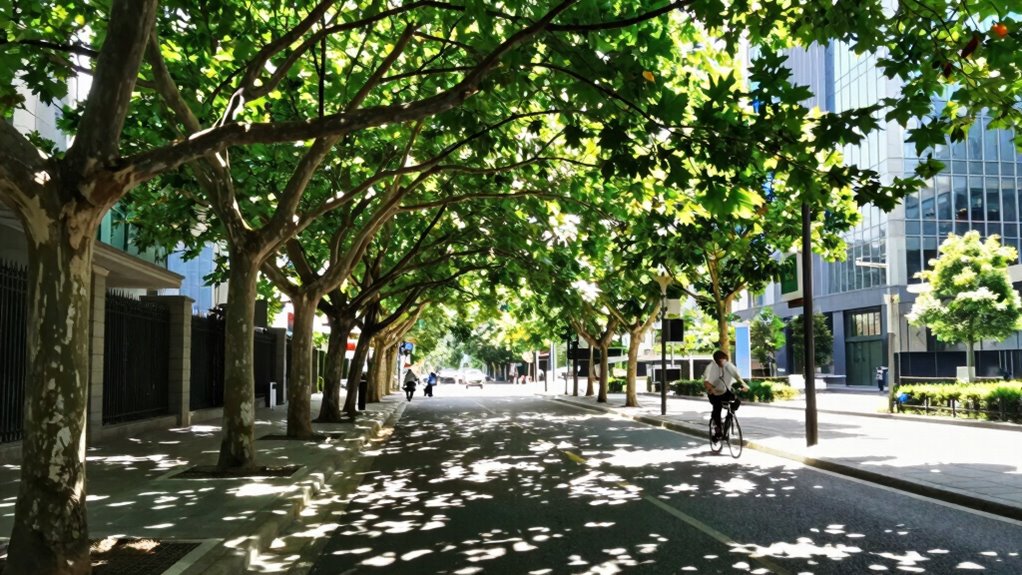

Urban trees cool streets more than you might think by providing shade that reduces heat absorption from pavement and buildings. They also cool the air through transpiration, releasing moisture that lowers temperatures. The type of trees and soil conditions play a big role—healthy, moist soil helps roots support cooling and prevents heat buildup. Proper care boosts these natural effects, making cities more comfortable. If you’re curious, you’ll discover how these hidden helpers work together to keep cities cooler.
Play games included with Prime
Start a Prime free trial and play with Amazon Luna on your devices.
As an affiliate, we earn on qualifying purchases.
Key Takeaways
- Urban trees provide extensive shade that significantly reduces heat absorption by pavement and buildings.
- Tree species with dense canopies, like oaks and maples, maximize cooling through shade and transpiration.
- Soil moisture retention enhances transpiration, boosting trees’ cooling effectiveness during heatwaves.
- Proper soil management improves tree health and their ability to lower urban temperatures.
- Well-maintained trees and soil create a resilient urban environment that effectively mitigates heat.
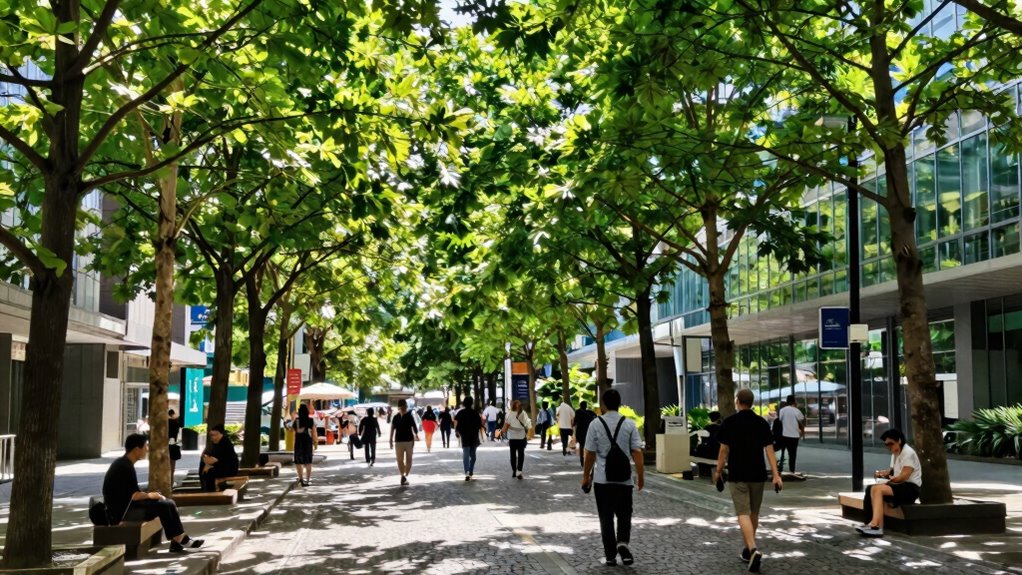
Urban trees do more than just add beauty to city streets; they play an indispensable role in cooling the environment around them. You might think that their primary job is aesthetic, but their impact on urban temperatures is profound. When you walk past a tree-lined street, what you might not realize is how different the air feels compared to bare pavement. Trees act as natural air conditioners, and their effectiveness depends heavily on factors like tree species and soil moisture.
Urban trees cool streets naturally, with their effectiveness shaped by species type and soil moisture levels.
Different tree species have unique characteristics that influence how well they cool their surroundings. Some species, like oaks and maples, have broad, dense canopies that provide extensive shade, which directly reduces the heat from pavement and buildings. Others, such as certain conifers, might not cast as much shade but can still lower temperatures through other mechanisms. Choosing the right tree species for urban environments guarantees maximum cooling benefits. Deciduous trees, for instance, shed leaves in winter, allowing sunlight to warm streets when needed, but in summer, their large leaves maximize shade, considerably lowering temperatures.
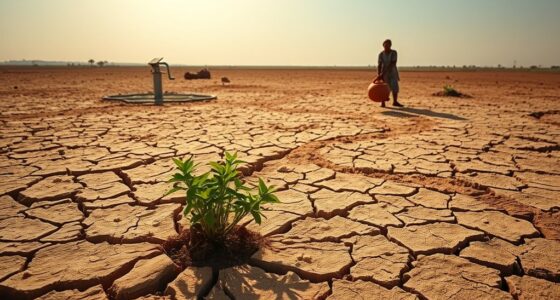
Soil moisture is another crucial factor that determines how effectively trees cool their environment. When soil around a tree is moist, it helps keep the root zone cool, which in turn supports healthy, vigorous growth. Healthy roots and lush foliage increase transpiration — the process where trees release water vapor through their leaves. Transpiration acts like a natural evaporative cooling system, lowering the surrounding air temperature. If soil becomes too dry, trees struggle to transpire effectively, reducing their cooling ability. That’s why maintaining adequate soil moisture through proper irrigation or soil management is indispensable, especially during heatwaves or drought conditions. When soil moisture is optimized, trees can perform transpiration efficiently, releasing more water vapor and cooling the air even further. Additionally, urban soil conditions such as compaction and limited space can hinder water retention, undermining the trees’ cooling potential. This highlights the importance of urban planning that includes soil management strategies like mulching, aeration, and soil restoration to keep moisture levels high. Implementing approaches like soil aeration, mulching, and avoiding compaction can significantly improve water retention and promote healthier, more resilient urban trees.
You might also notice that in urban environments, soil compaction and limited space can hinder water retention, reducing soil moisture and, consequently, the trees’ cooling capacity. This underscores the importance of urban soil conditions and their influence on tree health and cooling efficiency. This highlights the importance of urban planning that includes soil management strategies like mulching and aeration to keep moisture levels high. Ultimately, the combination of selecting appropriate tree species and maintaining soil moisture levels guarantees that urban trees are doing their best work in cooling streets. They’re not just decorative; they’re indispensable components of urban climate resilience, making city life more comfortable and sustainable. The next time you appreciate a shady street, remember that behind that comfort are carefully chosen trees and well-maintained soil working together to keep the heat at bay.
As an affiliate, we earn on qualifying purchases.
Frequently Asked Questions
How Do Urban Trees Compare to Other Cooling Methods?
Urban trees surpass other cooling methods in cooling efficiency because different tree species provide shade and evaporative cooling that air conditioning can’t match. You’ll find that trees like maples or oaks offer more effective cooling, reducing urban heat more sustainably. Unlike concrete or asphalt, which absorb and re-emit heat, trees actively lower temperatures, making your streets cooler and more comfortable. So, choosing the right tree species makes a big difference in urban cooling.
Can Trees Survive in All Urban Environments?
You’ll be surprised to learn that around 60% of urban trees struggle to survive due to improper tree selection and poor soil conditions. Trees can’t thrive in all environments; they need the right species for the climate and suitable soil. When planning urban spaces, consider your area’s soil quality and choose resilient trees suited to those conditions. Proper selection and soil management are key to ensuring your urban trees flourish and provide cooling benefits.
What Maintenance Do Urban Trees Require?
You need to regularly maintain urban trees through tree pruning to promote healthy growth and remove dead or hazardous branches. Soil management is also essential; it involves ensuring proper watering, mulching, and aeration to keep roots healthy. By caring for trees with these practices, you help them thrive in city environments, improve their ability to cool streets, and extend their lifespan. Consistent maintenance benefits both the trees and your community.
Do Trees Attract Pests or Cause Damage?
You might worry that urban trees attract pests or cause damage, but they rarely do significant harm. For instance, a city park saw a temporary increase in tree pests like aphids, yet the overall urban damage was minimal, thanks to proper maintenance. While pests can occasionally visit, healthy trees are resilient and don’t typically cause extensive urban damage, especially when managed well. So, urban trees generally offer benefits without major risks.
How Quickly Do Trees Impact Street Temperatures?
Tree placement greatly influences cooling efficiency, and you’ll notice street temperatures drop within a few years after planting. As trees grow, their shade can reduce pavement and air temperatures, sometimes by as much as 10-15°F. Proper placement guarantees maximum shade during peak heat hours, accelerating cooling effects. So, with strategic planting, you’ll experience noticeable temperature reductions relatively quickly, making your streets cooler and more comfortable in just a few seasons.
Conclusion
So, next time you see an urban tree, remember it’s more than just a pretty face — it’s a powerful tool for cooling your streets. Don’t overlook these green giants; they’re working behind the scenes to keep your city comfortable. Sometimes, the simplest solutions pack the biggest punch. By planting and caring for trees, you’re helping your community stay cool when the heat is on. It’s a win-win that’s worth every effort.
NFL season / tailgating Picks
team gear
As an affiliate, we earn on qualifying purchases.