

When expanding your battery system, it’s easy to focus on increasing capacity but overlook key factors like battery chemistry and charge cycles. Ignoring these can lead to uneven wear, reduced lifespan, and hidden efficiency losses over time. Proper management guarantees balanced charging and prevents premature module replacements. If you want to avoid common pitfalls and maximize your investment, understanding these underlying issues will help you get the most from your expanded setup.
Key Takeaways
- Adding modules without proper charge controller compatibility can cause uneven wear and capacity loss.
- Ignoring the battery chemistry may lead to overcharging or undercharging, reducing lifespan.
- Multiple modules can complicate balancing, risking capacity traps if not managed correctly.
- Frequent partial cycling is preferable; full cycles can accelerate capacity degradation if mismanaged.
- Proper system design and management prevent early capacity loss and maximize long-term expansion benefits.
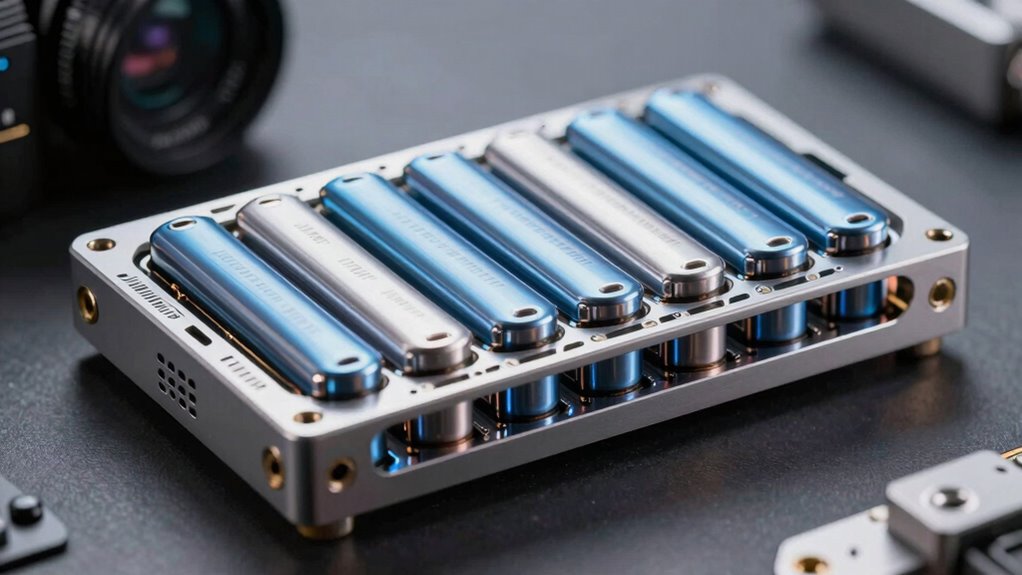
Battery expansion modules allow you to increase the capacity of your existing power system quickly and easily. This makes them an attractive option for those looking to extend runtime without overhauling their entire setup. But before you jump into adding more modules, it’s vital to understand how they interact with your current system, especially regarding battery chemistry and charging cycles. These factors play a pivotal role in the overall longevity and performance of your expanded battery bank.
Expanding your battery bank requires understanding chemistry and charging cycles for optimal longevity.
When you add expansion modules, you’re effectively increasing the total capacity, but not all batteries are created equal. Different types of battery chemistry—such as lithium-ion, lead-acid, or newer solid-state variants—have distinct characteristics. Lithium-ion batteries, for instance, are known for their high energy density and longer lifespan, often handling more charging cycles before capacity degrades. In contrast, lead-acid batteries tend to have fewer charging cycles and are more sensitive to deep discharges. Knowing the chemistry of your modules helps you anticipate how they will perform over time and how they should be charged to optimize lifespan.
Charging cycles, in particular, are essential when expanding your system. Every time you fully charge and then fully discharge a battery, you complete a charging cycle. Batteries have a finite number of these cycles—after which their capacity begins to decline. When you connect multiple modules, the way they are charged and discharged becomes more complex. If your charging system isn’t configured properly, some modules may undergo more cycles than others, leading to uneven wear and reduced overall system lifespan. Making sure your charge controller is compatible with your battery chemistry and capable of balancing the charge across multiple modules can help mitigate this issue.
Many people overlook the impact of frequent charging cycles on battery health. Repeated partial charges and discharges can be less stressful than full cycles, especially for lithium-ion batteries, which prefer shallow cycling to maximize lifespan. If your system isn’t properly managed, you might find yourself replacing modules sooner than expected, thinking the system’s capacity is the limiting factor when in reality, improper charging practices are accelerating battery wear. Proper system design, including smart charge controllers and understanding your battery chemistry, guarantees you get the most out of your expansion modules, maintaining capacity and performance over the long haul. Additionally, understanding battery health management can further extend the lifespan and reliability of your system.

BLUETTI B300K Expansion Battery, 2764.8Wh LiFePO4 Pack for Power Station AC200L AC300 AC500 AC200MAX, Extra Battery for Home, Emergency, Road Trip
- Compatibility: Works with multiple BLUETTI power stations
- Long-lasting Cells: Provides at least 4,000 cycles to 80% capacity
- Enhanced Durability: Better performance at high temperatures
As an affiliate, we earn on qualifying purchases.
As an affiliate, we earn on qualifying purchases.
Frequently Asked Questions
Do Expansion Modules Affect Overall Device Warranty?
Expansion modules can affect your device warranty, depending on manufacturer policies. When you add these modules, warranty concerns may arise if the manufacturer determines that the upgrade caused damage or issues. Always check your device’s warranty terms before installing expansion modules, as some manufacturers might void your warranty or restrict support if modifications are made. Being aware of manufacturer policies helps you avoid unexpected costs and protects your device’s coverage.
Can Expansion Modules Be Upgraded Later?
Yes, you can upgrade battery expansion modules later, but it depends on the device’s battery compatibility and design. Some modules are designed for easy upgrades, while others have upgrade limitations due to hardware or software constraints. Before upgrading, check if your device supports newer modules and guarantees compatibility to avoid issues. Keep in mind that not all expansion modules are future-proof, so research compatibility carefully.
Are There Compatibility Issues With Different Battery Brands?
Yes, you might face compatibility issues with different battery brands because not all brands support seamless integration. Before upgrading, check your device’s specifications and the manufacturer’s guidelines to confirm brand compatibility. Mixing brands could limit upgrade options or cause performance problems. To avoid these issues, stick to recommended brands or consult with the manufacturer for guidance on compatible upgrade options, ensuring your device runs smoothly and efficiently.
How Do Expansion Modules Impact Device Weight and Portability?
Expansion modules increase your device’s weight, which can make it less portable and more cumbersome to carry around. You’ll notice the weight increase, leading to portability challenges, especially if you frequently move or travel with your device. While they boost capacity, consider whether the added weight aligns with your mobility needs. Balancing extra battery life against the inconvenience of extra weight is key to making the right choice.
What Safety Precautions Are Necessary When Installing Expansion Modules?
You must prioritize safe installation when adding expansion modules. Always handle components with care, wearing anti-static gloves and working in a static-free environment. Double-check connections and guarantee power is off before installation to prevent shocks or damage. Follow manufacturer instructions precisely, and avoid rushing. These handling precautions protect both you and your device, preventing potential hazards and ensuring a secure, reliable upgrade.
Conclusion
So, next time you see those shiny battery expansion modules, remember—they promise more power, but often just trap you in a cycle of constant upgrades and hidden costs. Sure, more capacity sounds great, until you realize you’re just feeding the industry’s appetite for planned obsolescence. It’s almost poetic—our desire for endless energy leads us to build gadgets that keep us hooked, all while pretending we’re just “expanding” our capabilities. Clever, isn’t it?