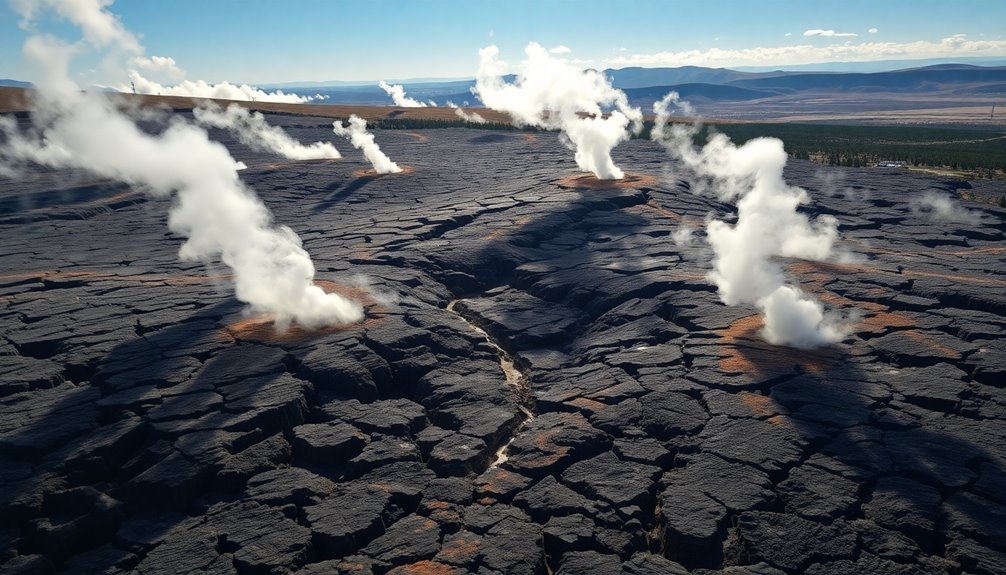

Integrated simulations show how fracture networks significantly enhance geothermal system performance. By analyzing fracture geometries, you can optimize fluid flow and heat extraction. These models help you understand thermal behavior and predict thermal breakthrough, crucial for efficient energy production. They also reveal that complex networks can improve heat recovery while managing flow paths to minimize thermal decline. Discover more about the implications of these simulations for sustaining energy output and efficiency in geothermal systems.
Open a free Amazon Business account
Business pricing, bulk buying and tax-exempt orders.
As an affiliate, we earn on qualifying purchases.
Key Takeaways
- Integrated simulations analyze fracture network geometries, optimizing fluid flow dynamics and heat extraction in geothermal systems.
- Complex fracture configurations enhance effective flow areas, delaying thermal breakthrough and improving overall system performance.
- Hydraulic stimulation methods activate existing fractures, increasing conductivity and efficiency in low-permeability geothermal reservoirs.
- Characterization of fracture networks through various surveys provides critical data for accurate modeling and enhanced geothermal system design.
- Optimized fracture network designs extend fluid flow paths, ensuring stable power output and sustainable heat recovery in geothermal operations.
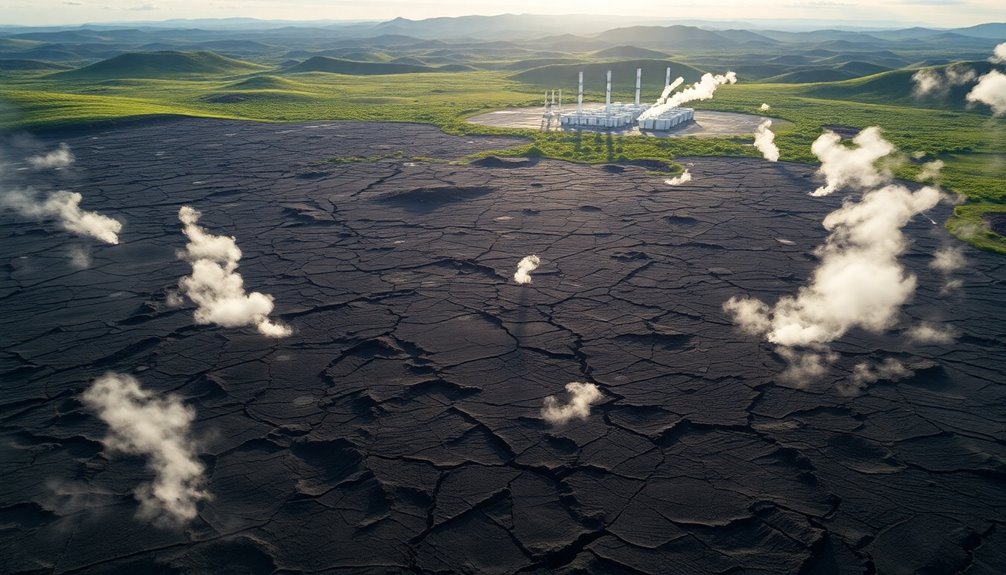
Fracture networks play a crucial role in enhancing the efficiency of geothermal systems, as they directly influence heat extraction and fluid flow dynamics. You'll notice that complex fracture networks significantly boost heat extraction by increasing the effective flow area, which delays thermal breakthrough.
When you're working with wider fracture spacing, you'll find that it reduces interference, allowing for larger heat extraction areas and ultimately improving power output. Understanding the role of fracture conductivity is essential, too. Interestingly, lower fracture conductivity can enhance heat recovery by curbing heat loss in wellbores. To analyze how different fracture geometries affect fluid flow and heat transfer in geothermal reservoirs, thermal-hydraulic modeling (THM) becomes your best friend. These models provide insights that help optimize heat extraction strategies.
In Enhanced Geothermal Systems (EGS), hydraulic stimulation methods create permeability in low-permeability rocks by activating existing fractures. Inducing shear on pre-existing fractures is another strategy that increases conductivity in crystalline formations. You'll want to rely on discrete fracture network modeling to grasp the intricacies of EGS stimulation, as it offers a detailed approach. Computer simulations are vital for predicting thermal breakthrough and determining the best well placements.
Characterizing fracture networks is equally important. Geological surveys, structural mapping, and even remote sensing tools like UAVs can gather essential data on fracture geometries in hard-to-reach places. You'll also need to conduct geophysical surveys, including well tests, to ascertain the hydraulic properties of fractures. By integrating multiple datasets, you can enhance the accuracy of your discrete fracture network models.
Optimizing your fracture network design can lead to significantly improved heat extraction efficiency. Interrupting fracture patterns makes fluid take longer flow paths, slowing thermal decline. The impact of fracture network geometries on lithium production also emphasizes the importance of understanding these structures in geothermal operations. While complex networks may require higher injection pressures, they enhance flow rates and delay thermal breakthrough, ensuring stable power output and sustainable heat recovery.
geothermal fracture network modeling software
As an affiliate, we earn on qualifying purchases.
As an affiliate, we earn on qualifying purchases.
Frequently Asked Questions
How Do Integrated Simulations Differ From Traditional Geothermal Modeling Approaches?
Integrated simulations differ from traditional geothermal modeling approaches by incorporating complex fracture network dynamics and advanced thermal-hydraulic-mechanical coupling.
You'll notice that these simulations require more computational power, allowing for detailed analyses of fluid flow and heat extraction efficiency.
While traditional methods often simplify these factors, integrated simulations provide a comprehensive view, optimizing system performance and enabling data-driven decision-making.
This holistic approach ultimately leads to better predictions and enhanced project viability.
What Role Do Fracture Networks Play in Geothermal Energy Sustainability?
Imagine a spider's web, intricate and interconnected, allowing warmth to flow effortlessly.
Fracture networks in geothermal systems play a similar role, enhancing energy sustainability by improving heat extraction. These networks create pathways for fluids, ensuring more efficient energy transfer and stable output.
When designed wisely, they can boost production temperatures and support lithium co-production, transforming geothermal energy into a reliable, sustainable resource.
You're witnessing a revolution in energy efficiency with every fracture created.
Can Integrated Simulations Be Applied to Other Renewable Energy Sources?
Absolutely, integrated simulations can be applied to various renewable energy sources.
For instance, in wind energy, they optimize turbine placements and predict energy output.
In solar energy, simulations forecast sunlight availability and enhance grid integration.
Hydrokinetic systems benefit from simulations that model water flow and turbine efficiency.
These tools not only improve performance but also aid in planning maintenance and assessing environmental impacts, ensuring a more reliable renewable energy infrastructure overall.
What Are the Limitations of Current Geothermal Simulation Technologies?
Current geothermal simulation technologies often struggle with accuracy, especially as studies show that up to 30% of geothermal potential remains untapped due to insufficient modeling.
You'll find that numerical simulations frequently ignore crucial thermal-hydraulic-mechanical-chemical interactions, limiting their effectiveness.
Additionally, challenges like poor well connectivity and complex geological structures hinder performance, while high drilling costs and uncertain economic viability further complicate the adoption of enhanced geothermal systems.
How Can Stakeholders Use Simulation Data for Decision-Making in Geothermal Projects?
You can use simulation data to make informed decisions in geothermal projects by analyzing key economic indices like LCOE and NPV.
By employing multi-criteria decision-making methods, you can evaluate various project scenarios based on performance metrics.
Additionally, simulations help you anticipate future reservoir behavior and optimize resource management, ensuring sustainable operations.
Integrating data from these simulations allows you to strategize effectively, minimizing risks while maximizing returns on your geothermal investments.
Conclusion
In the realm of geothermal energy, understanding fracture networks isn't just fascinating—it's essential. You've seen how these intricate systems can significantly boost geothermal performance, turning potential into power. As we harness the Earth's heat, we must ask ourselves: what other secrets lie beneath the surface waiting to be uncovered? By delving deeper into these networks, you're not just observing a process; you're igniting a revolution in sustainable energy. Embrace the journey, and let's unlock the Earth's hidden potential together!
Fall yard work Picks
leaf blowers
As an affiliate, we earn on qualifying purchases.