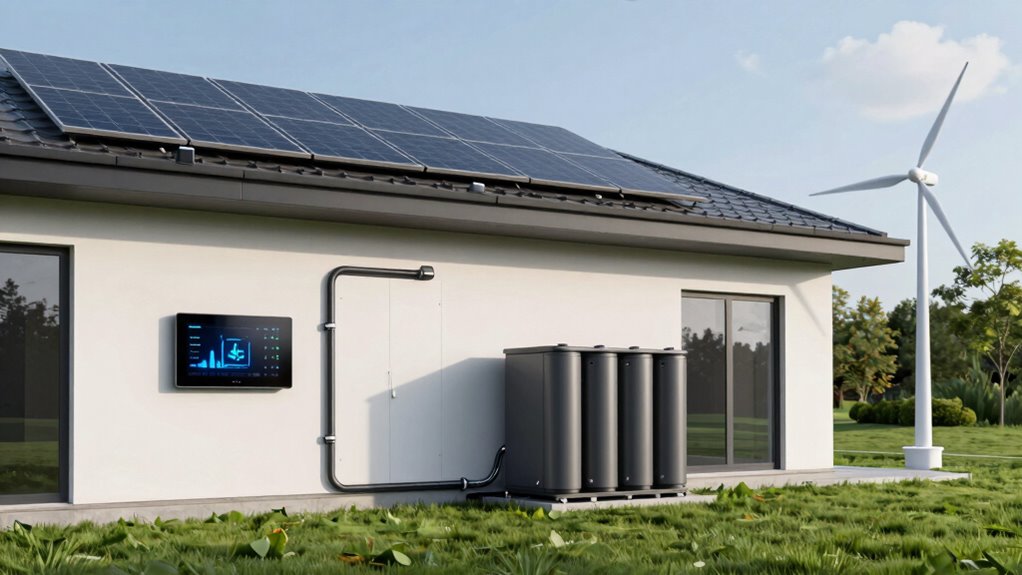

A future-ready home energy system seamlessly combines renewable energy sources like solar and wind with smart control technologies to guarantee reliable and sustainable power. It adapts to changing energy demands through advanced management, storing excess energy for later use. Smart grid capabilities allow real-time adjustments, enhancing efficiency and resilience. By integrating these features, your home becomes more adaptable and future-proof. Keep exploring to discover how these innovations can transform your energy experience.
Key Takeaways
- Integration of renewable energy sources like solar and wind for sustainable power generation.
- Advanced energy management and control systems that optimize efficiency and adapt to changing conditions.
- Implementation of smart grid technology for real-time response to energy demand and supply fluctuations.
- Incorporation of flexible energy storage solutions to ensure reliable power during peaks and low production periods.
- System design that allows seamless adaptation to emerging technologies and evolving sustainability standards.
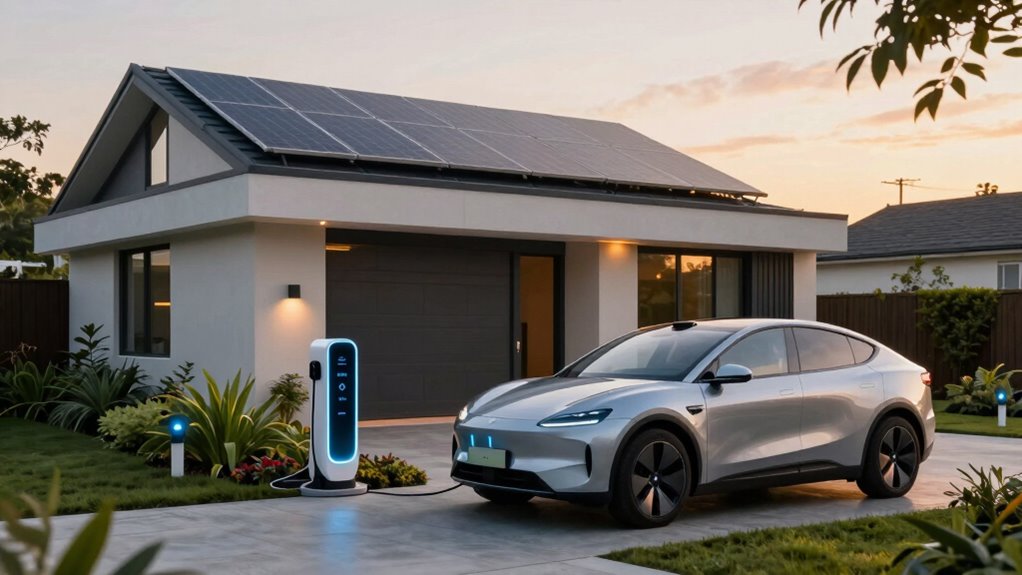
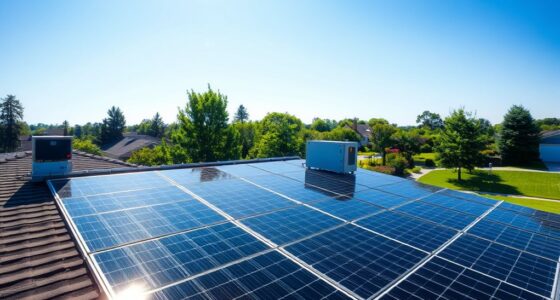
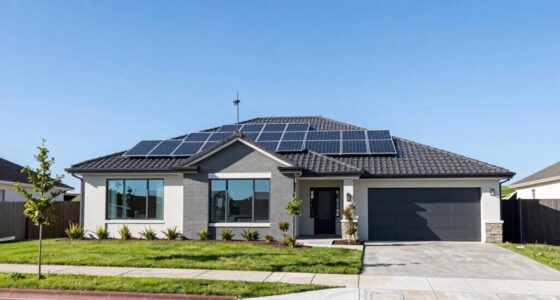
As technology advances, your home energy system is becoming more adaptable and resilient, preparing you for a sustainable future. One key feature that makes a system future-ready is its ability to seamlessly incorporate renewable energy sources. Renewable integration means your system can efficiently include solar panels, wind turbines, or other eco-friendly power options. This integration not only reduces your reliance on traditional energy grids but also helps lower your carbon footprint. A future-ready system intelligently manages these diverse energy inputs, guaranteeing you maximize their benefits while maintaining stability and efficiency. Incorporating renewable energy sources into your system enhances its sustainability and long-term viability. With renewable integration, you gain more control over your energy consumption, allowing you to produce and store clean energy on your terms. Additionally, the system’s capacity to adapt to emerging renewable technologies ensures ongoing compatibility and performance enhancements. Embracing smart grid technology further enhances the system’s ability to respond to fluctuating energy demands and supply conditions, making it truly future-proof. Staying informed about energy storage solutions can also help optimize your system’s resilience and efficiency as technology continues to evolve. To stay ahead, understanding the importance of grid modernization can ensure your system remains efficient and adaptable in a rapidly changing energy landscape.

ECO WORTHY 10000W Output Complete Off-Grid Solar Panel Kit for Home| 10KW 120V/240V Output Split Phase Inverter| 48V 314Ah16.1kWh High Capacity Energy Storage| 2950W Solar Panel PV| Whole House System
- Power Output: 10kW with split-phase support
- Solar Panels: 5 × 590W panels, 2950W capacity
- Energy Storage: 48V 314Ah LiFePO₄ battery
As an affiliate, we earn on qualifying purchases.
As an affiliate, we earn on qualifying purchases.
Frequently Asked Questions
How Can I Ensure My System Adapts to Future Energy Demands?
To guarantee your system adapts to future energy demands, focus on increasing its scalability and monitoring your energy consumption. Choose modular components that can be upgraded or expanded easily as your needs grow. Implement smart technology to track usage patterns and optimize efficiency. Regularly assess your system’s performance and stay informed about new energy solutions, making sure your setup remains flexible and capable of handling future demands seamlessly.
What Technologies Will Be Standard in Future Home Energy Systems?
Future home energy systems will standardize smart grid integration and advanced energy storage. You’ll see intelligent networks balancing supply and demand seamlessly, making your home more efficient. Energy storage solutions, like high-capacity batteries, will store excess solar power for later use, reducing reliance on the grid. These technologies will work together, creating a resilient, self-sufficient system that adapts to your needs while supporting a sustainable future.
How Secure Are Smart Home Energy Systems From Cyber Threats?
Smart home energy systems are increasingly secure, but cyber vulnerabilities still exist. You should be aware that hackers might exploit these vulnerabilities, risking your privacy and energy data. To stay protected, regularly update your system’s firmware, use strong passwords, and enable multi-factor authentication. Staying informed about potential privacy concerns helps you maintain control, ensuring your home energy system remains both secure and future-ready.
Can Future-Ready Systems Integrate Renewable Energy Sources Easily?
Future-ready systems can indeed integrate renewable energy sources easily, especially with advancements in smart grid technology and energy storage. Smart grids adapt quickly to fluctuating renewable inputs, optimizing energy distribution. Energy storage systems capture excess power from solar or wind, ensuring a steady supply. This seamless integration proves that modern home energy setups are designed for flexibility, making your home more sustainable and prepared for future energy needs.
What Is the Lifespan of a Future-Ready Home Energy System?
A future-ready home energy system typically lasts around 20 to 30 years, depending on its components and maintenance. You can maximize its lifespan by prioritizing energy efficiency and choosing durable, high-quality parts. Regular upkeep ensures it continues to operate at peak performance, adapting to new technologies over time. By focusing on system durability, you guarantee your investment remains reliable, efficient, and ready for future energy demands.
Conclusion
As you step into the future, your home energy system isn’t just about technology—it’s about harmony and adaptability. Coincidentally, the very choices you make today, like embracing smart integrations and renewable sources, will seamlessly prepare your home for whatever tomorrow holds. In a world where change is constant, your energy system can become your greatest ally—ready for the unexpected, yet perfectly tuned to support your lifestyle today and into the future.