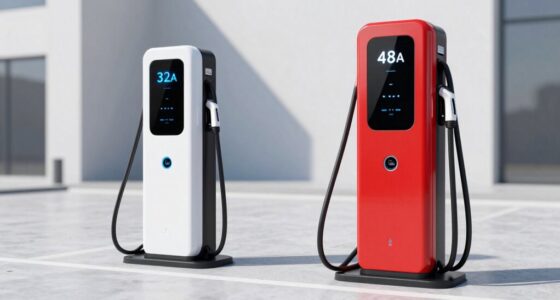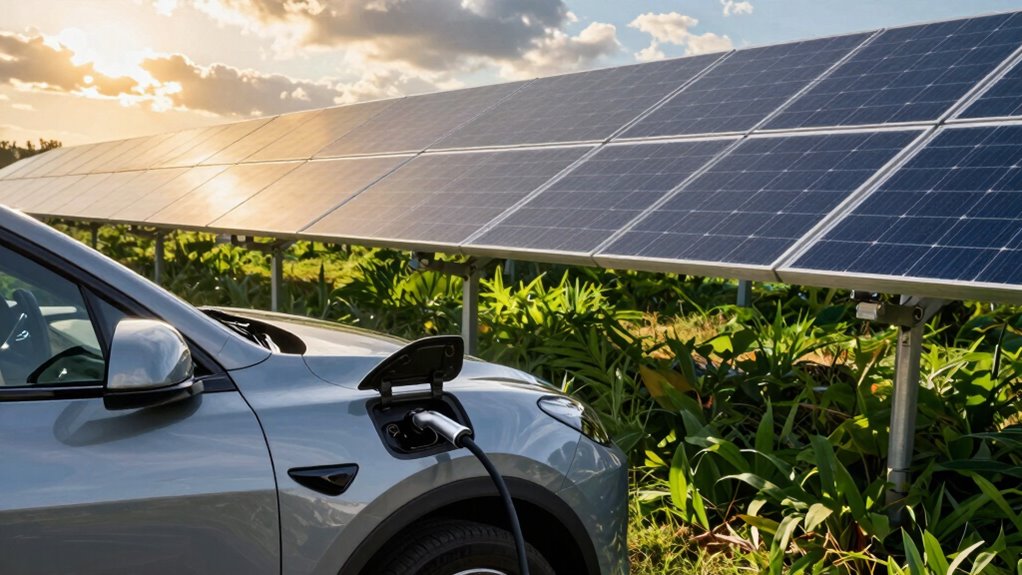

To align your EV charging with sunlight, schedule your charging during peak sunlight hours, typically late morning to early afternoon. Use smart chargers and energy management systems to automate this process and store excess solar energy in batteries for overnight use. Proper placement of your panels and regular system maintenance maximize efficiency, helping you power your EV sustainably and cost-effectively. If you want to discover more ways to optimize your solar-powered charging, keep exploring the options.
Key Takeaways
- Schedule EV charging during peak sunlight hours, typically late morning to early afternoon, for maximum solar energy utilization.
- Use smart chargers and energy management systems to automate charging times aligned with sunlight availability.
- Incorporate energy storage solutions like batteries to charge EVs overnight with stored solar energy.
- Optimize solar panel placement and orientation to enhance efficiency during peak sunlight periods.
- Integrate grid feedback features to balance solar energy use, surplus savings, and minimize reliance on grid power.
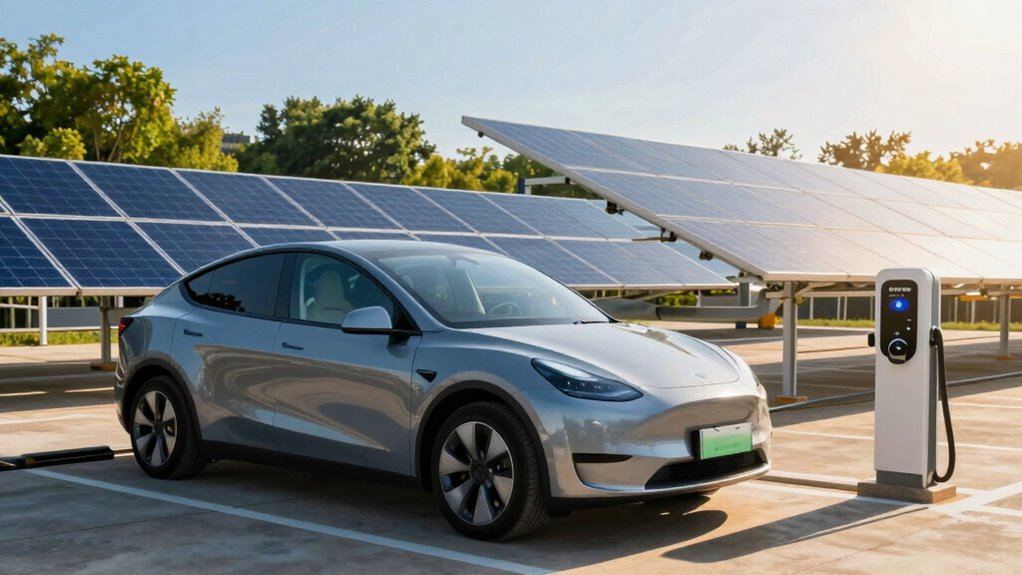
As electric vehicles become more popular, pairing them with solar power offers a sustainable way to charge your car while reducing energy costs. To make the most of this setup, understanding how solar panel efficiency and grid integration work together is essential. Solar panel efficiency determines how effectively your panels convert sunlight into electricity. High-efficiency panels produce more power in less space, meaning you can generate sufficient energy to charge your EV even on cloudy days or during shorter sunlight hours. When selecting panels, look for those with better efficiency ratings to maximize your solar investment and ensure your vehicle stays charged when you need it most.
Grid integration plays a crucial role in aligning your solar power generation with your EV charging schedule. It allows your solar system to communicate with the grid, enabling you to optimize when you draw power and when you feed excess energy back. During peak sunlight hours, your panels can generate surplus energy, which can be stored in batteries or sent back to the grid, earning you credits and reducing overall costs. In the evening or on cloudy days, you can draw from the grid or stored energy to keep your EV charged without relying solely on direct sunlight. This seamless interaction helps balance your energy use, making your charging process more efficient and cost-effective.
Timing is vital when syncing your EV charging with sunlight. If possible, set your charging to coincide with peak sunlight hours, typically between late morning and early afternoon, when your solar panels operate at maximum efficiency. Many smart chargers and energy management systems allow you to automate this process, ensuring your vehicle charges when your panels are producing the most power. This approach minimizes reliance on grid power during expensive peak rates and maximizes the use of clean solar energy. Additionally, if your home has a battery storage system, you can store excess solar energy generated during the day and use it to charge your EV overnight, further reducing your reliance on the grid and lowering energy costs. Understanding solar panel efficiency helps optimize your setup and get the best return on your investment.
To optimize your solar-powered EV charging setup, consider the placement and orientation of your panels for maximum efficiency, and invest in a good inverter to handle grid integration smoothly. Regular maintenance and monitoring of your system’s performance can help you identify any inefficiencies or issues, ensuring sustained high solar panel efficiency. By thoughtfully integrating solar power into your EV charging routine, you not only contribute to a greener environment but also enjoy lower energy bills and greater energy independence.
Frequently Asked Questions
How Does Weather Affect Solar-Powered EV Charging?
Weather impacts your solar-powered EV charging mainly through cloud cover and temperature effects. When clouds block sunlight, your solar panels produce less energy, possibly slowing your charging process. Additionally, extreme temperatures, whether hot or cold, can reduce panel efficiency. On hot days, panels might overheat, while cold temperatures can decrease their output. So, weather fluctuations directly influence how effectively you can charge your EV using solar energy.
What Are the Long-Term Financial Benefits of Solar EV Charging?
Coincidentally, investing in solar EV charging can offer significant long-term savings. You benefit from tax incentives that reduce upfront costs and lower installation expenses, making the switch more affordable. Over time, you’ll save on electricity bills, especially as energy prices rise. Plus, your commitment to renewable energy boosts your property’s value and minimizes your carbon footprint, making solar EV charging a smart, environmentally friendly financial choice.
Can Solar Panels Supply Enough Energy for Multiple EVS Simultaneously?
Yes, solar panels can supply enough energy for multiple EVs simultaneously if you have sufficient solar panel capacity. The key is to guarantee your system’s capacity meets your EV charging speed requirements, which depends on the total power output. By installing enough panels and possibly adding energy storage, you can efficiently charge multiple EVs at once, reducing your reliance on grid electricity and maximizing your solar investment.
How Do Seasonal Changes Impact Solar Charging Efficiency?
Seasonal variation markedly impacts your solar charging efficiency because sunlight hours decrease in winter and increase in summer. You’ll notice less energy generated during shorter days, so you might need to adjust your charging schedule accordingly. To maximize efficiency, consider installing a solar tracking system that follows the sun or optimize your system for the season. This way, you guarantee your EVs stay charged regardless of seasonal changes.
What Maintenance Is Required for Solar Charging Systems?
Think of your solar system as a thriving garden that needs regular care. You should clean panels to prevent dust and debris from blocking sunlight, like washing away weeds. Additionally, check your inverter to verify it’s functioning smoothly, like pruning a tree for healthy growth. Regular maintenance keeps your solar charging system efficient, ensuring it captures sunlight’s energy effortlessly, so your EV stays powered up without a hitch.
Conclusion
So, next time you plug in your EV, remember—you’re basically asking the sun to do all the heavy lifting. Why rely on dirty grids when sunlight’s just hanging around? Embrace solar charging and watch your carbon footprint shrink faster than your phone’s battery at 2%. After all, what’s more eco-friendly than letting the sun handle your ride? Just don’t forget to thank the sky when your car’s fully charged—after all, it’s doing all the work!