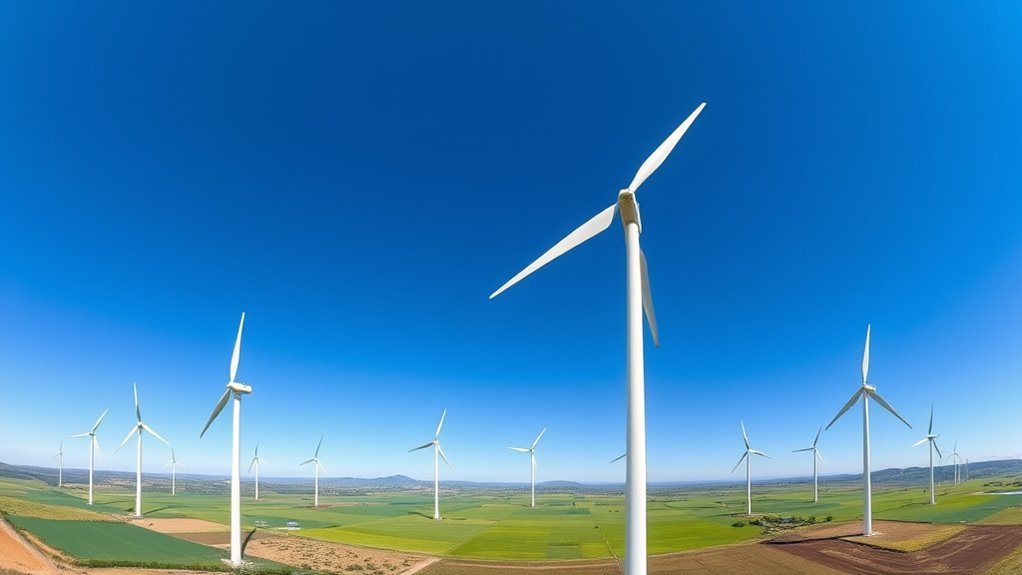

Wind energy captures the power of moving air with turbines to produce clean, renewable electricity. When the wind blows, it spins the turbine blades, turning kinetic energy into electrical energy through generators. Offshore and land-based turbines are designed to harness different environments, offering efficient ways to reduce reliance on fossil fuels. If you’re curious about how these systems work and their impact, exploring further reveals the innovative technology shaping our sustainable future.

Get garden gear delivered free with Prime
- Fast, free delivery on millions of items
- Prime Video, Amazon Music and more included
- Member-only deals all year
Key Takeaways
- Wind energy converts kinetic energy from moving air into electricity using wind turbines.
- Offshore turbines harness stronger, more consistent winds in ocean environments to maximize efficiency.
- Turbine design advancements reduce environmental impact and improve aesthetic appeal.
- Installing wind farms helps reduce reliance on fossil fuels and lowers greenhouse gas emissions.
- Wind energy is a renewable, sustainable power source supporting global efforts against climate change.
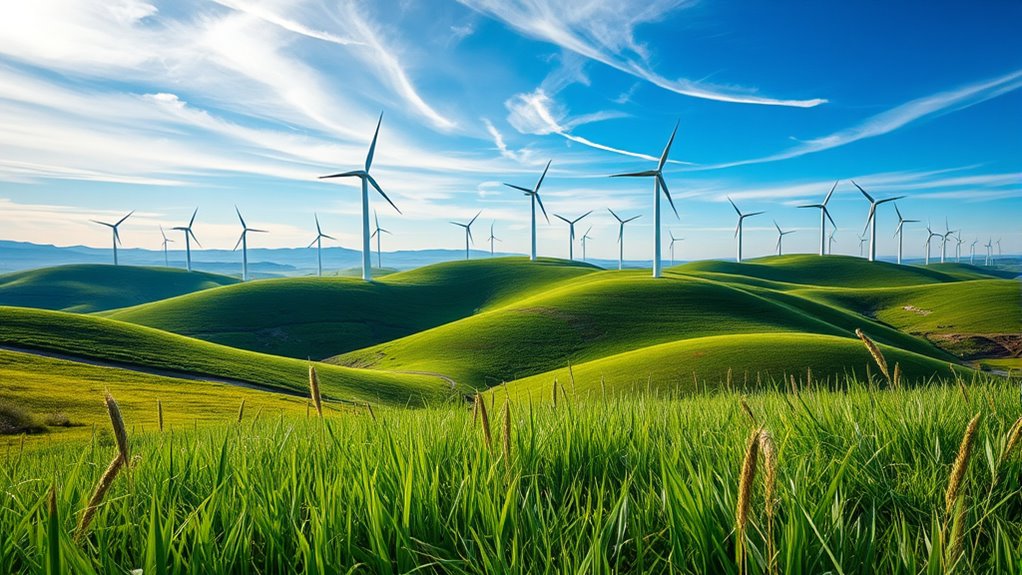
Have you ever wondered how wind can be transformed into clean, renewable energy? It’s a fascinating process that involves towering wind turbines capturing the kinetic energy of moving air. These massive structures are typically placed on land or offshore, where wind flows most consistently. While land-based turbines are more visible and accessible, offshore development presents unique advantages and challenges. Offshore turbines are installed in ocean or sea environments, often far from coastal towns, to harness stronger, more reliable winds. This placement minimizes visual clutter and reduces noise concerns for nearby communities, but it also raises questions about their aesthetic impact. Some people find offshore wind farms visually striking, creating a modern seascape of giant blades turning gracefully against the horizon. Others, however, argue that these installations disrupt natural views and marine ecosystems, sparking debates about their visual and environmental footprint. Despite differing opinions, offshore development allows for larger turbines and more extensive projects, boosting energy output considerably. The ocean’s open space and higher wind speeds make offshore wind farms highly efficient, but building and maintaining these installations demand specialized equipment and expertise. The process involves laying underwater cables, constructing foundations, and installing turbines on floating or fixed platforms, all designed to withstand harsh maritime conditions. These efforts contribute to the growth of renewable energy sources, reducing reliance on fossil fuels.
From your perspective, embracing offshore wind energy means supporting a cleaner future while weighing the aesthetic and environmental implications. While the turbines’ sleek, modern design can be seen as a symbol of technological progress, their presence in the ocean can alter scenic vistas and impact marine habitats. Yet, the benefits often outweigh these concerns, especially as offshore development continues to evolve with more eco-friendly and less intrusive designs. As technology advances, turbines are becoming quieter, more visually appealing, and less invasive. The key is balancing the need for sustainable energy production with the preservation of natural beauty and ecosystems. You might appreciate how offshore wind farms generate substantial amounts of electricity without producing air pollution or greenhouse gases. This sustainable energy source is essential in combating climate change and ensuring energy security. So, as you consider the future of wind energy, recognize that offshore development plays an important role, pushing the boundaries of renewable energy while sparking discussions about aesthetic impact and environmental responsibility. With ongoing innovation, wind energy has the potential to become a seamless part of our landscape—powerful, efficient, and increasingly harmonious with nature.
As an affiliate, we earn on qualifying purchases.
Frequently Asked Questions
How Does Wind Energy Compare Economically to Fossil Fuels?
You might wonder how wind energy stacks up against fossil fuels economically. Generally, wind offers better cost efficiency over time because it has lower operational costs and no fuel expenses. Plus, as technology advances, wind becomes more market competitive, making it an attractive option for investors. While initial setup can be costly, the long-term savings and environmental benefits often make wind energy a more economically sound choice compared to fossil fuels.
What Are the Environmental Impacts of Wind Turbine Manufacturing?
When considering the environmental impacts of wind turbine manufacturing, you should note that it involves some habitat disruption and produces life cycle emissions. During manufacturing, land use and resource extraction can disturb local habitats. Although these impacts are significant, they are generally lower than fossil fuel extraction and combustion. You can help by supporting sustainable practices and innovations that reduce these environmental effects over the turbines’ lifespan.
How Can Wind Energy Be Integrated Into Existing Power Grids?
Imagine your power grid as a busy river that needs steady flow. To integrate wind energy, you act like a skilled dam operator, balancing flow with grid stability. You can do this by upgrading infrastructure, utilizing energy storage, and implementing smart grid technologies. These steps guarantee wind power’s unpredictable gusts don’t disrupt supply, allowing the energy to seamlessly flow into the grid, providing reliable, clean electricity for all.
What Advancements Are Being Made in Offshore Wind Technology?
Offshore wind technology is advancing quickly, with innovations like larger offshore turbines boosting efficiency. Floating platform development allows turbines to be placed in deeper waters, expanding potential sites beyond shallow coasts. These offshore turbine innovations make wind farms more reliable and cost-effective, enabling you to harness stronger, steadier winds. As a result, offshore wind energy is becoming a crucial part of sustainable power, driving cleaner energy solutions worldwide.
How Do Wind Patterns Vary Globally and Affect Energy Production?
You should know that global wind patterns vary considerably, influenced by regional climate effects like temperature differences and landforms. These patterns determine where wind energy is most effective, so you’ll find higher energy production in areas with consistent, strong winds like coastal regions or open plains. Understanding these variations helps optimize wind turbine placement, ensuring you maximize energy output based on local wind conditions and regional climate influences.
Conclusion
So, after all this talk of harnessing wind, you might think we’re on the brink of a clean energy revolution. But with the world still relying heavily on fossil fuels and wind turbines facing their own challenges, it’s almost funny how we chase the breeze. Maybe, in the end, the biggest irony is that we’re trying to catch the wind while sometimes forgetting how unpredictable and fleeting it can be. Nature keeps us humble, doesn’t it?
Fall yard work Picks
leaf blowers
As an affiliate, we earn on qualifying purchases.