
Rainwater harvesting offers you a sustainable and eco-friendly way to supply water for your greenhouse, reducing reliance on municipal sources. By installing filtration systems and proper storage tanks, you guarantee clean water for your plants, promoting healthy growth and higher productivity. Additional devices like first-flush diverters improve water quality further, while professional guidance helps optimize your setup. Keep exploring to discover how to implement these systems and maximize their benefits for your greenhouse.

Get garden gear delivered free — and shop member deals
- Fast, free delivery on millions of items
- Access to Prime Big Deal Days deals on October 6–7
- Prime Video, Amazon Music and more included
Key Takeaways
- Implement rainwater harvesting systems to ensure a sustainable, eco-friendly water supply for greenhouse irrigation.
- Install multi-stage filters and mesh screens to maintain water purity and protect sensitive plants.
- Use durable storage tanks with proper placement and regular maintenance to prevent contamination and maximize collection.
- Incorporate first-flush diverters to improve water quality by diverting initial runoff debris.
- Consult professionals to optimize system design, filtration, and storage for maximum efficiency and plant health.

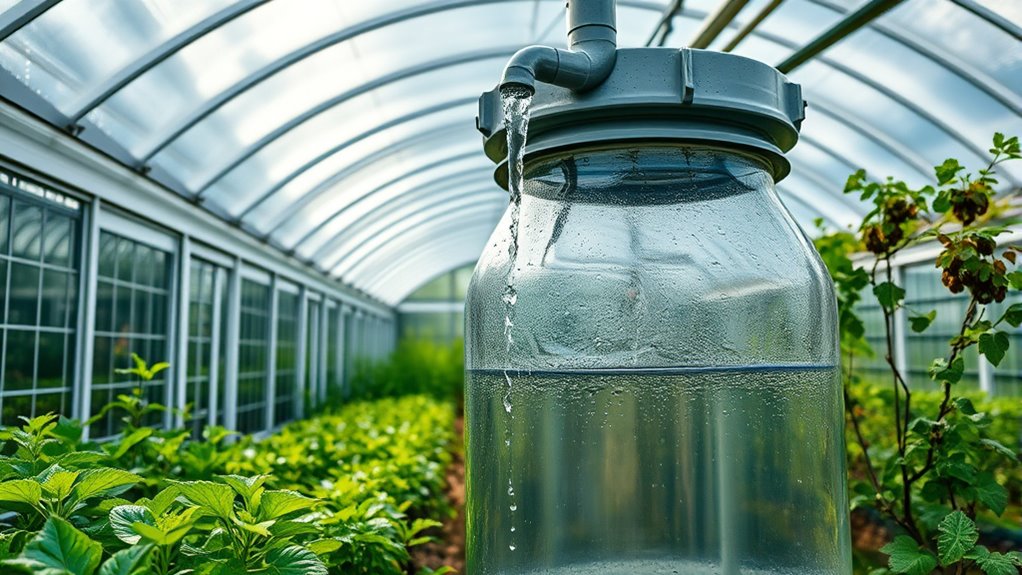
Have you ever considered how rainwater harvesting can benefit your greenhouse? Collecting rainwater is a smart way to guarantee a sustainable water supply while reducing your reliance on municipal sources. When properly managed, rainwater harvesting provides clean, natural water that can substantially enhance your greenhouse’s productivity. The first step is understanding water filtration. Rainwater isn’t just free; it’s also relatively pure when collected directly from your roof, but it can pick up debris, dust, and other contaminants. Installing a suitable filtration system guarantees that the water you use is free from particles that could clog your irrigation systems or harm your plants. Simple mesh screens or more advanced filter units can remove leaves, dirt, and other larger particles, providing a cleaner water supply. For even better results, consider integrating a multi-stage filtration process that can eliminate bacteria or chemical residues, especially if you’re growing sensitive plants. Once filtered, the next essential aspect is rainwater storage. You’ll want to design a storage system that captures and holds enough water to meet your greenhouse’s needs, particularly during dry spells. Storage tanks should be made from durable, non-toxic materials to prevent contamination, and positioned in a way that maximizes rain collection while minimizing evaporation losses. Proper placement and coverage help keep the stored water clean and accessible. Remember, good rainwater storage isn’t just about capacity; it’s also about maintenance. Regularly inspecting and cleaning your tanks prevents algae growth and mosquito breeding, ensuring your water remains fresh and safe for your plants. You might also consider installing a first-flush diverter—a device that diverts the initial, dirt-laden runoff away from your storage tank—so you only collect the cleaner rainwater. This simple addition can greatly improve the quality of your stored water. Rainwater harvesting isn’t just environmentally friendly; it can also be economically advantageous. Using stored rainwater reduces your dependence on municipal water, lowering your bills and promoting sustainability. Plus, when you combine effective water filtration with well-designed rainwater storage, you create a reliable, high-quality water source that supports healthy plant growth and enhances your greenhouse’s overall efficiency. Additionally, incorporating professional expertise can optimize your system’s design and functionality. By integrating these elements into your setup, you guarantee that your plants receive the best water possible, free from harmful impurities, while also contributing to a more eco-conscious operation. So, if you’re looking for a practical way to boost your greenhouse’s sustainability, start with a solid rainwater harvesting system—focused on proper filtration and strategic storage—and watch your plants thrive with naturally sourced water.
rainwater harvesting system for greenhouse
As an affiliate, we earn on qualifying purchases.
As an affiliate, we earn on qualifying purchases.
Frequently Asked Questions
How Much Rainwater Can a Typical Greenhouse Harvesting System Collect Annually?
You can typically collect anywhere from 1,000 to 10,000 gallons of rainwater annually, depending on your greenhouse’s size and local rainfall. The actual rainwater volume depends on collection efficiency, which varies with system design and maintenance. To maximize your harvest, guarantee your gutters and filters are clean and positioned ideally. Regularly check your system to improve collection efficiency and capture the most rainwater possible for your greenhouse needs.
What Are the Initial Costs Involved in Setting up Rainwater Harvesting for a Greenhouse?
Setting up a rainwater harvesting system for your greenhouse involves initial costs that include equipment expenses like gutters, storage tanks, filters, and pumps. Conduct a thorough cost analysis to understand these expenses better. You might also need to budget for installation and permits. While upfront costs vary based on system size and complexity, investing in quality equipment can save you money long-term by reducing water bills and ensuring reliable water supply for your greenhouse.
Are There Specific Filters Required to Keep Rainwater Suitable for Greenhouse Use?
Yes, you need specific filters for rainwater filtration to guarantee water quality standards are met for your greenhouse. You should use first-flush diverters to remove debris and coarse filters to trap larger particles. Additionally, installing fine mesh or UV sterilization helps eliminate pathogens and contaminants. Regular maintenance of these filters is essential to keep the rainwater suitable for plant growth and to prevent clogging or waterborne diseases.
How Often Should the Rainwater Harvesting System Be Maintained?
Think of your rainwater harvesting system like a car; regular check-ups keep it running smoothly. You should perform a system check at least quarterly and after heavy storms, inspecting filters, gutters, and tanks. Replace worn-out components promptly to prevent issues. Just as neglecting car maintenance leads to breakdowns, infrequent upkeep can jeopardize water quality, so stay diligent to ensure your system remains effective and your greenhouse thrives.
Can Rainwater Harvesting Reduce Overall Greenhouse Energy Consumption?
Yes, rainwater harvesting can boost your greenhouse’s energy efficiency by reducing the need for energy-intensive water treatments and pumping. It promotes water conservation, lowering your overall water usage and saving on utility costs. By utilizing harvested rainwater, you decrease reliance on external water sources, which can further cut energy consumption. This sustainable approach not only benefits your greenhouse’s operational efficiency but also supports eco-friendly practices.
Conclusion
By harnessing rainwater for your greenhouse, you’re opening a shimmering treasure chest of nature’s gift. Every drop becomes an essential heartbeat that nurtures your plants and fuels your passion. Think of it as dancing with the clouds, turning grey skies into a lush, green symphony beneath your fingertips. With rainwater harvesting, you’re not just growing plants—you’re cultivating a greener, more sustainable future, one rain shower at a time.
Fall yard work Picks
leaf blowers
As an affiliate, we earn on qualifying purchases.