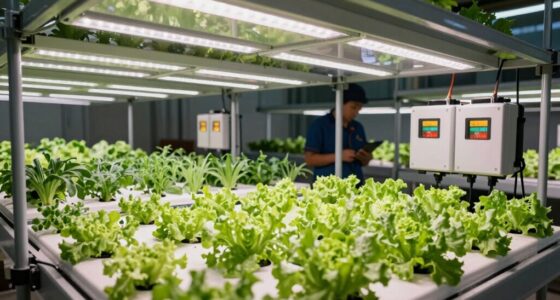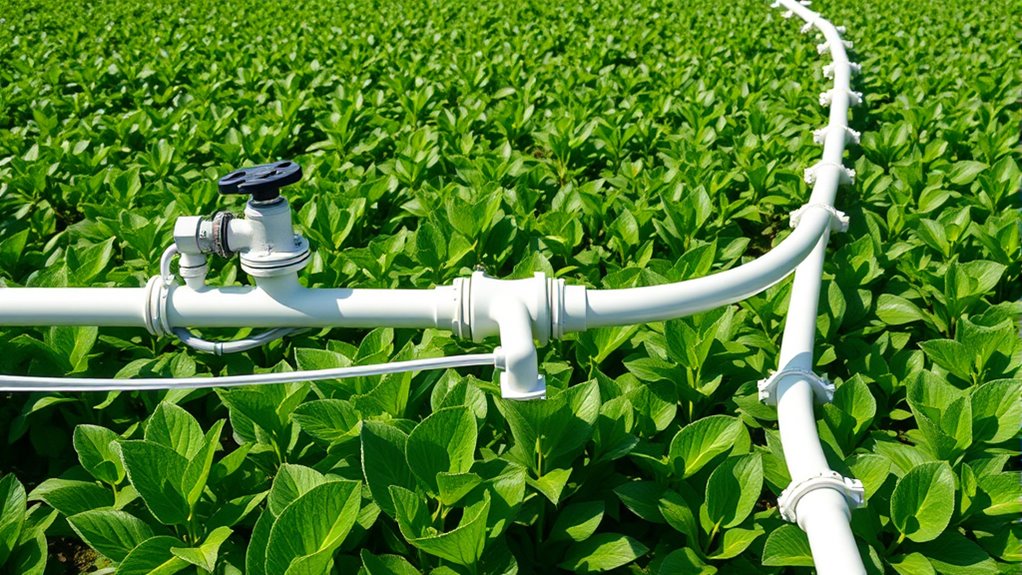

A fertigation system combines key components like filters, pressure regulators, piping, valves, and controllers to deliver water and nutrients efficiently. You’ll lay out drip lines with carefully placed emitters for even watering and nutrient distribution directly at the plant roots. The fertilizer injection unit meters nutrients into the irrigation flow, allowing for precise timing and amounts. Proper planning guarantees each part works together smoothly, maximizing crop health. If you want to understand how these elements integrate seamlessly, keep exploring further.
Key Takeaways
- Fertigation systems combine irrigation and fertilization to deliver water and nutrients efficiently directly to plant roots.
- Essential components include filters, pressure regulators, piping networks, valves, controllers, and fertilizer injection units.
- Drip irrigation layouts strategically position emitters for uniform water distribution and targeted nutrient delivery.
- Fertilizer injection units precisely meter nutrients into the irrigation water, adjustable based on crop needs.
- Proper field mapping, system design, and automation optimize performance, sustainability, and crop productivity.

Have you ever wondered how modern farmers guarantee crops receive the perfect balance of water and nutrients? The secret lies in fertigation systems, which combine irrigation and fertilization into a streamlined process. At the heart of this setup is a network of components designed to deliver precise amounts of water and nutrients directly to plant roots. One critical element is drip irrigation, which provides a controlled, slow release of water and nutrients right at the base of each plant. This targeted approach minimizes waste and ensures that roots absorb what they need for maximum growth.
Fertigation systems deliver precise water and nutrients directly to plant roots, optimizing growth and resource efficiency.
The drip irrigation lines are strategically laid out across the field, with emitters positioned to deliver water evenly. This layout not only conserves water but also enhances nutrient management, allowing you to tailor the delivery based on crop requirements. The system typically includes filters to prevent clogging of the emitters, ensuring consistent flow. A pressure regulator maintains the ideal pressure throughout the network, preventing damage and promoting uniform distribution. These components work together to create a reliable, efficient irrigation system that integrates seamlessly with fertilization.
Fertigation systems also incorporate a fertilizer injection unit, which is essential for delivering nutrients directly through the irrigation water. This device precisely meters fertilizer into the water supply, allowing for real-time nutrient management. You can adjust the injection rates depending on crop growth stages, weather conditions, or soil nutrient levels. This flexibility is indispensable for maximizing yields and minimizing fertilizer runoff, which can harm the environment. The fertilization process becomes more efficient and controlled, reducing the risk of over-application or deficiencies.
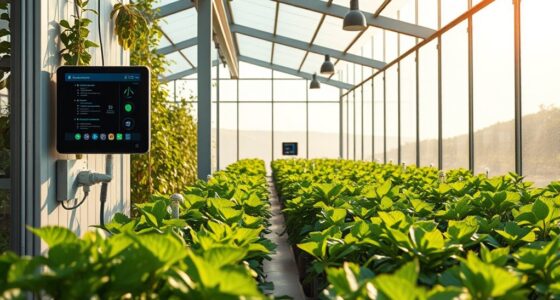
Additionally, understanding the importance of a reliable power source can help ensure consistent operation of the fertigation system, especially when automation is involved. The layout of a fertigation system needs careful planning to maximize performance. It starts with mapping out the field, identifying the most effective placement of drip lines, and designing a piping network that ensures uniform coverage. Valves and controllers are installed at key points to automate the process, making it easier to operate and monitor. These controls can be programmed to deliver water and nutrients at specific times and rates, aligning with the crop’s growth cycle.
In essence, a well-designed fertigation system combines sophisticated components—drip irrigation, fertilizer injectors, filters, and controllers—laid out thoughtfully to maximize efficiency. It allows you to manage water and nutrient delivery precisely, promoting healthy crops while conserving resources. By understanding the layout and components involved, you can implement a fertigation system that enhances productivity and sustainability in your farming operations.

EZ-FLO 3/4 Gallon Hose‑Bib & Drip Fertilizer Injector | Low‑Pressure Garden Feeder for On/Off Flow & Drip Irrigation | EZ 2005‑HB
- Universal hose-thread fit: Fits standard ¾-inch GHT faucets and hoses
- Low-pressure operation: Designed for pressures up to 50 psi
- Compatible with all liquid fertilizers: Handles organic teas, micronutrients, and supplements
As an affiliate, we earn on qualifying purchases.
As an affiliate, we earn on qualifying purchases.
Frequently Asked Questions
How Do Fertigation Systems Adapt to Different Crop Types?
You can adapt fertigation systems to different crop types by adjusting nutrient delivery and irrigation settings to match crop diversity. Using flexible irrigation controls allows you to tailor watering schedules and fertilizer application rates, ensuring ideal growth for each crop. This adaptability helps you maximize yield, conserve resources, and meet specific crop needs, making your fertigation system versatile and efficient across various agricultural practices.
What Maintenance Is Required for Fertigation Components?
You need to regularly maintain your fertigation components by cleaning them to prevent clogging and guarantee efficient nutrient delivery. Check for leaks frequently and perform leak detection to avoid wastage and system damage. Inspect filters, valves, and injectors for buildup or damage, replacing parts as needed. Keeping your system clean and leak-free helps maintain peak performance and prolongs the lifespan of your fertigation equipment.
How Does Automation Improve Fertigation Efficiency?
Automation boosts fertigation efficiency by up to 30%, helping you save water and nutrients. You’ll benefit from sensor integration that continuously monitors soil moisture, nutrient levels, and crop needs. Data analytics then process this information in real time, allowing you to adjust fertilizer application precisely. This targeted approach minimizes waste, maximizes yields, and reduces operational costs, making your fertigation system smarter, more responsive, and ultimately more effective.
Can Fertigation Systems Operate in Remote or Off-Grid Areas?
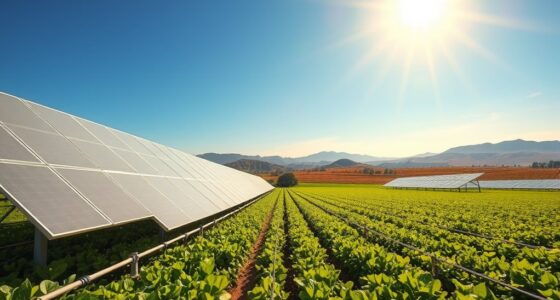
Yes, fertigation systems can operate in remote or off-grid areas by using solar power to run pumps and controls, making them energy-independent. Incorporate water recycling to conserve water and reduce reliance on external sources. With solar energy, you can maintain continuous operation, and water recycling guarantees sustainability. These systems are adaptable, allowing you to efficiently fertilize crops even in isolated locations without grid access or traditional power sources.
What Are the Environmental Impacts of Fertigation Systems?
You should consider that fertigation systems can impact the environment through runoff, which may carry excess nutrients into nearby water sources, causing pollution. Additionally, if not managed properly, they can increase soil salinity over time, harming plant health. To minimize these effects, you need to monitor nutrient levels closely, use proper irrigation techniques, and implement runoff management strategies. This way, you protect ecosystems while maintaining crop productivity.
Conclusion
As you design your fertigation system, think of it as planting a seed of growth and abundance. Each component works like roots and tendrils, reaching deep and spreading wide to nourish your crops. When laid out thoughtfully, your system becomes a thriving garden of harmony and efficiency. Remember, with careful planning, you’re cultivating not just plants, but a future ripe with promise—an enduring symbol of growth born from your hands.