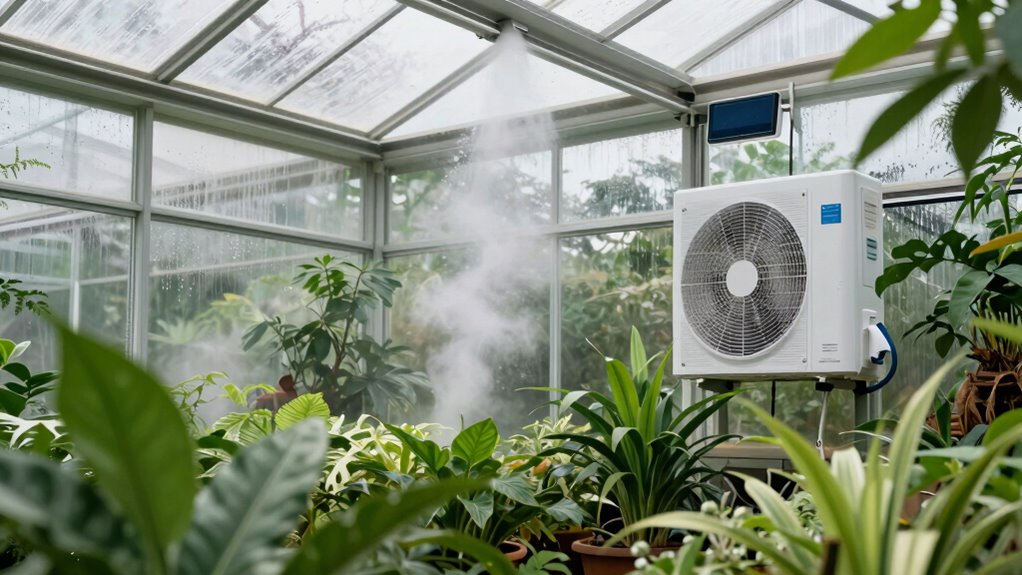

To stop condensation before it starts, you should actively control your greenhouse’s humidity levels using evaporative cooling systems. These systems work by passing warm, moist air through water-saturated pads, cooling the air while reducing humidity, which helps prevent condensation from forming on surfaces. Regularly monitor environmental conditions with sensors and automate your system to maintain ideal moisture levels. Keeping humidity in check creates a healthier, mold-free environment—if you want to learn more, keep exploring effective dehumidification strategies.

Get garden gear delivered free — and shop member deals
- Fast, free delivery on millions of items
- Access to Prime Big Deal Days deals on October 6–7
- Prime Video, Amazon Music and more included
Key Takeaways
- Implement evaporative cooling systems to naturally reduce humidity and prevent condensation buildup.
- Monitor environmental humidity and temperature levels with sensors for timely adjustments.
- Use automated controls to activate dehumidification methods before condensation occurs.
- Maintain proper airflow and ventilation to keep surfaces dry and minimize moisture accumulation.
- Regularly inspect and manage water sources and plant watering to avoid excess moisture that promotes condensation.
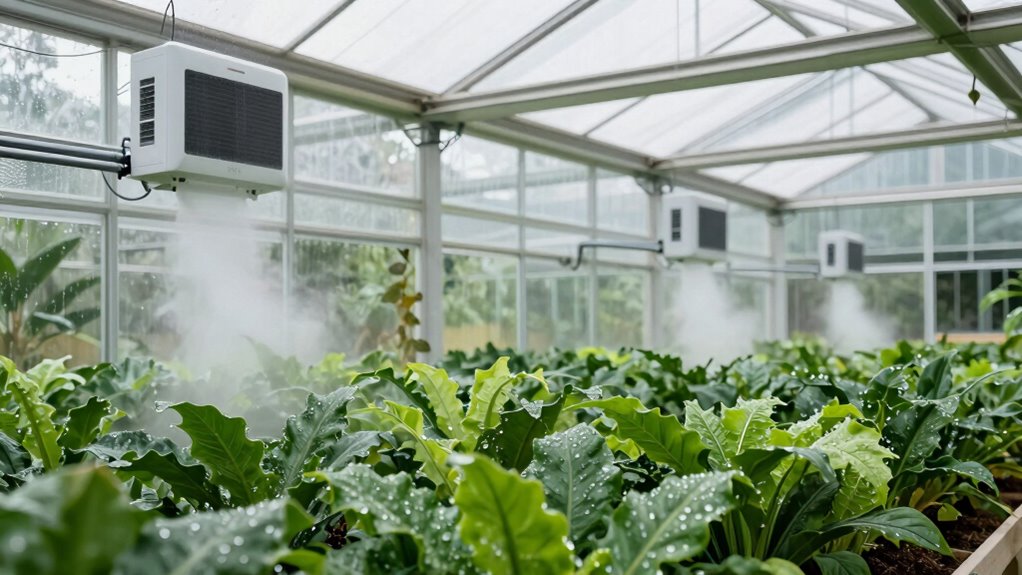
Maintaining proper humidity levels in a greenhouse is essential for healthy plant growth, and dehumidification plays a critical role in this process. When humidity becomes too high, it creates an environment conducive to mold, mildew, and disease, which can severely damage your crops. To prevent this, you need effective humidity control strategies that keep moisture levels balanced and prevent condensation. One key method is utilizing evaporative cooling, which naturally reduces humidity by introducing drier air into the greenhouse. This process works by passing warm, moist air through water-saturated pads, where the evaporation absorbs heat and lowers the air’s humidity. As a result, evaporative cooling not only cools your greenhouse but also helps maintain ideal humidity levels, creating a healthier environment for your plants.
Evaporative cooling systems are particularly beneficial because they are energy-efficient and environmentally friendly. Unlike traditional air conditioning units, they don’t rely on refrigerants or complex mechanical parts, which makes them easier to maintain and more cost-effective over time. By integrating evaporative cooling with humidity control systems, you can actively manage moisture levels without over-drying the air or allowing excessive humidity to build up. This balance is essential because too much moisture fosters pests and diseases, while too little can cause stress and dehydration in plants. With proper humidity control, you create a stable microclimate that supports vigorous growth and high yields.
Additionally, controlling humidity through evaporative cooling helps manage condensation, which often results from temperature fluctuations inside the greenhouse. When warm, moist air contacts cooler surfaces, water droplets form, leading to condensation problems that can damage plants and promote fungal growth. By lowering the overall humidity, evaporative cooling reduces the likelihood of condensation forming on leaves, benches, and structural surfaces. This is especially important during cold mornings or sudden temperature drops, when condensation tends to be most problematic. Incorporating humidity sensors and automation can further optimize this process for consistent conditions.
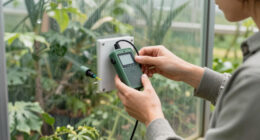
To maximize the benefits of evaporative cooling for humidity control, you should monitor environmental conditions closely. Use sensors to track humidity and temperature levels, and set your systems to operate automatically when thresholds are exceeded. This proactive approach ensures your greenhouse maintains a consistent, ideal environment at all times. Proper humidity control through evaporative cooling not only prevents condensation but also promotes healthy plant health, reduces pest issues, and improves overall productivity. When you master these techniques, you’ll create a thriving greenhouse environment that supports your plants’ growth from the moment they sprout until harvest.
As an affiliate, we earn on qualifying purchases.
Frequently Asked Questions
What Are the Energy Costs Associated With Greenhouse Dehumidification?
The energy costs of greenhouse dehumidification depend on your system’s energy consumption and size. Typically, you’ll see increased electricity bills as you run dehumidifiers regularly. Conducting a cost analysis helps you estimate expenses based on usage hours and efficiency. While initial setup might be costly, efficient models can reduce long-term energy costs, making dehumidification a worthwhile investment to prevent condensation and protect your crops.
How Does Dehumidification Affect Plant Health and Growth?
Dehumidification positively impacts plant health by maintaining humidity balance, which prevents mold and disease. When you control humidity, you enhance plant vitality, promoting stronger growth and better yields. By avoiding excessive moisture, your plants can breathe easier, reducing stress and increasing resilience. Proper dehumidification creates an ideal environment, ensuring your plants thrive and reach their full potential, making your greenhouse more productive and healthy overall.
Can Dehumidification Systems Be Automated for Optimal Performance?
Yes, dehumidification systems can be automated for ideal performance. You can use automated controls and sensor integration to monitor humidity levels constantly. These sensors detect when humidity rises above perfect levels, triggering the dehumidifiers to activate automatically. This guarantees consistent conditions, reduces manual adjustments, and prevents condensation before it starts. Automation helps maintain a stable environment, supporting healthy plant growth and efficient greenhouse management.
What Are the Maintenance Requirements for Dehumidifiers in Greenhouses?
Sure, keeping your dehumidifier happy is simple—just clean the humidifier filters regularly to prevent clogging and guarantee efficiency. Don’t forget drain maintenance; you wouldn’t want that sneaky water to back up and cause chaos. Check these parts weekly, and you’ll avoid unexpected breakdowns. After all, a well-maintained dehumidifier is like a well-behaved plant—thriving and trouble-free, making your greenhouse the envy of all.
Are There Eco-Friendly Dehumidification Options Available?
Yes, eco-friendly dehumidification options are available. You can choose solar-powered dehumidifiers that use renewable energy, reducing your carbon footprint. Biodegradable desiccants are another sustainable choice, as they break down naturally and avoid harmful chemicals. These options help you maintain ideal humidity levels in your greenhouse while prioritizing environmental health. By selecting eco-friendly technologies, you support sustainable agriculture and protect the environment for future growth.
Conclusion
By implementing effective greenhouse dehumidification, you can prevent condensation and protect your crops. Did you know that high humidity levels can reduce plant growth by up to 30%? Controlling moisture not only safeguards your plants but also improves overall yield and quality. Don’t wait for condensation to become a problem—start managing humidity today. With the right systems in place, you’ll create a ideal environment that promotes healthy, thriving plants all year round.
Fall Picks
fall essentials
As an affiliate, we earn on qualifying purchases.