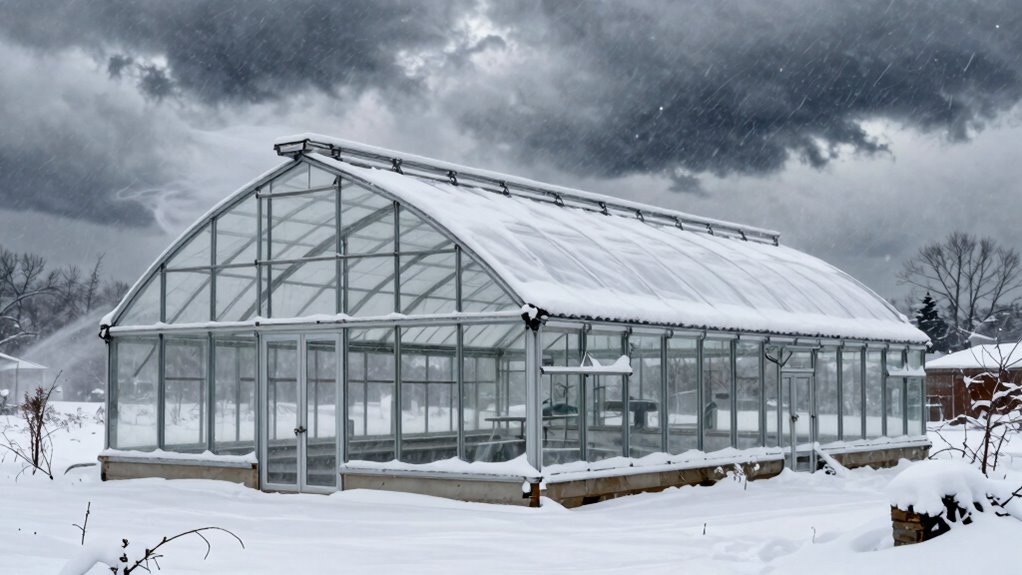

When buying a greenhouse, consider your local wind and snow loads to guarantee it won’t get damaged over time. Strong winds can stress the frame and glazing, so choose sturdy, wind-resistant designs and durable materials like galvanized steel or weather-resistant plastics. Heavy snowfalls mean you need a structure that can handle added weight, with reinforced support and proper drainage. Paying attention to these factors helps you pick a resilient greenhouse that lasts. Keep exploring to learn how to optimize your choice further.

Get garden gear delivered free — and shop member deals
- Fast, free delivery on millions of items
- Access to Prime Big Deal Days deals on October 6–7
- Prime Video, Amazon Music and more included
Key Takeaways
- Assess local wind intensity to select wind-resistant framing and glazing materials for durability.
- Incorporate snow load data to ensure structural support can handle seasonal snowfall.
- Choose reinforced materials like galvanized steel to withstand wind pressure and snow weight.
- Design for proper ventilation to reduce snow accumulation and improve wind resistance.
- Prioritize climate-specific features to enhance greenhouse resilience and long-term performance.
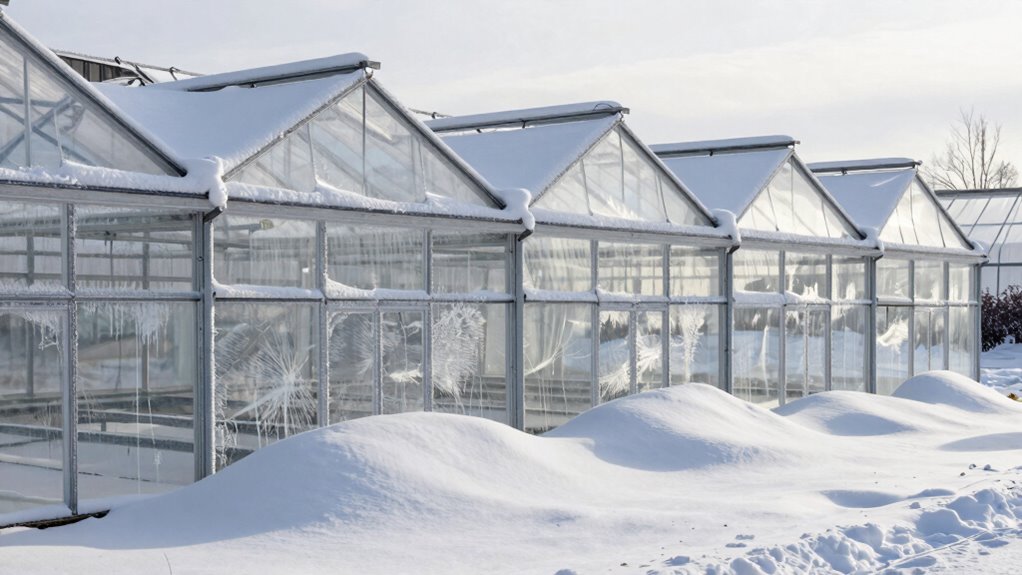
When purchasing a greenhouse, understanding the local wind and snow loads is essential for ensuring its durability and safety. These environmental factors directly influence the design, materials, and overall structure of your greenhouse. Wind loads, especially in areas prone to strong gusts, can stress the frame and glazing, so you need to prioritize a sturdy construction that can withstand such forces. Snow loads, on the other hand, determine how much weight your greenhouse must support during heavy snowfall seasons. Ignoring these factors can lead to structural failure, risking your plants and investment.
As you consider your options, think about how wind and snow loads will impact your greenhouse’s ventilation efficiency. High wind areas require a design that minimizes air resistance and prevents damage during storms. Proper ventilation not only helps regulate temperature and humidity but also reduces the risk of snow accumulation on the structure. An effective ventilation system works best when the greenhouse is built with materials that can endure harsh weather conditions without warping or cracking. This means selecting materials with high durability standards, such as reinforced polycarbonate or galvanized steel, which resist corrosion and structural fatigue caused by frequent wind and snow exposure. Additionally, considering the local climate data** can help you select the most appropriate design features to optimize resilience and efficiency. Incorporating climate-specific design considerations can further enhance your greenhouse’s ability to withstand environmental stresses. It is also beneficial to evaluate how material durability** impacts long-term performance in your specific climate.
Material durability plays a crucial role in ensuring your greenhouse remains functional over time. When facing high wind loads, lightweight yet strong materials help prevent bending or breaking. For snowy regions, you’ll want materials that can handle the added weight without compromising integrity. Metal frames coated with weather-resistant finishes or sturdy plastics reinforced with internal supports are excellent choices. Also, check whether the glazing material offers sufficient resistance to wind-driven debris and snow pressure. The more durable your materials, the less likely you’ll encounter costly repairs or replacements down the line. Furthermore, understanding the impact of climate conditions on material longevity can guide you in selecting the most suitable options for long-term durability. A thorough assessment of wind and snow load data can greatly improve your decision-making process for a resilient greenhouse structure.
As an affiliate, we earn on qualifying purchases.
Frequently Asked Questions
How Do Wind and Snow Loads Vary by Geographic Location?
You should consider how wind and snow loads vary by geographic location for climate adaptation and structural resilience. In windy areas, like coastal regions, you’ll need a sturdy, wind-resistant greenhouse design. In snowy zones, make certain your structure can handle heavy snow loads. Recognizing these regional differences helps you select the right materials and design features, making your greenhouse more durable and better suited to withstand local weather conditions.
What Materials Are Best for High Wind and Snow Regions?
If wind and snow threaten your greenhouse, opt for materials with high durability and excellent wind resistance, like galvanized steel frames or reinforced polycarbonate panels. These materials withstand harsh conditions without bending or breaking, keeping your plants safe. Imagine a sturdy structure standing tall against fierce winds and heavy snow, ensuring your greenhouse remains intact and functional, giving you peace of mind even in the most extreme weather.
How Often Should Greenhouse Structural Assessments Be Performed?
You should perform greenhouse structural assessments at least every year, especially if you’re in high wind or snow load areas. Regular checks guarantee foundation stability and that the structure can withstand ventilation effects during storms. After severe weather, inspect for damage or weaknesses. Consistent evaluation helps you catch issues early, maintaining safety and durability, and making sure your greenhouse remains resilient against changing wind and snow conditions.
Are There Specific Design Standards for Snow and Wind Resistance?
Think of designing your greenhouse like building a fortress against nature’s surprises. Yes, specific standards exist, such as ASCE 7 and local building codes, which set wind and snow load parameters. These standards help make certain your greenhouse’s ventilation efficiency and insulation performance are optimized against these forces. Following them protects your investment and ensures your plants thrive, no matter what the weather throws at you.
How Do Seasonal Changes Affect Load Requirements for Greenhouses?
Seasonal changes, like temperature and humidity fluctuations, directly impact load requirements for your greenhouse. During winter, snow accumulation and wind speeds tend to increase, requiring stronger structural support. In summer, higher temperatures and humidity can cause materials to expand or contract, affecting stability. You should consider these seasonal variations to guarantee your greenhouse is resilient year-round, adjusting design features like ventilation and reinforcement accordingly for peak performance.
Conclusion
When weighing wind and snow loads, your greenhouse’s durability depends on diligent, deliberate decisions. Don’t disregard design details or diminish the danger of heavy loads; instead, prioritize proper planning and preparation. By balancing building basics with brave, bold choices, you guarantee your greenhouse can withstand winter’s whims. Remember, smart sizing, sturdy structure, and strategic stance safeguard your greenhouse, securing your growing goals against nature’s unpredictable assault. Stay savvy, stay strong, and let your greenhouse grow gracefully through every gust and snowfall.
Fall Picks
fall essentials
As an affiliate, we earn on qualifying purchases.