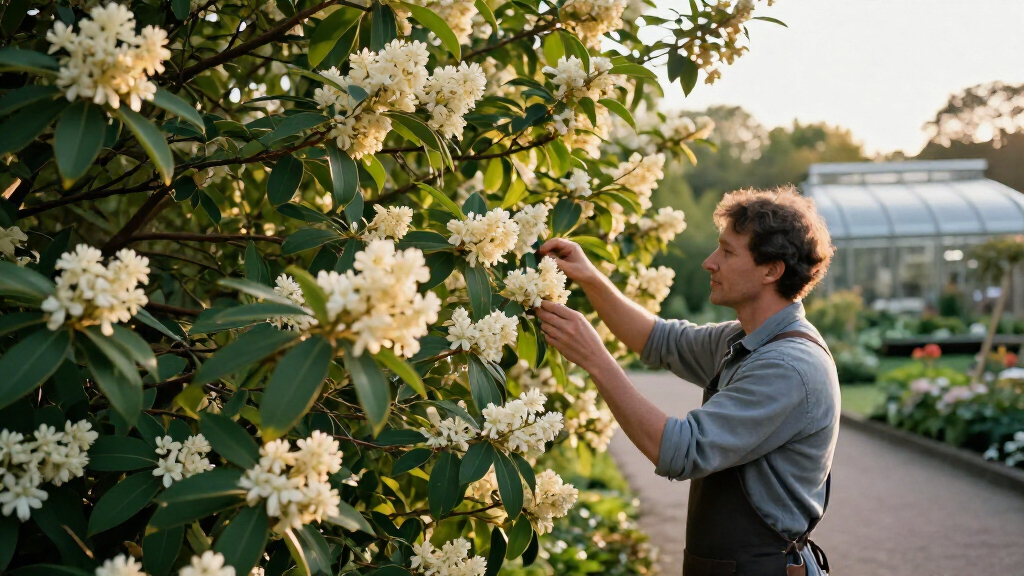
The best flowering evergreen trees combine lasting foliage with seasonal blooms, but the right choice depends on your climate, available space, and patience for a young plant to fill in. I rank the Little Gem Magnolia, 4–5 ft as the best overall for its useful starting size and compact habit, while the Bracken’s Brown Magnolia is a stronger fit for a larger, more established specimen. For warm-climate gardens that want vivid flowers, the Red Cluster Bottlebrush offers a distinct alternative to magnolias. The main tradeoffs are mature size, regional hardiness, and whether you want one specimen tree or several young plants. Read on for the full comparison and a guide to matching each option to your garden.

Get garden gear delivered free with Prime
- Fast, free delivery on millions of items
- Prime Video, Amazon Music and more included
- Member-only deals all year
Complete the kit


Key Takeaways
- The 4–5 ft Little Gem Magnolia is the most balanced pick: it offers a more developed start than the 1–2 ft Little Gem without the larger footprint of full-size Southern Magnolia.
- Plant size changes the value calculation. The smaller Little Gem and 18–24 in. Dahoon Holly need more time to establish a substantial presence, while the 5–6 ft Bracken’s Brown Magnolia starts closer to specimen scale.
- Magnolias dominate the lineup, but they are not the only route. Bottlebrush brings a different flower form and suits warm-climate planting, while Dahoon Holly and Loblolly Bay broaden the choices for buyers seeking less conventional options.
- Multi-plant listings solve a different problem from single trees. The 10 Southern Magnolia and 10 Loblolly Bay plants may suit a planned group planting, but they require more space and coordinated care than one specimen.
- Climate and mature dimensions should decide the shortlist. A flowering evergreen that struggles in local winter conditions or outgrows its site is a poorer fit than a slower, smaller tree matched to the garden.
| Perfect Plants Little Gem Magnolia Tree, 1–2 ft Live Plant |  | Best Compact Evergreen Magnolia | Plant type: Live evergreen tree | Variety: Little Gem Magnolia (Magnolia grandiflora) | Current height: 1–2 ft | VIEW LATEST PRICE | See Our Full Breakdown |
| Loblolly Bay (Gordonia lasianthus), 10 Live Plants |  | Best for Wet Sites and Naturalized Screens | Scientific name: Gordonia lasianthus | Quantity: 10 live plants | Plant type: Evergreen flowering tree | VIEW LATEST PRICE | See Our Full Breakdown |
| Red Cluster Bottlebrush Live Plant, 1 Gallon |  | Best for Long-Season Color in a Small Yard | Botanical name: Callistemon citrinus | Variety: Red Cluster | Plant form: Shrub or small tree | VIEW LATEST PRICE | See Our Full Breakdown |
| Southern Magnolia (Magnolia grandiflora), 10 Live Trees |  | Best for Privacy and a Broad Evergreen Canopy | Plant type: Evergreen tree | Quantity: 10 live trees | Flower details: Fragrant, creamy white blooms | VIEW LATEST PRICE | See Our Full Breakdown |
| Perfect Plants Little Gem Magnolia Live Tree, 4–5 ft |  | Best Ready-to-Plant Little Gem | Botanical name: Magnolia grandiflora ‘Little Gem’ | Plant height: 4–5 ft | Mature size: 20–25 ft tall; 10–15 ft wide | VIEW LATEST PRICE | See Our Full Breakdown |
| Perfect Plants Bracken’s Brown Magnolia Tree, 5–6 ft, Live Plant |  | Best for Privacy Screening | Plant height at shipment: 5–6 ft | Mature height: 30–40 ft | Mature width: 15–25 ft | VIEW LATEST PRICE | See Our Full Breakdown |
| Dahoon Holly Evergreen Tree, 18–24 in., 5-Gallon Nursery Pot |  | Best for Seasonal Berries | Height at shipment: 18–24 in. | Pot size: 5 gal. | Expected mature height: 15 ft.; listed potential up to 30 ft. | VIEW LATEST PRICE | See Our Full Breakdown |
| flowering evergreen tree | Light |
|---|---|
| Perfect Plants Little Gem Magn | — |
| Loblolly Bay | Full sun to partial shade |
| Red Cluster Bottlebrush Live P | Full sun |
| Southern Magnolia | Full sun |
| Perfect Plants Little Gem Magn | Full sun to partial shade |
| Perfect Plants Bracken’s Brown | — |
| Dahoon Holly Evergreen Tree | — |
More Details on Our Top Picks
Perfect Plants Little Gem Magnolia Tree, 1–2 ft Live Plant
Little Gem’s narrow shape makes it a good fit when you want a flowering evergreen tree near a patio, entryway, or building corner without the spread of a broad Southern Magnolia. Its fragrant, creamy white flowers and glossy leaves bring seasonal color and year-round greenery, while the listing says it can keep its form without pruning. The tradeoff is that compact describes its shape, not its eventual scale: it can still reach 20–25 feet tall, so it needs room overhead and some width. Compared with the 4–5 ft Little Gem, this plant arrives much smaller and suits buyers willing to wait for growth. It also cannot ship to Arizona or California, which rules it out for gardeners in those states.
Pros:- Narrow growth habit suits spaces where a broad magnolia would be difficult to fit.
- Glossy evergreen foliage provides year-round coverage.
- Fragrant creamy white flowers bloom from spring into summer.
- Listing says it maintains its shape without pruning.
Cons:- Despite its compact form, it can reach 20–25 ft tall and 10–15 ft wide.
- Ships at only 1–2 ft, so it takes time to become a substantial landscape tree.
- Unavailable for shipment to Arizona and California.
Best for: Gardeners with a narrow planting space who can start with a 1–2 ft tree and allow time for it to mature.
Not ideal for: Arizona and California buyers, or anyone needing an already-established tree or a truly small mature plant.
- Plant type:Live evergreen tree
- Variety:Little Gem Magnolia (Magnolia grandiflora)
- Current height:1–2 ft
- Mature size:20–25 ft tall; 10–15 ft wide
- Flower details:Creamy white; 4–6 in
- Bloom period:Spring to summer; listing also notes summer to fall
- Sun and water:Full sun; moderate watering
- Soil and included item:Sandy soil; plant food included
- Shipping restrictions:Does not ship to Arizona or California
Our verdict“Choose this Little Gem if you want a narrow flowering magnolia and are comfortable growing it from a small starter plant.”
Loblolly Bay (Gordonia lasianthus), 10 Live Plants
Loblolly Bay suits a problem site better than the magnolias in this lineup: it prefers moist, boggy, or periodically flooded ground, making it a candidate for pond edges and rain gardens where many flowering evergreens may struggle. The set includes 10 plants, which can help create a screen or a repeated planting rather than a single specimen. Its glossy foliage stays green year-round, and fragrant white flowers arrive in summer. Compared with the Red Cluster Bottlebrush, this is the more natural fit for wet soil, but it offers less flexibility if your ground dries out; its preferred conditions are a real limitation, not a detail to overlook. It also needs full sun to partial shade, so a deeply shaded, dry garden is a poor match.
Pros:- Tolerates moist, boggy, and periodically flooded soil.
- Ten plants support screening or a grouped landscape planting.
- Fragrant white flowers bloom in summer.
- Evergreen glossy foliage provides year-round cover.
Cons:- Needs consistently moist conditions to suit its preferred growing environment.
- Full sun to partial shade is preferred, limiting use in deep shade.
- A 10-plant quantity may be excessive for buyers who want a single specimen.
Best for: Landowners planting a damp pond margin, rain garden, or moist-soil privacy screen who can use a 10-plant set.
Not ideal for: Gardeners with dry or well-drained sites, or buyers seeking just one flowering tree for a small bed.
- Scientific name:Gordonia lasianthus
- Quantity:10 live plants
- Plant type:Evergreen flowering tree
- Light:Full sun to partial shade
- Soil preference:Moist, boggy, or periodically flooded soil
- Flowering season:Summer
- Flower color:White
- Listed uses:Shade tree, privacy screen, or specimen plant
Our verdict“Pick Loblolly Bay for a sunny-to-partly-shaded wet site where a group of flowering evergreen trees can earn its space.”
Red Cluster Bottlebrush Live Plant, 1 Gallon
Red Cluster Bottlebrush offers the longest flower show among these five options, with red brush-shaped blooms described as intermittent through the year, especially in warmer months. It can grow as a shrub or be trained into a small single- or multi-trunk tree, giving small-yard owners more control than the full-size Southern Magnolia. Its flowers attract hummingbirds and butterflies, though that same appeal can bring honeybees close to paths and entries. Compared with Little Gem Magnolia, bottlebrush is more adaptable in form and drought-tolerant once established, but it does not provide the same classic magnolia flowers or a clearly stated mature tree size. The 1-gallon plant is a starter, and its drought tolerance applies only after establishment, so it still needs care while settling in.
Pros:- Intermittent red blooms can appear through the year, particularly in warmer months.
- Can be grown as a shrub or shaped into a small single- or multi-trunk tree.
- Attracts hummingbirds and butterflies.
- Drought-tolerant once established and moderately salt-tolerant.
Cons:- Flowers attract honeybees, which may make entryways and narrow paths less suitable.
- Drought tolerance applies after establishment, not immediately after planting.
- Listed as a shrub or small tree, so it is not the choice for substantial shade.
Best for: Small-yard gardeners in suitable climates who want red flowers, wildlife activity, and the option to shape a shrub into a small tree.
Not ideal for: People planting beside a busy entry who want to avoid visiting bees, or buyers who need a large shade tree rather than a flexible accent.
- Botanical name:Callistemon citrinus
- Variety:Red Cluster
- Plant form:Shrub or small tree
- Container size:1 gallon
- Foliage:Evergreen
- Flowering period:Year-round, spring, and summer
- Light:Full sun
- Soil and moisture:Listed for all soil types; drought-tolerant once established
- Salt tolerance:Moderate
Our verdict“Choose this bottlebrush for a flexible small-scale planting with red blooms and wildlife appeal, rather than for a large evergreen canopy.”
Southern Magnolia (Magnolia grandiflora), 10 Live Trees
This 10-tree Southern Magnolia set is the lineup’s strongest screen-and-shade option for buyers with enough land to plant a broad evergreen canopy. Glossy foliage stays on the trees year-round, while fragrant creamy white flowers provide the classic magnolia look. Unlike the two Little Gem listings, this product is not presented as a narrow, compact cultivar, so its wide-spreading branches call for more room. That scale can be useful for privacy or shade, but it is a drawback in tight residential beds. Compared with the Loblolly Bay set, Southern Magnolia is the better match for a well-drained landscape rather than a boggy planting area. The listing gives limited detail on mature size and soil range, so buyers should confirm local suitability and allow ample space before planting all ten.
Pros:- Ten trees can form a substantial group planting or screen.
- Glossy evergreen foliage offers year-round coverage.
- Fragrant creamy white flowers add ornamental interest.
- Listed for full sun and moderate watering.
Cons:- Wide-spreading branches require ample planting space.
- The listing provides limited mature-size detail for planning placement.
- Care guidance specifies well-drained soil, making it a weaker fit for wet sites than Loblolly Bay.
Best for: Property owners who want a group planting for evergreen screening or shade and have room for broad-growing trees.
Not ideal for: Small-yard gardeners, buyers seeking a compact magnolia, or anyone planting in persistently waterlogged soil.
- Plant type:Evergreen tree
- Quantity:10 live trees
- Flower details:Fragrant, creamy white blooms
- Listed blooming period:Winter and year-round
- Light:Full sun
- Watering:Moderate
- Soil guidance:Clay soil listed; care instructions specify well-drained soil
- Planting period:Spring
- Listed uses:Shade, privacy, or ornamental planting
Our verdict“Choose this Southern Magnolia set when shade and privacy matter more than a compact footprint and you have room for a broad canopy.”
Perfect Plants Little Gem Magnolia Live Tree, 4–5 ft
This 4–5 ft Little Gem is the quickest route to an established-looking compact magnolia in this lineup. It shares the narrow habit, evergreen leaves, and fragrant white summer-to-fall flowers of the 1–2 ft Little Gem, but arrives taller and includes a fertilizer blend and planting guide. Its rusty-brown leaf undersides add contrast, and the listing notes tolerance of seacoast exposure, a useful distinction from the other magnolias here. It remains a slow-growing tree with a mature size of 20–25 ft tall and 10–15 ft wide, so it is not a permanent small-space plant. Compared with the smaller Little Gem, it costs you less waiting time in the landscape, but both share the same Arizona and California shipping restriction and need moderate watering in suitable soil.
Pros:- Arrives at 4–5 ft, taller than the 1–2 ft Little Gem listing.
- Narrow evergreen form suits smaller gardens better than a broad Southern Magnolia.
- Fragrant white flowers are listed for summer to fall.
- Includes fertilizer blend and planting guide, and tolerates seacoast exposure.
Cons:- Slow-growing, despite arriving taller than the smaller Little Gem.
- Matures to 20–25 ft tall and 10–15 ft wide, so it needs long-term space.
- Listed as intolerant of soil extremes and unavailable to Arizona and California.
Best for: Gardeners who want a taller Little Gem from the start, especially in a coastal landscape with room for its eventual size.
Not ideal for: Buyers seeking a miniature mature tree, fast growth, or delivery to Arizona or California.
- Botanical name:Magnolia grandiflora ‘Little Gem’
- Plant height:4–5 ft
- Mature size:20–25 ft tall; 10–15 ft wide
- Foliage:Evergreen; dark green above, rusty-brown below
- Flower details:Fragrant white flowers; summer to fall
- Light:Full sun to partial shade
- Soil and watering:Sandy soil; moderate watering
- Hardiness zones:7, 8, and 9
- Included components:Live plant, fertilizer blend, and planting guide
Our verdict“Choose the taller Little Gem if you want a head start on a narrow, flowering magnolia and can provide suitable soil and room to mature.”
Perfect Plants Bracken’s Brown Magnolia Tree, 5–6 ft, Live Plant
Bracken’s Brown Magnolia is the strongest fit here for buyers who want a flowering evergreen that can grow into a substantial screen. Its copper-brown leaf undersides add visual interest beyond the glossy green canopy, and the tree can also serve as a specimen or flowering hedge. Compared with the smaller Perfect Plants Little Gem Magnolia, this magnolia has a much larger mature footprint, so it makes more sense for open yards than compact planting beds. It tolerates partial shade, heat, drought, and cold, though full sun and ample room give it the best chance to thrive. The supplied plant food and care guide are useful starting points, but they do not offset the space requirement or the shipping exclusion for Arizona and California.
Pros:- Copper-brown leaf undersides add color and texture to the evergreen canopy
- Can serve as a specimen tree, hedge, or privacy screen
- Tolerates partial shade, heat, drought, and cold
- Includes plant food and a care guide
Cons:- Mature size of 30–40 feet tall and 15–25 feet wide demands substantial space
- Performs best in full sun
- Unavailable for shipment to Arizona and California
Best for: Homeowners with a sunny, spacious yard who want an evergreen magnolia for a privacy screen, hedge, or large focal point
Not ideal for: Gardeners with narrow lots, limited planting space, or addresses in Arizona or California, where this tree cannot ship
- Plant height at shipment:5–6 ft
- Mature height:30–40 ft
- Mature width:15–25 ft
- Sun exposure:Full sun to partial shade
- Soil type:Loam
- Soil moisture:Moderate watering
- Included:Plant food and care guide
- Shipping restriction:Does not ship to Arizona or California
Our verdict“Choose Bracken’s Brown Magnolia if you have room for a large evergreen screen and want foliage with more contrast than the smaller Little Gem Magnolia offers.”
Dahoon Holly Evergreen Tree, 18–24 in., 5-Gallon Nursery Pot
Dahoon Holly earns its place for pairing evergreen structure with a seasonal show of white flowers and red berries. Its dense, pyramidal growth gives a more formal outline than the spreading Bracken’s Brown Magnolia, while its mature size is still substantial enough to anchor a yard. The shipment arrives at just 18–24 inches, so buyers should expect to wait for it to develop into a tree; the listing gives a typical height of 15 feet while also noting potential growth up to 30 feet. This holly suits gardeners able to provide consistently moist, well-drained soil and full sun. Pruning can shape the form, but berries may cause mild digestive upset if eaten, making placement a real concern for households with curious children or pets.
Pros:- Glossy evergreen foliage forms a dense, pyramidal canopy
- White summer-to-fall flowers are followed by red berries
- Pruning allows the tree to be shaped
- Adaptable to loam and sandy or loamy soils
Cons:- Ships only 18–24 inches tall, so it takes time to establish as a tree
- Needs regular watering and consistently moist, well-drained soil
- Berries may cause mild digestive upset if eaten by people or pets
Best for: Gardeners in USDA zones 7–11 who want a prunable evergreen tree with glossy foliage, summer-to-fall flowers, and red winter berries
Not ideal for: Buyers seeking an instant screen, those unable to maintain consistently moist soil, or households that cannot keep people and pets from eating the berries
- Height at shipment:18–24 in.
- Pot size:5 gal.
- Expected mature height:15 ft.; listed potential up to 30 ft.
- Mature spread:Around 15 ft.
- Flower and berry color:White flowers; red berries
- Blooming period:Summer to fall
- USDA hardiness zones:7–11
- Sun and soil:Full sun; loam or adaptable sandy and loamy soils; consistently moist, well-drained conditions
- Shipping restrictions:Cannot ship to California, Arizona, Alaska, or Hawaii
Our verdict“Pick Dahoon Holly if you want an evergreen with red winter berries and can manage its watering needs and berry access.”
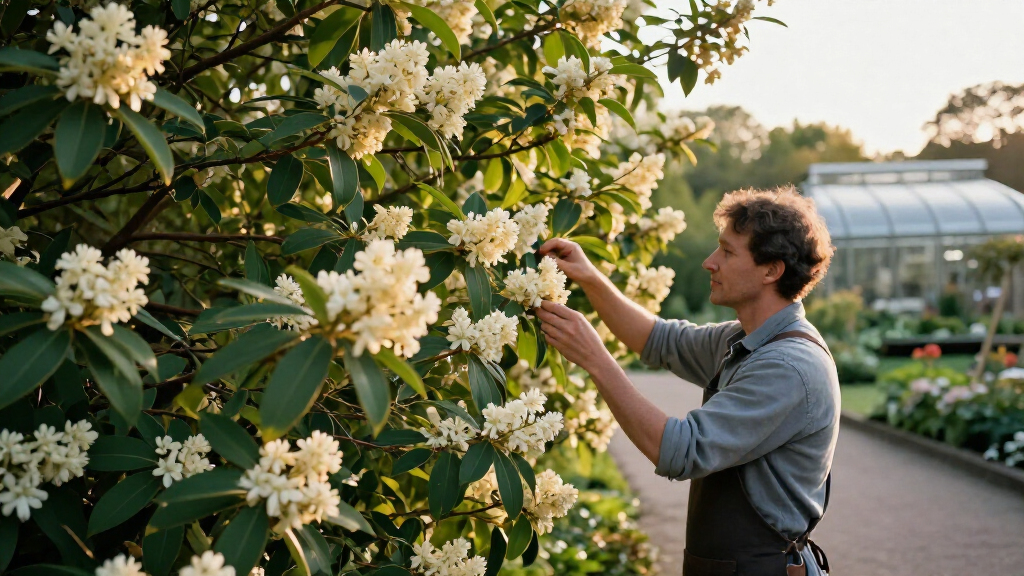
How We Picked
I compared these seven listings as flowering evergreen trees for real garden roles, not as interchangeable plants. The ranking gives the most weight to the balance of bloom appeal, evergreen character, useful starting size, and likely fit for a range of residential landscapes. I also distinguished single specimens from multipacks: ten young trees can suit a screen or group planting, but they are not automatically a better choice for a buyer who wants one focal point.
Plant size, mature-space demands, and climate fit shaped the order alongside ease of use and versatility. The 4–5 ft Little Gem leads because its size and compact magnolia form make a practical middle ground; the smaller Little Gem offers a lower-commitment entry point, while the taller Bracken’s Brown Magnolia serves buyers willing to plan around a larger tree. Bottlebrush ranks as a strong warm-climate alternative, and the multipacks and Dahoon Holly fill more specific needs. Since regional conditions and eventual dimensions can change the outcome, I treat local growing requirements as a selection checkpoint rather than assuming every tree suits every garden.
| flowering evergreen tree | Light |
|---|---|
| Perfect Plants Little Gem Magn | — |
| Loblolly Bay | Full sun to partial shade |
| Red Cluster Bottlebrush Live P | Full sun |
| Southern Magnolia | Full sun |
| Perfect Plants Little Gem Magn | Full sun to partial shade |
| Perfect Plants Bracken’s Brown | — |
| Dahoon Holly Evergreen Tree | — |
Factors to Consider When Choosing Best Flowering Evergreen Trees
Choosing among flowering evergreens is less about finding the tree with the showiest bloom and more about matching its year-round form to your site. I would settle the garden’s space, climate, and planting purpose before comparing starting sizes or flower color.
Match the Mature Tree to the Space, Not the Pot
A young tree can look manageable in a nursery pot while eventually becoming too wide or tall for the spot you have chosen. Check the expected mature height and spread, then leave room for branches, roots, nearby structures, and access for pruning. A narrow planting strip may call for a compact cultivar rather than a full-size evergreen magnolia. Avoid choosing a tree based only on how it looks beside the house at delivery. If the site cannot accommodate its mature form, regular heavy pruning can work against the natural shape you wanted.
Use Local Climate as an Early Filter
Evergreen appearance and flowering performance both depend on whether a tree suits local winter lows, summer heat, and moisture patterns. Check regional hardiness guidance for the exact plant, since a broad species name may cover selections with different tolerances. A sheltered yard can help with exposure, but it does not turn a poorly matched tree into a reliable choice. Also account for late frosts, drying winds, and reflected heat near pavement or walls. When climate information is uncertain, ask a local nursery or extension service before committing to several plants.
Decide Whether You Need a Specimen or a Group
One tree is usually the simpler route for a focal point, shade, or a clear view of the flower display. Multipacks make more sense when you have room for a planned grouping, screening, or a larger landscape project, but they also multiply watering, planting, and early-care tasks. Do not assume every plant in a multi-tree listing should be placed close together; spacing depends on mature size and the intended effect. A dense planting may look filled in sooner, yet crowding can create competition and reduce airflow later. Map the planting area first and count how many trees it can support at mature spacing.
Balance Instant Impact Against Establishment Time
A taller nursery tree gives a more immediate visual presence, but it can be harder to move and may need careful watering while its roots establish. Smaller plants are often easier to handle and can adapt well when planted correctly, though they take longer to become a focal point. Compare the plant’s height with its root condition and container size rather than treating height alone as a quality measure. A larger specimen is not automatically the better choice if transport, planting access, or aftercare will be difficult. Choose the starting size that fits the labor and time you can provide.
Look Beyond Bloom Color to Seasonal Interest
Flowers may last for only part of the year, so assess the foliage, branching, and overall shape that remain afterward. Evergreen leaves can provide structure, but leaf size, color, and density affect how the tree reads through winter and how much litter it produces. Flower form also matters: a dramatic, showy bloom creates a different effect from a subtler display spread across many branches. If the tree sits near a walkway or patio, ask about fallen flowers, leaves, and fruit before planting. This helps prevent a visually appealing choice from becoming a maintenance mismatch.
Pay More for a Clear Fit, Not Just a Bigger Plant
A larger plant can be worthwhile when you need immediate structure and have a suitable planting site, but extra height alone does not guarantee a better long-term result. A compact selection may be the smarter investment where space is limited, while a multipack may have more value for a coordinated planting than for a single-tree garden. Factor in delivery access, planting effort, watering needs, and the time required for establishment. If you are new to tree care, a manageable specimen and straightforward site often matter more than starting size. Spend effort verifying the plant identity and regional suitability before paying for a particular form or scale.
Frequently Asked Questions
Which flowering evergreen tree is the safest choice if I am unsure how much space I have?
I would first measure the planting area and check the mature spread of any candidate rather than relying on its current container size. A compact selection such as Little Gem is a more practical starting point than a full-size Southern Magnolia when room is limited, but even compact trees need clearance as they grow. Check overhead lines, walls, paths, and nearby planting beds before deciding. If the site is narrow, ask a local grower to confirm the mature dimensions for your region and cultivar. When those measurements remain uncertain, postpone planting rather than relying on repeated pruning to keep a tree in bounds.
Should I choose a taller tree or a smaller plant for faster results?
A taller tree generally gives more immediate presence, but height is only one part of how quickly a plant settles in. Root health, planting conditions, and consistent water after planting affect establishment, while a smaller plant may be easier to handle in a difficult location. Think about whether you need an immediate focal point or can wait for gradual growth. Also check that a larger specimen can be delivered and planted without damaging its root ball. For a first tree or a tight-access garden, a manageable size can be a better practical choice than the tallest listing.
Are multi-tree listings a good choice for a home garden?
They can be a good fit when you have a planned screen, grove, or larger planting area and can provide care for all the trees. A ten-plant listing is less suitable if you only need one accent tree or do not have room to follow mature spacing recommendations. Before ordering, confirm the plants can be spaced appropriately and that your site has suitable light, soil, and water for the whole group. Account for the extra planting and establishment work, especially during the first growing season. If the project is uncertain, one specimen lets you learn how the tree performs locally before adding more.
Can I plant these trees in a region with cold winters?
That depends on the exact species or cultivar and the lowest temperatures your garden regularly experiences. Do not assume that every evergreen tree in this roundup will keep its foliage or flower reliably in every region. Check a trusted regional hardiness source and confirm the plant’s cold tolerance with the seller or a local horticultural adviser. Site exposure matters too: wind, winter sun, and drainage can make conditions harsher than the local zone suggests. If the tree is near the edge of its climate range, choose a protected site and be prepared for less reliable evergreen performance.
What should I check before ordering a live tree online?
Confirm the plant name and cultivar, the listed starting size, and whether the listing is for one tree or a group. Review shipping timing and the seller’s instructions for handling the plant on arrival, since live trees can be stressed by delays or rough transport. Check the container or root presentation and ask how the seller handles a plant that arrives damaged. Plan the planting location before ordering so the tree does not sit unplanted while you make site decisions. A suitable planting window and a ready watering plan matter more than receiving the largest available specimen.
Conclusion
For most buyers seeking one versatile flowering evergreen, I recommend the Little Gem Magnolia, 4–5 ft as the best overall balance of established size and compact form. The 1–2 ft Little Gem is my best value-style choice for gardeners willing to wait for growth, while the Bracken’s Brown Magnolia, 5–6 ft is the best premium fit for someone who wants a larger specimen and has room for it. Beginners should start with a manageable single tree and confirm local growing conditions before ordering; that makes the smaller Little Gem a practical starting point. For warm-climate gardens seeking a different flower display, choose the Red Cluster Bottlebrush; for a planned group planting, compare the ten-tree options against your available space. The right pick is the one that fits your climate and mature-site capacity, not simply the one that arrives largest.