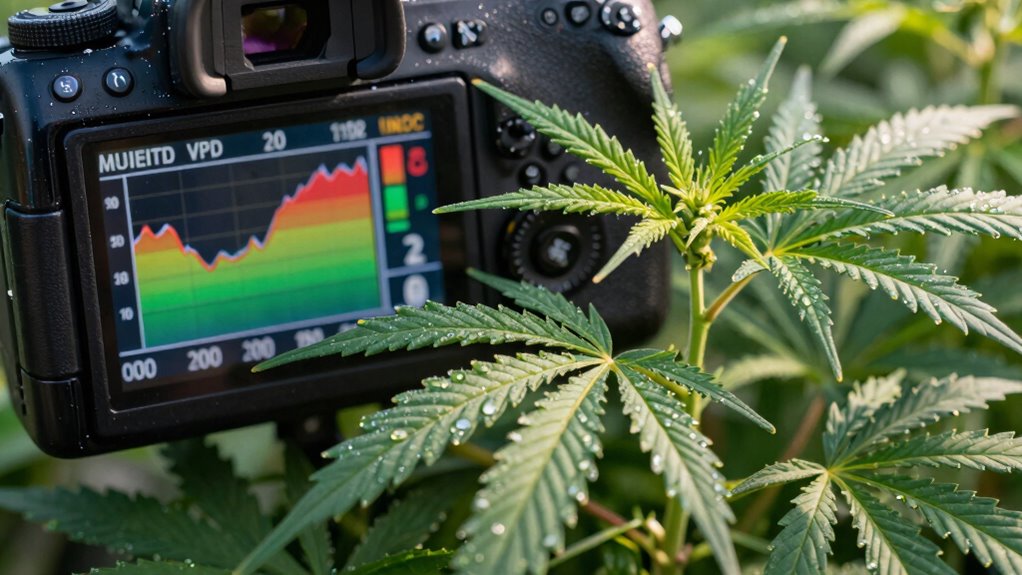
VPD, or vapor pressure deficit, is a key climate number that predicts plant stress by showing how much water vapor plants lose through transpiration. If VPD is too high, plants can suffer from rapid water loss, wilting, and slowed growth. Too low, and excess moisture may lead to mold and pests. By understanding and managing VPD, you can prevent stress and promote healthy growth. Keep exploring to discover how to control VPD effectively for ideal results.
Key Takeaways
- VPD measures the moisture difference between air and saturation, indicating plant water stress levels.
- Monitoring VPD helps growers adjust watering and airflow to prevent underwatering or overwatering.
- High VPD signals rapid water loss, risking wilting and nutrient deficiencies; low VPD increases mold and pest risks.
- Temperature and humidity directly influence VPD, making climate control crucial for optimal plant health.
- Maintaining optimal VPD promotes healthy growth, reduces stress, and increases crop predictability and yield.

Understanding Vapor Pressure Deficit (VPD) is essential for growers aiming to optimize plant health and maximize yields. VPD measures the difference between the amount of moisture in the air and the amount plants can hold when saturated. It directly influences plant water needs, dictating how much water your plants require to stay healthy. When VPD is high, the air is dry, causing plants to lose water quickly through transpiration. Conversely, a low VPD indicates humid conditions where water loss is minimal. Managing VPD effectively means you can fine-tune watering schedules and prevent problems like underwatering or overwatering, both of which stress plants and reduce growth.
Climate impact plays a significant role in VPD levels. Temperature and humidity are the two main components that shape VPD. As temperatures rise, the air’s capacity to hold moisture increases, which could raise VPD if humidity doesn’t also increase. This means that in hot, dry climates, plants are likely to experience higher VPD, leading to rapid water loss. In cooler or more humid environments, VPD drops, reducing transpiration rates and risking issues like excess moisture and mold. Understanding how climate impacts VPD allows you to adapt your grow environment to maintain ideal conditions. For instance, in a hot climate, you might need to increase humidity or adjust watering to prevent stress. In cooler climates, you may need to ensure adequate airflow and ventilation to keep VPD within a suitable range. Monitoring environmental factors and understanding their impact on climate conditions enables more precise control over your grow environment.
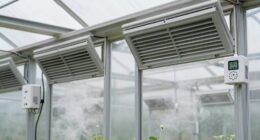
Controlling VPD isn’t just about watering; it’s about creating a balanced environment that supports healthy growth. If VPD is too high, plants will struggle to keep up with water loss, leading to wilting, nutrient deficiencies, and slowed growth. If it’s too low, plants can become overly moist, risking mold, pests, and root rot. You need to monitor climate conditions closely and adjust your environmental controls—such as fans, humidifiers, and misting systems—to maintain a stable VPD. This proactive approach helps you avoid stress and creates a more predictable, productive grow cycle.

AC Infinity VPD Thermometer, Handheld Environmental Monitor, Captures Leaf VPD and Temperature, Calibrates Smart Controllers, Precision Infrared Range for Plants, Grow Tents, Greenhouses, Terrariums
A digital thermal gun designed to measure plant leaf VPD for optimized control over your grow environment.
As an affiliate, we earn on qualifying purchases.
As an affiliate, we earn on qualifying purchases.
Frequently Asked Questions
How Does VPD Vary With Different Crop Types?
You’ll find that VPD varies with different crop types because each has specific thresholds for ideal growth. Some crops tolerate higher VPD levels, while others need more stable conditions. By understanding crop-specific thresholds, you can better adapt the environment to reduce stress. Monitoring VPD helps you optimize watering and airflow, ensuring your plants stay healthy and productive through environmental adaptation tailored to each crop’s needs.
Can VPD Be Used to Optimize Nutrient Delivery?
Yes, you can use VPD to maximize nutrient delivery by balancing evaporative cooling and transpiration efficiency. When VPD is ideal, plants transpire effectively, enhancing nutrient uptake. If VPD is too high, plants may close stomata, reducing nutrient flow. Adjusting environmental conditions to maintain suitable VPD ensures efficient transpiration, improves nutrient absorption, and promotes healthy growth. Monitoring VPD helps you fine-tune your system for maximum nutrient delivery.
What Are the Signs of Improper VPD Levels in Plants?
If your plants show wilting or curling leaves despite high humidity, they’re signaling improper VPD levels. Conversely, dry, brittle foliage indicates excessively low VPD. These fluctuations can lead to disease, as high humidity fosters mold, while low VPD stresses plants. You’ll notice uneven growth and leaf drop, so monitor VPD closely to prevent issues. Proper balance aids in disease prevention and ensures healthy, vigorous growth.
How Often Should VPD Be Monitored During Growth?
You should monitor VPD regularly throughout the growth cycle, ideally measuring at least two to three times daily. Use reliable monitoring tools such as hygrometers and thermometers to get accurate readings. Consistent measurement frequency helps you catch fluctuations early, allowing you to adjust environmental conditions promptly. This proactive approach guarantees your plants remain within ideal VPD ranges, promoting healthy growth and preventing stress caused by improper humidity and temperature levels.
Is VPD Applicable for Indoor and Outdoor Cultivation?
Yes, VPD is applicable for both indoor and outdoor cultivation. You should use it to optimize humidity control and environmental monitoring, ensuring your plants stay in ideal conditions. Regularly evaluating VPD helps you prevent stress, improve growth, and maximize yields. Whether indoors or outdoors, understanding and managing VPD gives you better control over your environment, leading to healthier plants and more successful cultivation.
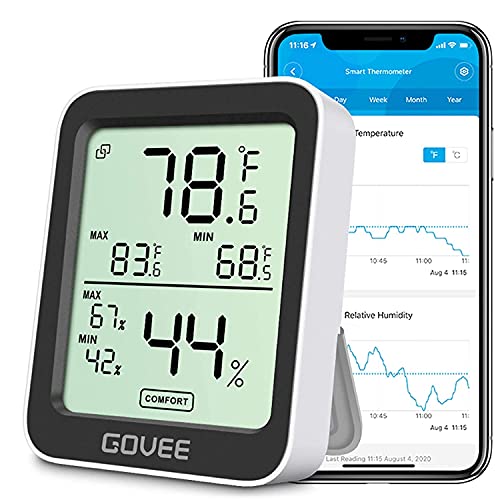
Govee Digital Hygrometer Indoor Thermometer Room H5075, Bluetooth Temperature Humidity Meter with 164ft Remote App Control, Notification Alerts, 2 Years Data Storage Export for Bedroom, Wine Cellar
Smart Features: The Govee Wireless Thermometer Hygrometer supports all basic functions as well as smart functions such as…
As an affiliate, we earn on qualifying purchases.
As an affiliate, we earn on qualifying purchases.
Conclusion
Understanding VPD helps you predict plant stress and optimize growth conditions. Did you know that even a slight increase in VPD can double the rate of transpiration? By monitoring this climate number, you can prevent issues like wilting or disease before they happen. Staying ahead of these changes means healthier plants and better yields. So, keep an eye on VPD—it’s your secret weapon for thriving, resilient crops every time.
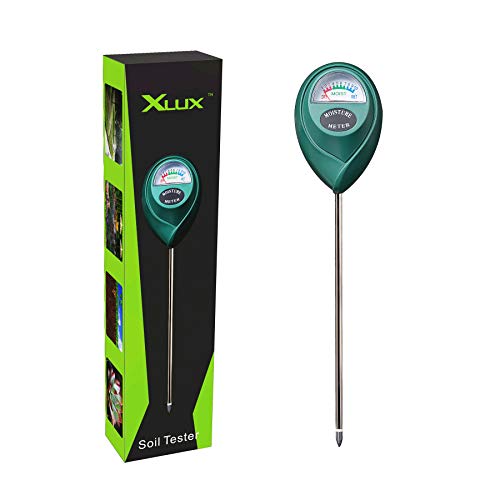
XLUX Soil Moisture Meter, Plant Water Monitor, Hygrometer Sensor for Gardening, Farming, Indoor and Outdoor Plants, No Batteries Required
Accurate Soil Moisture Detection:The XLUX Soil Moisture Meter can tell you if the soil deep inside your pot…
As an affiliate, we earn on qualifying purchases.
As an affiliate, we earn on qualifying purchases.

AC Infinity CLOUDFORGE T3, Plant Humidifier 4.5L with VPD Humidity Controls, 10-Level Precision Vaporizer, Extendable Targeting Hose and No-Leak Seal for Grow Tents
Designed with smart controls and precision vapors to obtain optimal humidity levels for plant growth.
As an affiliate, we earn on qualifying purchases.
As an affiliate, we earn on qualifying purchases.