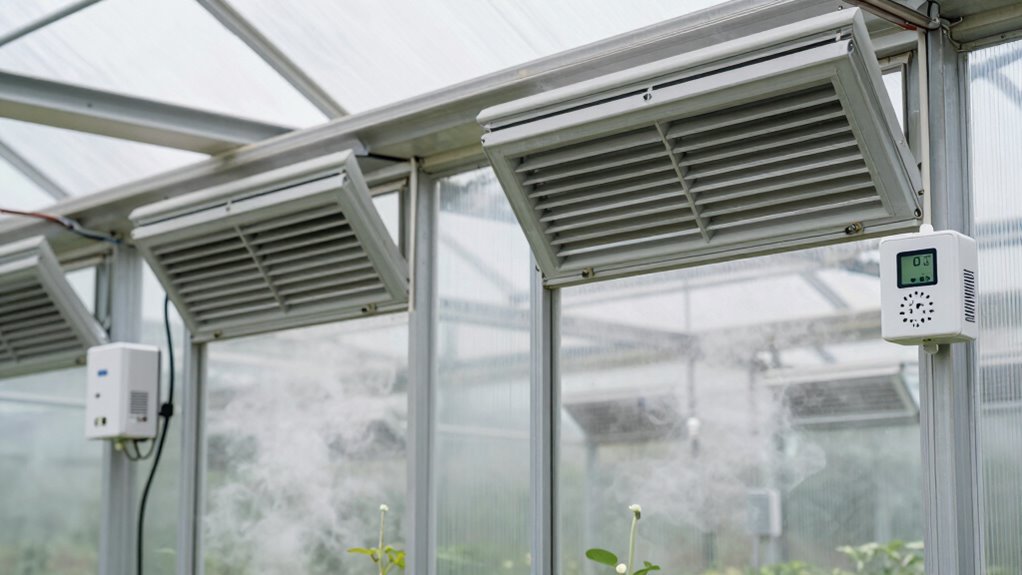
To keep your greenhouse safe and healthy, guarantee proper venting to remove excess humidity and gases like carbon monoxide. Regularly check vents and use CO detectors to prevent dangerous buildup. Managing moisture with good ventilation and humidity controls supports plant health and reduces mold risk. Choosing the right heater size and maintaining safety features helps conserve energy and protect everyone. Keep these basics in mind, and you’ll create a safer, more efficient environment—learn more about optimizing your system.

Get garden gear delivered free — and shop member deals
- Fast, free delivery on millions of items
- Access to Prime Big Deal Days deals on October 6–7
- Prime Video, Amazon Music and more included
Key Takeaways
- Proper venting removes excess humidity and prevents dangerous gas buildup, including carbon monoxide, ensuring safe greenhouse operation.
- Regularly inspect and maintain vents and heating equipment for blockages, leaks, or damage to ensure optimal safety and airflow.
- Installing CO detectors and ensuring proper venting safeguards against harmful gas accumulation and health hazards.
- Controlling moisture levels through venting and humidity management promotes healthy plant growth and reduces mold risk.
- Using appropriately sized, energy-efficient heaters with safety features helps maintain stable temperatures safely and cost-effectively.
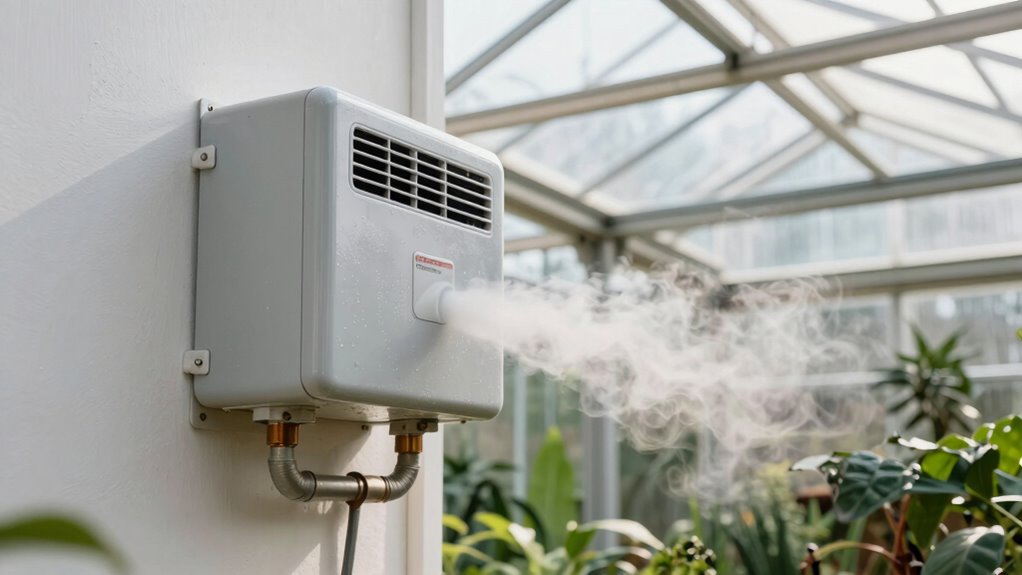
Greenhouse heaters are essential tools for maintaining ideal temperatures and ensuring healthy plant growth year-round. When you choose the right heater, you support optimal plant development and create a stable environment that encourages consistent growth. One of the keys to maximizing the benefits of your greenhouse heater is understanding venting, moisture control, and CO safety. Proper venting helps remove excess humidity and prevents dangerous buildup of gases, which can otherwise hinder plant growth and compromise your safety. Ensuring good airflow means cooler, stale air exits and fresh, oxygen-rich air enters, helping your plants breathe easier and grow stronger. Venting also aids in controlling moisture levels, which is crucial because too much humidity can lead to mold, mildew, and diseases that stunt plant development. You should regularly check your vents and make sure they’re clear and functioning correctly, especially during colder months when heaters run more frequently. Additionally, choosing a properly sized heater ensures efficient operation and prevents overheating or underheating your greenhouse environment.
Energy efficiency plays a vital role in keeping your greenhouse operation sustainable and cost-effective. An energy-efficient heater not only reduces your utility bills but also minimizes environmental impact. To achieve this, select a heater with good insulation properties, appropriate size, and adjustable settings that match your greenhouse’s needs. Using a thermostat or timer can help you avoid unnecessary energy waste by running the heater only when needed. Proper insulation of your greenhouse further boosts energy efficiency by reducing heat loss, meaning your heater doesn’t have to work as hard to maintain consistent temperatures. When your heater operates efficiently, it maintains plant growth conditions without excessive energy consumption, making your greenhouse more sustainable and economical over time.
Moisture management is equally critical because excess moisture can create a breeding ground for fungi, bacteria, and pests that threaten your plants’ health. While heaters help maintain warmth, they can also inadvertently reduce humidity levels if not managed properly. You should monitor humidity levels regularly and consider using a humidifier or dehumidifier if needed, especially during temperature fluctuations. Proper moisture levels ensure your plants absorb nutrients effectively and prevent stress caused by overly dry or damp conditions. Safety is also paramount when dealing with greenhouse heaters. Always ensure your heating system is vented properly to prevent dangerous buildup of carbon monoxide (CO), which can cause serious health issues. Regularly inspect your equipment for leaks, corrosion, or damage, and install CO detectors for added protection. Remember, venting and CO safety aren’t just about protecting your plants—they’re about safeguarding your health too.
As an affiliate, we earn on qualifying purchases.
Frequently Asked Questions
What Are the Best Venting Options for Small Greenhouses?
For small greenhouses, the best venting system options are using small greenhouse vents, such as roof vents or side vents, that you can easily open and close. These vents help regulate temperature and moisture, reducing CO buildup. You might also consider exhaust fans or adjustable louvers for better airflow. Always guarantee your venting system options are simple to operate and provide adequate airflow to keep your greenhouse safe and healthy.
How Often Should Greenhouse Heaters Be Inspected for Safety?
An ounce of prevention is worth a pound of cure, so you should inspect your greenhouse heater at least once a month. Regular heater maintenance helps catch issues early, ensuring safety and efficiency. Follow safety checklists to verify proper venting, moisture control, and CO levels. If you notice any irregularities or wear, perform a more thorough inspection and consult a professional if needed. Staying vigilant keeps your greenhouse safe and productive.
Can Moisture Buildup Damage Greenhouse Structures or Plants?
Moisture buildup can definitely damage your greenhouse structures and affect plant health. Excess humidity promotes mold, rot, and corrosion, weakening frames and surfaces. It also creates an environment where pests and diseases thrive, risking your plants’ vitality. To prevent moisture damage, guarantee proper venting and humidity control. Regularly monitor moisture levels, and address any excess promptly to maintain a healthy, durable environment for your plants and greenhouse infrastructure.
What Are the Signs of CO Poisoning in Greenhouses?
You should watch for signs of CO poisoning in your greenhouse, such as headaches, dizziness, nausea, and confusion. If you notice these symptoms, it’s vital to have carbon monoxide detection systems in place and check them regularly. Because CO poisoning symptoms can mimic other issues, make certain proper ventilation and monitor your environment closely to protect yourself and your plants from dangerous buildup.
Are There Eco-Friendly Greenhouse Heating Alternatives?
Yes, you can choose eco-friendly greenhouse heating alternatives like solar heating and geothermal systems. Solar heating harnesses sunlight to warm your greenhouse efficiently and sustainably, reducing energy costs. Geothermal systems use the earth’s natural heat, providing consistent warmth with minimal environmental impact. Both options are renewable, decrease your carbon footprint, and can be integrated into your existing setup, making them excellent choices for eco-conscious growers.
Conclusion
As you tend to your greenhouse, imagine gentle breezes carrying away any whispers of excess moisture, keeping the air clear and welcoming. Proper venting and safety measures act like a warm embrace, nurturing your plants while softly guiding any hidden risks away. With thoughtful attention, your greenhouse becomes a cozy haven where warmth and safety dance together, ensuring your plants thrive happily and healthily, all while you enjoy peace of mind in your flourishing green sanctuary.
Fall yard work Picks
leaf blowers
As an affiliate, we earn on qualifying purchases.