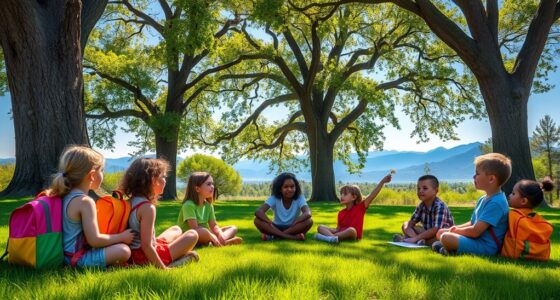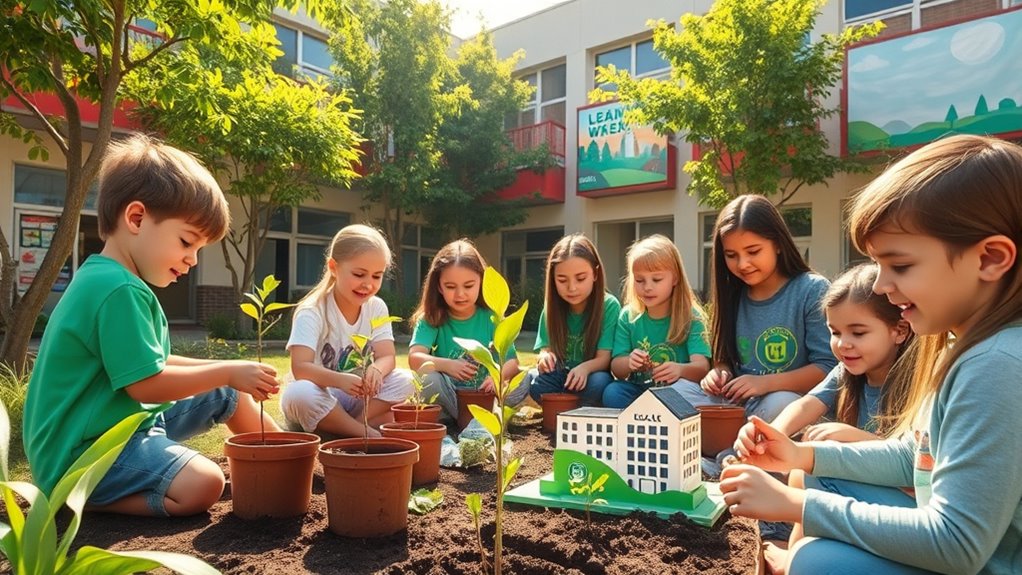

Building a green school culture starts with you integrating sustainability into daily routines, policies, and activities. By promoting waste reduction, energy conservation, and eco-friendly policies, you encourage everyone to adopt responsible behaviors. Engage students and staff through educational programs, green teams, and community partnerships. Celebrate efforts to motivate ongoing commitment. Remember, creating a lasting green culture isn’t a one-time project—it’s an ongoing process that shapes future generations. Keep exploring ways to strengthen this sustainable environment.

Get garden gear delivered free with Prime
- Fast, free delivery on millions of items
- Prime Video, Amazon Music and more included
- Member-only deals all year
Key Takeaways
- Integrate sustainability into daily school operations through waste reduction, energy conservation, and eco-friendly policies.
- Develop clear, communicative policies emphasizing paper reduction, sustainable transportation, and responsible vendor choices.
- Engage students with green teams, sustainability curriculum, and hands-on activities like gardening and energy audits.
- Demonstrate leadership by celebrating eco initiatives, providing training, and collaborating with community organizations.
- Foster an ongoing, adaptive culture by embedding sustainability into school identity and encouraging continuous improvement.
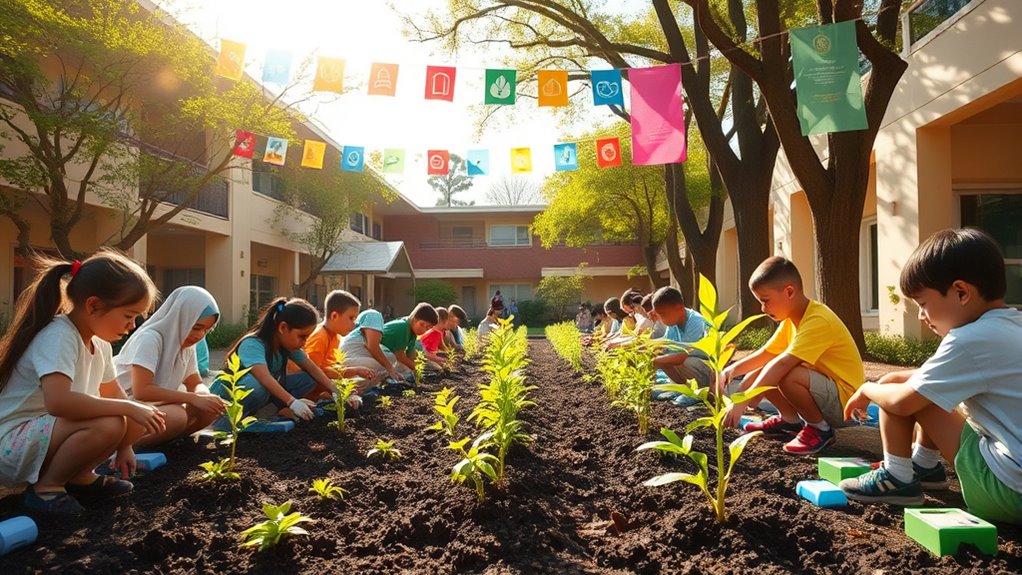
Creating an eco-friendly environment and making sustainability a core part of your school’s identity can inspire a culture that values environmental responsibility. This commitment demonstrates that caring for the planet isn’t just a slogan; it’s a core value woven into everyday actions. Start by examining your school’s current operations—look for opportunities to reduce waste, conserve energy, and promote eco-friendly policies. Simple changes, like switching to reusable supplies, implementing recycling programs, and turning off unused equipment, make a significant difference. These steps not only cut costs but also reinforce the importance of mindful resource use.
Implementing eco-friendly policies is essential for embedding sustainability into your school’s culture. These policies could include guidelines for reducing paper usage, encouraging bike or walk-to-school programs, and choosing environmentally responsible vendors. When you make sustainability a formal part of your school’s regulations, it signals to everyone that protecting the environment is a top priority. You’ll want to communicate these policies clearly, ensuring students understand the reasons behind them and feel empowered to participate. By involving students in developing and following eco-friendly policies, you foster a sense of ownership and responsibility toward the environment.
Creating an engaging environment around sustainability can inspire lasting change. You might establish student-led green teams or clubs focused on environmental projects, giving students a voice in shaping your school’s practices. Integrate sustainability education into the curriculum, showing students how their actions impact the planet. Hands-on activities like gardening, composting, or energy audits help make eco principles tangible and relevant. When students see the real-world impact of sustainable practices, they’re more likely to adopt these behaviors outside of school as well. Additionally, understanding building codes and zoning regulations is crucial to ensure your initiatives comply with legal requirements and can be successfully implemented.
Leadership plays a fundamental role in building a green school culture. As a leader, your enthusiasm and commitment can motivate staff and students alike. Recognize and celebrate eco-friendly initiatives to keep morale high and demonstrate that sustainability efforts are valued. Provide ongoing training and resources so everyone feels equipped to contribute. Collaboration is key—partner with local organizations, community groups, and families to expand your school’s reach and impact. When everyone works together, sustainability becomes more than just policy; it becomes a shared purpose that unites your school community.
Ultimately, building a green school culture isn’t a one-time effort. It’s an ongoing process that evolves as you learn and adapt. Your dedication to sustainable practices and eco-friendly policies sets the foundation for a healthier environment and a more conscious, responsible generation. By embedding these principles into your school’s identity, you’re helping shape a future where caring for the planet is second nature.
As an affiliate, we earn on qualifying purchases.
Frequently Asked Questions
How Can Students Actively Participate in Green Initiatives?
You can actively participate in green initiatives by leading student projects that promote sustainability, like recycling programs or tree planting events. Encourage your peers to get involved by raising awareness through peer education and sharing eco-friendly tips. Joining or starting clubs focused on environmental issues is also impactful. Your enthusiasm and leadership can inspire others to adopt sustainable habits, making a real difference in creating a greener, more conscious school community.
What Are Cost-Effective Ways to Implement Eco-Friendly Practices?
Think of your school as a garden that needs nurturing. To keep it thriving, start with cost-effective eco-friendly practices like promoting recycling initiatives and energy conservation. Encourage students to create recycling stations and turn off unused lights. You can also implement simple energy-saving habits, like unplugging devices after use. These small, affordable steps can blossom into a sustainable culture, making your school a model for green responsibility without breaking the bank.
How to Measure the Success of Green School Programs?
You can measure the success of green school programs by tracking student engagement and curriculum integration. Look for increased participation in eco-friendly activities, sustainability projects, and awareness campaigns. Use surveys and assessments to gauge students’ understanding of environmental topics. Additionally, evaluate how well sustainability concepts are integrated into lessons and school policies. Positive trends in these areas indicate your programs are effectively fostering a green school culture.
What Challenges Might Schools Face When Building a Green Culture?
Oh, you’ll love the challenge of getting everyone on board! Cultural resistance can make sustainability integration feel like teaching a cat to swim. You might face stubborn attitudes, outdated habits, or skepticism about green initiatives. These hurdles slow progress, but with persistence, you can turn resistance into enthusiasm. Remember, changing mindsets takes time, and overcoming cultural barriers is key to truly embedding a green culture in your school.
How Can Schools Involve the Local Community in Sustainability Efforts?
You can involve your local community by forming partnerships with nearby organizations, businesses, and residents. Host awareness events, such as clean-up days or sustainability fairs, to boost local awareness. Encourage community members to participate in school projects like recycling programs or gardening initiatives. By actively engaging them, you foster a shared sense of responsibility and support for your sustainability efforts, creating a stronger, more connected green school culture.
Conclusion
As you work to build a green school culture, remember that small seeds grow into mighty trees. Every effort you make, from recycling to conserving energy, plants the roots of sustainability. Stay committed, and soon your school will flourish into a vibrant, eco-friendly community. Keep in mind, a single hand can’t clap alone—together, your collective actions will create lasting change. With patience and dedication, you’ll nurture a greener future for everyone.
Fall Picks
fall essentials
As an affiliate, we earn on qualifying purchases.