Reusing water in your greenhouse helps reduce waste, lower costs, and support sustainable practices. You can recycle rainwater collected from roofs and surfaces or treat greywater from sinks and cleaning areas. Using methods like filtration, recirculation, and proper maintenance guarantees water safety and efficiency. Incorporating these systems not only conserves resources but also keeps you compliant with regulations. Keep exploring ways to optimize your water reuse strategies to make your greenhouse more environmentally friendly and cost-effective.
Get ready for Prime Big Deal Days — try Prime free
Exclusive member deals on October 6–7, plus fast free delivery. Cancel anytime.
As an affiliate, we earn on qualifying purchases.
Key Takeaways
- Capture and treat greywater from sinks, washing areas, and condensation for reuse in irrigation.
- Implement filtration and recirculation systems to ensure water safety and quality.
- Use drip irrigation and mulching to maximize water efficiency and minimize waste.
- Regularly inspect and maintain recycling infrastructure to ensure optimal performance.
- Comply with local regulations and document water reuse practices for sustainable operations.
Have you ever wondered how we can make the most of our limited water resources? When it comes to running a successful greenhouse, water management is essential. One effective way to do this is by implementing water recycling practices, which help reduce waste and lower your overall water bills. A good starting point is rainwater harvesting. By collecting rainwater from your greenhouse roof or nearby surfaces, you can create a sustainable source of water that’s free and readily available. Installing gutters and storage tanks allows you to capture rainwater during storms, so you have a backup supply during dry spells. This not only conserves municipal water but also guarantees your plants receive clean, chemical-free water.
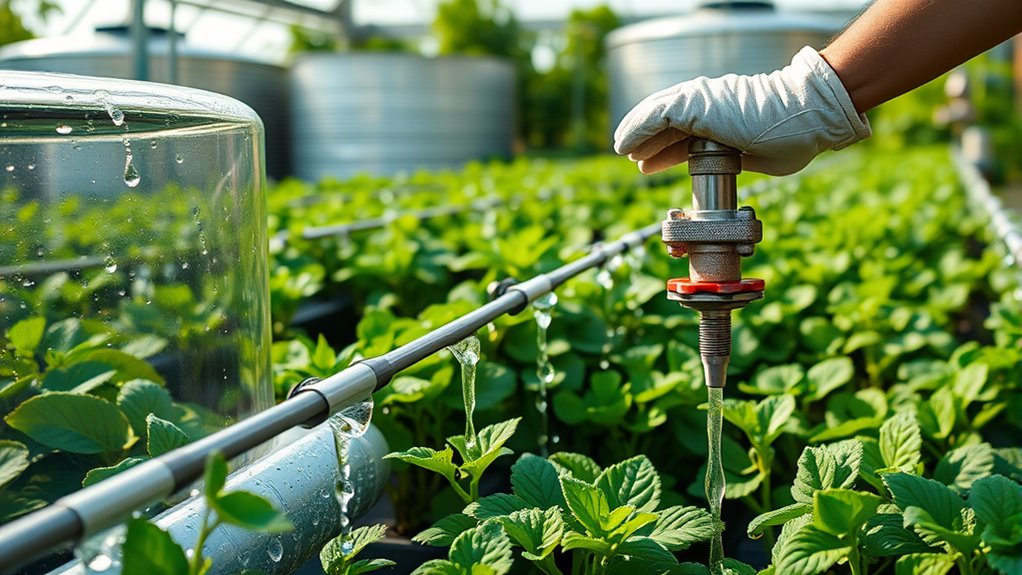
Once you’ve collected rainwater, it’s important to adopt water conservation techniques to maximize its use. For example, you can install drip irrigation systems that deliver water directly to the plant roots, minimizing evaporation and runoff. This targeted approach guarantees your plants get the moisture they need without wasting water. Using mulch around your plants can also help retain soil moisture, reducing the frequency of watering. These simple methods make a significant difference in how efficiently you use your water resources. Incorporating smart water management systems can further enhance your conservation efforts and optimize water use. Additionally, selecting water-efficient plants that require less water can help reduce overall consumption and promote sustainability.
Install drip irrigation and mulch to conserve water and keep your plants healthy.
Another aspect of water recycling involves reusing water from different sources within your greenhouse. For instance, water used for cleaning tools, trays, or even from condensation can be captured and treated for reuse. Filtering and treating this water guarantees it’s safe for plants, preventing the buildup of contaminants. Recycling greywater—water from sinks or washing areas—again reduces reliance on fresh sources and promotes a more sustainable operation. Incorporating a recirculating system where excess water is collected, filtered, and reused throughout the greenhouse can dramatically cut down on water consumption. Using water treatment processes ensures the water remains safe and free of pollutants, supporting healthy plant growth. Regular maintenance of these systems also ensures their longevity and effectiveness. Recognizing the importance of proper filtration can improve the quality and safety of recycled water.
To make these systems work effectively, maintaining your infrastructure is key. Regularly inspecting and cleaning rainwater harvesting components, filters, and pipes ensures peak performance. Educate yourself on local regulations regarding water reuse to stay compliant and avoid potential legal issues. Additionally, documenting your water use and savings can help you identify areas for improvement and demonstrate your commitment to sustainability. Understanding water reuse regulations can prevent costly violations and ensure your practices are environmentally responsible.
In essence, integrating rainwater harvesting and water conservation techniques into your greenhouse operations turns water management from a challenge into an advantage. It allows you to operate more sustainably, cut costs, and support environmentally friendly practices. Reusing water is not only good for the planet but also makes your greenhouse more resilient in times of drought or water shortages. By adopting these methods, you’re taking a proactive step toward smarter, more efficient water use—ensuring your plants thrive while conserving this precious resource for future generations.
rainwater harvesting system for greenhouse
As an affiliate, we earn on qualifying purchases.
As an affiliate, we earn on qualifying purchases.
Frequently Asked Questions
What Are the Initial Costs of Implementing Water Recycling Systems?
When considering the initial costs, you should do a thorough cost analysis to understand expenses involved. Equipment options vary, from simple filtration systems to advanced recycling setups, which influence the total investment. You’ll need to factor in costs for pumps, filters, and plumbing. While some systems are affordable upfront, more sophisticated options might require higher initial investment but can save money long-term through water efficiency.
How Much Water Can Typically Be Conserved Through Recycling?
You can typically save around 30-50% of water usage through recycling, offering significant conservation benefits. By reusing water in your greenhouse operations, you reduce your reliance on fresh sources, lower water bills, and support environmental sustainability. The actual water savings depend on your system’s efficiency and scale, but embracing recycling can make a notable difference in conserving resources while maintaining healthy plant growth.
Are There Legal Regulations Governing Water Reuse in Greenhouses?
You might worry about legal hurdles, but staying compliant is essential. Regulations around water reuse in greenhouses vary by location, so you need to check local laws. Legal compliance involves obtaining permits and licenses, ensuring your water recycling practices follow environmental standards. Ignoring these rules could lead to fines or shutdowns. By understanding and adhering to legal requirements, you protect your operation and support sustainable practices that benefit everyone.
What Maintenance Is Required for Water Recycling Equipment?
You need to regularly perform filtration maintenance to guarantee your water recycling system runs smoothly. System inspection is essential to catch any leaks, blockages, or wear that could affect water quality. Clean or replace filters as needed and check all components for signs of damage. Doing these routine checks helps prevent costly breakdowns, maintains water purity, and keeps your greenhouse operations efficient and compliant with regulations.
Can Water Recycling Systems Be Integrated With Existing Greenhouse Setups?
Ever thought about turning your greenhouse into a water wonderland? You can easily integrate water recycling systems with your existing setup using rainwater harvesting and advanced filtration technology. It’s like giving your plants a luxury spa treatment—reducing waste and saving money. Just guarantee your current infrastructure can handle the new flow, and you’re good to go. No need to overhaul—just smart upgrades for a greener, more efficient operation.
Conclusion
By recycling water in your greenhouse, you not only save resources but also create a more sustainable operation. Imagine how much water you can conserve with simple adjustments—aren’t you curious how much impact you can make? Embracing water recycling isn’t just good for the environment; it’s good for your plants and your wallet too. So, why not start reusing today and see the difference it makes in your greenhouse’s success?
Fall yard work Picks
leaf blowers
As an affiliate, we earn on qualifying purchases.