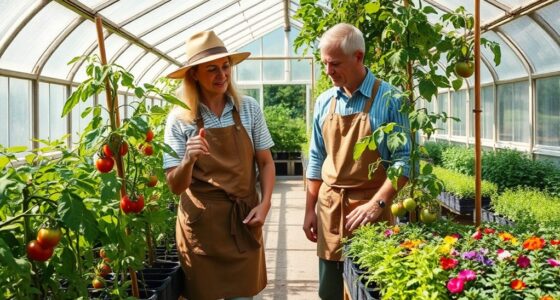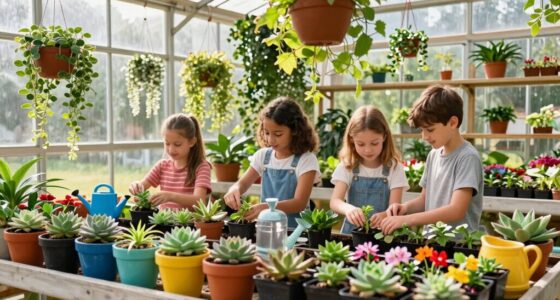
You can combine school gardens and greenhouses to create a dynamic learning environment where students get hands-on experience with plant growth, sustainability, and climate management. Greenhouses allow you to start seedlings and control conditions, while gardens let kids observe plants adapt to natural environments. Together, they teach responsibility, ecological awareness, and resilience. By integrating these spaces, you’ll foster environmental stewardship and help students understand how climate influences sustainability—continue to explore how this collaboration transforms education.

Get garden gear delivered free with Prime
- Fast, free delivery on millions of items
- Prime Video, Amazon Music and more included
- Member-only deals all year
Key Takeaways
- Use greenhouses to start seedlings and transplant them into outdoor gardens for continuous growth and learning.
- Integrate climate control in greenhouses to extend growing seasons and support plants in school gardens.
- Teach students about plant biology and ecology through hands-on activities in both environments.
- Implement sustainable practices like composting and water conservation across gardens and greenhouses.
- Foster environmental stewardship by demonstrating how climate management and eco-friendly methods benefit plant health.

School gardens and greenhouses offer students hands-on learning experiences that connect them to nature and foster environmental awareness. When you combine these two elements, you create a dynamic environment where students can explore plant growth, sustainability, and ecology firsthand. Your role in maintaining this ecosystem involves managing plant maintenance effectively, guaranteeing that each plant receives the proper care to thrive. This includes watering, pruning, and monitoring for pests or diseases. By actively engaging in plant maintenance tasks, students learn responsibility and develop a deeper understanding of plant biology. Greenhouses, in particular, allow you to control variables that affect plant health, making climate control a crucial aspect of your work.
School gardens and greenhouses foster hands-on learning, responsibility, and understanding of plant care and environmental sustainability.
In a greenhouse setting, climate control becomes your primary tool for optimizing plant growth. You can adjust temperature, humidity, and light levels to mimic ideal conditions for different plant species. This controlled environment extends the growing season and allows students to experiment with crops that wouldn’t typically survive outdoors. As you manipulate these factors, students observe how climate influences plant development, fostering a sense of curiosity and scientific inquiry. The combination of outdoor garden spaces and indoor greenhouses lets students see the full cycle of plant life, from seedling to harvest, while understanding how climate impacts growth. Additionally, understanding indoor air quality is essential for maintaining a healthy greenhouse environment and supporting optimal plant growth.
Working with both garden and greenhouse environments requires you to develop a seamless approach to plant maintenance and climate management. For instance, you might start seedlings in the greenhouse, where climate control ensures healthy growth, then transplant them into the outdoor garden to observe how they adapt to natural conditions. Conversely, students can learn to adjust greenhouse settings based on outdoor weather patterns, gaining insight into how climate variables affect plant health. This integrated approach teaches students about the importance of proper plant care and environmental management in agriculture and horticulture. Incorporating climate variability education helps students understand how unpredictable weather patterns can impact plant growth and sustainability. Furthermore, understanding the role of microclimates in different garden areas can help optimize plant success and resilience. Recognizing climate patterns also prepares students to better anticipate and respond to changing environmental conditions.
The collaboration between garden and greenhouse also emphasizes sustainability. You can demonstrate eco-friendly practices such as composting, water conservation, and integrated pest management across both settings. These lessons show students how to maintain plant health without relying heavily on chemicals or resource-intensive methods. Additionally, teaching about climate adaptation strategies helps students appreciate the importance of resilience in plant systems amid changing environmental conditions. As a result, they understand the significance of sustainable plant maintenance and climate control in preserving our environment. By working together, school gardens and greenhouses provide a well-rounded educational experience—one that nurtures responsible environmental stewardship while giving students the practical skills to care for living things effectively.
As an affiliate, we earn on qualifying purchases.
Frequently Asked Questions
How Can Schools Fund Both Gardens and Greenhouses Effectively?
You can fund both gardens and greenhouses effectively by exploring diverse fundraising strategies like hosting events, selling produce, or sponsorship programs. Additionally, seek out grant opportunities from local governments, nonprofits, and educational foundations dedicated to sustainability and STEM. Combining these approaches allows you to generate steady financial support, engage your community, and guarantee both projects thrive, enriching students’ learning experiences through hands-on environmental education.
What Are the Best Plants for Beginner Students in Gardens and Greenhouses?
For beginner students, easy plant selection is key. Opt for resilient plants like radishes, lettuce, and herbs such as basil or mint—they grow quickly and need minimal care. Use beginner gardening tips like consistent watering, proper sunlight, and simple soil mixes. These plants boost confidence and teach foundational skills, making gardening enjoyable and educational. Start small, stay patient, and watch your students develop their green thumbs effortlessly.
How Do Gardens and Greenhouses Support Environmental Education?
You see a vibrant garden and greenhouse, teeming with life, supporting wildlife habitats and illustrating climate resilience firsthand. By engaging with these spaces, you learn how native plants attract pollinators and provide shelter, fostering environmental awareness. Greenhouses demonstrate how controlled environments mitigate climate impacts, teaching students about sustainability. Together, gardens and greenhouses inspire responsibility, showing how local actions can protect ecosystems and build a resilient, thriving planet.
What Safety Precautions Are Necessary for Students Working in Gardens and Greenhouses?
To guarantee safety, you should emphasize garden safety by instructing students on proper handling of tools and awareness of their surroundings. Implement greenhouse precautions like wearing gloves, goggles, and appropriate clothing to protect against chemicals and sharp objects. Constant supervision is essential, and you should establish clear rules for behavior and equipment use. Regularly check the environment for hazards, and teach students to report any unsafe conditions immediately.
How Can Gardens and Greenhouses Be Integrated Into the School Curriculum?
You can integrate gardens and greenhouses into your curriculum by creating hands-on lessons on plant propagation and composting techniques. Encourage students to start seeds, learn about cloning, and understand sustainable practices through composting. These activities make science tangible, promote environmental awareness, and develop practical skills. By linking classroom theory with real-world gardening, you help students grasp concepts while fostering a love for nature and responsible resource use.
Conclusion
By integrating school gardens and greenhouses, you create a dynamic learning environment that nurtures curiosity and responsibility. Together, they offer hands-on lessons about sustainability, nutrition, and biology. Think about the lasting impact you can make—aren’t you inspiring future generations to care for our planet? When both spaces work in harmony, you’re not just growing plants; you’re cultivating young minds ready to face environmental challenges with confidence and knowledge.
Fall yard work Picks
leaf blowers
As an affiliate, we earn on qualifying purchases.