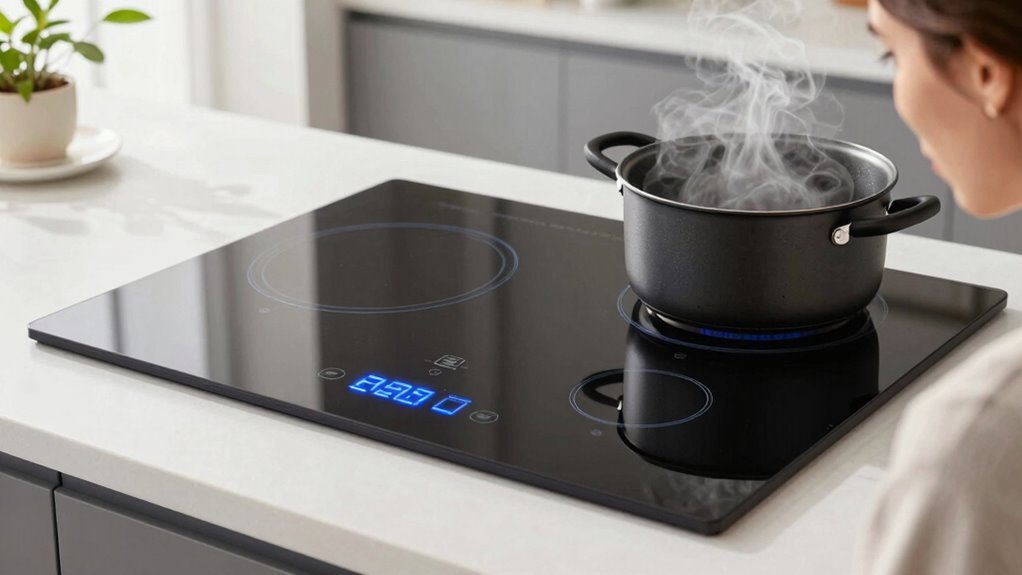

Induction cooking is fast because it uses electromagnetic fields to directly heat pots and pans, cutting down cooking time. It’s clean since the cooktop surface stays cool and helps keep your kitchen tidy. However, it can be confusing at first because it requires compatible cookware and understanding how electromagnetic energy works. If you’re curious about how it offers these benefits and wants to understand safety tips, there’s plenty more to discover below.

Get garden gear delivered free with Prime
- Fast, free delivery on millions of items
- Prime Video, Amazon Music and more included
- Member-only deals all year
Key Takeaways
- Induction cooking heats cookware directly via electromagnetic fields, resulting in faster and more precise temperature control.
- It is cleaner and easier to maintain due to minimal splattering and no open flames or exposed heating elements.
- The technology can be confusing initially because it requires compatible cookware and understanding safety features.
- Residual heat can be misleading, as the surface cools quickly but cookware remains hot, posing burn risks.
- Its efficiency and safety benefits make induction cooking an innovative, modern kitchen solution.
Have you ever wondered how induction cooking works so quickly and efficiently? It’s a fascinating process that uses electromagnetic fields to heat your pots and pans directly, rather than relying on traditional burners or heated surfaces. This method offers remarkable energy efficiency because it transfers heat directly into the cookware, reducing wasted energy and cooking time. Additionally, induction cooktops can be integrated into European cloud innovation to optimize energy management in smart kitchens. However, with this power comes the need for proper safety precautions. Since induction cooktops heat up rapidly and can cool down just as fast, you must be attentive to avoid accidental burns or fires. Always keep an eye on the surface, especially when children are around, and avoid placing flammable objects near the cooktop. It’s also wise to use cookware that’s compatible with induction; otherwise, the surface won’t heat at all, which can cause confusion and frustration.
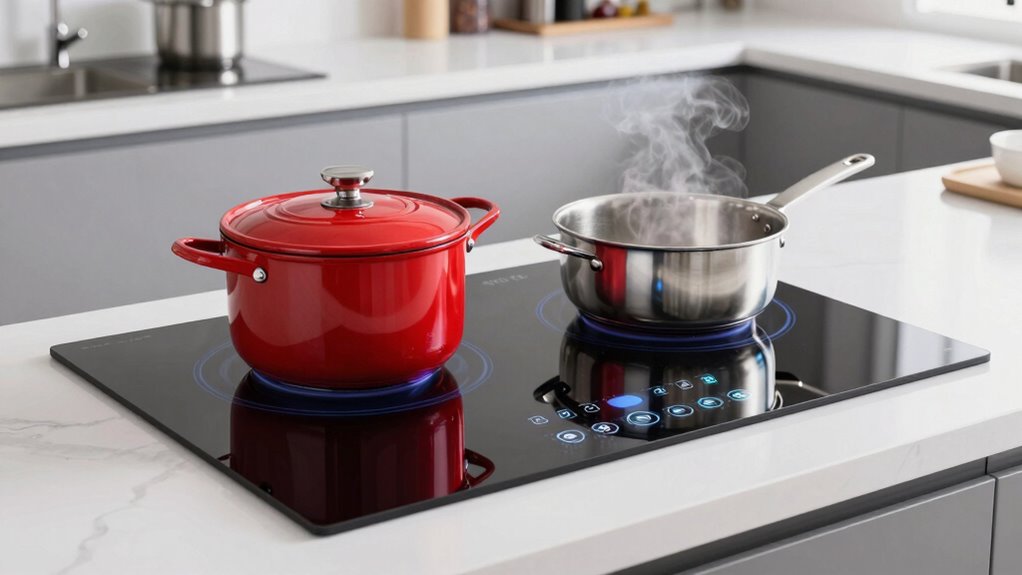
Energy efficiency is one of the biggest advantages of induction cooking. Unlike gas or electric stoves, induction cooktops only generate heat when there’s a suitable ferromagnetic pan in contact with the surface. This means you waste less energy heating the air or the surrounding environment, and you don’t have to wait long for your food to cook. Your kitchen remains cooler, and you spend less time waiting for water to boil or a sauce to simmer. Plus, because heat is generated directly in the cookware, your kitchen stays cleaner—there’s less splattering or burned-on residue, making cleanup easier and quicker.
Induction cooking saves energy by directly heating cookware, keeping your kitchen cooler and cleaning easier.
Understanding safety precautions is vital when you’re new to induction cooking. The cooktop surface can become hot, but not as hot as traditional stoves, so it’s safer in that regard. Still, the surface can retain residual heat, which could cause burns if touched immediately after cooking. Some models have safety features like auto-shutoff or lock functions, which can prevent accidental activation or disable the surface during cleaning. It’s essential to read your appliance’s manual carefully and familiarize yourself with its safety features to avoid mishaps.
Moreover, since induction heating relies on magnetic fields, people with pacemakers or other electronic medical devices should consult their doctors before using an induction cooktop. In addition, keep an eye on the power settings—using the highest setting unnecessarily can cause overheating or damage to sensitive cookware. Overall, induction cooking is safe and efficient when you follow proper safety precautions and understand how it works. It’s a blend of modern technology and practical kitchen safety, making it a smart choice for those looking to cook faster, cleaner, and more efficiently.
induction cooktop compatible cookware
As an affiliate, we earn on qualifying purchases.
As an affiliate, we earn on qualifying purchases.
Frequently Asked Questions
Can Induction Cooktops Be Used Outdoors?
Yes, you can use induction cooktops outdoors, but look for models with good outdoor durability and weather resistance. Make sure they’re designed to handle exposure to moisture, dust, and temperature changes. Portable induction cooktops with sealed surfaces and sturdy builds are ideal. Keep in mind, protect your unit from direct rain or extreme weather, and always follow the manufacturer’s guidelines to ensure safe, reliable outdoor cooking.
Are Induction Cooktops Safe for Children?
Think of induction cooktops as a gentle guardian in your kitchen. They’re safe for children when you keep an eye on them, as the surface stays cool and reduces burn risk. For child safety, make certain you use compatible cookware and turn off the cooktop when not in use. With proper supervision and the right cookware, you can cook confidently, knowing your little ones are protected from harm.
How Energy-Efficient Are Induction Cooktops Compared to Gas?
You’ll find that induction cooktops are more energy-efficient than gas, helping you save on energy costs and reduce your environmental impact. They convert electricity directly into heat with minimal waste, meaning you use less energy overall. This efficiency can lead to noticeable energy savings over time, making induction a smarter, eco-friendlier choice for your kitchen. Plus, you’ll enjoy faster cooking without sacrificing environmental responsibility.
What Are the Common Maintenance Issues With Induction Stoves?
You might face common issues like cleaning spills, which can be tricky to remove without scratching, or glass cracking from sudden impacts or thermal stress. Regularly wipe your cooktop with a soft cloth and avoid dragging heavy pots. Keep an eye out for cracks, and handle your stove gently to prevent damage. Staying proactive guarantees your induction stove stays in top shape, providing safe, efficient cooking every time.
Can Induction Cooking Be Used With Homemade Cookware?
Yes, you can use homemade pots with induction cooking if they are made from ferromagnetic materials. To check, hold a magnet to your cookware; if it sticks, it’s induction-compatible. Make certain your homemade cookware has a flat, smooth base for good contact. If it’s magnetic and flat, your induction cookware, including homemade pots, will work effectively. Otherwise, you might need to upgrade or modify your pots for maximum performance.
Conclusion
Once you get the hang of induction cooking, you’ll appreciate its speed and cleanliness—it’s up to 50% faster than traditional methods. While the technology might seem confusing at first, with practice, you’ll find it’s straightforward and efficient. Remember, nearly 80% of users report improved cooking experiences after just a few weeks. Stick with it, and you’ll enjoy precise control, quicker meals, and a cleaner kitchen in no time.
Evergreen bestsellers Picks
bestsellers
As an affiliate, we earn on qualifying purchases.