TL;DR
An Amateur Gardening report recommends drought-tolerant plants that can help UK gardeners maintain colour and structure through hot, dry weather. The supplied source describes seven plants, but cuts off during its account of Bistorta amplexicaulis; the other three plants and the full list cannot be verified from the material provided.
Amateur Gardening has published a guide to plants that can cope with hot, dry summer conditions, offering UK gardeners options for maintaining colour and structure while reducing reliance on watering. The supplied report names seven plants, but its text ends partway through the seventh entry, so the remaining three plants in the advertised list cannot be confirmed.

Get garden gear delivered free with Prime
- Fast, free delivery on millions of items
- Prime Video, Amazon Music and more included
- Member-only deals all year
The article frames its advice around a difficult 2026 UK gardening season, which it describes as marked by prolonged dry spells, high temperatures and hosepipe restrictions. Its author says the conditions damaged familiar garden plants and prompted a visit to a coastal rock garden to see what was thriving. Those observations are the report’s basis for its recommendations, rather than a formal trial comparing plant performance.
The seven names visible in the supplied text are agapanthus, rosemary, sedum (Hylotelephium), ornamental grasses, cordyline, Verbena bonariensis and Bistorta amplexicaulis. The report says agapanthus, rosemary and cordyline cope with dry conditions once established, while young cordylines need regular watering as their roots develop. It recommends free-draining soil for agapanthus and rosemary, and warns that cordylines can struggle in prolonged cold, wet weather.
The article also points to plant-specific benefits and limits. Sedum’s fleshy leaves store water, and its late-season flowers can provide nectar for pollinators. Verbena bonariensis can self-seed and attracts butterflies and other pollinators. The report says some ornamental grasses tolerate relatively dry conditions once established, while noting that their moisture needs differ. Its account of bistort is cut off just as it begins to distinguish the plant’s growing requirements.
Planning For Drier Summer Borders
For gardeners facing dry spells or watering restrictions, choosing plants adapted to limited moisture may help keep beds and containers looking presentable with less frequent watering. The report’s practical message is to match plants to their site and water needs, not to assume that every plant described as drought-tolerant can go without water.
The recommendations also cover more than flowers. The listed plants offer foliage, height, scent, texture and pollinator value, giving gardeners ways to retain interest across a border as summer blooms fade. However, the source is a gardening feature based partly on the author’s experience and observations; it does not quantify water savings or promise that the plants will thrive in every garden.
Popular right now

De'Longhi Stilosa Compact Manual Espresso Machine with Manual Milk Frother

Dyson V9 Motorbar Cordless Vacuum

Ninja Creami Scoop & Swirl Ice Cream Maker – Bone & Champagne (Amazon Exclusive)
As an affiliate, we earn on qualifying purchases.
The Report’s Seven Visible Picks
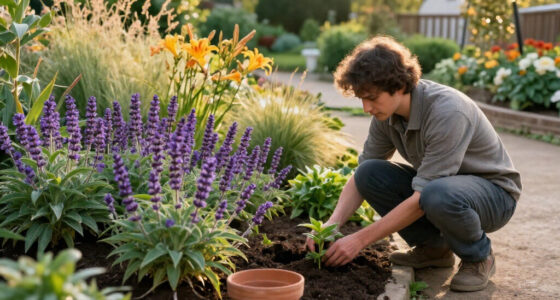
The source presents drought-adapted planting as one response to the challenging conditions it describes in Britain during 2026. It says the author visited a coastal rock garden, where several varieties appeared to be thriving, and then set out plants that readers might consider. The account mixes that observation with general cultivation advice and personal gardening experience.
Several recommendations depend on establishment, drainage and exposure. Agapanthus prefers sunny positions and free-draining soil, and can grow in containers; occasional watering during prolonged dry spells can help it look its best. Rosemary is described as suited to sunny, well-drained sites. For ornamental grasses, the author names Pennisetum alopecuroides and Stipa tenuissima, adding that the latter particularly suits a sunny, free-draining position. These details make clear that “tough” does not mean suitable for every location or wholly maintenance-free.
““With extreme weather likely to become a more regular feature of our summers, I’ve started thinking about how I can adapt my planting to make my garden more resilient.””
— Amateur Gardening report
Three Plants Missing From The Text
The supplied source cuts off during its entry for Bistorta amplexicaulis, after beginning to explain that its growing conditions differ from those of the preceding plants. It does not include the remainder of that advice or the final three plants promised by the headline. Their identities and recommendations are therefore unconfirmed here.
The source also does not provide a named weather dataset, measured rainfall totals, a comparative watering trial or quantified water savings. Its description of the 2026 season and its plant suggestions should be read as the report’s account and guidance, not as independently verified measurements. Local climate, soil and establishment can affect how any plant performs.
Check Conditions Before Planting
Gardeners considering the listed plants can use the report’s advice as a starting point, then check the needs of the specific variety against local soil, sun exposure and winter conditions. Newly planted specimens may still need watering while they establish, and plants in containers can dry out faster than those in the ground. The article itself recommends occasional watering during extended dry spells for agapanthus and regular watering for young cordylines.
The full list cannot be completed from the supplied text. To confirm all 10 recommendations, readers would need the complete Amateur Gardening article. In the meantime, the visible entries support a cautious approach: choose plants suited to the site, provide appropriate drainage and do not treat drought tolerance as a guarantee of survival without water.
Key Questions
Which plants are named in the supplied report?
The visible text names agapanthus, rosemary, sedum (Hylotelephium), ornamental grasses, cordyline, Verbena bonariensis and Bistorta amplexicaulis. The source cuts off before the list is complete.
Do drought-tolerant plants need no watering?
No. The report qualifies its recommendations: agapanthus may benefit from occasional watering during prolonged dry spells, and young cordylines need regular watering while they establish. Water needs also depend on soil, location and whether a plant is in a container.
Which growing conditions does the report emphasize?
Several listed plants suit sunny positions and free-draining soil. The report also warns that cordylines can struggle in prolonged cold, wet weather, showing that drainage and winter conditions matter alongside summer drought tolerance.
What are the three plants missing from the list?
The supplied report text does not say. It ends during the entry for Bistorta amplexicaulis, so the last three plants cannot be verified from the material provided.
Source: amateurgardening.com