
TL;DR

Get garden gear delivered free with Prime
- Fast, free delivery on millions of items
- Prime Video, Amazon Music and more included
- Member-only deals all year
Gardening Know How has published a guide to seven plants for winter porch containers, including Korean fir, winterberry holly, ornamental kale and English ivy. The list focuses on winter color, structure and cold tolerance; actual suitability depends on local conditions and container care.
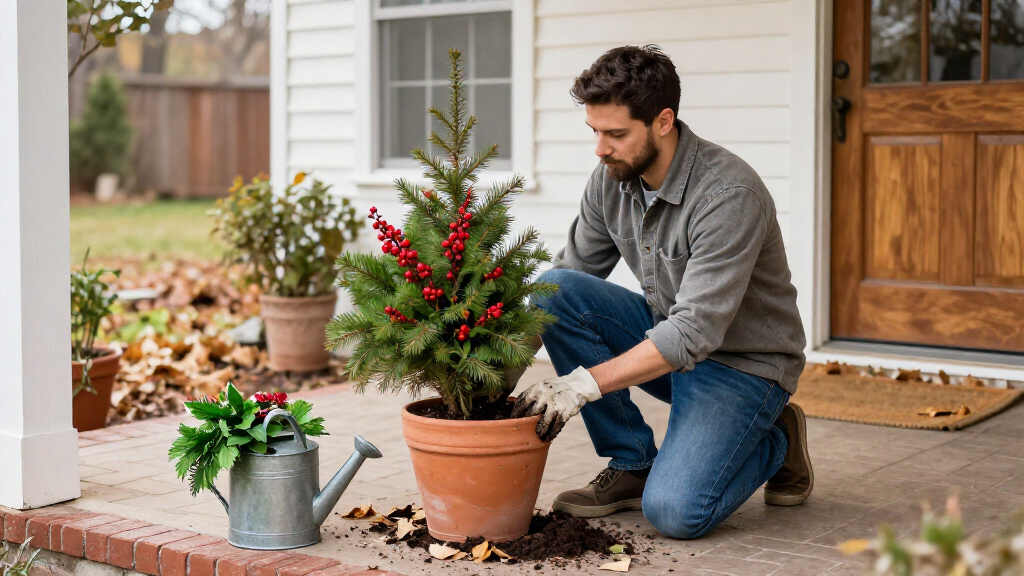
Gardening Know How has published a guide to seven plants for holiday porch pots, recommending a mix of evergreens, colorful foliage, berries and flowers for outdoor winter containers. The guide names winterberry holly, ornamental cabbage and kale, Christmas hellebores, coral bells and trailing English ivy, alongside two compact conifers. According to the source, these plants can add seasonal color and structure near entrances, though their performance will depend on local winter conditions and how the pots are maintained.
According to Gardening Know How, the plants serve different roles in a container: upright evergreen structure, bright foliage or berries, and trailing growth to soften the pot’s edge. The article names the dwarf Korean fir cultivar ‘Ice Breaker’, whose curled silver needles have pale undersides, and ‘Little Gem’ Norway spruce, described as a naturally rounded, slow-growing evergreen. The source gives ‘Ice Breaker’ a cold tolerance of minus 20 degrees Fahrenheit and ‘Little Gem’ a tolerance of minus 40 degrees Fahrenheit.
For color, the Gardening Know How guide recommends winterberry holly, a deciduous holly whose red berries remain after its leaves fall, and ornamental cabbage or kale, which can develop white, pink, red and purple rosettes in cold weather. The article also suggests coral bells for their varied leaf colors, such as bronze, apricot and burgundy. Hellebores offer dark foliage and white flowers, but the source cautions that many varieties bloom in January; it names ‘Christmas Carol Early,’ ‘Jacob’ and ‘Snowbells’ as cultivars that may flower in time for the holiday period.
Trailing English ivy is presented in the guide as a spiller that can cascade over container edges and balance upright or mounding plants. Gardening Know How also suggests combining ornamental cabbage and kale with winter-hardy pansies, berried twigs, chrysanthemums or ornamental grasses. Its practical advice begins with choosing containers made of materials that can handle winter temperatures, including metal, wood or plastic. The supplied source excerpt ends before giving further container or planting instructions.
Planning Color for Winter Entrances
Gardening Know How presents porch pots as a way to decorate an entry with living plants rather than relying only on cut greenery or seasonal ornaments. The guide’s mix can help readers choose plants with different visual jobs: evergreens hold the arrangement together, berries and colored leaves provide contrast, and ivy creates a cascading outline. That combination can keep a container visually varied even when some plants are not flowering.
The timing matters for shoppers and gardeners preparing for the holiday season: the source says starting in late autumn gives them time to find plants and assemble containers before guests arrive. But the recommendations are not a guarantee that every plant will look the same through winter. The article’s hardiness figures refer to the plants’ stated tolerance, while a container’s exposure, local climate and care can affect how it fares.
Popular right now

TCL 65-Inch QM6K QLED Mini-LED 4K HDR Smart Google TV, 144Hz

Hisense 65-inch U6 Pro Mini-LED 4K UHD Smart Fire TV

iRobot Roomba 105 Robot Vacuum with LiDAR Navigation
As an affiliate, we earn on qualifying purchases.
Seven Plants, Different Winter Roles
Gardening Know How frames late October as an opportunity to begin making natural holiday decorations ahead of a season that runs from Thanksgiving through the new year. The article describes porch pots as outdoor arrangements placed by doors, steps or entryways. Its plant selection spans compact conifers, a berry-producing deciduous shrub, cold-weather ornamental foliage, a flowering perennial and a trailing vine.
The source calls winterberry holly native across eastern Canada and the southern United States and says it is hardy to USDA zone 3. It describes Christmas rose, or Helleborus niger, as usually hardy to zone 3 as well. These are details reported by Gardening Know How; gardeners should check plant labels and local growing conditions before buying, particularly where winter temperatures are severe or containers are exposed.
Local Results May Differ
The supplied Gardening Know How excerpt does not identify the article’s publication date, name an author or provide expert interviews. Its plant descriptions and hardiness figures are presented as the publication’s guidance, not as results from a comparative trial. The excerpt also cuts off during the container advice, so it does not establish how to water, insulate or overwinter the arrangements.
Specific results remain dependent on location and care. The guide does not say how long each plant will retain its appearance in a particular porch pot, or whether a given cultivar is available nearby. It also does not address possible differences between a plant’s hardiness in the ground and its exposure in an above-ground container. Readers should confirm cultivar details and care directions with the nursery or plant label.
Check Conditions Before Planting
Readers planning a display can use the Gardening Know How list to decide which plants provide the shapes and colors they want, then check local forecasts, hardiness guidance and nursery availability before purchasing. Choose a container material suited to winter weather and follow the plant’s label for placement and care. The source’s recommendations point to a mix of foliage, berries and evergreens, but it does not announce a later update or provide a detailed planting calendar.
Key Questions
Which plants does the guide recommend for holiday porch pots?
Gardening Know How lists ‘Ice Breaker’ Korean fir, winterberry holly, ornamental cabbage or kale, Christmas hellebores, ‘Little Gem’ Norway spruce, coral bells and trailing English ivy.
Which plants in the list add red color?
According to the Gardening Know How guide, winterberry holly is included for its bright berries after its leaves fall. Ornamental cabbage and kale can also show red, pink, purple or white foliage.
Will hellebores bloom during the holidays?
Not necessarily. Gardening Know How says hellebores often bloom in January, but names ‘Christmas Carol Early,’ ‘Jacob’ and ‘Snowbells’ as cultivars that may flower in time for the holidays.
What container materials does the source suggest?
The supplied Gardening Know How excerpt recommends pots made from materials that can handle winter temperatures, including metal, wood or plastic. It does not include the remainder of the article’s container-care instructions.
Source: gardeningknowhow.com