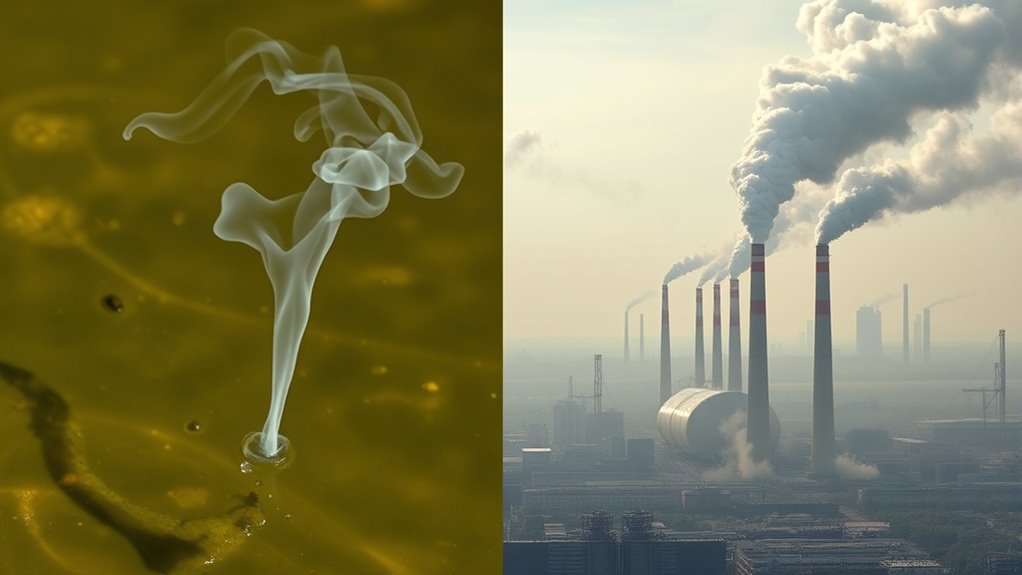

If you’re comparing methane and CO₂, methane is more dangerous in the short term because it traps much more heat—about 84-87 times that of CO₂ over 20 years—and causes rapid, intense warming. However, methane’s atmospheric lifetime is only around a decade, while CO₂ stays for centuries, making it the bigger long-term threat. To understand how both gases impact climate change, keep exploring their differences and the best ways to reduce them.
Prime for Young Adults — start your free trial
Fast free delivery, streaming and member deals for eligible 18–24 year olds.
As an affiliate, we earn on qualifying purchases.
Key Takeaways
- Methane is more potent than CO₂ on a per-molecule basis, with 84-87 times the global warming potential over 20 years.
- Methane’s atmospheric lifetime is about a decade, causing intense but short-term warming; CO₂ persists for centuries, leading to long-term effects.
- Short-term methane reductions provide rapid climate benefits, while CO₂ cuts are essential for long-term climate stabilization.
- Methane leaks can cause immediate climate impacts, making it more dangerous in the near term despite its shorter lifespan.
- Both gases need targeted mitigation strategies: methane for quick wins, CO₂ for sustained, long-term climate change control.
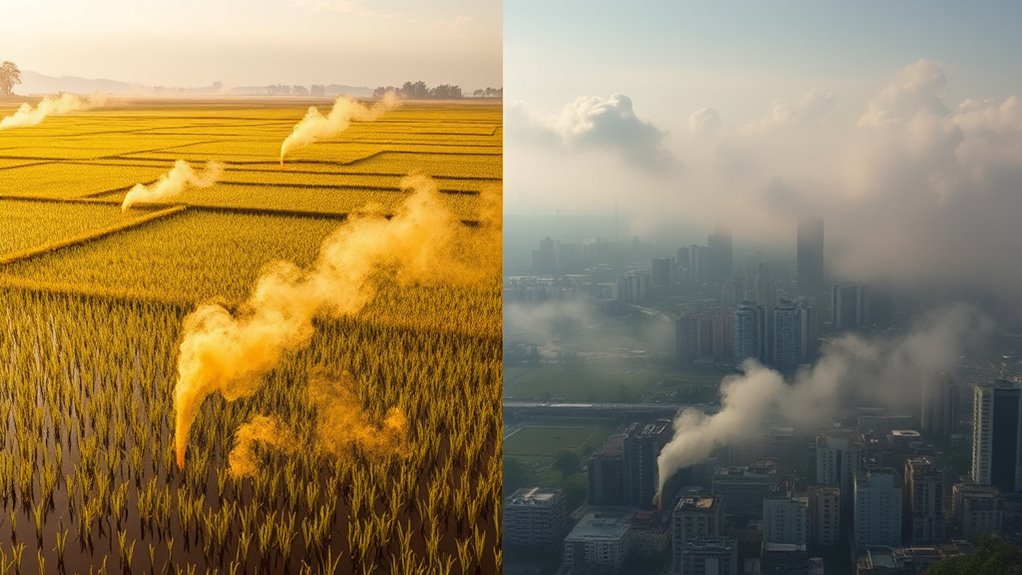
Greenhouse gases play a vital role in warming our planet, but not all gases have the same impact. When it comes to climate change, understanding the differences between methane and carbon dioxide is crucial. Both gases trap heat in the atmosphere, but methane is significantly more potent in the short term, making methane emission reduction a key area of focus. If you’re concerned about the environment, recognizing how methane compares to CO₂ helps you grasp the urgency of tackling these gases differently.
Methane, or CH₄, has a much higher heat-trapping ability per molecule than carbon dioxide. Over a 20-year period, methane’s global warming potential (GWP) is roughly 84-87 times that of CO₂. This means that even small releases of methane can have a large, immediate impact on climate warming. However, methane doesn’t stay in the atmosphere as long—it has an atmospheric lifetime of about a decade—so its impacts are intense but more short-lived compared to CO₂. Reducing methane emissions can provide quick wins in slowing warming, especially by targeting major sources like agriculture, landfills, and fossil fuel extraction.
On the other hand, carbon dioxide impacts are more persistent. CO₂ is released in vast quantities from burning fossil fuels, deforestation, and industrial processes. It remains in the atmosphere for hundreds of years, accumulating over time and causing long-term climate effects. Because of its longevity, CO₂ is the primary driver of sustained global warming, even though its immediate warming potential per molecule is lower than methane’s. Efforts to cut carbon dioxide emissions focus on shifting to renewable energy, improving energy efficiency, and protecting forests, all of which help stabilize the planet’s temperature over decades. Understanding greenhouse gases is essential for developing effective climate policies.
While methane’s impact is more pronounced in the short term, CO₂’s long-lasting presence means that it’s responsible for the majority of long-term climate change. If you’re aiming to slow global warming effectively, you need to address both gases. Prioritizing methane emission reduction can yield rapid climate benefits, but tackling CO₂ impacts is essential for lasting change. Managing both requires different strategies, with methane control often involving technological fixes and policy measures targeting specific industries. Meanwhile, reducing CO₂ emissions involves systemic shifts toward cleaner energy and sustainable practices.
As an affiliate, we earn on qualifying purchases.
Frequently Asked Questions
How Do Methane and Co₂ Differ in Their Sources?
You should know that methane and CO₂ differ in their sources. Methane mainly comes from biogenic sources like wetlands, livestock, and rice paddies, as well as fossil fuel extraction and processing. CO₂, on the other hand, is released from burning fossil fuels like coal, oil, and natural gas, and from natural processes such as respiration and volcanic activity. Understanding these sources helps in addressing their environmental impact effectively.
What Are the Most Effective Ways to Reduce Methane Emissions?
To reduce methane emissions, you should focus on implementing effective capture techniques like installing better ventilation and upgrading equipment in agriculture and waste management. Supporting policy measures that promote stricter regulations and funding for methane reduction projects can also make a big difference. By actively adopting these strategies, you help cut emissions, protect the environment, and combat climate change more effectively.
How Long Does Each Gas Stay in the Atmosphere?
You wonder about the atmosphere lifetime of these gases. Methane has a shorter greenhouse longevity, staying in the atmosphere about 12 years, so its impact is more intense but shorter-lived. In contrast, CO₂ lingers much longer, from hundreds to thousands of years, making its overall climate influence more persistent. Understanding these differences helps you grasp how each gas contributes uniquely to climate change over time.
Are There Any Health Impacts From Methane Exposure?
You might wonder if methane exposure poses health risks. Research shows that short-term exposure to high levels can cause respiratory issues, dizziness, or headaches. In some cases, methane leaks can lead to oxygen displacement, creating suffocation risks in enclosed spaces. While low-level, long-term exposure effects are less clear, it’s wise to address leaks promptly. Understanding these exposure effects helps protect your health from potential hazards associated with methane.
How Does Each Gas Impact Global Warming Potential Over Time?
You should recognize that each gas impacts global warming differently over time due to their atmospheric lifetime and radiative forcing. Methane has a shorter atmospheric lifetime but a higher radiative forcing, making it more potent in the short term. CO₂ persists longer, leading to lasting effects. Over time, CO₂’s cumulative impact becomes more significant, but methane’s rapid warming potential makes it vital to address both gases for effective climate mitigation.
Conclusion
You now know that methane is over 25 times more potent than CO₂ over a 100-year period, making it a significant threat in the short term. While CO₂ stays in the atmosphere longer, methane’s quick, intense warming potential can’t be ignored. So, it’s essential to reduce methane emissions now, as cutting just a small amount could prevent thousands of future heat-related disasters. Every action counts in fighting climate change effectively.
NFL season / tailgating Picks
team gear
As an affiliate, we earn on qualifying purchases.