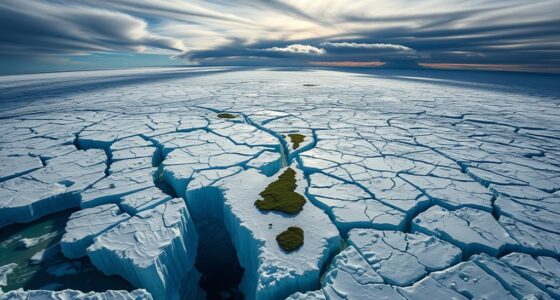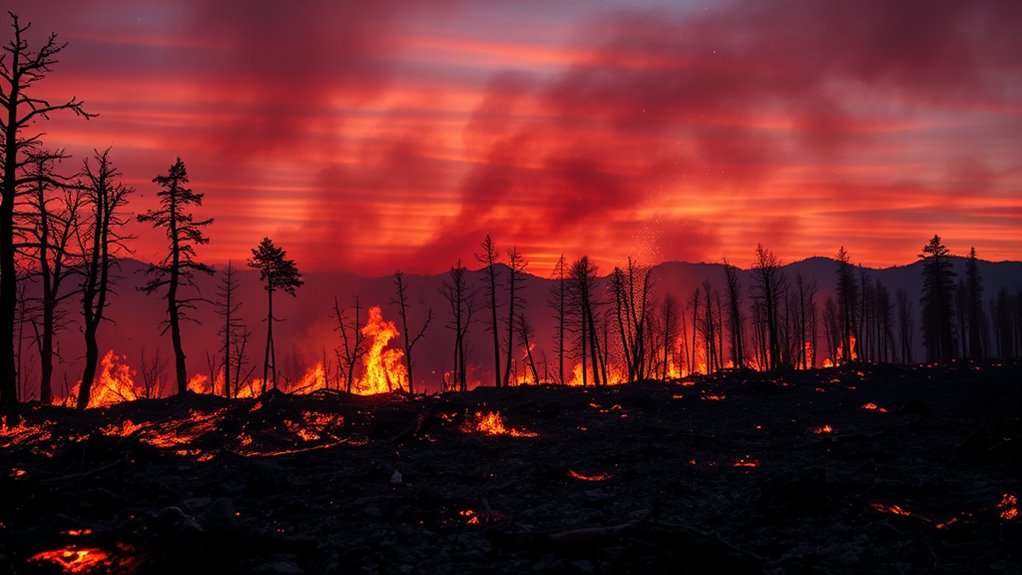
Fire ecology helps you understand how wildfires are a natural and essential part of many ecosystems. Fires clear dead material, promote new growth, and support a diversity of plants and animals. They also help maintain healthy lands by preventing dangerous fuel buildup. Recognizing these natural roles allows you to see the importance of managing fires wisely. Keep exploring to discover how understanding fire’s role can protect ecosystems and communities alike.
Listen free for 30 days with Audible
Thousands of audiobooks and originals — cancel anytime.
As an affiliate, we earn on qualifying purchases.
Key Takeaways
- Fire ecology studies how fire interacts with ecosystems, influencing their structure, function, and species adaptations.
- Understanding fire’s role helps develop management strategies that reduce destructive wildfires and promote ecosystem health.
- Fire-adapted traits like thick bark and heat-responsive seeds enable species to survive and regenerate after fires.
- Prescribed burns mimic natural fire regimes, reducing fuel loads and preventing larger, uncontrollable wildfires.
- Knowledge of fire ecology guides land use and restoration efforts to enhance resilience and biodiversity.
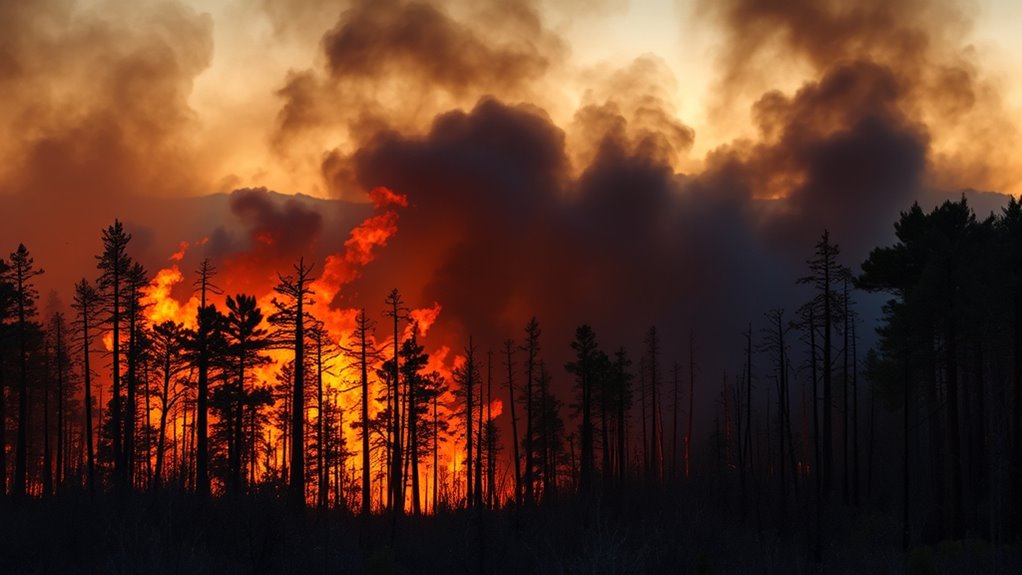
Fire ecology is the study of how fire interacts with ecosystems, shaping their structure and function. When you understand this relationship, you gain insight into why some plants and animals have developed specific fire adaptation strategies. Many species have evolved traits that help them survive or even thrive after fires, such as thick bark, underground storage organs, or seed coats that only open in response to heat. Recognizing these adaptations is essential for effective wildfire management, as it allows you to design strategies that work with natural processes rather than against them.
Fire plays a critical role in maintaining healthy ecosystems, clearing out dead material, promoting new growth, and preserving biodiversity. However, when fires become too frequent or intense due to human activity or climate change, they can threaten both ecosystems and communities. That’s why understanding fire ecology helps you develop more informed wildfire management practices. Instead of simply suppressing every fire, managers now aim to balance fire suppression with prescribed burns and other techniques that mimic natural fire regimes. This approach encourages the regeneration of fire-adapted species and reduces the risk of catastrophic wildfires. Additionally, understanding the role of controlled burns can help prevent the buildup of fuel loads that contribute to more destructive fires.
You should also recognize that fire adaptation varies across different environments. For example, in some ecosystems, fire is a natural and essential part of the cycle, and plants depend on it for reproduction. In others, invasive species might alter fire behavior, making wildfires more destructive. As someone involved in wildfire management, knowing these differences helps you tailor your response plans. Prescribed burns, for instance, can reduce fuel loads in fire-prone areas, decreasing the likelihood of uncontrolled wildfires. It’s a way of working with nature, respecting the role fire has historically played in shaping landscapes.
Additionally, understanding the relationship between fire and ecosystems can guide you in restoring degraded areas. When you reintroduce fire thoughtfully, you encourage the growth of native species that are adapted to fire, helping ecosystems recover faster and become more resilient. This knowledge also informs urban planning and land use policies, so communities can coexist safely with fire-prone landscapes. Being aware of fire regimes and their effects is crucial for implementing sustainable land management practices.
In essence, grasping fire ecology isn’t just about understanding fire itself—it’s about recognizing its importance in ecosystem health and learning how to manage it responsibly. You’re better equipped to implement wildfire management strategies that protect both natural environments and human lives. By respecting fire’s ecological role and supporting fire adaptation, you help foster landscapes that are resilient, diverse, and better prepared for the challenges posed by wildfires.
fire-resistant clothing for wildfire management
As an affiliate, we earn on qualifying purchases.
As an affiliate, we earn on qualifying purchases.
Frequently Asked Questions
How Do Different Tree Species Respond to Fire?
You’ll notice that different tree species respond to fire based on their adaptations. Some, like pines, have thick bark protection that shields them from heat, allowing them to survive fires. Others, like eucalypts, quickly resprout from roots or coppice after a fire. Tree adaptation varies, but bark protection and resprouting abilities are key factors that help trees endure or recover from wildfires.
What Role Do Animals Play During Wildfires?
During wildfires, animals play a vital role in shaping the landscape through their behavior. You might notice wildlife fleeing, seeking shelter, or even helping to disperse seeds and nutrients. Their survival strategies, such as burrowing or escaping quickly, influence how ecosystems recover. By observing animal behavior during fires, you gain insight into wildlife survival and how animals adapt to these intense events, ultimately supporting the resilience of their habitats.
Can Fire Ecology Help Prevent Future Wildfires?
Yes, fire ecology can help prevent future wildfires by promoting fire prevention strategies that strengthen ecological resilience. When you understand how fire interacts with ecosystems, you can implement controlled burns and manage fuel loads effectively. This approach reduces the risk of large, uncontrollable wildfires and helps maintain healthy landscapes. By applying fire ecology principles, you support a balanced environment capable of recovering quickly after fires.
How Does Climate Change Impact Wildfire Frequency?
Climate change increases wildfire frequency because it leads to higher temperatures, drier conditions, and prolonged droughts. These changes make landscapes more vulnerable to fires. Climate modeling helps scientists predict these patterns, improving wildfire predictions. As a result, you can better prepare and adapt to the increasing risk. By understanding these impacts, you’re more equipped to support strategies that mitigate climate change’s effects on wildfire behavior.
Are There Traditional Indigenous Fire Management Practices?
You see the land glowing with the gentle flicker of flames, a dance of fire guided by Indigenous practices. These cultural burnings, rooted in centuries of tradition, use controlled fire to nurture ecosystems rather than destroy them. Indigenous practices honor the land’s balance, reducing wildfire risks and promoting biodiversity. By embracing these methods, you help maintain healthy landscapes, blending ancient wisdom with modern conservation efforts to protect and sustain the environment.
Conclusion
You see, understanding fire ecology is like tending a garden; when you know when to let the fire burn and when to hold back, you help the ecosystem thrive. Imagine a forest as a phoenix rising from ashes, renewed and stronger after each blaze. Studies show that controlled fires reduce dangerous fuel build-up, protecting communities. By respecting fire’s role, you become a steward of the land, ensuring it can flourish anew—like a gardener nurturing a resilient, vibrant landscape.
Flea & tick season Picks
flea and tick prevention
As an affiliate, we earn on qualifying purchases.