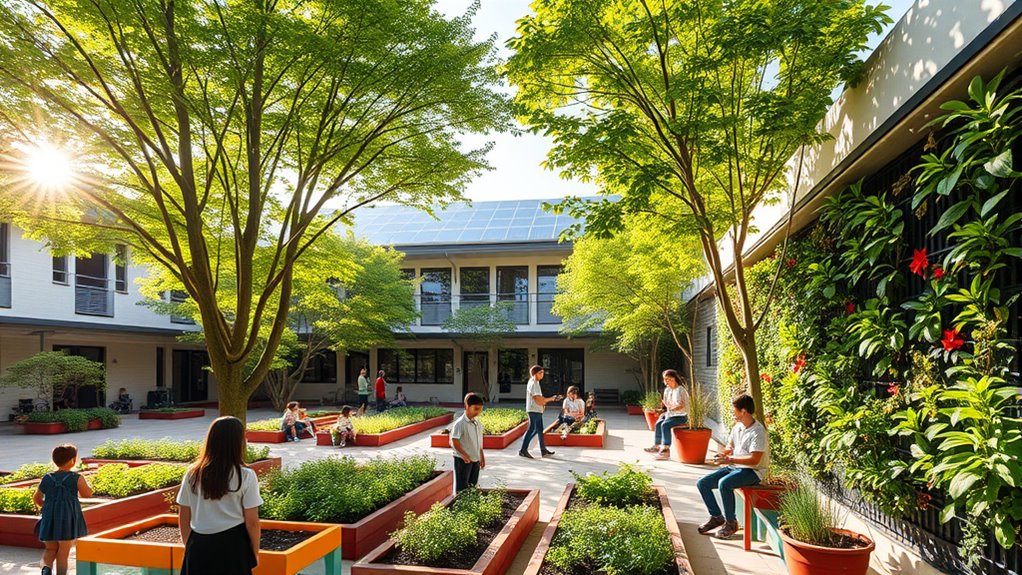

Implementing sustainable practices in your school can make a big difference. Consider installing renewable energy sources like solar panels or wind turbines to reduce reliance on fossil fuels and cut costs. Promote waste reduction through recycling, composting, and reusable products. Incorporate energy-efficient systems such as LED lighting and smart thermostats. Engage students in eco-friendly initiatives and educational activities to foster a culture of sustainability. Keep exploring ways to make your school greener and more responsible for a healthier future.
Key Takeaways
- Implement renewable energy sources like solar panels and wind turbines to reduce fossil fuel dependence and lower energy costs.
- Establish waste reduction programs through recycling, composting, and promoting reusable products to minimize landfill contributions.
- Integrate energy-efficient systems such as LED lighting and smart thermostats to optimize campus energy use.
- Foster student engagement via environmental clubs, sustainability projects, and educational activities to build ecological awareness.
- Promote community involvement and daily sustainable actions, cultivating a culture of environmental responsibility on campus.
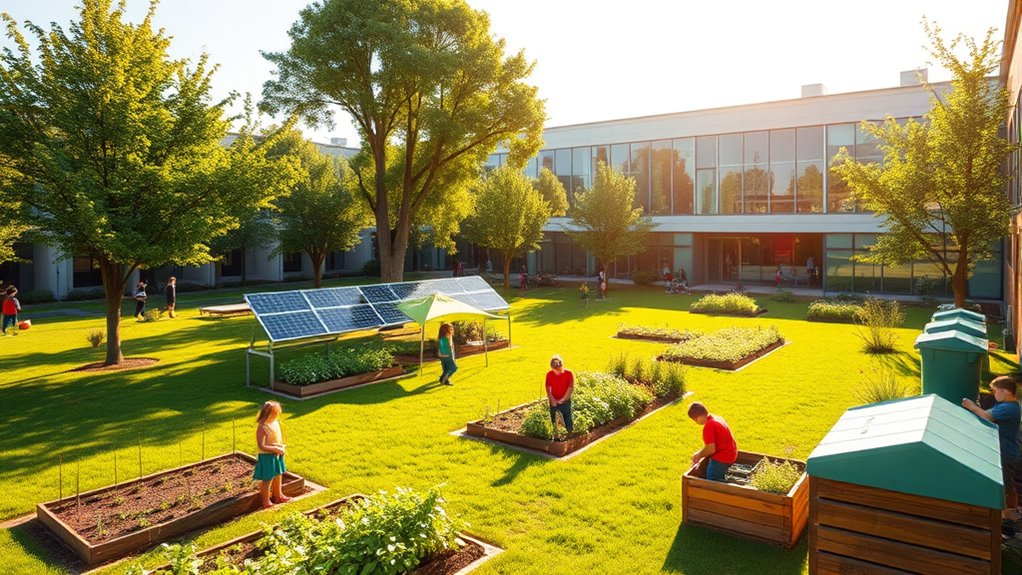
Have you ever wondered how schools can become healthier and more sustainable environments? One of the most effective ways to achieve this is by integrating renewable energy sources into campus operations. Installing solar panels or wind turbines can considerably cut down the school’s reliance on fossil fuels, reducing greenhouse gas emissions and lowering energy costs. Renewable energy doesn’t just benefit the environment—it also serves as a powerful educational tool. Students can learn firsthand about clean energy technologies by participating in maintenance or monitoring projects, fostering a sense of ownership and responsibility. Additionally, schools can implement energy-efficient systems such as LED lighting, smart thermostats, and energy management software to further optimize energy use and minimize waste. These measures not only conserve resources but also set a positive example for students and staff to adopt sustainable habits. Utilizing machine learning algorithms can also optimize energy consumption patterns, making energy use even smarter and more efficient. Implementing renewable energy projects encourages innovation and demonstrates practical applications of scientific principles, inspiring students to pursue careers in green technology. Moreover, fostering a culture of energy sustainability can motivate students and staff to participate actively in conserving resources daily. Creating dedicated environmental clubs and sustainability committees can further amplify these efforts and promote ongoing engagement. Alongside renewable energy, waste reduction plays a crucial role in greening schools. You can start by establishing extensive recycling programs that sort paper, plastics, metals, and electronics properly. Encouraging students and staff to minimize single-use items and opt for reusable containers, water bottles, and utensils can drastically decrease waste generation. Composting organic waste like food scraps and yard trimmings is another effective strategy that reduces landfill contributions while enriching soil for school gardens or local green spaces. To foster a culture of waste consciousness, schools can incorporate waste reduction into the curriculum, organizing workshops and campaigns that emphasize the importance of responsible waste management. Clear signage and accessible recycling stations also make it easier for everyone to participate actively. Creating awareness about waste management practices can further empower the school community to adopt environmentally responsible behaviors.
Implementing waste reduction and renewable energy projects requires commitment, but the benefits are worthwhile. These initiatives lower operating costs over time, freeing up funds for other educational needs. They also help meet environmental standards and demonstrate leadership in sustainability. As a student or staff member, your role is essential—by making small everyday choices like turning off unused lights, recycling diligently, or advocating for renewable energy projects, you contribute to creating a greener campus. Schools that prioritize renewable energy and waste reduction not only reduce their ecological footprint but also inspire a culture of sustainability that can extend beyond the campus. These efforts teach valuable lessons about environmental stewardship, preparing students to become responsible global citizens. Ultimately, by embracing these sustainable practices, you help forge a healthier, more resilient future for everyone involved in the school community.
Frequently Asked Questions
How Can Students Participate in Sustainability Initiatives Effectively?
You can participate effectively in sustainability initiatives by joining student-led campaigns and promoting peer education. Get involved in organizing events, advocating for eco-friendly policies, and spreading awareness among classmates. Your active engagement helps build a culture of sustainability on campus. By leading or supporting these efforts, you inspire others to take action, making a real difference in creating a greener, more sustainable school environment.
What Are the Funding Options for Green School Projects?
Imagine you’re a pioneer in green school projects. You can tap into grant opportunities tailored for sustainability initiatives or seek sponsorship options from local businesses and organizations. These funding sources can help cover costs for solar panels, gardens, or recycling programs. By actively exploring these options, you guarantee your project gets the support it needs, making your school more eco-friendly and inspiring others to join the green movement.
How to Measure the Environmental Impact of a School’S Efforts?
To measure your school’s environmental impact, start by evaluating your carbon footprint, which includes energy use and transportation emissions. Track resource conservation efforts like water savings and waste reduction. Use tools such as environmental audits or sustainability dashboards to monitor progress over time. Regularly reviewing these metrics helps you identify areas for improvement, demonstrate your efforts’ success, and motivate continued commitment to creating a greener campus.
Are There Specific Certifications for Eco-Friendly Schools?
Imagine you’re stepping into a world where eco labels like LEED and Green Globes, much like a badge of honor, certify eco-friendly schools. These programs follow green building standards that guarantee sustainable design, energy efficiency, and healthier environments. Such certifications help you identify schools committed to sustainability. They’re a great way to verify your efforts and inspire others, proving that eco-conscious practices are both achievable and recognized nationwide.
How Can Schools Incorporate Climate Education Into Curricula?
You can incorporate climate education into your curriculum by teaching students about renewable energy sources like solar and wind power, emphasizing their role in reducing carbon footprints. Encourage hands-on projects on waste management, such as composting and recycling programs, to promote eco-friendly practices. Use real-world examples to inspire action and foster a deeper understanding of climate issues, empowering students to become environmentally conscious citizens.
Conclusion
By embracing sustainable practices, you turn your school into a thriving garden, rich with growth and possibility. Every small action you take is like planting a seed that blooms into a greener, healthier future. Together, you and your school can be the sun that nurtures change, illuminating the path toward a more sustainable world. Keep watering those efforts, because your commitment is the roots that will support a brighter, greener tomorrow.