Pulsing water pressure often means there’s an issue with your pressure tank or booster pump. It could be a damaged bladder, incorrect air charge, or a faulty pressure switch, causing your system to cycle on and off rapidly. These problems prevent your tank from buffering water properly, leading to fluctuating flow. If you want to understand the common causes and how to fix them, there’s more to contemplate to keep your water steady and reliable.

Get garden gear delivered free with Prime
- Fast, free delivery on millions of items
- Prime Video, Amazon Music and more included
- Member-only deals all year
Key Takeaways
- A malfunctioning pressure tank with a damaged or improperly charged bladder causes water flow pulsations.
- Incorrect air pressure in the tank leads to inadequate buffering, resulting in fluctuating water pressure.
- Worn or faulty pressure switches can cause the pump to cycle on and off frequently, creating pressure pulses.
- Debris buildup or corrosion in the system reduces pump efficiency, causing inconsistent pressure delivery.
- Regular maintenance and correct system settings prevent pressure fluctuations and ensure smooth water flow.
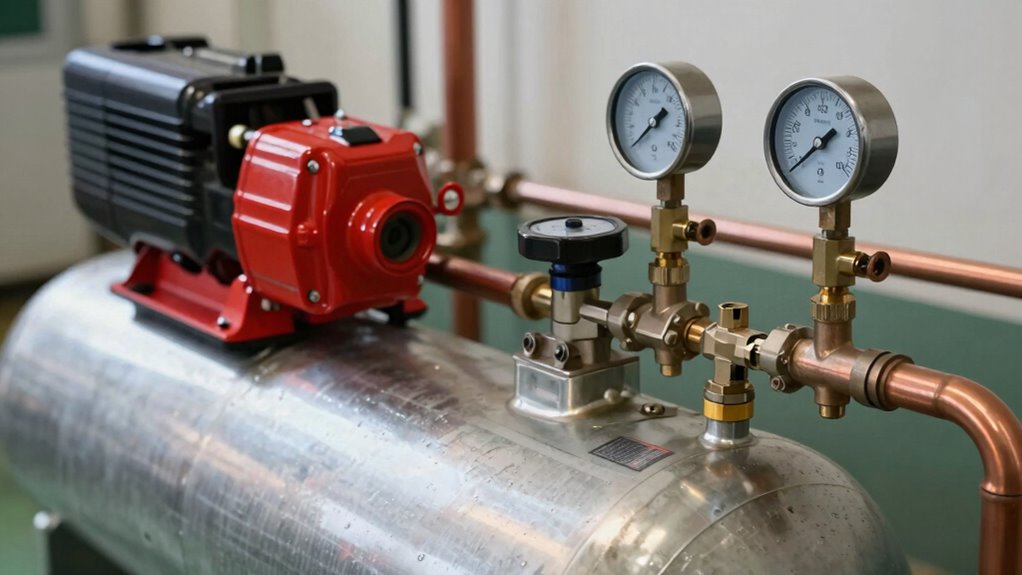
Have you ever wondered how your household water system maintains consistent pressure and flow? If you’ve noticed water pressure fluctuations, where the flow seems to pulse or suddenly drop, you’re not alone. These fluctuations often stem from issues within your pressure tank or booster pump system. Understanding how these components work together can help you troubleshoot and maintain steady water pressure in your home.
Your pressure tank acts as a buffer, storing water and maintaining a steady pressure level. When you turn on a faucet, the tank supplies water at a consistent pressure, preventing your pump from constantly cycling on and off. If your tank isn’t functioning properly—perhaps due to a leak, a worn bladder, or incorrect air pressure—you might experience water pressure fluctuations. These fluctuations can cause your water to pulse, making showers uncomfortable or appliances less effective. Regular pump maintenance is vital to prevent these issues. Neglecting maintenance can lead to a buildup of debris or corrosion inside the pump, causing it to work inefficiently or fail prematurely. Ensuring your pump is clean, properly lubricated, and has the right settings keeps it running smoothly, reducing pressure inconsistency.
When your pump or pressure tank isn’t properly maintained, the system struggles to keep the water pressure steady. For example, a pressure tank with a damaged bladder won’t effectively buffer water, leading to rapid cycling of the pump. This cycling creates the pulsating sensation many notice in their water flow. Similarly, if the pump’s pressure switch isn’t adjusted correctly or if the system’s air charge is off, your household water pressure can become inconsistent. This not only causes discomfort but can also put extra strain on your equipment, increasing the risk of breakdown. Routine pump maintenance involves checking the air pressure in the tank, inspecting for leaks, and ensuring electrical components are functioning correctly. These simple steps can considerably reduce water pressure fluctuations and extend the lifespan of your system. Additionally, understanding system component function can help you better diagnose and prevent pressure issues before they become major problems.
Popular right now

Ninja Flip Toaster Oven and Air Fryer, 8-in-1, Stainless Steel, SP151

Apple AirPods Pro 3 Wireless Earbuds with Active Noise Cancellation

Roborock RockNeo Q110H Wire-Free Robot Lawn Mower
As an affiliate, we earn on qualifying purchases.
Frequently Asked Questions
How Often Should I Drain My Pressure Tank?
You should drain your pressure tank at least once a year as part of your maintenance schedule. Regular draining helps remove sediment buildup, especially if your tank is made of materials prone to corrosion. If you notice fluctuating water pressure or unusual sounds, it might be time to empty it sooner. Keeping to a routine ensures your tank functions properly and extends its lifespan, preventing potential issues down the line.
Can Booster Pumps Increase Water Pressure Too Much?
Yes, booster pumps can increase water pressure too much if not properly controlled. Overpressure safety features help prevent damage by automatically shutting off or reducing pressure when it exceeds safe levels. Regular pump maintenance ensures these safety mechanisms work correctly, avoiding potential issues like pipe damage or leaks. Always check your system’s pressure settings and consult a professional to prevent over-pressurization and maintain ideal performance.
What Causes a Pressure Tank to Lose Pressure?
Think of your pressure tank like a balloon slowly leaking air. You lose pressure due to several factors: a faulty air bladder, leaks, or corrosion inside the tank. Regular tank maintenance helps prevent pressure loss by ensuring everything functions smoothly. Over time, the pressure can drop, so checking the tank’s air pressure and inspecting for leaks keeps your water system running consistently. Don’t forget, timely maintenance extends your tank’s lifespan.
Are There Noise Issues With Booster Pumps?
Yes, booster pumps can produce noise, especially if they have high noise levels or aren’t installed properly. Poor installation considerations, like mounting on unstable surfaces or close to living spaces, can amplify noise. To minimize disruption, choose quieter models and guarantee proper installation. Regular maintenance also helps reduce noise issues. If noise persists, consulting a professional can help identify and address specific causes effectively.
How Do I Choose the Right Size Pressure Tank?
A stitch in time saves nine, so pick the right size pressure tank from the start. To do this, focus on tank sizing by calculating your household’s water demand and peak usage. Capacity calculation considers your flow rate and how much water you need during busy times. Choose a tank that can handle these needs without cycling frequently, ensuring smooth water pressure and extending equipment life.
Conclusion
Understanding how pressure tanks and booster pumps work helps you keep your water flow steady and smooth. When you notice those gentle pulses, it’s like a quiet reminder to give your system a little tune-up. With a bit of care and attention, your water pressure can stay serene, flowing effortlessly like a calming current. Embrace the rhythm, and your daily flow will feel as natural as the breeze—quiet, reliable, and just right.