To make your Earth Day ideas stick, focus on simple actions like recycling properly, composting food scraps, and using native plants in your garden. Cut down on waste by rinsing recyclables and crushing bottles to save space. Add rain barrels and mulch to conserve water and support healthier gardens. These practical steps reduce pollution and resource use, making a real impact. Keep exploring more ways to make your Earth Day effort truly memorable.
Key Takeaways
- Promote recycling by properly sorting, rinsing, and crushing recyclables to reduce waste and pollution.
- Start composting organic waste to decrease landfill volume and produce nutrient-rich soil.
- Implement sustainable gardening practices using native plants, rain barrels, mulch, and composting.
- Conserve water with rainwater collection, mulching, and eco-friendly watering techniques.
- Educate others on waste reduction, recycling, and eco-friendly habits to celebrate Earth Day meaningfully.
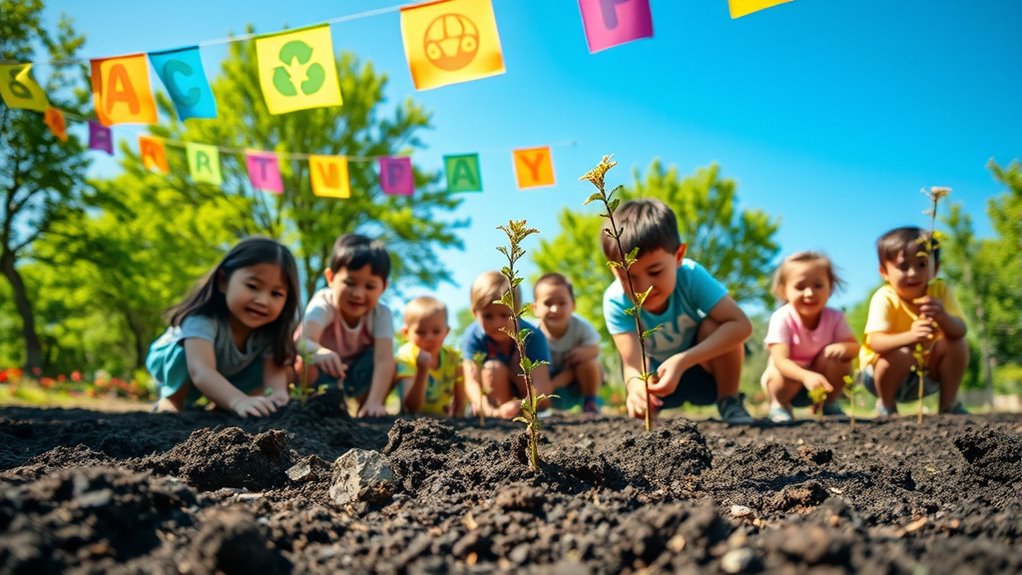
Looking for simple ways to celebrate Earth Day and make a positive impact? One effective approach is to incorporate recycling tips into your daily routine. Recycling is more than just tossing paper into a bin; it’s about being mindful of what you produce and how you handle waste. Start by sorting your recyclables properly—plastic, glass, paper, and metals each have specific guidelines that help ensure they can be reused efficiently. Rinse containers to remove residue, crush bottles to save space, and avoid contaminated recyclables that could spoil the entire batch. Additionally, consider creating a compost bin for organic waste like food scraps and yard waste. Composting reduces landfill mass and creates nutrient-rich soil, which feeds into your sustainable gardening efforts. When you integrate recycling tips into your lifestyle, you’re actively reducing pollution and conserving resources, which are key to protecting the environment.
Speaking of sustainable gardening, Earth Day is a perfect occasion to embrace eco-friendly practices in your yard or balcony garden. Sustainable gardening involves choosing native plants that require less water and fertilizer, minimizing the use of chemical pesticides, and practicing water conservation techniques. For example, installing rain barrels helps collect rainwater to irrigate your garden, reducing reliance on municipal water supplies. Mulching around plants not only retains moisture but also suppresses weeds, decreasing the need for chemical herbicides. Incorporate compost into your soil to enrich it naturally, avoiding synthetic fertilizers. You can also grow your own vegetables and herbs, which cuts down on packaging waste and transportation emissions associated with store-bought produce. These small changes make a significant difference over time, creating a healthier garden and a healthier planet.
Frequently Asked Questions
How Can I Involve My Local Community in Earth Day Activities?
You can involve your local community in Earth Day activities by organizing a community cleanup and inviting neighbors to join. Promote local workshops on recycling, composting, or sustainable living to educate residents. Use social media, flyers, and word of mouth to spread the word. Encourage schools, local businesses, and organizations to participate, making it a collective effort to raise awareness and foster environmental responsibility in your neighborhood.
What Eco-Friendly Gifts Can I Give on Earth Day?
For eco-friendly gifts on Earth Day, consider giving items made with sustainable packaging and eco-friendly accessories. You could choose reusable water bottles, bamboo utensils, or biodegradable skincare products. These gifts help reduce waste and promote sustainability. By selecting items that come in minimal or compostable packaging, you show your commitment to protecting the environment while giving thoughtful, practical presents that encourage eco-conscious habits.
Are There Virtual Earth Day Events for Remote Participation?
You can absolutely join virtual Earth Day events from anywhere. Many organizations host online webinars and virtual workshops that make it easy to participate remotely. Coincidentally, these events often feature inspiring speakers and practical tips for sustainability. You’ll find a variety of topics, from recycling to renewable energy, all accessible through your computer or tablet. So, why not mark your calendar and engage in meaningful environmental activities without leaving your home?
How Can Schools Incorporate Earth Day Into Their Curriculum?
You can incorporate Earth Day into your school curriculum by organizing recycling projects and outdoor lessons that actively engage students. Encourage them to create compost bins or recycle art projects, fostering hands-on learning. Take lessons outside to explore local ecosystems, instilling environmental awareness. These activities make Earth Day meaningful, inspiring students to develop eco-friendly habits while connecting classroom concepts with real-world action.
What Are Some Simple Daily Habits to Celebrate Earth Day Year-Round?
You might think saving the planet requires grand gestures, but small daily habits make a huge difference. For example, you could improve your recycling habits and cut back on water use—simple acts that seem so minor, yet have a big impact over time. Just remember, every time you recycle or turn off the tap while brushing, you’re celebrating Earth Day all year round. Who knew tiny habits could be so powerful?
Conclusion
As you embrace Earth Day, remember that small steps spark significant change. From planting plants to picking up plastic, your proactive efforts promote progress and preserve our planet. Let’s cherish and champion these choices, creating a cycle of sustainability that sticks. By making mindful moves today, you become a mighty messenger of environmental change, making each Earth Day a memorable milestone. Stay spirited, stay sustainable, and let your actions affirm your dedication to Earth’s well-being.