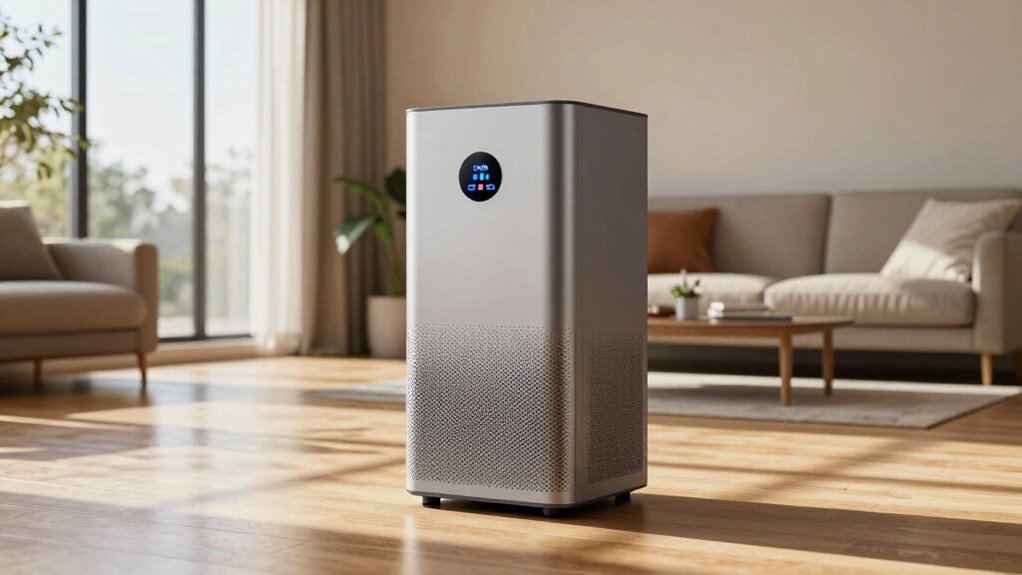

To select the right air purifier size, match its CADR and airflow capacity to your room’s volume and your clean-air goals. A higher CADR means faster and more effective pollutant removal, especially if your room is large. Guarantee the purifier’s airflow rate suits your space to avoid underperformance. If you want to know how to determine ideal sizing for your needs, keep exploring further details.

Get garden gear delivered free — and shop member deals
- Fast, free delivery on millions of items
- Access to Prime Big Deal Days deals on October 6–7
- Prime Video, Amazon Music and more included
Key Takeaways
- Determine your room’s volume by multiplying length, width, and height to find the appropriate purifier size.
- Match the purifier’s CADR to your room size to ensure sufficient airflow and efficient pollutant removal.
- Aim for 4–6 air exchanges per hour for allergy relief, selecting a unit with a CADR that supports this rate.
- Higher CADR values enable faster air cleaning, especially in larger spaces or areas with higher pollutant levels.
- Ensure the airflow rate and HEPA filter capacity are suitable for your specific indoor air quality needs.
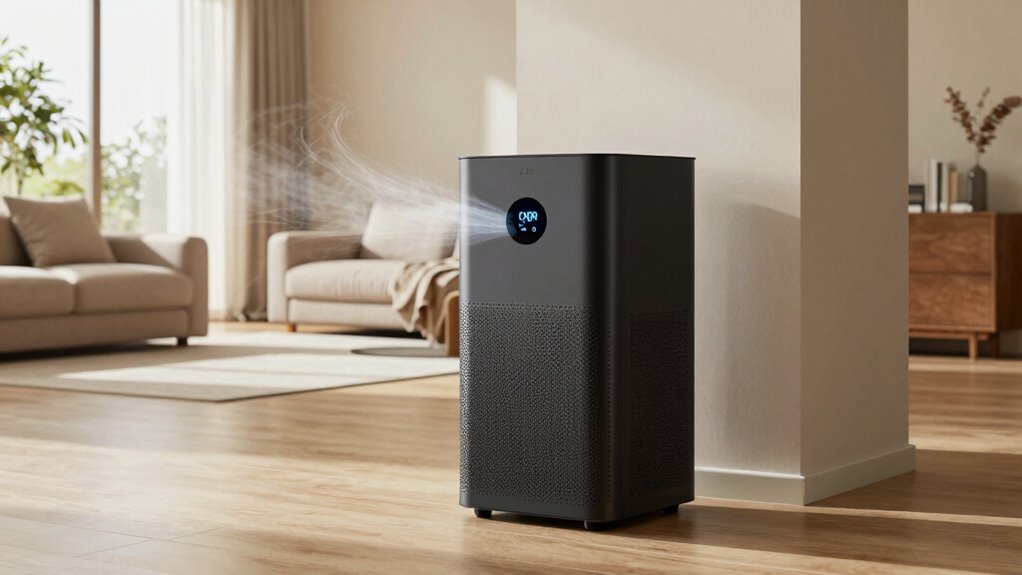
Choosing the right air purifier size is essential to effectively improve your indoor air quality. When selecting a unit, you need to consider how well it can filter the air in your space. The key factors here are HEPA filters and airflow rates. HEPA filters are crucial because they trap tiny particles like allergens, dust, pet dander, and even some bacteria and viruses, making them highly effective for cleaner air. However, even the best HEPA filter won’t provide optimal results if the airflow rates aren’t sufficient to circulate air through the filter efficiently. Airflow rate, typically measured in cubic feet per minute (CFM), determines how much air the purifier can process in a given time. A higher airflow rate means the unit can clean the air more quickly, which is especially important in larger rooms or spaces with higher pollutant levels.
To ensure your air purifier is appropriately sized, you should match its capacity to your room’s volume. Room volume is calculated by multiplying the length, width, and height of the space. Once you know your room’s size, look for a purifier with a Clean Air Delivery Rate (CADR) rating that aligns with that volume. CADR is a standardized measurement indicating how many cubic feet of filtered air the device can deliver per minute for specific pollutants like smoke, pollen, and dust. A higher CADR means faster and more efficient air cleaning, which is vital for maintaining healthy indoor air quality.
You also need to consider your clean-air targets. For example, if you or someone in your household suffers from allergies, you might want a purifier capable of multiple air exchanges per hour—generally around four to six. This ensures the air in your room is being filtered frequently enough to reduce allergen levels effectively. Conversely, if you’re mainly concerned about odors or general air freshness, a unit with a moderate CADR might suffice. When choosing an air purifier, it’s best to opt for a model where the airflow rates and HEPA filters are designed to handle your specific room size and air quality needs.
air purifier with high CADR for large rooms
As an affiliate, we earn on qualifying purchases.
As an affiliate, we earn on qualifying purchases.
Frequently Asked Questions
How Often Should I Replace the Filter in My Air Purifier?
You should replace your air purifier filter every 6 to 12 months, depending on the filter lifespan and how often you use your device. Check the manufacturer’s recommendations for replacement frequency, as filters can get clogged with pollutants over time. If you notice decreased airflow or odors lingering, it’s a sign to substitute the filter sooner. Regular replacements ensure your purifier works efficiently and maintains clean air in your space.
Can an Air Purifier Effectively Remove All Types of Indoor Pollutants?
A picture is worth a thousand words, so an air purifier can markedly improve indoor air quality, but it can’t remove all pollutants. It effectively targets allergens and some indoor chemicals, enhancing allergen filtration efficiency and reducing chemical exposure. However, it may not eliminate gases like VOCs or viruses completely. To maximize benefits, choose a purifier with multiple filters and good CADR ratings for your specific pollutants.
What Is the Ideal Placement for an Air Purifier in a Room?
Place your air purifier in a central spot, away from walls and furniture, to maximize airflow and coverage. Keep it on an elevated surface if possible, and avoid corners that block airflow. By considering your room layout and airflow optimization, you guarantee the purifier effectively circulates and cleans the air throughout the space. Regularly reposition it if needed to target specific areas with higher pollutant levels.
How Does Humidity Affect an Air Purifier’s Performance?
Humidity impact can affect your air purifier’s performance by making it less effective at capturing particles. High moisture levels can cause dust and mold spores to cling to surfaces, reducing filtration efficiency. Conversely, low humidity can lead to static buildup, which might interfere with sensors. You should monitor moisture levels and use a dehumidifier or humidifier if necessary, ensuring ideal conditions for your air purifier to operate efficiently.
Are There Noise Considerations When Choosing an Air Purifier?
Think of noise levels as a whisper in a quiet room—you want it to be barely noticeable. When selecting an air purifier, consider its sound frequency and decibel rating; some models hum loudly, while others operate quietly. You’ll want a unit with low noise levels, especially if you plan to run it overnight or in a workspace. Quiet operation makes clean air feel like a gentle breeze, not a disruptive roar.
Conclusion
To guarantee your air purifier works effectively, always match its capacity to your room’s size and your clean-air goals. For example, if you have a 300-square-foot living room, choosing a purifier with a CADR suitable for that space will keep the air fresh and healthy. By sizing your purifier correctly, you create a safer, more comfortable environment. Don’t settle for less—proper sizing makes all the difference for cleaner, healthier air in your home.
Fall Picks
fall essentials
As an affiliate, we earn on qualifying purchases.