
In a sustainable city, better feedback loops help you make smarter decisions by providing timely, accurate environmental data. These systems connect natural elements, technology, and community input to monitor and respond swiftly to issues like pollution, flooding, or heat islands. When you improve feedback, you support resilience, resource efficiency, and social engagement. Staying tuned reveals how strengthening feedback loops transforms urban life and guarantees your city adapts effectively to future challenges.

Get garden gear delivered free with Prime
- Fast, free delivery on millions of items
- Prime Video, Amazon Music and more included
- Member-only deals all year
Key Takeaways
- Enhanced feedback loops provide timely, accurate environmental data critical for adaptive urban planning and resilience.
- Natural infrastructure systems act as real-time sensors, improving environmental monitoring and flood risk management.
- Data-driven insights enable proactive interventions, optimizing resource use and reducing environmental impacts.
- Community engagement through transparent feedback fosters behavioral change and collective support for sustainability efforts.
- Strong feedback mechanisms help cities respond swiftly to climate change, resource shortages, and social inequalities.
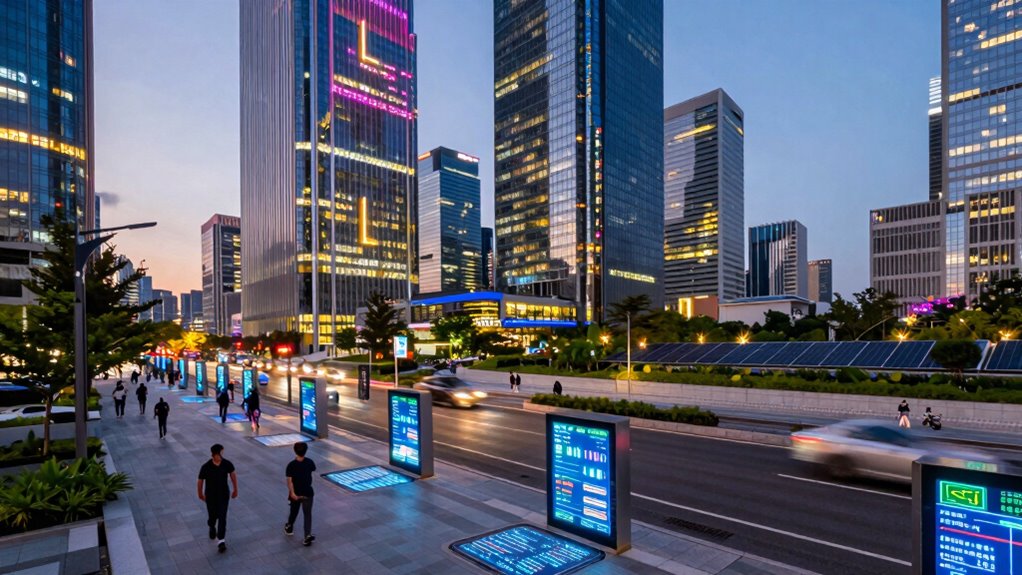
Sustainable cities rely on understanding the complex feedback loops that influence their environment, economy, and residents’ well-being. These loops create interconnected systems where one change can trigger a series of reactions, sometimes beneficial, sometimes problematic. To navigate these dynamics effectively, cities need better feedback loops—mechanisms that provide timely, accurate information to inform decision-making. When you improve these feedback systems, you enhance urban resilience, allowing your city to adapt to challenges like climate change, resource shortages, and social inequalities.
One key to strengthening these feedback loops is investing in green infrastructure. Unlike traditional gray infrastructure, which relies on concrete and pipes, green infrastructure uses natural systems—such as parks, wetlands, and green roofs—to manage stormwater, improve air quality, and reduce urban heat islands. These natural elements serve as living sensors, providing real-time data on environmental conditions. For example, wetlands can absorb excess rainfall, alerting city managers about flood risks before they escalate. When you integrate green infrastructure into your city’s planning, it becomes an essential part of the feedback loop, offering continuous insights into environmental health and helping you respond proactively. Incorporating natural systems into urban planning can significantly improve the accuracy and reliability of environmental feedback.
Investing in green infrastructure transforms natural elements into real-time environmental sensors, enhancing city resilience and proactive planning.
Better feedback loops also mean harnessing technology to gather and analyze data from various sources. Sensors embedded in green infrastructure can monitor soil moisture, air quality, and temperature, sending alerts that inform maintenance or policy adjustments. This real-time information allows you to make smarter decisions, reducing waste, conserving resources, and increasing overall urban resilience. For example, if sensors detect rising temperatures in a specific neighborhood, you could prioritize planting shade trees or implementing cooling strategies, preventing heat-related health issues and lowering energy consumption. Additionally, integrating digital monitoring tools can enhance the scope and precision of environmental data collection, making feedback more comprehensive. Incorporating data analytics can further help identify patterns and predict future challenges, ensuring proactive responses. Developing integrated data systems fosters a more cohesive approach to managing urban sustainability and improves the efficiency of feedback mechanisms.
Furthermore, effective feedback loops foster community engagement. When residents and local businesses can access data about their environment and see how their actions impact the city’s sustainability, they become active participants in the effort. Citizen science programs, mobile apps, and public dashboards provide transparent information that motivates behavioral change and collective action. You’ll find that this participatory approach strengthens social cohesion and creates a more resilient urban fabric. Additionally, leveraging environmental data enhances transparency and accountability, encouraging ongoing investment in sustainable practices. Building trust in the data shared publicly is essential for maintaining community support and ensuring continuous improvement in urban sustainability efforts.
green infrastructure rainwater management systems
As an affiliate, we earn on qualifying purchases.
As an affiliate, we earn on qualifying purchases.
Frequently Asked Questions
How Can Residents Actively Participate in Improving Feedback Systems?
You can actively participate by engaging in community meetings and sharing your ideas through participatory design processes. Attend local workshops or forums to voice your concerns and suggestions. Use digital platforms or apps to report issues and provide feedback. Collaborate with neighbors to strengthen community engagement, ensuring your input influences city planning. Your involvement helps create more responsive feedback systems, fostering sustainable urban development that truly reflects residents’ needs.
What Technology Advances Are Most Promising for Real-Time City Feedback?
Imagine a city with senses sharper than an eagle’s eye—that’s what sensor integration offers. These advances enable real-time data collection on traffic, air quality, and infrastructure. When combined with data visualization tools, you can see city health at a glance, making feedback instant and impactful. This tech helps you and city officials respond swiftly, turning city management into a dynamic, responsive system that keeps communities thriving.
How Do Feedback Loops Influence Long-Term Urban Planning Strategies?
Feedback loops directly influence your long-term urban planning strategies by enhancing urban resilience through continuous data collection and analysis. When you prioritize data transparency, you empower decision-makers and residents to make informed choices, adapt to changing conditions, and address issues proactively. This ongoing process helps create sustainable cities that can recover quickly from disruptions, foster community trust, and guarantee resilience in the face of environmental, social, and economic challenges.
What Challenges Exist in Integrating Diverse Data Sources for Feedback?
You face challenges in integrating diverse data sources because data integration requires aligning different formats, standards, and systems, which can be complex. Stakeholder collaboration is essential but often difficult, as various groups may have conflicting priorities or limited communication channels. Overcoming these hurdles involves establishing common standards, fostering open dialogue, and ensuring all stakeholders are committed to sharing data transparently for effective feedback and sustainable urban planning.
How Can Feedback Loops Address Social Equity in City Development?
You can use feedback loops to improve social equity by promoting data transparency and encouraging community engagement. When residents share their experiences and concerns, city planners gain insights into disparities and needs. This inclusive approach helps create policies that address inequalities effectively. By continuously gathering and acting on community input, you guarantee development efforts are fair, equitable, and responsive, fostering a more just and sustainable urban environment for everyone.
Conclusion
You see, by strengthening feedback loops, your city can adapt more effectively to challenges like pollution or traffic congestion. Imagine a smart city where sensors instantly relay data on air quality, prompting swift action—like rerouting traffic or activating green spaces. This real-time response creates a cycle of continuous improvement, making your city not just sustainable but resilient. Embracing better feedback loops isn’t just smart; it’s essential for building a truly sustainable urban future.
Columbus Day / Indigenous Peoples' Day Picks
long weekend sales
As an affiliate, we earn on qualifying purchases.