Community solar projects let you join a shared solar farm, providing clean energy to your neighborhood. Instead of installing panels on your roof, you buy or lease a portion of the solar farm and get credits on your electricity bill. This makes solar power more affordable and accessible, especially if you’re a renter or have shaded roofs. If you’re curious about how these projects work and their benefits, there’s more to discover below.
Key Takeaways
- Community solar projects allow multiple households and businesses to share the benefits of large-scale solar farms.
- Participants buy or lease a portion of the solar farm, receiving credits on their electricity bills.
- They provide an affordable, flexible way to access renewable energy without high upfront costs or maintenance.
- These projects help reduce greenhouse gas emissions and support local environmental and economic goals.
- Community solar promotes equitable access to clean energy, benefiting renters, apartment dwellers, and shaded-area homeowners.
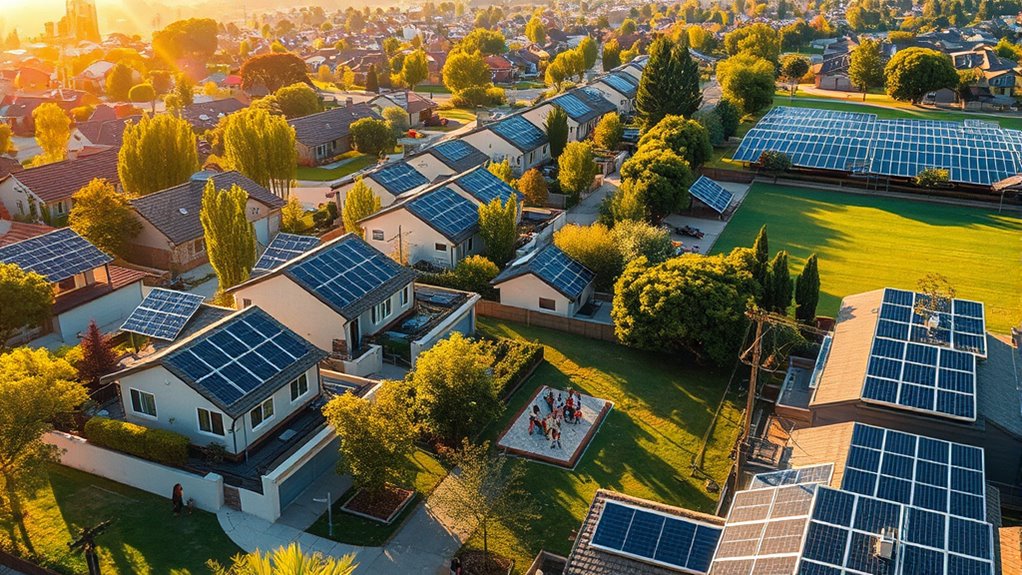
Have you ever wondered how communities can harness solar energy collectively? It’s a smart way to generate clean power and lower energy costs, especially when individual households can’t afford their own solar installations. That’s where community solar projects come into play. Instead of each person installing panels on their roof, a large solar farm is set up nearby. This shared infrastructure creates a single, centralized source of renewable energy that multiple households and businesses can tap into. The concept of a solar farm is central to these projects—large fields of solar panels that generate electricity for the community. When you join a community solar program, you typically buy or lease a portion of this shared solar farm. In return, you receive credits on your electricity bill, reflecting your share of the power produced. This setup offers shared benefits: lower costs, increased access to solar energy, and reduced carbon footprint for everyone involved.
By participating in a community solar project, you avoid the high upfront costs and maintenance responsibilities associated with individual solar systems. Instead, you benefit from economies of scale, making solar energy more affordable. The project’s shared benefits extend beyond savings. It allows renters, apartment dwellers, and homeowners with shaded roofs to access renewable energy without needing to install panels themselves. Plus, community solar supports local job creation and helps communities meet renewable energy goals faster. You don’t have to be a solar expert to participate; most programs are designed to be straightforward. You simply sign up, select your share of the solar farm, and watch your savings grow over time.
Participate easily, save money, and support renewable energy without installing panels yourself.
Another advantage of community solar is its flexibility. You can usually choose a plan that fits your budget and energy needs. Some programs even allow you to enroll or opt-out easily, giving you control over your participation. The shared benefits aren’t just financial—they also promote environmental responsibility. By supporting a solar farm, you contribute to reducing greenhouse gases and reliance on fossil fuels. This collective effort makes a tangible difference in combating climate change and fostering sustainable communities. Additionally, understanding the refrigeration cycle involved in solar power systems can help optimize their efficiency and longevity.
In essence, community solar projects democratize access to renewable energy. They turn solar power from a personal investment into a community resource, spreading the benefits far and wide. Whether you’re looking to save money, support clean energy, or both, participating in a shared solar farm helps power neighborhoods together—making solar energy accessible, affordable, and impactful for everyone involved.
community solar panel subscription
As an affiliate, we earn on qualifying purchases.
As an affiliate, we earn on qualifying purchases.
Frequently Asked Questions
How Do Community Solar Projects Impact Local Energy Bills?
Community solar projects can lower your energy bills by increasing solar capacity and providing billing savings. When you participate, you share in the clean energy generated, which reduces the amount you pay for electricity. This means you can enjoy lower monthly costs without installing panels yourself. As more solar capacity is added, your savings grow, making renewable energy more affordable and helping you cut costs while supporting sustainable energy efforts.
Can Renters Participate in Community Solar Programs?
Renters, rejoice! You can definitely participate in community solar programs. Many projects offer flexible lease options, making it simple for tenants to join without long-term commitments. Project eligibility often depends on your location and building type, but most programs welcome renters. This means you get to enjoy solar savings without the need to install panels or own property, empowering everyone to participate in sustainable energy solutions.
What Are the Environmental Benefits of Community Solar?
You’ll find that community solar projects boost solar panel efficiency by maximizing energy output through shared resources. They help reduce carbon emissions by increasing access to renewable energy incentives, making clean power more affordable. This approach promotes environmental benefits like cleaner air and less reliance on fossil fuels. By participating, you support sustainable development and contribute to a healthier planet while enjoying the advantages of renewable energy.
How Is Community Solar Project Funding Typically Secured?
You typically secure funding for a community solar project through a mix of solar incentives and project financing options. You can apply for federal, state, or local solar incentives that reduce upfront costs. Additionally, you might explore loans, grants, or third-party investments to finance the project. By leveraging these resources, you make it easier to fund and develop the project, ensuring it benefits the community while maximizing financial support.
Are Community Solar Projects Available in Rural or Urban Areas?
Imagine sunlight pouring over both bustling city streets and quiet rural fields—community solar projects are accessible in both settings. In urban development, they enhance energy access amid dense infrastructure, while in rural areas, they bolster rural infrastructure by providing affordable, renewable power. Whether in city neighborhoods or sprawling countryside, these projects connect communities to clean energy, empowering everyone to share in a sustainable future.
Conclusion
By participating in community solar projects, you help reduce carbon emissions and make renewable energy more accessible. Did you know that over 3 gigawatts of community solar capacity have been installed nationwide? That’s enough to power nearly 600,000 homes annually! Together, you and your neighbors can create a cleaner, greener future while saving money on energy bills. Join the movement and be part of the community transforming the way we power our neighborhoods.