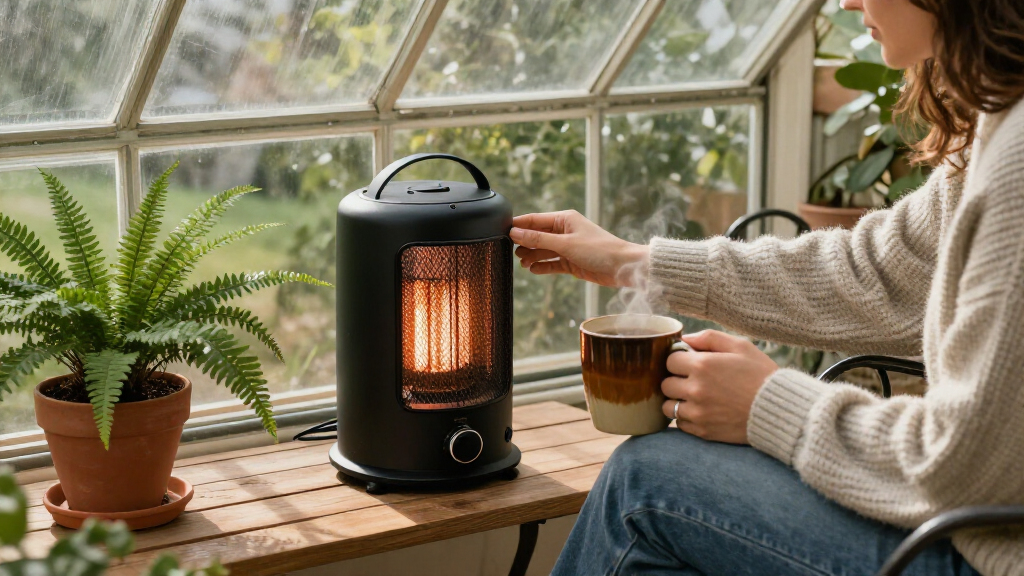

Choosing the right heating system for a greenhouse is rarely about picking the ‘best’ heater in a vacuum; it is about selecting the right compromise between convenience, cost, and reliability. The two dominant choices for most home gardeners and small commercial growers are electric convection heaters and propane-powered units. This comparison addresses the fundamental tension every grower faces: do you prioritize the simplicity and safety of electricity, or the raw power and off-grid capability of propane?

Get garden gear delivered free with Prime
- Fast, free delivery on millions of items
- Prime Video, Amazon Music and more included
- Member-only deals all year

Buyplus 1500W Greenhouse Heater with Digital Thermostat – Red
- ✔ Power: 1500 watts
- ✔ Heating Area: 215 sq ft
- ✔ Temperature Range: 40°F–108°F

Greenhouse Heater with Thermostat, 1500W Outdoor Heater for Patio, Auto Temp Control & Overheat Protection, Non‑Slip Cushion, Ele…
- ✔ Power Output: 1500 watts
- ✔ Heating Element: PTC Radiant
- ✔ Modes: Fan, Low, High
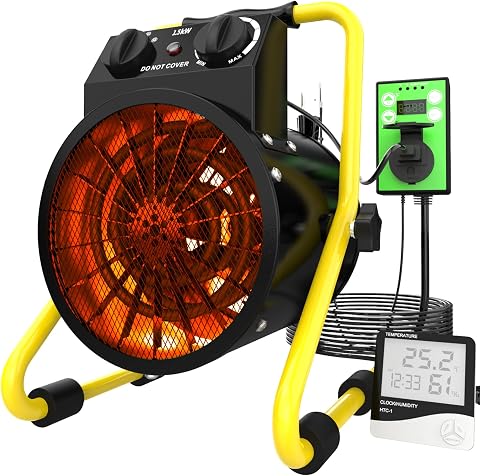
Buyplus Greenhouse Heater with Digital Thermostat, 1500W Electric Space Heater for Patio, Garage, Greenhouse (Black)
- ✔ Power: 1500 watts
- ✔ Dimensions: 14" D x 10" W x 10" H
- ✔ Heating Area: 215 sq ft
Electric heaters are often the default for small, insulated structures where safety and low upfront cost matter most. Propane heaters, conversely, appeal to larger spaces or growers in regions prone to power outages, where keeping plants alive during a winter storm is critical. The decision hinges on your specific infrastructure, local energy costs, and risk tolerance. Below, we break down these options across critical criteria to help you determine which system aligns with your gardening goals.
At a Glance
| Criteria | Electric Greenhouse Heaters | Propane Greenhouse Heaters | Winner |
|---|---|---|---|
| Initial Cost | Low ($50-$200) | Moderate ($150-$400) | A |
| Operating Cost | High (Electricity rates) | Moderate (Propane prices vary) | Depends |
| Installation Complexity | Very Low (Plug and play) | Moderate (Venting required) | A |
| Safety & Ventilation | High (No fumes, low fire risk) | Moderate (CO risk, fire hazard) | A |
| Heat Output & Efficiency | Moderate (100% efficient at point of use) | High (High BTU output) | B |
| Reliability During Outages | Low (Depends on grid) | High (Independent of grid) | B |
| Maintenance Requirements | Minimal (Dust cleaning) | High (Tank swaps, nozzle checks) | A |
Buyplus 1500W Greenhouse Heater with Digital Thermostat – Red
This unit earns our top spot because it directly addresses the most critical need in a greenhouse: consistent temperature maintenance. Unlike basic space heaters that cycle on and off aggressively, the digital thermostat with a waterproof probe allows for fine-tuned adjustments within a 40°F–108°F range. This precision is superior to the analog or less refined controls found on competitors. The 3-second heating response ensures that when the thermostat triggers, warmth is immediate, preventing shock to sensitive plants. While it shares the 1500W power limit with our other picks, its build quality and safety features, including a self-resetting heat breaker, make it the most reliable choice for year-round use. It is not the most versatile in terms of airflow options, lacking the multi-speed fan features of the PTC model, but for pure heating efficiency and accuracy, it leads the pack.
Pros:
- Waterproof digital probe ensures accurate readings in humid environments
- Rapid 3-second heating prevents sudden temperature drops
- Comprehensive safety suite with overheat protection and self-resetting breaker
- Long 7.5 ft cord allows for flexible placement away from outlets
Cons:
- Limited to two modes (Fan/Heat) with no low-heat setting for mild days
- No built-in timer for automated on/off cycles
Best for: Gardeners who need precise temperature regulation for delicate seedlings or tropical plants.
Not ideal for: Users looking for smart home integration or remote scheduling capabilities.
Bottom line: The most reliable and precise heater for serious greenhouse growers who prioritize temperature stability.
“The most reliable and precise heater for serious greenhouse growers who prioritize temperature stability.”
Greenhouse Heater with Thermostat, 1500W Outdoor Heater for Patio, Auto Temp Control & Overheat Protection, Non‑Slip Cushion, Ele…
If you need more than just on/off heating, this PTC (Positive Temperature Coefficient) model offers the greatest flexibility. Its standout feature is the three-speed operation (Fan Only, Low Heat, High Heat), which is a significant advantage over the two-mode Buyplus units. This allows you to circulate air gently on mild days or use low heat to maintain a baseline temperature without the aggressive cycling of the full 1500W mode. The 2-second heating time is marginally faster than the Buyplus, providing immediate warmth when needed. However, the lack of a waterproof probe on the standard model (unless the optional digital thermostat is attached) makes it slightly less ideal for extremely humid setups compared to our top pick. It is the best choice for growers who use their heaters across different seasons and environments, from grow tents to patios.
Pros:
- Three power modes offer superior control over airflow and heat intensity
- Extremely fast 2-second heating response time
- Stainless steel construction offers enhanced durability in outdoor settings
- Non-slip cushion and handle improve stability on uneven greenhouse floors
Cons:
- Standard model lacks the integrated waterproof digital probe of the Buyplus
- No remote control or smartphone connectivity
Best for: Users who need variable heat settings for different stages of plant growth or mild weather days.
Not ideal for: Those who require a permanently waterproof sensor for high-humidity fogging systems.
Bottom line: The most versatile option for multi-season use due to its three-mode heating and cooling functionality.
“The most versatile option for multi-season use due to its three-mode heating and cooling functionality.”
Buyplus Greenhouse Heater with Digital Thermostat, 1500W Electric Space Heater for Patio, Garage, Greenhouse (Black)
This black variant of the Buyplus heater is essentially identical in performance to our top pick but often comes in at a slightly lower price point or availability tier. It retains the digital thermostat and 1500W power, ensuring it can still effectively warm up to 215 sq ft. The compact dimensions (14" D x 10" W x 10" H) make it an excellent choice for smaller grow tents or tight greenhouse corners where the red model might feel bulkier. While it lacks the additional airflow versatility of the PTC model, it provides the same safe, precise heating needed for most home gardening applications. We rank it third because it offers no distinct functional advantage over the first Buyplus model, serving primarily as an alternative color or availability option for buyers who prefer a black aesthetic or find better stock availability for this specific SKU.
Pros:
- Compact footprint fits easily into tight grow tent spaces
- Same reliable digital thermostat and safety features as the top pick
- Rapid 3-second heating ensures quick temperature recovery
- Portable handle and non-slip base for easy repositioning
Cons:
- No built-in timer or remote control for scheduling operation
- Functionally identical to the red Buyplus model with no added features
Best for: Growers with limited space who prefer a black aesthetic or find better availability for this model.
Not ideal for: Users who need multiple heat intensity levels or advanced scheduling features.
Bottom line: A solid, reliable alternative for those who need a compact, black heater with precise digital control.
“A solid, reliable alternative for those who need a compact, black heater with precise digital control.”
As an Amazon Associate we earn from qualifying purchases.
Key Differences
The most significant divergence lies in operational independence and safety profile. Electric heaters are inherently safer for enclosed spaces because they do not consume oxygen or produce carbon monoxide. This allows them to be used in smaller, less ventilated structures without the complex venting systems required for combustion-based heating. However, this convenience comes at a steep price: electricity is generally more expensive per unit of heat than propane, and if the power grid fails during a cold snap, electric heating stops immediately. Propane heaters offer robust, high-output heating that functions independently of the electrical grid, making them ideal for emergency backup or large spaces. Yet, this power introduces significant safety concerns, including the risk of carbon monoxide buildup and fire hazards, necessitating strict ventilation protocols and regular maintenance.
Another critical difference is the infrastructure required. Electric heaters require only a grounded outlet, making them accessible to almost any gardener. Propane heaters require fuel storage, safe tank handling, and often more sophisticated installation to ensure proper air exchange. For a hobbyist with a small backyard greenhouse, the hassle of managing propane tanks may outweigh the fuel savings. For a serious grower with a large structure or frequent power instability, the reliability and lower operating cost of propane often justify the added complexity and safety precautions.
Detailed Comparison
Initial Cost (Electric Greenhouse Heaters wins — major)
Electric heaters are significantly cheaper to buy. A basic 1,500-watt unit can be found for under $100. Propane units, even small ones, typically start around $150 to $200, excluding the cost of the tank and regulator. For budget-conscious beginners, the lower barrier to entry makes electric the clear winner. The gap is major for those starting small, but less relevant for larger installations where multiple units or larger propane tanks are needed anyway.
Operating Cost (Propane Greenhouse Heaters wins — moderate)
This is where the math gets tricky and location-dependent. In areas with low electricity rates, electric heating might be competitive. However, in most regions, propane provides more heat per dollar. Propane has a higher energy density, meaning you get more BTUs for your money compared to the cost of running an electric coil. Over a long winter season, the savings from propane can offset the higher initial purchase price. This difference is moderate to major depending on local utility rates and the length of the heating season. For large spaces, propane is almost always cheaper to run.
Installation Complexity (Electric Greenhouse Heaters wins — major)
Electric heaters are plug-and-play. You mount them or place them on a stable surface, plug them into a GFCI outlet, and they work. Propane heaters require more thought. You need to ensure the tank is stored safely outside or in a ventilated area, connect regulators, and often install vents to exhaust combustion gases. If you are not comfortable with gas connections, electric is vastly easier. The gap here is major for DIY novices, as improper propane installation can be dangerous.
Safety & Ventilation (Electric Greenhouse Heaters wins — major)
Electric heaters win on safety for enclosed spaces. They do not produce fumes, consume oxygen, or pose a carbon monoxide risk. This makes them ideal for small greenhouses where ventilation is limited. Propane heaters produce combustion byproducts. While many modern units are designed for indoor use, they still require adequate ventilation to prevent CO buildup and oxygen depletion. In a tightly sealed greenhouse, a propane heater can become a hazard if not monitored. This difference is major for health and safety, particularly in small or poorly ventilated structures.
Reliability During Outages (Propane Greenhouse Heaters wins — major)
Propane heaters function without electricity. If a winter storm knocks out the power grid, a propane heater will continue to warm your greenhouse, potentially saving your plants from freezing. Electric heaters become useless bricks the moment the power fails. For growers in areas prone to outages, this reliability is a major advantage. If you have a backup generator, this advantage diminishes, but for most home gardeners, propane offers peace of mind that electricity cannot match.
Maintenance Requirements (Electric Greenhouse Heaters wins — minor)
Electric heaters require minimal maintenance. Occasionally wiping down the casing to remove dust is usually sufficient. Propane heaters need more attention. You must check hoses for leaks, clean burner nozzles to prevent clogging, and manage fuel tank refills or swaps. This adds a layer of ongoing effort and potential failure points. For users who prefer a ‘set it and forget it’ approach, electric is superior. The difference is minor for experienced users but moderate for those who dislike routine maintenance tasks.
Electric Greenhouse Heaters: Pros and Cons
Pros:
- Lower upfront cost
- No fumes or carbon monoxide risk
- Easy installation (plug and play)
- Low maintenance
- Safe for small, enclosed spaces
Cons:
- Higher operating cost in many regions
- Useless during power outages
- Lower heat output per unit
- Requires adequate electrical capacity
Propane Greenhouse Heaters: Pros and Cons
Pros:
- High heat output
- Works during power outages
- Lower fuel cost per BTU
- Independent of grid infrastructure
Cons:
- Higher upfront cost
- Requires ventilation and safety precautions
- Complex installation and fuel handling
- Higher maintenance needs
Who Should Choose What
Choose Electric Greenhouse Heaters if:
- You have a small greenhouse (under 100 square feet)
- You live in an area with reliable electricity
- You prioritize safety and ease of use over fuel costs
- You are a beginner gardener who wants simplicity
Choose Propane Greenhouse Heaters if:
- You have a large greenhouse or grow room
- You live in an area prone to winter power outages
- You want to minimize long-term fuel costs
- You are comfortable handling propane tanks and ventilation
Skip both if: If you live in a mild climate where frost is rare, neither may be necessary; a thermal mass or simple row cover might suffice.
Value for Money
Is paying more for propane worth it? For small spaces, often no. The savings in fuel costs rarely offset the higher initial price and the hassle of fuel management unless the winter season is exceptionally long. For large spaces, yes. The cost difference between heating 500 square feet with electricity versus propane can be substantial over a season. Propane provides better value for scale and reliability. However, if you already have a backup generator, the value proposition of propane shifts toward convenience and fuel diversity rather than pure cost savings. Electric offers better value for low-risk, small-scale applications where safety and simplicity are the primary drivers.
Final Verdict
For most home gardeners with small to medium greenhouses and reliable grid access, electric heaters are the superior choice. They are safer, easier to install, and require less maintenance. The higher operating cost is a fair trade for the peace of mind and simplicity they offer. Choose propane heaters if you have a large structure, live in an area with frequent power outages, or face extremely high electricity rates. In these specific scenarios, the reliability and fuel efficiency of propane justify the added complexity and safety precautions. Do not mix systems without understanding ventilation requirements; if you choose propane, invest in a carbon monoxide detector immediately.
Frequently Asked Questions
Can I use a propane heater in a small greenhouse?
Only if you have adequate ventilation. Propane heaters consume oxygen and produce carbon monoxide. In a small, sealed greenhouse, this can quickly become dangerous for both plants and humans. If you must use one, crack vents open or use a model specifically designed for indoor use with an oxygen depletion sensor.
Which is safer for pets and children?
Electric heaters are generally safer because they do not produce fumes. However, they can still get hot to the touch and pose a burn risk. Propane heaters add fire and explosion risks. In both cases, keeping heaters away from flammable materials and out of reach is mandatory.
Do electric heaters dry out the air?
Electric convection heaters do not inherently dry the air more than propane heaters; in fact, propane combustion adds water vapor, which can increase humidity. However, heating any air space reduces relative humidity. If you use electric, you may need to monitor humidity levels more closely than with propane.
What size heater do I need?
For electric, use a rule of thumb of 10 watts per square foot for mild winters, or up to 20 watts for harsh climates. For propane, calculate BTUs needed based on square footage and insulation. A 1,500-watt electric heater is roughly equivalent to 5,000 BTUs, which is suitable for a small, insulated space.