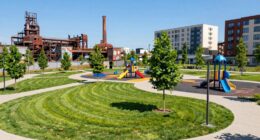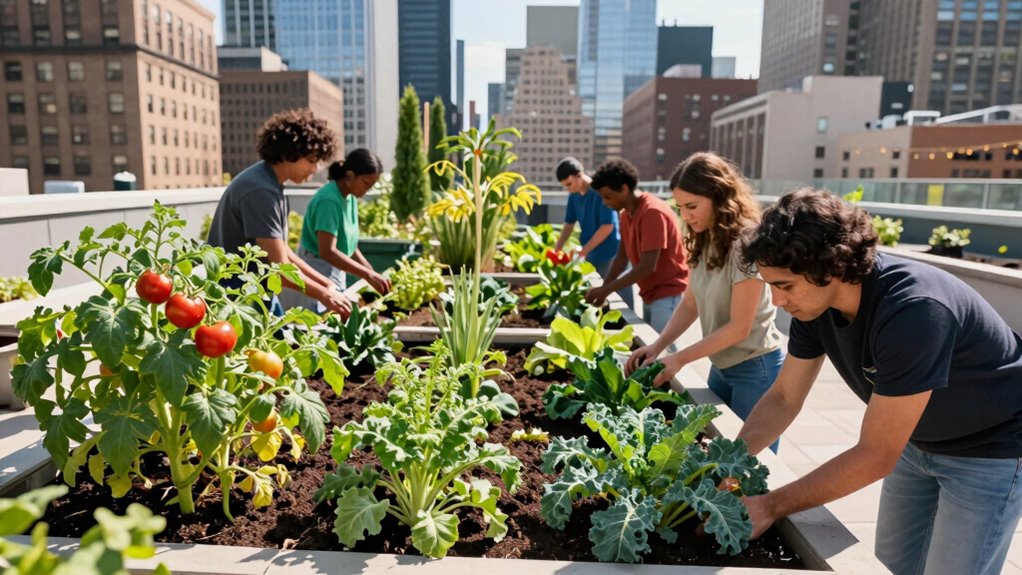

Urban agriculture helps you become more aware of local food systems by involving you in hands-on gardening and farming activities. When you participate in transforming vacant lots or rooftops into green spaces, you see firsthand how food is grown and produced within your community. This active involvement fosters a sense of ownership, responsibility, and connection to your environment. Keep exploring to discover more ways urban agriculture creates community awareness and promotes sustainable living.
Key Takeaways
- Urban agriculture engages community members through hands-on activities, fostering a sense of connection and shared responsibility.
- It raises awareness about sustainable practices, environmental health, and local food systems within neighborhoods.
- Educational programs in urban farms increase understanding of food justice, nutrition, and ecological principles.
- Transforming unused spaces into green areas visibly demonstrates environmental benefits and community value.
- Active participation in urban farming encourages advocacy for green policies and long-term city sustainability.
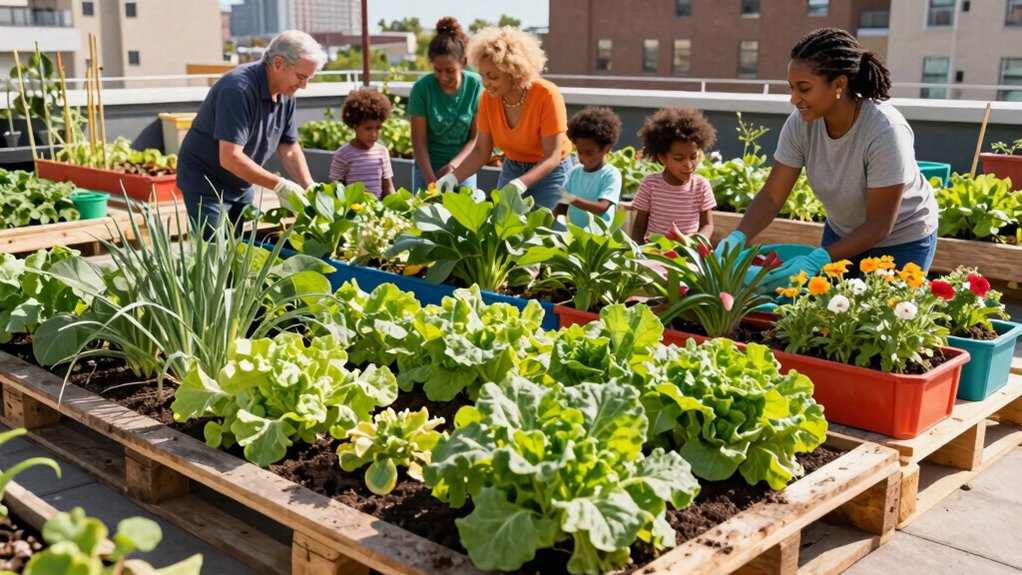
Have you ever wondered how cities are transforming underused spaces into productive green areas? Urban agriculture is at the forefront of this movement, turning vacant lots, rooftops, and alleyways into thriving gardens and farms. But beyond the beauty and food production, urban agriculture plays a pivotal role in building local awareness. When community members get involved in planting, tending, and harvesting, they develop a deeper understanding of where their food comes from and the effort it takes to grow it. This hands-on experience fosters a sense of connection and responsibility that can ripple through neighborhoods, encouraging more sustainable practices and communal pride.
Community engagement is essential in shaping the success of urban agriculture projects. By involving local residents, schools, and organizations, these initiatives create opportunities for everyone to participate actively. When people see themselves as part of the solution, they become more invested in maintaining green spaces and supporting sustainable development. Workshops, volunteer days, and shared harvests open dialogue and strengthen bonds among community members. This collective effort not only enhances the physical environment but also cultivates a culture of environmental stewardship and social cohesion. Additionally, the use of sustainable practices ensures that urban agriculture remains environmentally friendly and effective over time. Incorporating urban ecosystem principles can further enhance biodiversity and resilience within city environments. Promoting awareness of local environmental conditions can help communities adapt their strategies to specific urban challenges. Recognizing the importance of soil health in urban farms can also lead to more productive and sustainable crop yields. Developing community-led initiatives can further empower residents to take ownership of urban agriculture projects and foster long-term success.
Sustainable practices are central to urban agriculture’s effectiveness and long-term viability. Using organic methods, composting, rainwater harvesting, and native plants helps minimize environmental impact. These practices teach residents that farming doesn’t have to harm the planet; instead, it can be a model for responsible living. As community members observe the benefits of sustainable practices firsthand, they’re more likely to adopt similar habits in their own homes and neighborhoods. This creates a cycle of awareness and action that extends beyond the garden, influencing city-wide attitudes toward environmental responsibility.
Furthermore, urban agriculture serves as an educational tool, raising awareness about food justice, nutrition, and local ecosystems. Schools and community centers often partner with urban farms to provide lessons on healthy eating and ecological balance. When people understand the importance of sustainable practices, they’re more inclined to support policies and initiatives that promote green spaces and local food systems. This heightened awareness can drive collective advocacy, shaping city planning and resource allocation toward more sustainable and inclusive urban environments.
In essence, urban agriculture transforms vacant spaces into vibrant hubs of learning and sustainability. It fosters community engagement, promotes sustainable practices, and nurtures an informed citizenry. By actively participating in these green projects, you help build a more conscious, resilient, and connected city—one plot at a time.
As an affiliate, we earn on qualifying purchases.
Frequently Asked Questions
How Does Urban Agriculture Impact Local Economies?
Urban agriculture boosts your local economy by promoting economic diversification and creating jobs. As you support community farms, you help reduce reliance on external sources and strengthen local food systems. This encourages entrepreneurs to start new ventures, leading to more employment opportunities. By fostering a vibrant local food scene, urban agriculture keeps money circulating within your community, ultimately making your neighborhood more resilient and economically sustainable.
What Are Common Challenges Faced by Urban Farmers?
You face challenges like maintaining soil quality, which is crucial for healthy crops, and managing pests without harmful chemicals. Did you know that urban soil often contains contaminants, making soil improvement essential? Pests can quickly destroy your efforts if not controlled properly. Balancing soil health and pest management requires knowledge, patience, and resources, but overcoming these hurdles helps you grow sustainable, fresh food directly in your community.
How Can Urban Agriculture Promote Community Health?
Urban agriculture promotes community health by fostering community engagement, encouraging residents to participate in growing their own food and learn about nutrition. It also supports environmental sustainability by reducing food miles and promoting eco-friendly practices. When you get involved, you help build a healthier, more connected neighborhood. This active participation not only improves physical well-being but also strengthens social bonds, creating a resilient and vibrant community.
What Policies Support Urban Agriculture Initiatives?
Think of it as hitting two birds with one stone. You support urban agriculture through zoning regulations that designate areas for community gardens and farms, making it easier to establish projects. Subsidy programs also play a crucial role by providing financial aid to urban farmers, encouraging more residents to grow their own food. These policies foster local awareness, boost community involvement, and help create a sustainable, resilient urban environment.
How Does Urban Agriculture Influence Local Food Security?
Urban agriculture boosts your local food security by increasing access to fresh, nutritious produce, reducing reliance on distant supply chains. It promotes food sovereignty, empowering you and your community to control your food sources. Additionally, it helps preserve cultural traditions through gardening practices and crops that reflect your heritage, strengthening community bonds. By growing food locally, you’re fostering resilience and ensuring everyone has reliable access to healthy foods.
Conclusion
So, next time you walk past that tiny city garden, remember—urban agriculture isn’t just about fresh produce. It’s about building awareness, connecting communities, and proving that even in concrete jungles, growth is possible. Ironically, in a world obsessed with technology and speed, it’s the simple act of planting that reminds us all to slow down and stay aware. Because sometimes, the best way to grow a city’s future is by planting the seeds of understanding today.