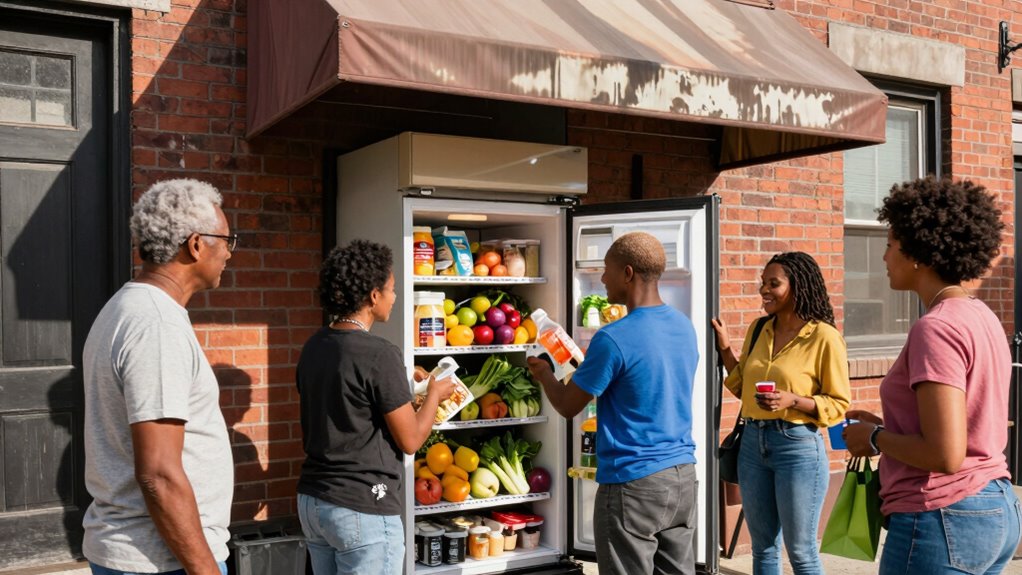

Community fridges reflect mutual aid by letting neighbors directly share food, support one another, and build stronger, caring bonds. You can see how volunteers manage, maintain, and stock the fridge, turning it into a neighborhood effort. It’s about collective responsibility, reducing waste, and empowering residents to address food insecurity themselves. If you want to understand how these efforts foster resilience and community trust, you’ll find more inspiring examples coming up.

Get garden gear delivered free with Prime
- Fast, free delivery on millions of items
- Prime Video, Amazon Music and more included
- Member-only deals all year
Key Takeaways
- Community fridges enable neighbors to voluntarily donate, share, and access food, exemplifying collective responsibility and mutual support.
- Managed by volunteers, they foster local ownership and empower residents to address food insecurity directly.
- They build social bonds by encouraging community participation and creating support networks for those in need.
- By redistributing surplus food, they reduce waste and demonstrate grassroots efforts to tackle systemic hunger issues.
- The fridges symbolize community-led action, reinforcing trust, resilience, and shared commitment to mutual aid.

Community fridges have become a powerful symbol of mutual aid, allowing neighbors to share food freely and address local food insecurity. When you see a fridge stocked with fresh produce, canned goods, and other nourishing items in a public space, it’s a reminder that community members are actively working together to combat hunger. These fridges serve more than just a practical purpose; they embody the spirit of collective care and solidarity. As you engage with the concept, you realize that community fridges thrive because of effective volunteer coordination, which guarantees that these resources remain accessible, clean, and well-stocked.
Community fridges symbolize mutual aid, fostering care, solidarity, and community-driven solutions to food insecurity.
You might wonder how these fridges stay full without a centralized organization controlling every aspect. It’s because volunteers from the neighborhood step up to manage them—donating food, maintaining cleanliness, and monitoring supplies. This volunteer coordination is essential because it shifts the responsibility from a few individuals or organizations to the community itself. When everyone contributes, the burden is shared, and the fridge becomes a symbol of shared responsibility. You can see how this model nurtures trust and encourages participation, making the initiative sustainable in the long run.
Addressing food insecurity requires more than just providing food; it calls for building relationships and fostering a sense of collective ownership. Community fridges do this by inviting neighbors to participate actively. Whether you donate extra groceries from your pantry or help organize the weekly restocking, your involvement makes a difference. It’s a direct way to combat the systemic issues that cause food insecurity, showing that solutions can come from within the community itself. This approach also reduces waste because surplus food is redistributed rather than discarded, which is an important aspect of waste reduction. Proper food redistribution ensures that resources are maximized and that less food goes to waste, making the effort more sustainable. Community-led action plays a vital role in sustaining these efforts and ensuring their success.
Furthermore, volunteer coordination in community fridges demonstrates that mutual aid isn’t just about giving—it’s about creating a support network. When you see volunteers helping to keep the fridge clean or spreading awareness about the initiative, you recognize that these actions reinforce social bonds. It’s a practical expression of solidarity, where everyone has a role to play. This collective effort helps guarantee that those facing food insecurity have a reliable resource and that the community as a whole becomes stronger and more resilient. Additionally, such grassroots actions often foster a deeper understanding of local needs and promote community empowerment.
Additionally, community fridges exemplify mutual aid as a form of community-led action that addresses systemic issues, emphasizing the importance of grassroots solutions. In essence, community fridges reflect mutual aid in practice by empowering residents to take action against hunger. Through volunteer coordination, neighbors turn a simple fridge into a powerful symbol of shared effort, trust, and care. It’s a tangible reminder that, when people come together, they can address pressing issues and build a more equitable, supportive community.
community fridge food storage containers
As an affiliate, we earn on qualifying purchases.
As an affiliate, we earn on qualifying purchases.
Frequently Asked Questions
How Do Community Fridges Stay Stocked Regularly?
You see community fridges stay stocked through effective food donation logistics and volunteer coordination. Donors regularly drop off perishable and non-perishable items, and volunteers help organize and distribute the food. Local businesses, farms, and individuals frequently contribute, ensuring the fridge remains filled. This collaborative effort relies on open communication channels and scheduled pickup times, making sure everyone who needs food can access it without interruption.
Who Manages or Oversees Community Fridge Operations?
Imagine a modern-day Robin Hood managing the community fridge. You’ll find volunteers, often coordinated by local groups or nonprofits, overseeing operations. They handle tasks like stocking, cleanliness, and safety. Community engagement is essential—neighbors and local businesses often pitch in. You become part of a collective effort, ensuring the fridge stays accessible and well-maintained, turning mutual aid into an everyday act of kindness that strengthens your neighborhood.
Are Community Fridges Accessible to All Community Members?
Yes, community fridges are accessible to all community members. They promote cultural inclusivity by offering diverse food options that respect different dietary needs and preferences. However, some accessibility barriers, like location or physical access issues, can limit participation. To guarantee everyone benefits, it’s vital to address these barriers, such as placing fridges in easily reachable areas and maintaining open, welcoming environments that serve diverse community needs.
How Is Food Safety Maintained in Community Fridges?
You’ll be glad to know that food safety is prioritized through strict food safety protocols and volunteer training. Studies show that community fridges, with proper oversight, reduce food waste by up to 50%, highlighting their effectiveness. Volunteers receive training on handling and monitoring food to prevent contamination. Regular inspections and clear guidelines guarantee that food stays safe for everyone, fostering trust and encouraging ongoing community participation.
What Challenges Do Community Fridges Face Long-Term?
You face challenges like resource sustainability and volunteer coordination in the long term. Ensuring the fridge stays stocked without over-relying on donations can be tough, especially with fluctuating supplies. Additionally, coordinating volunteers to regularly maintain and monitor the fridge requires ongoing effort and organization. Without proper planning, these issues can threaten the fridge’s continued operation, making it essential to develop sustainable strategies and strong volunteer networks to keep the community resource thriving.
Conclusion
Community fridges truly embody the spirit of mutual aid, showing that when people come together, they can turn the tide of hardship. By sharing food freely, you create a web of support that lifts everyone up, proving that a helping hand can go a long way. When it’s all said and done, it’s clear that this movement isn’t just about food — it’s about building a community that sticks together through thick and thin.
Columbus Day / Indigenous Peoples' Day Picks
long weekend sales
As an affiliate, we earn on qualifying purchases.