
Your personal mobility’s value depends heavily on cargo capacity, as it determines how well your vehicle adapts to your daily needs. A larger cargo space can help you carry bigger or more items, reducing trips and increasing convenience. Smaller vehicles offer agility but limit what you can transport. As your needs evolve, so does the importance of the right storage. Keep exploring how cargo capacity shapes your transportation choices to make the most of your mobility options.
Key Takeaways
- Increased cargo capacity enhances vehicle utility, allowing for more versatile and efficient personal transportation.
- Adequate cargo space reduces the need for multiple trips or alternative transport methods.
- Vehicle size and design directly influence its ability to meet evolving personal and lifestyle needs.
- Cargo capacity impacts urban mobility by balancing practicality with maneuverability in dense environments.
- Sustainable vehicle design considers cargo needs to optimize space and promote eco-friendly personal mobility options.
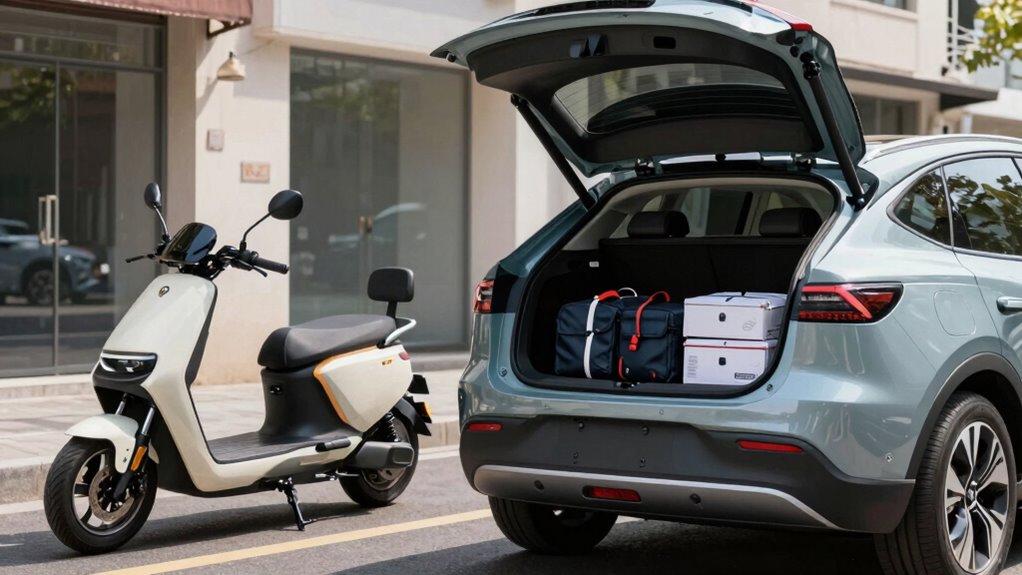
Have you ever wondered how cargo capacity impacts your personal mobility? It might seem like a minor detail, but cargo capacity constraints can significantly influence how useful and versatile your transportation options truly are. Limited space means you can’t carry as much, which can restrict your ability to handle daily errands, weekend getaways, or even unexpected needs. When considering urban mobility solutions, cargo capacity often becomes a deciding factor. Smaller vehicles like compact cars or scooters excel for quick trips and narrow city streets, but they fall short when it comes to transporting larger items or multiple bags. Conversely, larger vehicles offer more room but can be cumbersome in crowded urban settings, affecting maneuverability and parking.
The value of personal mobility hinges on how well your vehicle adapts to your lifestyle. If you frequently shop for groceries, carry sporting equipment, or transport work tools, having sufficient cargo capacity boosts your independence and convenience. Without this space, you might find yourself making multiple trips or relying on additional transportation methods, which can be time-consuming and costly. Urban mobility solutions that focus solely on speed or fuel efficiency overlook the importance of cargo space, making them less practical for everyday needs. In dense city environments, a vehicle’s cargo capacity becomes a key component of its overall utility, influencing your daily routines and flexibility. Additionally, understanding the urban environment and how different vehicles interact with it can help in selecting the most suitable transportation mode.
Furthermore, cargo capacity constraints often dictate your choice of transportation, especially as your needs evolve. As your life changes—say, you start a new hobby or expand your household—you’ll require different levels of storage. If your current mode of transport cannot accommodate these shifts, your personal mobility diminishes, forcing you to seek alternative solutions. Electric bikes or scooters might be perfect for quick trips, but they lack cargo space for larger loads. On the other hand, small vans or crossovers strike a balance, providing enough room without sacrificing too much in urban maneuverability. The size of the vehicle and its adaptability are crucial factors in maintaining effective urban mobility, especially when circumstances change unexpectedly. Recognizing the impact of vehicle design on cargo capacity can further enhance your understanding of how well a vehicle suits your needs.
Moreover, considering sustainable urban planning practices can influence the availability and design of vehicles that optimize cargo space while reducing environmental impact. Ultimately, understanding how cargo capacity influences personal mobility helps you make smarter choices. It’s not just about getting from point A to B; it’s about how seamlessly your vehicle fits into your daily life. When you prioritize cargo capacity alongside other factors like fuel efficiency and size, you maximize the value of your personal mobility, ensuring that your transportation adapts to your changing needs and the challenges of urban environments. Recognizing the role of biodiversity and sustainable practices in urban planning can also contribute to creating more adaptable and eco-friendly mobility options in the future.
As an affiliate, we earn on qualifying purchases.
Frequently Asked Questions
How Is Cargo Capacity Measured in Personal Mobility Devices?
You measure cargo capacity in personal mobility devices through cargo measurement, which typically involves evaluating the volume and weight the device can carry. To optimize capacity, you consider the available space and weight limits, ensuring efficient capacity optimization. This helps you select devices that fit your needs, whether for carrying groceries or other essentials, making your personal mobility more functional and convenient without compromising safety or performance.
Does Increased Cargo Capacity Affect Vehicle Speed or Performance?
Adding cargo capacity is like packing extra weight into a backpack; it can slow you down and challenge your balance. Increased cargo may reduce vehicle speed and affect performance, making your ride feel less nimble. It also impacts vehicle stability, especially on uneven surfaces. Plus, carrying more cargo leads to higher energy consumption, draining your power faster and shortening your device’s range, so think carefully before overloading your personal mobility device.
Are There Safety Concerns With Larger Cargo Capacities?
Yes, there are safety concerns with larger cargo capacities. You need to maintain proper cargo stability and weight distribution to prevent the vehicle from becoming unbalanced or difficult to control. Overloading can increase the risk of rollover or accidents, especially during sharp turns or sudden stops. Always confirm your cargo is secured, evenly distributed, and within the vehicle’s recommended capacity to keep yourself and others safe on the road.
How Does Cargo Capacity Influence the Cost of Personal Mobility Devices?
You’ll find that increasing cargo capacity raises the cost of personal mobility devices because larger storage compartments and higher cargo weight require more robust materials and engineering. For instance, devices with expanded storage can add up to 15% to the price. This means you pay more for enhanced storage options, which are essential if you carry heavier or more items regularly, making your device more versatile but also more expensive.
Can Cargo Capacity Be Customized for Individual Needs?
Yes, cargo capacity can be customized to meet your individual needs through cargo customization options. You can choose designs that maximize personal storage, ensuring you have enough space for your belongings. Many personal mobility devices offer adjustable compartments or modular storage solutions, allowing you to tailor the cargo capacity to your specific requirements. This customization enhances convenience and efficiency, making your mobility device more functional and suited to your lifestyle.
Conclusion
So, next time you consider a personal vehicle, ask yourself: is cargo capacity truly just a feature, or does it shape how much you can carry, do, and accomplish? Your choice impacts not only your daily convenience but also your overall mobility and independence. When cargo space aligns with your lifestyle, it transforms your vehicle from just transportation into a trusted partner. After all, isn’t being prepared for anything what true personal mobility is about?