TL;DR

Get garden gear delivered free with Prime
- Fast, free delivery on millions of items
- Prime Video, Amazon Music and more included
- Member-only deals all year
Gardening Know How has published a guide to taking November hardwood cuttings from seven deciduous shrubs: roses, butterfly bush, dogwood, forsythia, spirea, mock orange and viburnum. The report says cuttings can root over winter, but success varies by plant and is not guaranteed.
Gardening Know How has published a guide to taking hardwood cuttings from seven deciduous shrubs in November, offering gardeners a way to try growing more plants from existing shrubs rather than buying new ones. The report names roses, butterfly bush, dogwood, forsythia, spirea, mock orange and viburnum, and says cuttings can root over winter, though results are not guaranteed.
The guide recommends waiting until a shrub has dropped its leaves or lost about three-quarters of its foliage in a mild autumn. Gardeners should choose current-year stems from the sunnier outer part of the plant. The report describes ideal stems as roughly pencil-width and mature enough to snap rather than bend softly.
It advises cutting sections generally 6 to 12 inches long, with several nodes. The bottom cut should be straight and close below a node; the top cut should be angled just above a node. Any remaining leaves should be trimmed off with pruners. The guide says to take several cuttings because hardwood propagation does not have a 100% success rate.
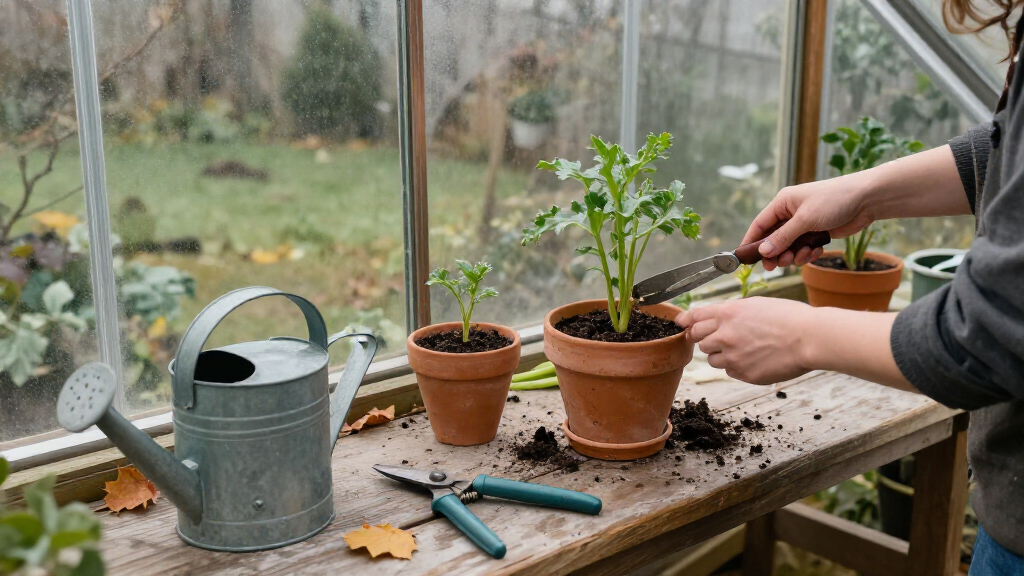
For planting, the report recommends deep containers with fast-draining potting mix, loosened with a similar volume of grit, sand or perlite. Make holes deep enough to cover about two-thirds of each cutting, place the base end down and gently firm the mix around the stem. The guide says dogwood, forsythia, butterfly bush and spirea may root without added hormone; it recommends rooting powder for roses, and both hormone and a small bark score at the base for mock orange and viburnum.
A Low-Cost Way to Grow Shrubs
Hardwood cuttings let gardeners try to multiply shrubs they already have, potentially reducing the need to purchase plants for a new bed or garden area. The method also offers a way to share plants, though the article’s promise of growing shrubs “for free” does not account for supplies such as pots, growing mix and rooting hormone where used.
The timing makes the advice relevant to late-fall garden work: the report says stems are entering dormancy and can be set in pots for winter rooting and possible spring planting. That is a practical seasonal option, not a guarantee of a successful crop. The guide explicitly notes that not every cutting will take, and gardeners may need to try multiple stems.
Popular right now

Dyson Car+Boat Cordless Handheld Vacuum

De'Longhi Rivelia Fully Automatic Espresso Machine with Milk Frother, White

Ninja Foodi 6-in-1 DualZone Air Fryer, 8 qt, Grey (DZ201)
As an affiliate, we earn on qualifying purchases.
Why November Suits Hardwood Cuttings
The Gardening Know How report frames November as a useful time to take hardwood cuttings from deciduous shrubs, after much of the foliage has fallen and before or during winter dormancy. It says mature stems are tougher than soft new growth and have stored energy that can support rooting. The guidance is directed at shrubs, not all garden plants or every climate.
The article’s process is designed to reduce two common risks: choosing unsuitable stems and leaving cuttings in wet conditions. It calls for mature, current-year growth and a sheltered position for pots, protected from severe winter weather and excess rain. Local temperatures, plant condition and growing conditions can affect results; the source does not provide region-by-region timing or success data.
Rooting Results Vary by Plant
The guide does not report measured success rates for any of the seven shrubs, and it does not say how many cuttings gardeners should expect to root. Its description of the method as “foolproof” is a headline claim; the report itself cautions that hardwood cuttings do not succeed every time.
The source material ends partway through its instructions on where to place pots, so it does not provide a complete account of winter care, watering frequency or when to check for roots. It also does not specify whether the timing applies equally across climates. Gardeners should treat November as the article’s suggested window, not a universal date, and consider local weather and plant dormancy.
Protect Cuttings Through Winter
The report’s next step is to place the pots in a sheltered spot, such as beside a south-facing wall, away from harsh winds and heavy winter rain. The intended outcome is for the stems to root during winter and be ready for planting in spring, but the article does not give a calendar date for checking roots or transplanting.
Gardeners following the method can monitor pots through winter and assess each cutting before moving it outdoors or planting it in a permanent position. The source provides no follow-up results, so whether the cuttings establish successfully will depend on the plant and conditions.
Key Questions
Which shrubs does the November guide recommend?
It lists roses, butterfly bush, dogwood, forsythia, spirea, mock orange and viburnum as shrubs to try from hardwood cuttings.
When should I take hardwood cuttings?
The report suggests waiting until the deciduous shrub has dropped its leaves, or has lost about three-quarters of its foliage in a mild autumn. It presents November as its recommended period, but does not provide climate-specific dates.
Do all seven shrubs need rooting hormone?
No. The guide says dogwood, forsythia, butterfly bush and spirea may root without it. It recommends rooting powder for roses, mock orange and viburnum, with a small bark score at the base for the latter two.
Are hardwood cuttings guaranteed to grow?
No. The source says even experienced gardeners do not get a 100% success rate, and it gives no measured rates for the individual shrubs. Taking several cuttings may improve the chance that some establish, but it cannot guarantee results.
Source: gardeningknowhow.com