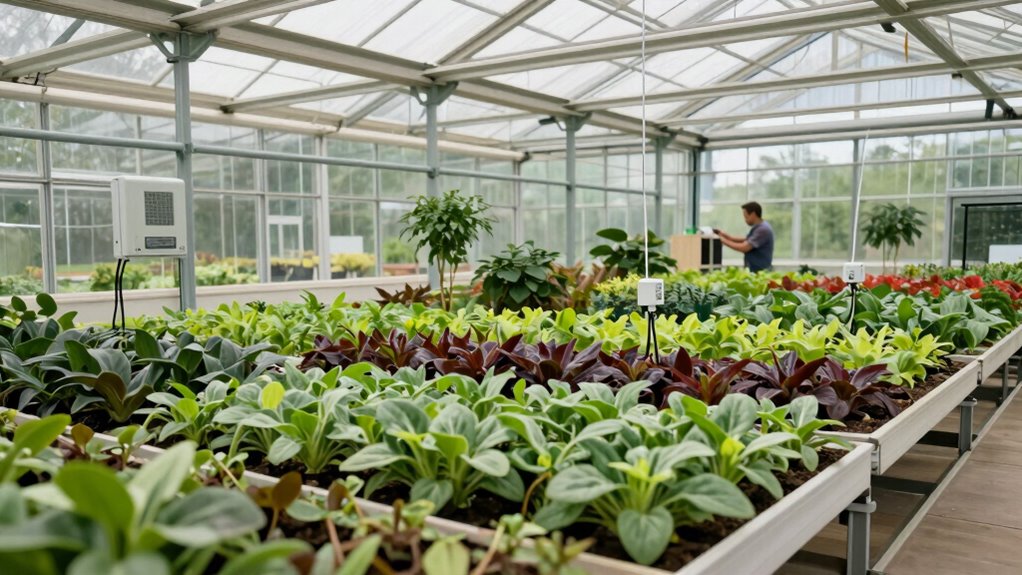

When you expand your greenhouse, simply adding more space isn’t enough. Larger areas require better climate control, water management, and environmental monitoring to keep conditions uniform and plants healthy. Outdated systems can lead to uneven temperatures, water waste, and plant stress, reducing yields and increasing costs. Upgrading your systems ensures efficient resource use, healthier plants, and smoother operations. If you want to improve your expansion strategy, there’s plenty more to take into account below.

Get garden gear delivered free with Prime
- Fast, free delivery on millions of items
- Prime Video, Amazon Music and more included
- Member-only deals all year
Key Takeaways
- Larger space without upgraded systems can lead to uneven environmental conditions and lower crop yields.
- Outdated climate control systems struggle to maintain optimal conditions in expanded greenhouses.
- Effective water management becomes more complex, risking waste or plant stress if systems aren’t improved.
- Automated sensors and controls ensure precise regulation, preventing environmental issues and optimizing resource use.
- Upgrading systems supports sustainable growth, energy efficiency, and consistent crop quality in expanded facilities.
Are current greenhouse systems keeping up with expansion demands? If you’re planning or already expanding your greenhouse operation, you might quickly realize that adding more space isn’t enough. Simply increasing the footprint doesn’t guarantee ideal plant growth or efficiency. To truly support expansion, you need to focus on enhancing your climate control and water management systems. These elements are the backbone of a productive greenhouse, and neglecting them can lead to wasted resources, lower yields, and even plant stress or disease.
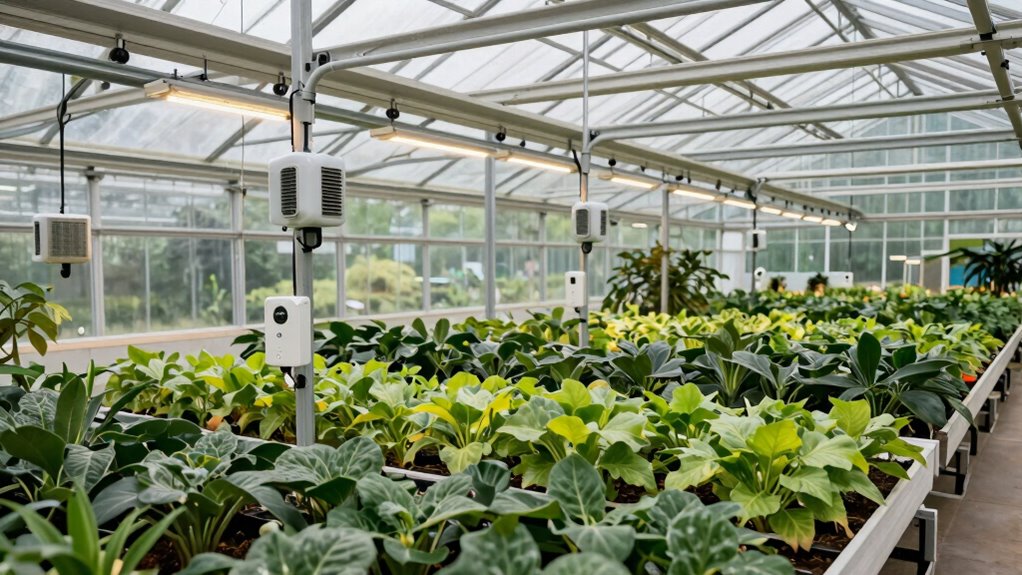
Climate control becomes even more essential as your greenhouse grows. When you expand, maintaining a consistent temperature, humidity, and airflow throughout the entire space becomes more complex. Outdated or insufficient ventilation and heating systems can result in uneven conditions, which stunt plant growth and increase the risk of pests and diseases. Modern climate management technologies, like automated venting, precision heating, and real-time environmental sensors, help you monitor and adjust conditions efficiently. These systems enable you to respond swiftly to changing weather patterns or internal needs, ensuring your plants stay in their ideal growth zone. Investing in scalable climate control systems is crucial for sustainable expansion. Additionally, integrating environmental sensors allows for more precise and responsive adjustments, further supporting optimal growth conditions. Properly designed systems can also help you achieve energy efficiency, reducing operational costs over time. Incorporating monitoring technology can also assist in early detection of environmental issues, preventing potential crop losses. Furthermore, adopting automated control systems can help streamline operations and reduce manual labor, making your expansion more manageable.
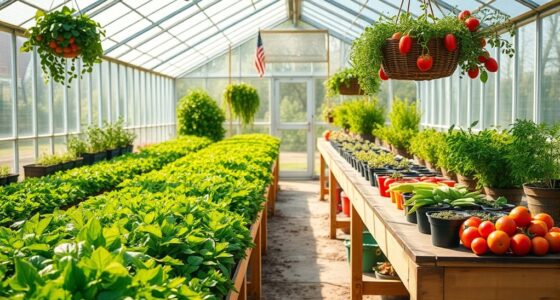
Effective climate control is crucial for large greenhouses; modern systems ensure uniform conditions and healthy plant growth.
Water management is another indispensable aspect that often gets overlooked during expansion. As your greenhouse enlarges, so does your water demand, and managing this efficiently can be challenging. Overwatering wastes resources, raises costs, and can lead to root diseases, while underwatering stresses plants and reduces yield. Implementing smart irrigation systems, such as drip or ebb-and-flow setups equipped with moisture sensors, allows you to deliver precise amounts of water exactly where and when your plants need it. This not only conserves water but also promotes healthier root systems and higher productivity.
Expanding your greenhouse without investing in better climate control and water management systems can be a costly mistake. These systems ensure uniform conditions throughout the space, which is essential for maintaining crop quality and consistent harvests. They also help you optimize resource use, reduce waste, and lower operational costs over time. It’s tempting to think that more space automatically means more output, but without the right systems in place, you risk creating an environment that’s difficult to manage and ultimately less profitable.
In essence, expanding your greenhouse requires a strategic upgrade of your environmental control systems. It’s not just about adding square footage; it’s about making sure your climate control and water management systems are scalable, reliable, and efficient enough to support your growth. When done right, these improvements can turn your expansion into a sustainable, high-yield operation that’s well-prepared for future challenges.
greenhouse climate control systems
As an affiliate, we earn on qualifying purchases.
As an affiliate, we earn on qualifying purchases.
Frequently Asked Questions
How Do Better Systems Improve Plant Growth Efficiency?
Better systems improve plant growth efficiency by optimizing soil health and pest management. You can control soil nutrients and moisture more precisely, promoting stronger root development. Additionally, integrated pest management reduces disease and pest damage, ensuring healthier plants. These improvements lead to higher yields and better quality crops, making your greenhouse more productive without needing extra space. Efficient systems streamline operations, save costs, and support sustainable growth.
What Are the Costs Associated With Upgrading Greenhouse Systems?
Upgrading greenhouse systems costs more upfront but boosts energy efficiency and reduces long-term expenses. You’ll face costs like new equipment, installation, and training. While a detailed cost analysis reveals these investments, remember the savings in energy bills and improved yields. The initial investment might seem high, but the enhanced system pays off over time, making your greenhouse more sustainable and profitable in the long run.
Which Systems Are Most Critical for Sustainable Greenhouse Expansion?
You need to focus on pest management systems and crop rotation strategies for sustainable greenhouse expansion. Pest management keeps pests under control, reducing crop loss and minimizing chemical use. Crop rotation maintains soil health, prevents disease buildup, and improves yields over time. By investing in these critical systems, you guarantee your expansion is sustainable, resilient, and environmentally friendly, ultimately boosting productivity and profitability without relying solely on increasing space.
How Can Technology Optimize Climate Control in Larger Greenhouses?
You can optimize climate control in larger greenhouses by integrating technology like automated watering systems and light sensors. Automated watering ensures plants receive precise moisture levels, reducing waste and stress. Light sensors adjust supplemental lighting, maintaining ideal conditions regardless of external weather changes. These tools help you manage the environment efficiently, guaranteeing healthier crops, consistent growth, and energy savings, which are essential for successful greenhouse expansion.
What Maintenance Is Required for Advanced Greenhouse Systems?
Imagine a greenhouse that uses automation integration to optimize climate and pest management. To keep it running smoothly, you need to regularly check sensors, recalibrate systems, and update software. Pest management systems require periodic inspections and eco-friendly treatments to prevent infestations. Consistent maintenance guarantees your advanced greenhouse stays efficient, reduces downtime, and maximizes crop yields, making your investment worthwhile.
Conclusion
As you consider expanding your greenhouse, remember that more space alone isn’t enough—you need better systems to truly thrive. Efficient climate control, automation, and sustainable practices make all the difference. Did you know that greenhouses with advanced systems can boost crop yields by up to 30%? By investing in smarter solutions, you’re not just increasing size but optimizing growth, ensuring your expansion is both productive and sustainable. It’s about working smarter, not just bigger.
Fall yard work Picks
leaf blowers
As an affiliate, we earn on qualifying purchases.