Water recirculation changes your greenhouse management by making water use more efficient, cutting costs, and supporting sustainability. You’ll promote healthier plants with better growth rates, thanks to continuous monitoring and precise nutrient adjustments. It also prevents water waste and reduces environmental impact through filtration and treatment. Automation guarantees even watering and easier system control, saving you time and labor. Keep exploring how these practices can optimize your greenhouse for long-term success.

Get garden gear delivered free with Prime
- Fast, free delivery on millions of items
- Prime Video, Amazon Music and more included
- Member-only deals all year
Key Takeaways
- Improves sustainability by reducing water consumption and minimizing wastewater discharge.
- Enhances plant health through precise nutrient and water quality control.
- Automates irrigation, ensuring even water distribution and reducing labor.
- Extends equipment lifespan and lowers operational costs with proper maintenance.
- Supports eco-friendly practices aligned with long-term greenhouse sustainability goals.
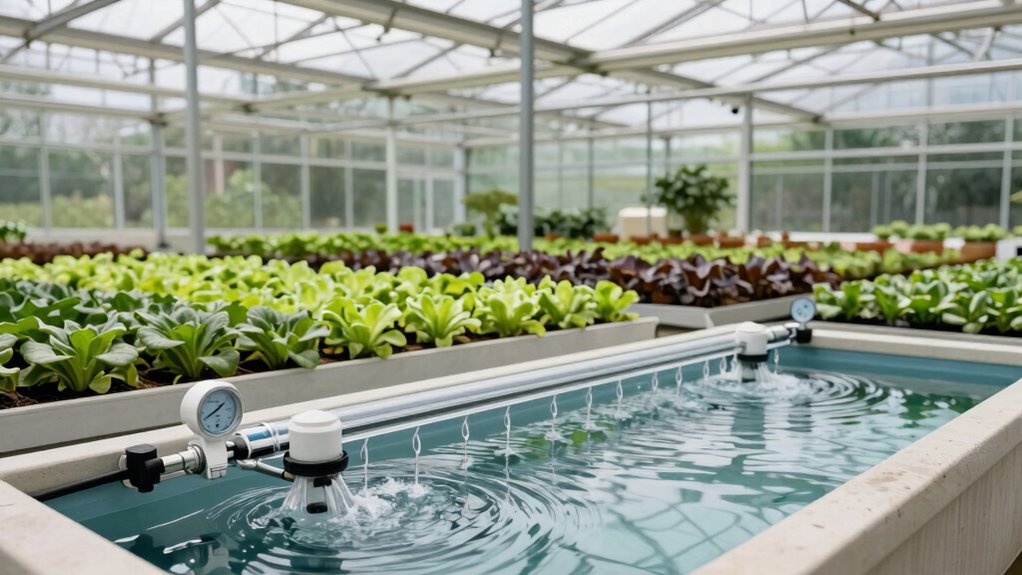
Implementing water recirculation systems in greenhouse management can markedly enhance sustainability and reduce water costs. When you adopt these systems, you start to see how efficient water use directly impacts your operation’s overall health. A key part of this process involves optimizing plant nutrient solutions, which are central to ensuring your plants receive the right nutrients without wasting resources. Instead of continually adding fresh water and nutrients, you recycle and reuse water, carefully adjusting nutrient concentrations to meet plant needs. This process often involves water quality management, which is crucial for maintaining healthy plant growth and system efficiency. Properly maintaining water quality also helps prevent the buildup of harmful substances that could compromise plant health. This comprehensive approach to nutrient management ensures that your system remains balanced and sustainable over time. This careful regulation of nutrients and water promotes environmental sustainability, making your greenhouse more eco-friendly.
Recycling water and optimizing nutrient solutions boost sustainability and reduce waste in greenhouse management.
Designing an effective irrigation system is fundamental to successful water recirculation. You’ll want to choose or modify your irrigation setup to facilitate continuous water movement, avoiding stagnation and ensuring even distribution. Drip systems or ebb-and-flow setups are popular choices because they allow precise control over water delivery and facilitate easy recirculation. When designing your irrigation system, consider how water flows from your plant beds back into a central collection point, where it can be filtered, treated if necessary, and reintroduced. Proper system design allows you to maintain ideal moisture levels, reduce waste, and prevent issues like disease spread caused by standing water. Incorporating system automation can further enhance efficiency by providing real-time adjustments and monitoring. Additionally, understanding water recirculation benefits can help you optimize your setup for maximum efficiency and sustainability.
As you integrate water recirculation, you’ll notice improvements in your plant health and growth rates. Because the water is continuously monitored and adjusted, plants receive consistent, balanced nutrients, leading to better yields. Plus, you save time and labor since you’re managing a closed-loop system rather than constantly sourcing new water. The ability to precisely control water quality and nutrient levels also reduces the risk of over-fertilization, which can harm plants and increase costs. Additionally, a well-maintained system can extend the lifespan of your equipment and reduce maintenance needs over time.
Over time, you’ll see that water recirculation cuts down on operational expenses. Less water consumption means lower water bills, and the reduced need for fresh water supplies aligns your greenhouse with sustainable practices. Additionally, by recycling water, you diminish the environmental impact associated with wastewater disposal and nutrient runoff. These benefits can boost your reputation and appeal to environmentally conscious consumers.
In essence, adopting water recirculation transforms your greenhouse into a more efficient, sustainable, and cost-effective operation. By focusing on smart plant nutrient solutions and thoughtful irrigation system design, you create a resilient system that supports healthy plant growth while conserving resources. The shift not only benefits your bottom line but also promotes a greener future, making your greenhouse a model of responsible and innovative management.
greenhouse water recirculation system
As an affiliate, we earn on qualifying purchases.
As an affiliate, we earn on qualifying purchases.
Frequently Asked Questions
How Does Water Recirculation Impact Greenhouse Energy Efficiency?
Water recirculation substantially improves your greenhouse’s energy efficiency by reducing water use and maintaining consistent humidity levels. This process conserves water and lowers energy costs associated with heating and cooling, supporting water conservation efforts. Additionally, it provides environmental benefits by minimizing water waste and reducing your carbon footprint. By implementing recirculation, you optimize resource use, creating a more sustainable and energy-efficient greenhouse environment.
What Are the Initial Costs of Implementing Water Recirculation Systems?
Implementing water recirculation systems involves initial costs like equipment, installation, and setup, which can be substantial. However, you save on water expenses over time because of water savings, reducing your overall operational costs. Keep in mind, you’ll need ongoing system maintenance to guarantee efficiency and prevent issues. Although upfront costs are high, the long-term benefits, including water conservation and lower utility bills, make it a worthwhile investment.
How Often Should Water Quality Be Tested in Recirculation Setups?
You should test your water quality at least once a week in recirculation setups. Imagine it like checking your car’s oil—neglecting water testing can lead to buildup and system failures. Regular water testing and recirculation maintenance help you catch issues early, ensuring your plants thrive. Consistent checks keep your system running smoothly, reduce risks of disease, and save you money in the long run by preventing costly repairs.
Can Water Recirculation Systems Be Integrated With Existing Greenhouse Infrastructure?
Yes, you can integrate water recirculation systems with your existing greenhouse infrastructure. You’ll want to incorporate rainwater harvesting to reduce reliance on external water sources and maximize nutrient management to guarantee plants get the right nutrients. By upgrading plumbing and installing filtration systems, you can seamlessly connect recirculation with your current setup, promoting sustainability and efficiency while maintaining ideal plant growth conditions.
What Are Common Challenges Faced When Transitioning to Water Recirculation?
You might find that shifting to water recirculation presents challenges like maintaining water quality and system complexity. Many believe aquaponics sustainability hinges on flawless operation, but initial setups can be tricky. You’ll need to master water conservation techniques and guarantee proper filtration to prevent disease buildup. Patience is key—regular monitoring and adjustments help overcome these hurdles, ultimately making your greenhouse more efficient and eco-friendly.
Conclusion
Think of water recirculation like tending a delicate garden pond. When you recycle the water wisely, you’re nurturing a thriving ecosystem, just as a skilled gardener nurtures each plant. It keeps your greenhouse vibrant and sustainable, ensuring every drop counts. By embracing this cycle, you’re the guardian of a self-sustaining oasis—where growth flourishes, resources are conserved, and your greenhouse thrives like a lush, thriving pond, alive with endless possibility.
Halloween Picks
halloween
As an affiliate, we earn on qualifying purchases.