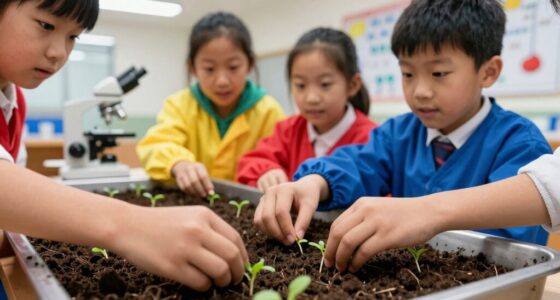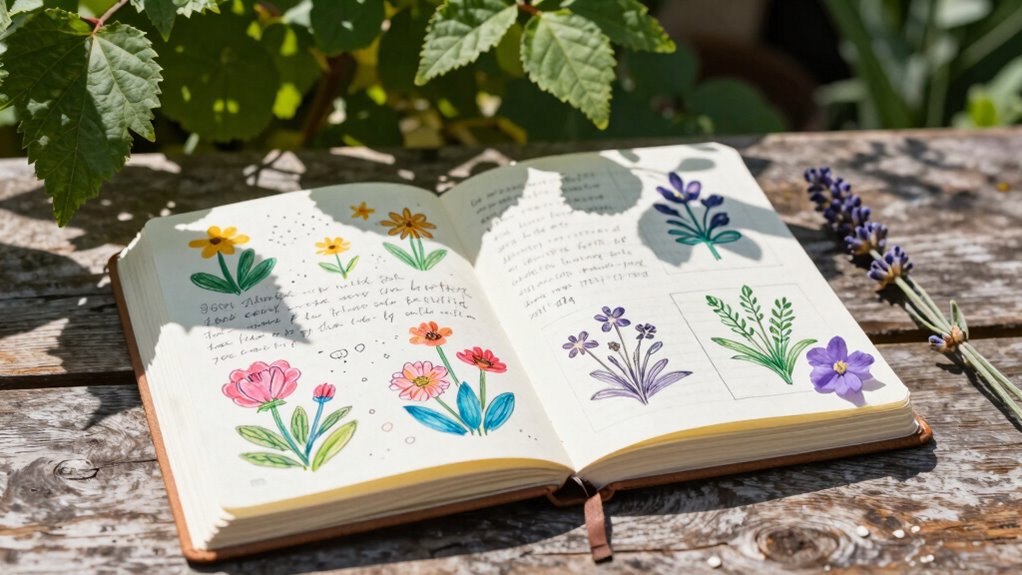

Keeping a garden journal helps you actively track your observations, which reinforces your understanding and memory. When you record plant growth, soil conditions, and your successes or setbacks, you engage your mind and make connections. Reflecting on this information highlights what works and what doesn’t, boosting your confidence and skills. As you continue, you’ll discover even more ways to improve your gardening practices and deepen your knowledge.
Key Takeaways
- Recording observations reinforces memory and helps internalize gardening concepts.
- Reflecting on past entries clarifies what techniques work best, strengthening learning retention.
- Active engagement through journaling creates a personal connection, making information more memorable.
- Documenting soil and plant responses provides visual cues that enhance understanding and recall.
- Regular review of journal entries promotes continuous learning and long-term retention of gardening skills.
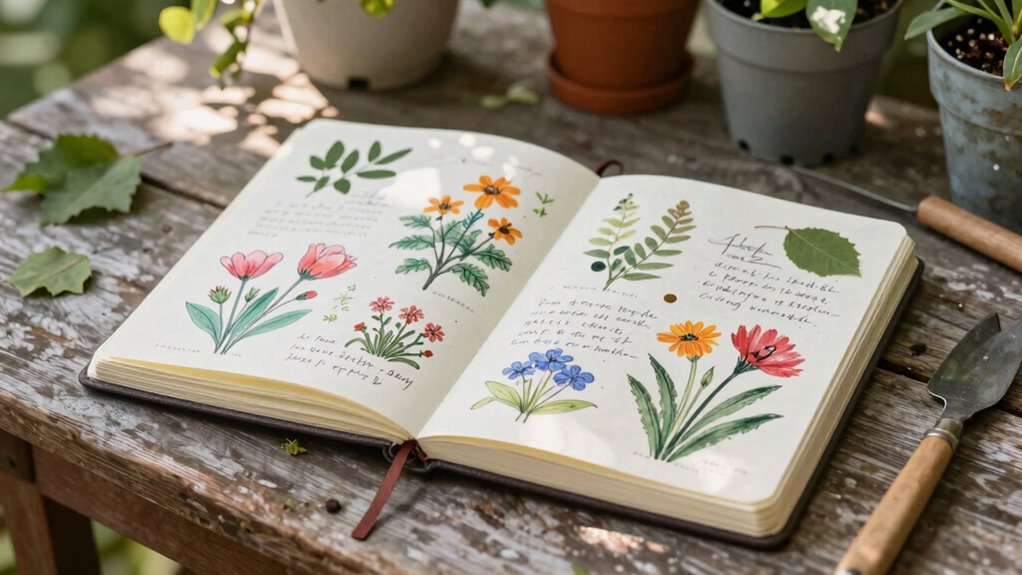
Keeping a garden journal can substantially boost your learning retention, especially when it comes to understanding plant growth and soil health. When you record daily observations, you engage more deeply with the natural processes happening in your garden. Tracking plant growth over time helps you notice patterns, such as how different plants respond to weather changes or soil conditions. This active engagement makes the information stick better in your memory. Instead of passively reading about gardening techniques, you see firsthand what works and what doesn’t, reinforcing your understanding through real-world experience.
Keeping a garden journal enhances learning by helping you observe and understand plant growth and soil health patterns.
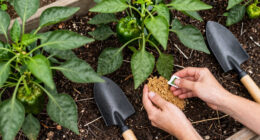
By noting how your plants develop, you become more aware of the factors influencing their growth. For example, you might observe that certain plants thrive in specific spots or after particular watering routines. These details help you recognize what improves plant growth and how soil health impacts your garden’s importance. Soil health is fundamental; healthy soil provides the nutrients that plants need to flourish. When you record soil conditions—such as moisture levels, compost application, or pH—you connect these details to plant performance. Over time, this helps you develop an intuitive sense of how to care for your soil, which directly influences plant growth success.
Your journal also acts as a personalized reference guide. Instead of relying solely on generic advice, you create a tailored record of what’s effective in your unique garden environment. Recalling these notes reinforces your learning, making you more confident in adjusting your techniques. For instance, if you notice that a certain fertilizer improves growth or that a specific watering schedule prevents disease, you’ll remember these lessons better because you’ve documented the outcomes. This process transforms abstract gardening concepts into practical knowledge rooted in your own experience.
Additionally, maintaining a journal encourages a habit of reflection. When you look back at your entries, you identify what strategies yielded positive results and which areas need improvement. Reflection deepens your understanding of plant biology and soil ecology, enhancing your awareness of ecological balance. Incorporating soil testing into your routine can provide even more detailed insights into your soil’s health, helping to refine your gardening practices. This can also motivate you to adopt more sustainable gardening practices, which support long-term soil vitality. Developing a routine of regular observation can further enhance your ability to spot issues early and adapt accordingly, solidifying the lessons learned. Over time, this habit fosters critical thinking about gardening practices, helping you troubleshoot problems more effectively. It’s not just about recording data; it’s about actively analyzing and applying what you learn. Recognizing the importance of soil health can also motivate you to adopt practices that promote healthy soil ecosystems, which are essential for successful gardening.
In essence, a garden journal is a powerful learning tool. It links theory to practice, reinforces your memory through active participation, and cultivates a deeper comprehension of plant growth and soil health. By consistently noting observations, results, and adjustments, you turn everyday gardening into a rich educational experience that improves your skills and confidence as a gardener.

Legend Gardening Journal – 5-Year Garden Journal Planner & Log Book with Gardening Calendar & Plant Logs – Hardcover Garden Planner (Cypress)
PLAN YOUR GARDEN WITH CONFIDENCE – Keep every planting detail in one place, from seed selection to garden…
As an affiliate, we earn on qualifying purchases.
As an affiliate, we earn on qualifying purchases.
Frequently Asked Questions
Can Garden Journals Be Used for Other Subjects Besides Gardening?
Yes, you can definitely use garden journals for other subjects besides gardening. They’re great for indoor projects, allowing you to document experiments or craft ideas. You can also incorporate STEM activities by recording data, observations, or designing experiments. Using a journal helps you stay organized, reflect on progress, and connect concepts across subjects. It’s a versatile tool that boosts learning, creativity, and retention in various areas beyond just gardening.
What Age Groups Benefit Most From Garden Journaling?
You’ll find that children and teenagers benefit most from garden journaling. As you observe plant growth and seasonal changes, you help them develop observational skills, understand biology, and connect with nature. Writing about these changes encourages active learning and retention. Younger kids enjoy drawing and noting daily progress, while teens can explore more detailed reflections, making garden journals a versatile tool for fostering curiosity and deeper understanding across age groups.
How Often Should I Update My Garden Journal for Optimal Learning?
Have you ever wondered how often you should update your garden journal? To optimize your learning, you should update it weekly or whenever you notice significant changes in plant growth or weather. Regular entries help track patterns, document plant responses to weather, and reinforce your understanding. Consistent updates keep you engaged and make it easier to remember key lessons, ultimately improving your gardening skills and knowledge over time.
Are Digital Garden Journals as Effective as Paper Ones?
Digital garden journals can be just as effective as paper ones, especially with good tech integration. You benefit from easy editing, multimedia options, and quick access, making learning dynamic. However, paper journals offer tactile engagement and fewer distractions, which can enhance retention. Your choice depends on your learning style: if you prefer tech, digital works well; if tactile experience helps, go with paper. Both can boost your gardening knowledge effectively.
What Are Common Mistakes to Avoid When Maintaining a Garden Journal?
To avoid common mistakes in maintaining a garden journal, focus on consistent record keeping and avoid neglecting updates. Don’t skip details like weather, soil conditions, or plant growth, as they help you learn over time. Also, resist the urge to be sporadic—set a routine for journaling. This consistency guarantees your observations are accurate, helping you improve your gardening skills and make better decisions for future plantings.

Rapitest Soil Test Kit for Gardens, Vegetables, Flowers and Lawns. USA designed and assembled soil tester completely, quickly and accurately measures/analyzes soil pH acidity and garden nutrients.
Quick, at home results for Soil pH, Nitrogen, Phosphorous and Potash Innovative and inexpensive soil test kit features…
As an affiliate, we earn on qualifying purchases.
As an affiliate, we earn on qualifying purchases.
Conclusion
By keeping a garden journal, you deepen your understanding, reinforce your memories, and sharpen your skills. It’s a tool that captures your observations, tracks your progress, and sparks your curiosity. With each note you write, you plant a seed of knowledge that grows stronger over time. Just as your garden flourishes with care, your learning blossoms with reflection. Embrace your journal, nurture your mind, and watch your gardening journey thrive.

Garden Planting Notebook for Kids – Plant Observation Journal: Fun Gardening Log Book with Guided Prompts for Daily Plant Tracking – 8.5 x 11 in – 120 Pages
As an affiliate, we earn on qualifying purchases.
As an affiliate, we earn on qualifying purchases.

Harloon Garden Planner and Log Book Floral Garden Journal Guided Tracker Notebook Gardening Diary Planner for Farmers Record Plant Growing Profile,100 Sheets,6.3 x 8.7 Inch(Cute)
Floral Theme Design: our garden journal has a beautiful design with vivid floral and leaf patterns, the overall…
As an affiliate, we earn on qualifying purchases.
As an affiliate, we earn on qualifying purchases.