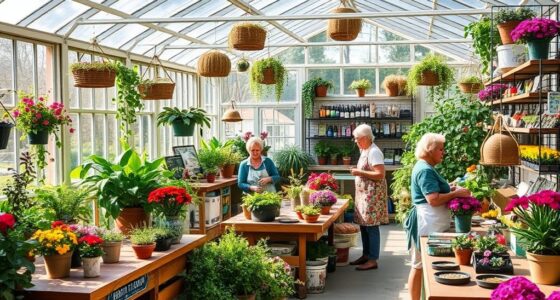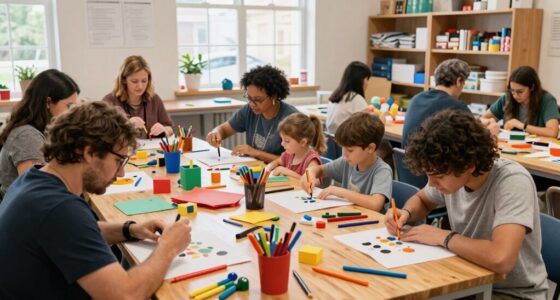

Hands-on growing programs improve science education by helping you experience plants and ecosystems firsthand, making abstract ideas like photosynthesis more understandable. They boost engagement by encouraging responsibility, observation, and experimentation. These activities connect you to the natural world, fostering curiosity about sustainability and ecosystems. Plus, collaborating on gardening projects sharpens your critical thinking and teamwork skills. If you keep exploring, you’ll discover even more ways these programs make science meaningful and exciting.

Get garden gear delivered free — and shop member deals
- Fast, free delivery on millions of items
- Access to Prime Big Deal Days deals on October 6–7
- Prime Video, Amazon Music and more included
Key Takeaways
- They provide direct experience, making abstract scientific concepts like photosynthesis tangible and easier to understand.
- Hands-on activities boost student engagement and motivation by involving them actively in learning processes.
- Growing programs connect students with nature, fostering environmental awareness and appreciation for ecosystems.
- Collaborative projects develop critical thinking, problem-solving, and communication skills through shared experimentation.
- Practical experiences reinforce scientific methods and highlight real-world applications, deepening ecological and scientific understanding.
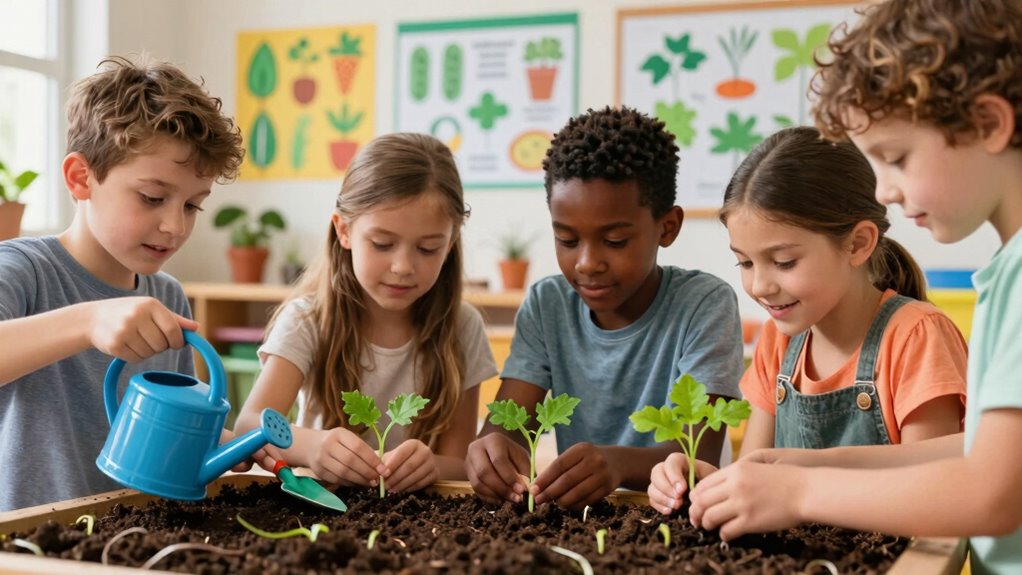
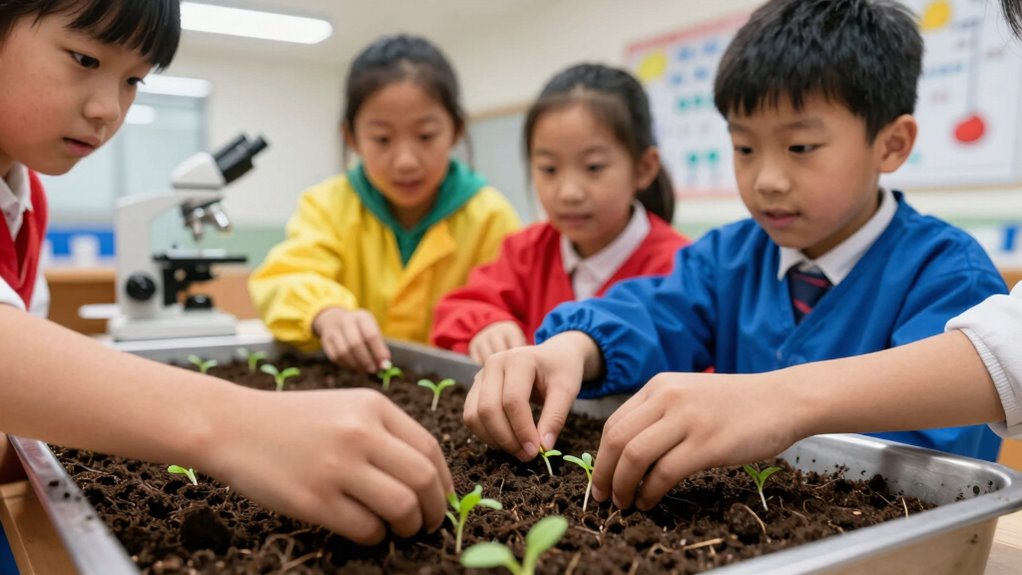
Hands-on growing programs are transforming science education by giving students direct experience with plants and ecosystems. These programs allow you to participate in interactive experiments that make abstract concepts tangible. Instead of just reading about photosynthesis or ecological cycles, you’re actively involved in observing how plants grow, respond to light, and interact with their environment. This hands-on approach helps you grasp complex ideas more clearly and remember them longer. When you engage physically with growing activities, your learning becomes more meaningful and memorable.
Hands-on growing programs turn science into an engaging, memorable experience by making abstract concepts tangible through active participation.
Student engagement skyrockets when you’re physically tending to plants, measuring soil moisture, or monitoring growth patterns. These tasks foster a sense of responsibility and curiosity that passive learning often lacks. Instead of passively listening to lectures, you’re asking questions, making observations, and drawing conclusions. This active participation keeps your mind alert and motivated, which leads to a deeper understanding of scientific principles. As you experiment with different variables—like changing water amounts or light exposure—you see firsthand how variables influence outcomes, reinforcing scientific methods and critical thinking skills. Incorporating hands-on activities makes scientific concepts more accessible and engaging for learners of all ages.
Moreover, these programs nurture a sense of connection to the natural world. When you see a seed sprout after days of nurturing, it’s a powerful moment that ties theoretical knowledge to real-world outcomes. This connection not only enhances your comprehension but also fosters environmental awareness and stewardship. You begin to understand the importance of sustainable practices and your role in protecting ecosystems, which can inspire lifelong habits of caring for the planet. Incorporating scientific concepts into hands-on activities helps solidify understanding and demonstrates the relevance of scientific knowledge in everyday life. Additionally, engaging in these programs can deepen your understanding of biodiversity, emphasizing the importance of diverse ecosystems for ecological health. Developing an appreciation for ecosystem dynamics can help you recognize how different species depend on one another for survival.
Hands-on growing programs also promote collaboration. Working with classmates on planting projects or shared experiments encourages teamwork and communication. You learn to listen to others’ ideas, share your observations, and troubleshoot problems together. These social interactions build confidence and improve your ability to work collaboratively—skills vital for scientific careers and everyday life. Plus, the immediate feedback from real-time results helps you adapt your methods and think critically about your approach. Additionally, incorporating smart technology like automated watering systems or environmental sensors can further enhance these learning experiences by providing real-time data and feedback.
As an affiliate, we earn on qualifying purchases.
Frequently Asked Questions
How Do Hands-On Programs Differ From Traditional Science Teaching Methods?
Hands-on programs differ from traditional science teaching by actively engaging you in experiments and real-world activities rather than just learning theoretical concepts. You get to explore and observe directly, which enhances understanding. Unlike digital simulations, which offer virtual experiences, hands-on programs provide tactile learning, allowing you to develop practical skills. This active involvement makes science more tangible and memorable, fostering curiosity and deeper comprehension beyond passive textbook learning.
What Materials Are Typically Used in Hands-On Growing Science Activities?
In hands-on growing science activities, you typically use materials like plant experiments kits, soil analysis tools, and various seeds. You might handle soil test kits to analyze nutrients or pH levels, and use pots or gardening trays for planting experiments. These materials allow you to observe plant growth firsthand, understand soil properties, and engage actively with the scientific process, making learning more interactive and meaningful.
How Can Schools Fund and Sustain Hands-On Growing Programs?
You can revolutionize your school’s program by forging strong community partnerships that open endless resources and support. Tap into diverse funding strategies like grants, local business sponsorships, and fundraising events to keep the program thriving. These efforts create a sustainable cycle, ensuring your hands-on growing initiatives flourish year after year. With passion and strategic collaboration, you’ll turn your science program into an unstoppable force of learning and discovery!
Are These Programs Suitable for All Age Groups and Skill Levels?
Yes, these programs are suitable for all age groups and skill levels. You can tailor activities to guarantee age appropriateness and skill adaptability, making them engaging and accessible. Younger students might focus on basic plant growth, while older students explore scientific concepts in-depth. By adjusting complexity and tools, you create inclusive learning environments that foster curiosity and skill development at every stage.
What Are the Measurable Outcomes of Implementing Hands-On Growing Programs?
Implementing hands-on growing programs leads to measurable outcomes like improved plant health and precise growth measurement. You’ll see increased student engagement, better understanding of plant biology, and stronger practical skills. By tracking growth patterns and plant resilience, you can assess progress over time. These programs also foster critical thinking and responsibility, providing tangible evidence of learning, making science more meaningful and encouraging continued exploration of horticultural and ecological concepts.
Conclusion
You see, hands-on growing programs truly turn the tide in science education, making concepts come alive and sparking curiosity. When you get involved directly, learning becomes more meaningful and memorable. These programs help you cut through the noise and see science in action. Remember, it’s often said that seeing is believing—so by growing and experimenting, you’re not just learning about science, you’re experiencing it firsthand. Embrace these programs, and watch your understanding bloom.
Fall yard work Picks
leaf blowers
As an affiliate, we earn on qualifying purchases.