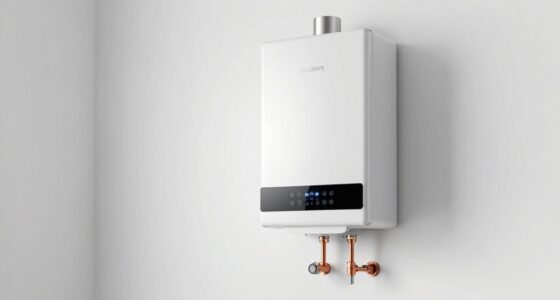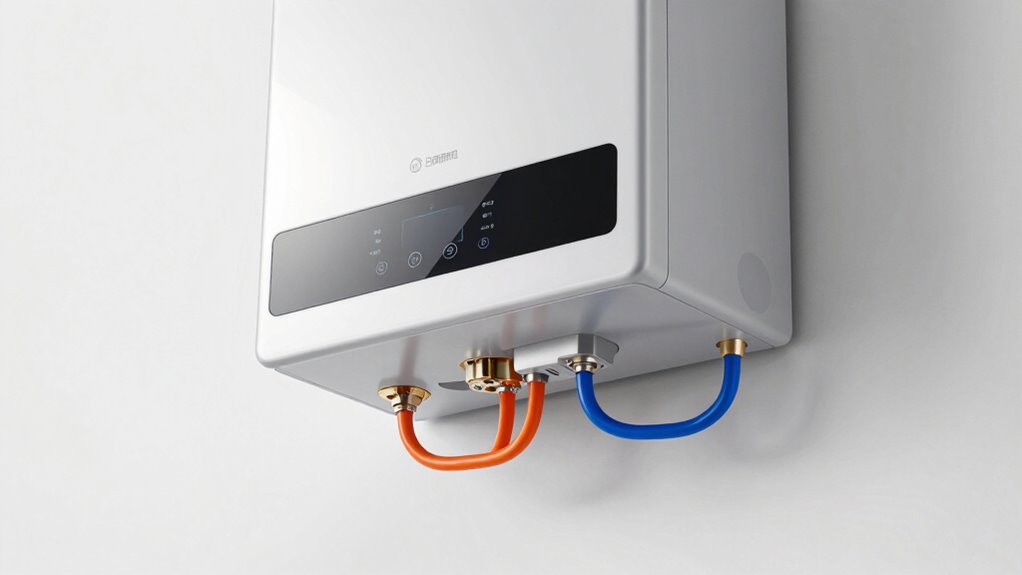

Electric tankless water heaters often need much higher amperage than your usual household system, which can catch you off guard. They require stronger electrical circuits—sometimes up to 100 amps or more—to heat water instantly on demand. This might mean upgrading your panel or wiring to handle the load. Understanding these demands now can help you avoid surprises later. Keep going to discover how proper planning can keep your installation safe and efficient.
Key Takeaways
- Electric tankless water heaters often require high amperage, sometimes 100 amps or more, which surpass standard household circuits.
- Proper electrical system evaluation and possible upgrades are essential for safe and effective installation.
- Insufficient electrical capacity can cause tripped breakers and inadequate hot water supply.
- Professional assessment ensures compatibility with existing wiring and adherence to electrical codes.
- Planning for high amperage needs prevents safety hazards and supports reliable, on-demand hot water.
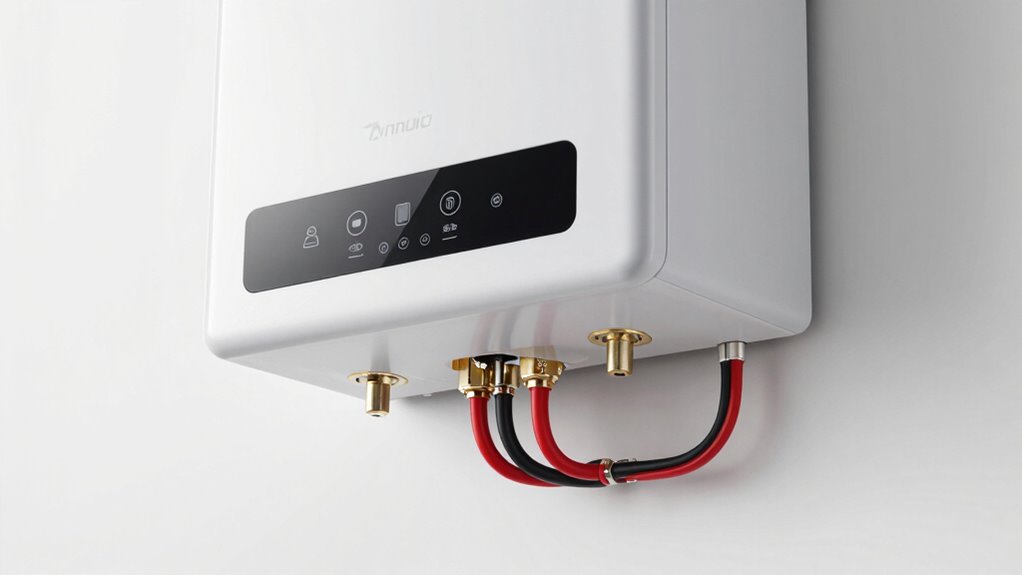
Electric tankless water heaters are an energy-efficient alternative to traditional tank models, providing hot water on demand without the need for bulky storage tanks. They heat water only when you need it, which means you don’t waste energy keeping a tank full of hot water constantly. This targeted heating can reduce your energy bills and minimize standby heat loss, making them an appealing choice for many homeowners. However, despite their efficiency benefits, installation challenges can arise, particularly related to amperage requirements.
Electric tankless water heaters save energy but require careful electrical system consideration for proper installation.
When you’re considering an electric tankless water heater, it’s essential to understand that these units often demand higher electrical current than standard household wiring can supply. This is because they need a substantial amount of power to heat water instantly as it flows through the unit. The key is the amperage—how much current the heater draws during operation. Some models require dedicated circuits with significant amperage capacity, sometimes up to 100 amps or more, depending on your household’s hot water needs. If your electrical system isn’t already equipped or upgraded to handle this load, installation becomes more complex and potentially costly. You might need a licensed electrician to evaluate your current wiring, upgrade your breaker panel, or install new wiring to guarantee safety and compliance with electrical codes.
This installation challenge can catch homeowners off guard, especially if they’re unaware of the increased electrical demands. It’s not simply plugging in a new device; it’s about guaranteeing your home’s electrical infrastructure can support the heater’s amperage needs. Failing to do so can lead to tripped breakers, inadequate hot water supply, or even safety hazards. To avoid surprises, it’s wise to consult with a professional before purchasing or installing an electric tankless water heater. They can assess your current electrical system and recommend any necessary upgrades. Additionally, understanding the vetted information about electrical requirements can help you make smarter decisions.
While the upfront installation effort might seem daunting, the long-term energy savings and space efficiency often outweigh these initial challenges. Electric tankless water heaters are designed to be compact and versatile, fitting into tight spaces where traditional units wouldn’t. Just keep in mind that the power requirements are a critical factor in guaranteeing smooth operation. Proper planning and professional installation are key to unlocking the full energy efficiency benefits of these systems without running into electrical issues. With the right setup, you can enjoy endless hot water while reducing your energy consumption and minimizing installation headaches.
electric tankless water heater 100 amps
As an affiliate, we earn on qualifying purchases.
As an affiliate, we earn on qualifying purchases.
Frequently Asked Questions
How Do I Determine the Right Amperage for My Household?
To determine the right amperage for your household, start by evaluating your energy efficiency needs and the number of water fixtures you’ll use simultaneously. Check your home’s voltage compatibility and match it with the heater’s requirements. Calculate the total wattage needed, then divide by your voltage to find the appropriate amperage. This guarantees safe operation and ideal performance, preventing overloads and ensuring your heater runs efficiently.
Can I Upgrade My Existing Water Heater’s Amperage?
Think of your electrical system as a delicate orchestra. Upgrading your water heater’s amperage requires making sure water heater compatibility with your electrical panel. You can upgrade, but only if your panel can handle the increased load without risking overload or safety issues. Consult a licensed electrician to assess your panel’s capacity and ensure the upgrade harmonizes with your home’s electrical symphony, keeping everything running smoothly and safely.
What Safety Precautions Are Needed With High-Amperage Units?
You should prioritize safety when installing high-amperage units by ensuring proper electrical wiring and correct circuit breaker sizing. Always use wiring rated for the unit’s amperage and consult local electrical codes. It is crucial to have a qualified electrician assess your setup to prevent overloads or short circuits. Never skip steps, and double-check that your circuit breaker can handle the increased load to keep your home safe.
How Does Amperage Affect Installation Costs?
Think of your electric circuit as a tightrope walker balancing a high power load; higher amperage units demand more support. This means installation costs increase because you might need upgraded wiring, breakers, or panels to safely manage the load. As a result, the initial expense rises, but it ensures safe, reliable operation. You’ll pay more upfront, but it’s a necessary investment to keep everything running smoothly without tripping hazards.
Are There Amperage Restrictions for Specific Home Types?
You need to check your home’s electrical code for amperage compatibility, as restrictions vary by home type. Some older homes or small apartments might not support high amperage demands without upgrades. Always consult an electrician to verify your electrical system can handle the heater’s amperage requirements and comply with local electrical code. This prevents safety hazards and ensures your tankless water heater operates efficiently without overloading your system.
Conclusion
Guiding the world of electric tankless water heaters might seem like decoding a secret map, but understanding the amperage surprise turns the journey into a manageable adventure. Think of it as charting a course through a maze of electrical currents—once you grasp the flow, the path becomes clear. With this knowledge, you hold the key to making smarter choices, ensuring your hot water needs are met without the sparks flying overhead.