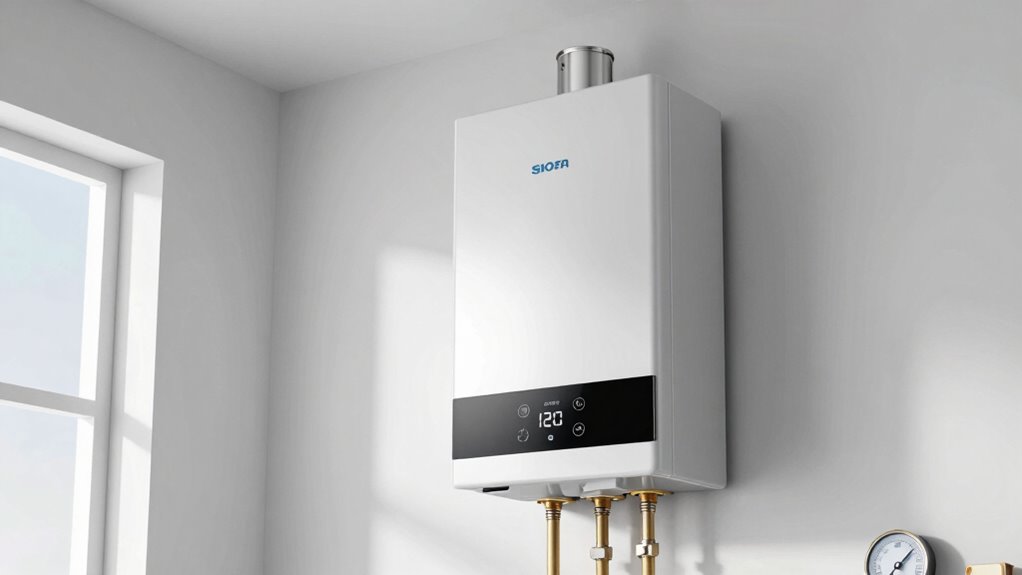
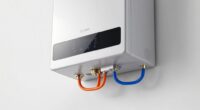
To guarantee your heat pump water heater keeps up, size it based on your household’s hot water demand. If it’s too small, you’ll run out of hot water, while an oversized unit wastes energy and costs more. Consider your household size, water usage habits, and recovery rate, which shows how quickly it heats water again. Proper sizing balances efficiency and performance—if you want to know how to get it just right, keep going to learn more.

Get garden gear delivered free — and shop member deals
- Fast, free delivery on millions of items
- Access to Prime Big Deal Days deals on October 6–7
- Prime Video, Amazon Music and more included
Key Takeaways
- Match the heater’s capacity to your household’s hot water demand to prevent shortages or energy waste.
- Consider your family size and usage habits to determine the appropriate tank size and recovery rate.
- Ensure the unit’s recovery rate can handle peak usage periods without running out of hot water.
- Proper placement and insulation enhance efficiency and help the heater keep up with demand.
- Avoid oversized tanks that consume extra energy or undersized units that cause frequent cycling and system wear.
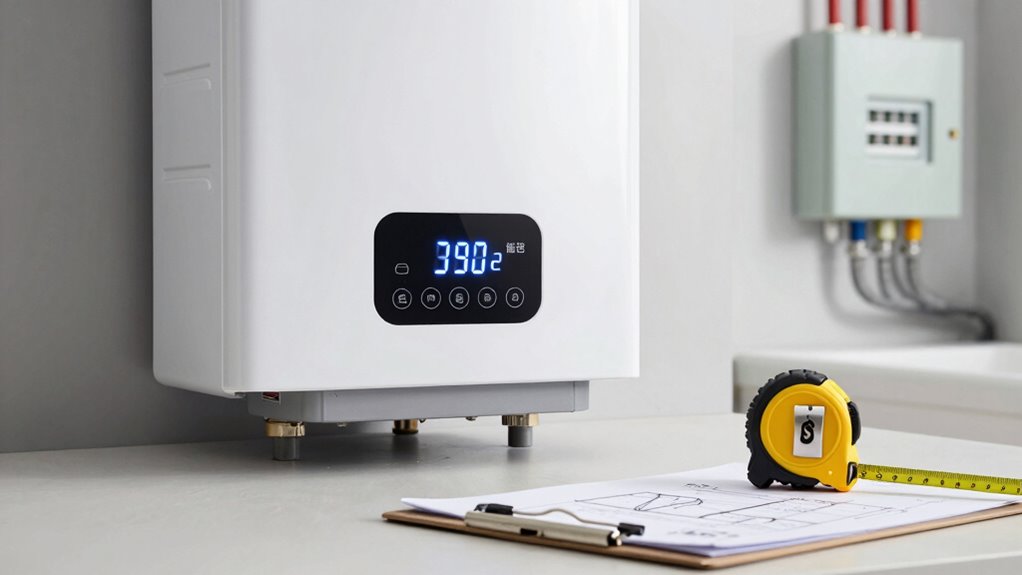
Choosing the right size for your heat pump water heater is vital to guarantee it meets your household’s hot water needs efficiently. An undersized unit will struggle to keep up, leading to cold showers and frustration, while an oversized model can waste energy and inflate your utility bills. To find the perfect fit, you need to consider your household’s daily hot water demand and the capacity of the heat pump. Typically, a family of four needs a unit with a capacity of about 50 gallons, but this can vary depending on your usage habits. It’s important to remember that energy efficiency hinges on selecting a size that balances capacity with your actual needs. A too-large heater may run less frequently, but it consumes more energy during startup, reducing overall efficiency. Conversely, a unit that’s too small will cycle constantly, increasing wear and tear and decreasing lifespan.
Choosing the right size ensures efficiency, longevity, and reliable hot water for your household.
When choosing the right size, keep in mind the installation tips that can optimize your system’s performance. Proper placement and insulation are vital for maintaining energy efficiency. For example, locating your heat pump water heater in a warm, sheltered spot can help it operate more effectively, reducing the workload and energy consumption. Additionally, ensuring adequate clearance around the unit improves airflow and heat transfer. When sizing your unit, also consider future household growth or changes in water usage habits, so you don’t have to replace the system prematurely.
Another key aspect is understanding the unit’s recovery rate—the amount of hot water it can produce in an hour. This figure influences how well the heater can keep up during peak usage times, such as mornings or evenings. A higher recovery rate means less waiting time for hot water and less strain on the system. Always check the manufacturer’s specifications and compare models based on both capacity and recovery rate, which together determine overall performance. Proper sizing is essential for optimizing efficiency and ensuring long-term satisfaction with your heat pump water heater.
Ultimately, choosing the right size involves evaluating your household’s hot water demand, considering energy efficiency, and following installation tips to maximize performance. Don’t just pick a model based on price or capacity alone; think about how it will operate in your home environment. Proper sizing ensures your heat pump water heater will deliver reliable hot water, operate efficiently, and last for years to come. Taking the time to get it right now will save you money, energy, and headaches down the road.
50 gallon heat pump water heater
As an affiliate, we earn on qualifying purchases.
As an affiliate, we earn on qualifying purchases.
Frequently Asked Questions
How Often Should I Schedule Maintenance for My Heat Pump Water Heater?
You should schedule maintenance for your heat pump water heater once a year to keep it running efficiently. Regular maintenance frequency helps prevent breakdowns and guarantees peak performance. During checkups, clean filters, inspect components, and look for leaks. For additional efficiency tips, keep the area around the unit clear and set the thermostat correctly. Staying consistent with maintenance not only extends the life of your heater but also saves you energy and money.
Can I Upgrade My Existing Water Heater to a Heat Pump Model?
Yes, you can upgrade your existing water heater to a heat pump model. When considering a tank replacement, think about upgrade considerations like size, capacity, and compatibility with your current plumbing and electrical systems. confirm your space can accommodate the new unit and verify that your power supply supports it. An upgrade can improve efficiency and save energy, but proper sizing and installation are key to getting the best performance.
What Are the Best Energy-Saving Settings for My Heat Pump Water Heater?
Think of your heat pump water heater like a smart thermostat—use energy-saving modes and temperature optimization to keep it efficient. Set your heater to ‘Eco’ or ‘Energy Saver’ mode when possible, and keep the temperature around 120°F to avoid excess energy use. Regularly adjust settings based on your household needs, ensuring you maximize savings without sacrificing comfort. This way, you harness your system’s full potential.
How Does Climate Affect the Efficiency of Heat Pump Water Heaters?
Climate impact considerably affects your heat pump water heater’s efficiency, causing variation based on outdoor temperatures. In warmer climates, your heater works more efficiently because it doesn’t need to work as hard to heat water. Conversely, colder climates reduce efficiency, making it necessary to choose a unit with proper sizing and insulation. Understanding this variation helps you optimize performance and energy savings, especially if you live in a region with extreme temperatures.
Are There Specific Brands Known for Better Sizing Options?
Some brands are better known for their sizing flexibility and strong reputation, helping you find a unit that fits your needs. Consider brands like Rheem, Stiebel Eltron, and A.O. Smith, as they often offer models with multiple size options and reliable performance. You’ll want to research their product lines, read reviews, and consult with installers to make certain you choose a heat pump water heater that keeps up with your household demands.
Conclusion
Remember, choosing the right size for your heat pump water heater is like finding the perfect fit for a cozy sweater—you want it to keep you warm without feeling too tight. If you go too small, you might find yourself longing for more hot water. But if you choose wisely, you’ll enjoy a smooth, reliable supply that keeps your household humming happily along. Think of it as a warm hug that’s just right, every time.
Fall yard work Picks
leaf blowers
As an affiliate, we earn on qualifying purchases.