You can compost at home using methods like vermicomposting, traditional composting, or using a compost bin. Start by choosing a suitable container with drainage, add moist bedding materials, and feed worms or layers of green and brown waste. Regularly turn or aerate your pile, monitor moisture levels, and avoid meat, dairy, or weeds with seeds. Keep up these practices to quickly produce rich soil; exploring further will reveal even more tips for success.
Key Takeaways
- Choose the right composting method (vermicomposting or traditional composting) based on available space and materials.
- Maintain proper moisture, aeration, and layering of green and brown materials for efficient composting.
- Use worm bins with drainage and moist bedding for quick, nutrient-rich vermicomposting.
- Regularly turn or mix compost to promote decomposition and prevent odor or compaction.
- Avoid adding meat, dairy, weeds with seeds, or diseased plants to keep compost healthy and pest-free.
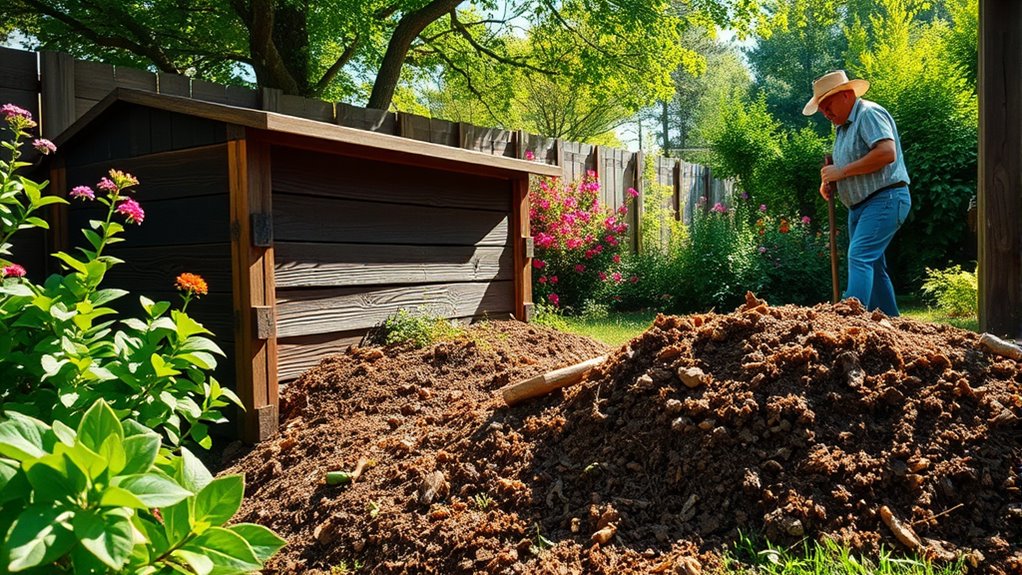
Have you ever wondered how to turn kitchen scraps and yard waste into nutrient-rich soil? Composting at home is a simple, effective way to recycle organic materials and improve your garden’s health. To get started, you’ll want to explore vermicomposting techniques, which involve using worms—specifically red wigglers—to break down food scraps quickly. These worms consume organic waste and produce vermicompost, a nutrient-dense soil amendment. Setting up a worm bin is straightforward: choose a container with drainage holes, add moist bedding like shredded newspaper or coconut coir, and introduce your worms. Be sure to feed them small amounts of vegetable peelings, coffee grounds, and fruit scraps, avoiding meat or dairy, which can attract pests. Regularly checking on your worm bin is essential, especially to maintain proper moisture levels and aeration, which are key components of compost bin maintenance. If the bin gets too dry, lightly mist it; if it’s too wet, add more bedding to absorb excess moisture. Turning or gently mixing the contents every few weeks helps aerate the compost, encouraging healthy worm activity and faster decomposition.
In addition to vermicomposting, traditional compost bins are great for yard waste and larger kitchen scraps. They require some ongoing maintenance, like turning the pile every few weeks to supply oxygen and distribute heat evenly. Proper compost bin maintenance also involves monitoring moisture—your compost should feel like a damp sponge—not too wet or dry. Layering green materials (like vegetable scraps and grass clippings) with brown materials (such as leaves and shredded paper) balances nitrogen and carbon, speeding up decomposition. Be mindful to avoid adding weeds with seeds or diseased plant material, as these can spread unwanted plants or pests in your compost. Over time, the materials break down into rich, dark humus, perfect for enriching garden beds and potted plants.

The Original VermiHut® Plus 5-Tray Worm Composter – Dark Green | Indoor & Outdoor Vermicomposting Bin | Sustainable Design for Food Waste Recycling
Compact, High-Efficiency Footprint Designed to maximize composting capacity while minimizing floor space.
As an affiliate, we earn on qualifying purchases.
As an affiliate, we earn on qualifying purchases.
Frequently Asked Questions
Can I Compost Meat and Dairy Waste at Home?
You can compost meat and dairy waste at home, but it’s not recommended for beginners. Meat disposal and dairy composting attract pests and can cause odors, so you need a well-maintained, sealed compost bin. If you decide to try, bury meat and dairy deep in the pile and balance it with plenty of browns like leaves or paper. This helps prevent smells and pest problems while still composting these materials safely.
How Often Should I Turn My Compost Pile?
Did you know turning your compost regularly can speed up decomposition by up to 50%? You should turn your compost pile about once a week to promote proper soil aeration, which helps break down materials faster. Keep your compost bin in a shaded, well-ventilated spot for the best results. Regular turning prevents odors and ensures even decomposition, making your compost ready sooner and improving your garden’s soil health.
What Are Signs of a Compost Pile That’s Too Wet?
If your compost pile is too wet, you’ll notice a strong odor and it becomes slimy or soggy. To manage moisture effectively, check the pile’s drainage and adjust by adding dry materials like straw or shredded leaves. Proper moisture management guarantees aerobic decomposition, preventing odors and compaction. Turning the pile helps distribute moisture evenly, but controlling water levels is key to maintaining a healthy, balanced compost.
How Long Does It Take to Produce Finished Compost?
Think of your compost pile as a slow-biring cake—patience is key. Typically, it takes about 3 to 6 months for you to see finished compost, depending on factors like temperature, materials, and maintenance. Your composting timeline can be shortened with proper aeration and balancing greens and browns. When it’s dark, crumbly, and earthy-smelling, you’ll know your compost is ready to enrich your garden.
Is Composting Illegal in My City or Neighborhood?
You might wonder if composting is illegal in your city or neighborhood. It’s best to verify your local compost laws and neighborhood regulations first, as rules vary widely. Some areas encourage composting to reduce waste, while others have restrictions due to odor or pests. Contact your local government or neighborhood association to confirm if composting is permitted and ensure you follow any specific guidelines to stay compliant.

Utopia Kitchen Indoor Compost Bin Kitchen, Odorless Composting with Charcoal Filter, 1.3 Gallon Stainless Steel Large Composter for Countertop & Under Sink, Easy Cleaning, One Extra Filter – (Silver)
With this compost bin, you can let the scraps build up during the week without worrying about bad…
As an affiliate, we earn on qualifying purchases.
As an affiliate, we earn on qualifying purchases.
Conclusion
Now that you know the basics, composting at home is easier than you might think. By turning kitchen scraps and yard waste into nutrient-rich soil, you’re not only helping your garden thrive but also reducing waste. Did you know that composting can cut household waste by up to 30%? So, start small, stay consistent, and watch your compost pile turn kitchen scraps into garden gold—an eco-friendly habit worth cultivating!

FCMP Outdoor IM4000 Dual Chamber Tumbling Composter Canadian-Made, 100% Recycled Resin – Outdoor Rotating Compost Tumbler Bin for Garden, Kitchen, and Yard Waste, Black (37 Gallon)
Made in Canada from 100% post-consumer recycled plastic – The original 8-sided dual chamber tumbling composter.
As an affiliate, we earn on qualifying purchases.
As an affiliate, we earn on qualifying purchases.

Jobe's Organics Fast Acting Granular Fertilizer Compost Starter, Easy Plant Care Compost Accelerator, 4 lbs Bag
Organic compost starter speeds up the composting process and is ideal for outdoor compost piles
As an affiliate, we earn on qualifying purchases.
As an affiliate, we earn on qualifying purchases.