
To raise eco-conscious children, incorporate sustainable habits into daily routines, like teaching recycling through fun activities and choosing eco-friendly toys made from natural or recycled materials. Model responsible behaviors and discuss environmental impact openly. Practice waste reduction, minimalism, and mindful consumption together. Celebrate their efforts and reinforce that sustainability is a lifelong journey. Keep exploring ways to nurture their eco-awareness, and you’ll discover more effective strategies to shape environmentally responsible future adults.

Get garden gear delivered free — and shop member deals
- Fast, free delivery on millions of items
- Access to Prime Big Deal Days deals on October 6–7
- Prime Video, Amazon Music and more included
Key Takeaways
- Model eco-friendly behaviors like recycling and reducing waste to encourage children to imitate sustainable habits.
- Choose eco-friendly toys made from sustainable or recycled materials to teach resourcefulness and environmental responsibility.
- Incorporate sustainable materials and minimalism into daily routines, promoting mindful consumption and waste reduction.
- Engage children in conversations about sustainability during everyday activities to reinforce eco-conscious choices.
- Foster a long-term mindset by emphasizing that sustainability involves ongoing, conscious decisions rather than perfection.
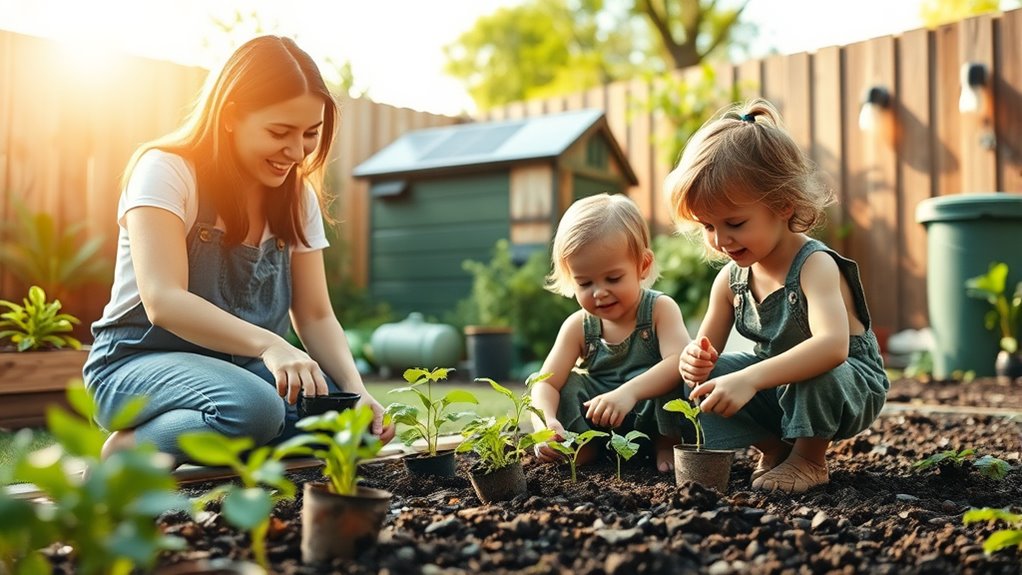
Have you ever wondered how your parenting choices can impact the planet? It’s a powerful realization, and it opens the door to making intentional decisions that shape your child’s understanding of sustainability. One of the most effective ways to start is by fostering good recycling habits early on. When you teach your children to sort recyclables, you’re instilling a sense of responsibility and awareness about waste. Show them how to separate plastics, paper, and metals, and explain why recycling matters. Turn it into a game—challenge them to find recyclable items around the house or during outings. As they learn to see waste as something that can be repurposed, they develop habits that can last a lifetime. It’s also essential to model these behaviors yourself. When your child sees you actively recycling, reducing waste, and thinking about environmental impact, they learn by example.
In addition to recycling habits, choosing eco friendly toys plays a significant role in raising eco-conscious children. Conventional plastic toys often contain harmful chemicals and contribute to pollution when discarded. Instead, opt for toys made from sustainable materials like wood, organic cotton, or recycled plastics. These options are safer for your child and better for the environment. Encourage your kids to appreciate handmade or upcycled toys, which foster creativity and resourcefulness. When you include eco friendly toys in playtime, you’re showing that fun and sustainability can go hand in hand. Plus, involving your children in selecting or making these toys can deepen their understanding of resourcefulness and environmental stewardship. Incorporating eco-conscious sustainable materials into your lifestyle can also inspire your children to think more broadly about sustainability. Developing an understanding of waste reduction can help them make mindful choices in everyday life. Additionally, teaching children about minimalism can help them appreciate the value of owning fewer possessions and focusing on quality over quantity. Research indicates that fostering an awareness of nutrient retention and proper food handling can also contribute to reducing food waste and environmental impact, making it a valuable lesson for children to learn early on.
Fostering a mindset of sustainability isn’t about perfection; it’s about making consistent, conscious choices. Engage your children in conversations about why recycling is essential and how eco friendly toys reduce their ecological footprint. Use everyday moments—like grocery shopping or cleaning up—to highlight the importance of minimizing waste and choosing eco-friendly options. When your child sees that their actions contribute to protecting the planet, they develop a sense of empowerment and responsibility. This early exposure to sustainable practices can influence their lifestyle as they grow, shaping habits that extend beyond childhood. Remember, teaching sustainability is a journey, not a destination. Your ongoing commitment and positive reinforcement can turn eco-conscious ideals into meaningful, lifelong habits for your children.
eco-friendly wooden toys for kids
As an affiliate, we earn on qualifying purchases.
As an affiliate, we earn on qualifying purchases.
Frequently Asked Questions
How Can I Encourage My Child to Reduce Waste Effectively?
To encourage your child to reduce waste, start by teaching them about recycling habits and why they matter. Make it fun by setting up a recycling station at home and involving them in sorting items. Introduce composting skills through simple, hands-on activities like composting kitchen scraps. Praise their efforts, and explain how these actions help the environment. With patience and consistency, they’ll develop habits that make a real difference.
What Are Eco-Friendly Gift Ideas for Children?
You can choose eco-friendly gift ideas for children by opting for reusable gift options like cloth toys, wooden puzzles, or metal water bottles. Wrap presents with eco-friendly wrapping made from recycled or biodegradable materials to minimize waste. These thoughtful choices teach children about sustainability while making your gifting more environmentally responsible. Plus, reusable and eco-friendly gifts often become cherished keepsakes, encouraging a lifelong appreciation for caring for the planet.
How Do I Teach Kids About Climate Change Responsibly?
You might worry teaching kids about climate change is too complex or scary, but it’s essential for their future. Start by debunking climate change myths with simple facts, then engage them in eco awareness activities like planting trees or recycling projects. This hands-on approach makes learning fun and meaningful, helping kids understand their role in protecting the planet while fostering responsibility and curiosity.
Are There Sustainable Toys That Are Safe for Children?
You’ll find plenty of eco-friendly play options that are safe for children. Look for toys made from non-toxic materials like organic cotton, wood, or recycled plastics. These sustainable toys promote eco-consciousness, ensuring safe, non-toxic play. Always check labels for certifications like FSC or ASTM to confirm eco-friendliness and safety. Choosing these options helps protect your child’s health while teaching them the importance of caring for the environment.
How Can I Involve Teenagers in Eco-Friendly Routines?
Getting teenagers involved in eco-friendly routines is like planting seeds for a greener future. You can encourage their teenage eco activism by discussing local environmental issues and supporting sustainable lifestyle choices. Invite them to join community clean-ups or start eco projects together. By making sustainability relevant and empowering, you turn eco-conscious habits into a natural part of their lives, inspiring them to become passionate stewards of the planet.
Conclusion
By teaching your children eco-friendly habits, you’re shaping a greener future. Did you know that children today will inherit a planet that’s 1.5°C warmer than pre-industrial times if current trends continue? Your efforts in sustainable parenting can make a real difference, fostering mindful choices and environmental stewardship from a young age. Keep inspiring your kids to care for the Earth—your small actions today create lasting change for tomorrow.
Fall yard work Picks
leaf blowers
As an affiliate, we earn on qualifying purchases.