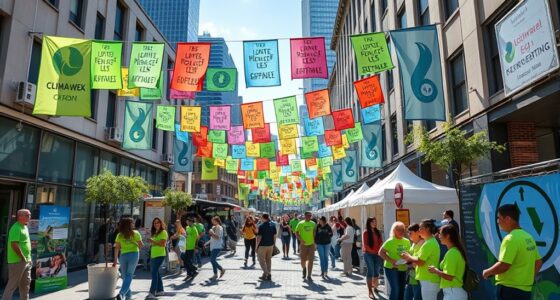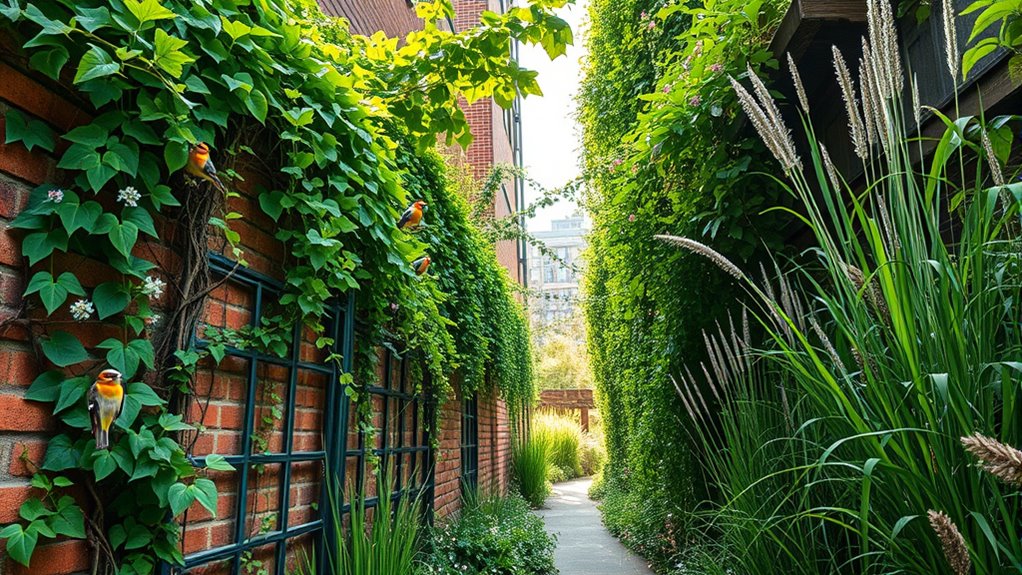

Urban biodiversity corridors are essential pathways that connect green spaces throughout your city, allowing wildlife, birds, and insects to move safely and thrive. By incorporating native plants along streets, parks, and vacant lots, you can support local ecosystems, improve air quality, and create inviting spaces for recreation. Wildlife crossings help animals pass safely over roads, maintaining healthy populations. Keep exploring to discover how you can help build and enhance these important ecological links.
Key Takeaways
- Connect fragmented green spaces to enable wildlife movement and ecological connectivity within urban areas.
- Incorporate native plants along streets, parks, and vacant lots to support local biodiversity and pollinators.
- Design wildlife crossings like overpasses or underpasses with native vegetation to facilitate safe animal passage.
- Use native plantings to stabilize soil, improve air quality, and create inviting habitats for urban wildlife.
- Engage communities in planting and advocating for green corridors to promote resilient, biodiverse cities.
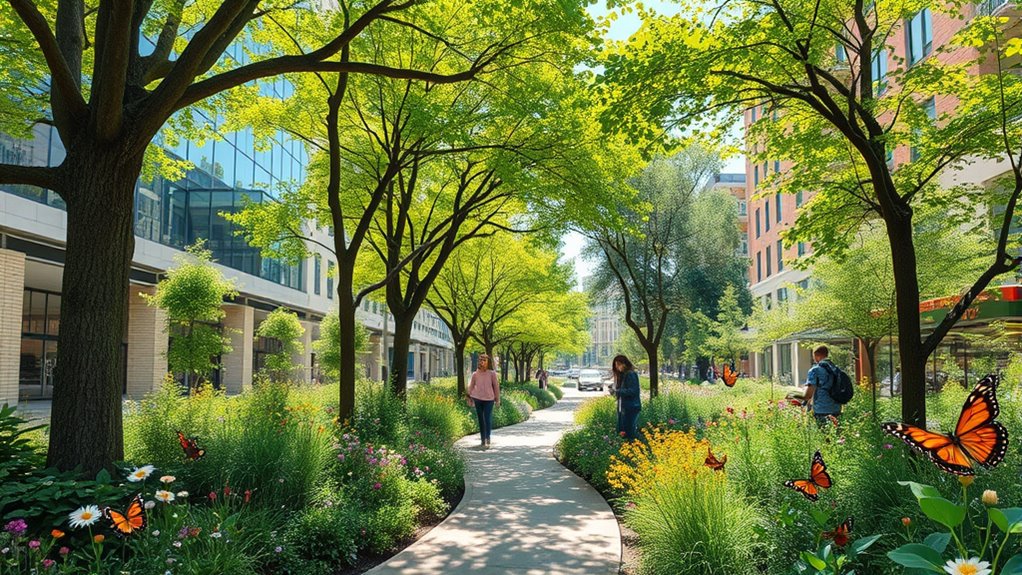
Urban biodiversity corridors are essential pathways that connect fragmented green spaces within cities, allowing wildlife to move freely and thrive. These corridors act as critical links, enabling animals, birds, and insects to navigate urban landscapes safely. When designed thoughtfully, they can markedly reduce habitat loss caused by urban sprawl and help maintain healthy ecosystems amid concrete jungles. One effective way to strengthen these corridors is through native plantings. Using plants native to your region provides food, shelter, and breeding sites tailored to local wildlife. Native plantings encourage biodiversity by supporting a variety of species, from pollinators like bees and butterflies to small mammals and birds. They require less water and maintenance, making them sustainable choices that blend seamlessly into the urban environment. Additionally, incorporating native plantings helps support urban biodiversity corridors, which are vital for maintaining ecological connectivity in cities.
Incorporating native plantings along green corridors not only enhances their ecological value but also creates inviting spaces for residents. When you plant native species along streets, parks, or vacant lots, you’re fostering a more resilient urban ecosystem. These plants attract native pollinators, which in turn support the broader food web, from insects to larger animals. The increased presence of native flora also helps stabilize soil, reduce erosion, and improve air quality. As you develop or restore green corridors, consider selecting a diverse mix of native trees, shrubs, grasses, and groundcovers to maximize habitat variety. This diversity supports a wider range of wildlife and ensures the corridor remains functional across different seasons.
Wildlife crossings are another essential feature in urban biodiversity corridors. These structures, such as overpasses or underpasses, allow animals to cross busy roads safely without risking their lives. Installing wildlife crossings minimizes roadkill and prevents animals from becoming isolated in small habitat patches. When combined with native plantings, crossings become even more effective, providing familiar cover and food sources that encourage animals to utilize these safe passages. By designing crossings that mimic natural habitats and include native vegetation, you create a more inviting route for wildlife. This integration reduces human-wildlife conflicts and helps maintain genetic diversity by connecting populations separated by roads or development.
You play an important role in supporting urban biodiversity corridors by advocating for native plantings and wildlife crossings in your community. Whether you participate in local planting projects or support policies that prioritize ecological connectivity, your efforts help create a city that’s more welcoming to wildlife. These corridors aren’t just about conservation—they also enrich your quality of life by providing green spaces for recreation, education, and tranquility. Through thoughtful planning and community engagement, you can contribute to a healthier, more vibrant urban environment where wildlife can flourish alongside people.

Native Wildflower Seeds for Planting 24 Variety Pack – Perennial & Annual North American Flowers for Butterfly & Bee-Friendly Pollinator Gardens – Non-GMO Heirloom – Survival Garden Seeds
NATIVE BEAUTY – New England Aster, Smooth Blue Aster, Purple Coneflower, Narrow-Leaved Coneflower, Black-Eyed Susan, Dense Blazing Star…
As an affiliate, we earn on qualifying purchases.
As an affiliate, we earn on qualifying purchases.
Frequently Asked Questions
How Do Urban Biodiversity Corridors Impact Local Air Quality?
You’ll see that urban biodiversity corridors improve air quality by enhancing ecological connectivity and promoting air purification. As plants and trees in these corridors absorb pollutants and produce oxygen, they filter the air around you, reducing harmful particles. This natural process helps create healthier environments, making your city more livable. By supporting ecological connectivity, these corridors guarantee continuous green spaces that effectively clean the air and benefit your community’s well-being.
What Funding Sources Support Urban Biodiversity Corridor Projects?
You might find funding for urban biodiversity corridors through diverse sources like government grants, green infrastructure programs, and public-private partnerships. Often, these projects benefit from coincidental support, where environmental initiatives align with urban development budgets or private sector investments. Look into local, state, and federal agencies emphasizing sustainability, as well as nonprofits dedicated to conservation. Such collaboration can release essential resources, turning your corridor project into a thriving, funded reality.
How Do Corridors Affect Urban Heat Island Effects?
Corridors help reduce urban heat island effects by integrating green spaces that promote temperature regulation. As you design or maintain these corridors, you support the cooling process, which lowers surrounding temperatures and improves air quality. By connecting parks, trees, and natural habitats, you create a network that mitigates heat buildup, making cities more comfortable and sustainable. This green space integration benefits residents and enhances urban resilience against climate change.
Are There Specific Species That Benefit Most From These Corridors?
Can you picture native pollinators thriving in lush urban wildlife habitats? These corridors mainly benefit insects like bees and butterflies, which rely on diverse plant life for food and shelter. By connecting green spaces, you create safe pathways for these species to migrate, breed, and flourish. Your efforts support the resilience of native pollinators and enhance overall urban biodiversity, making cities healthier and more vibrant for everyone.
How Can Residents Participate in Maintaining Biodiversity Corridors?
You can participate in maintaining biodiversity corridors through community volunteerism by helping plant native species, removing invasive plants, and monitoring local wildlife. Engaging in educational outreach allows you to raise awareness about the importance of these corridors and promote conservation efforts. Your active involvement supports healthy ecosystems, benefits local species, and fosters a stronger, more connected community dedicated to preserving urban biodiversity.

Lilyanaen Aluminum Sign Slow Down Wildlife Crossing Traffic Sign Plaque 8"x12" Retro-Vintage Yellow
High Quality:Made of imported materials,Exquisite craftsmanship.It will not peel or fade.
As an affiliate, we earn on qualifying purchases.
As an affiliate, we earn on qualifying purchases.
Conclusion
As you walk through these urban biodiversity corridors, you become a bridge between concrete and nature, witnessing life’s quiet resilience. These green veins pulse with the rhythm of thriving ecosystems, weaving a vibrant tapestry amid the city’s heartbeat. Embrace these corridors as your own secret passages to wildness, reminding you that even in the busiest streets, nature’s melody continues to play—silent, strong, and beautifully unbroken. Let these pathways inspire you to nurture the wild within the urban jungle.
urban biodiversity corridor planting kit
As an affiliate, we earn on qualifying purchases.
As an affiliate, we earn on qualifying purchases.
Plant This, Not That: Over 200 Native Plant Swaps for a More Sustainable, Pollinator-Friendly Garden
As an affiliate, we earn on qualifying purchases.
As an affiliate, we earn on qualifying purchases.