
Urban wildlife corridors reconnect fragmented habitats across cities, allowing wildlife to move safely and thrive. By creating green roofs, planting native trees, and establishing layered habitats, you help foster biodiversity and improve ecosystem health. These corridors reduce hazards like busy roads and buildings, facilitating migration, food access, and breeding for birds, insects, and small mammals. If you want to find out how you can support or create these essential pathways, there’s more to explore below.

Get garden gear delivered free — and shop member deals
- Fast, free delivery on millions of items
- Access to Prime Big Deal Days deals on October 6–7
- Prime Video, Amazon Music and more included
Key Takeaways
- Urban wildlife corridors connect fragmented habitats, allowing safe movement and supporting biodiversity within city environments.
- Green roofs and layered habitat networks create multi-tiered pathways that enhance species survival and ecological resilience.
- Planting native trees along streets and parks facilitates wildlife movement and provides essential food and shelter.
- Community involvement in habitat projects promotes sustainable urban biodiversity and fosters coexistence between humans and wildlife.
- Combining green infrastructure strategies reduces urban hazards, improves air quality, and creates healthier habitats for urban species.
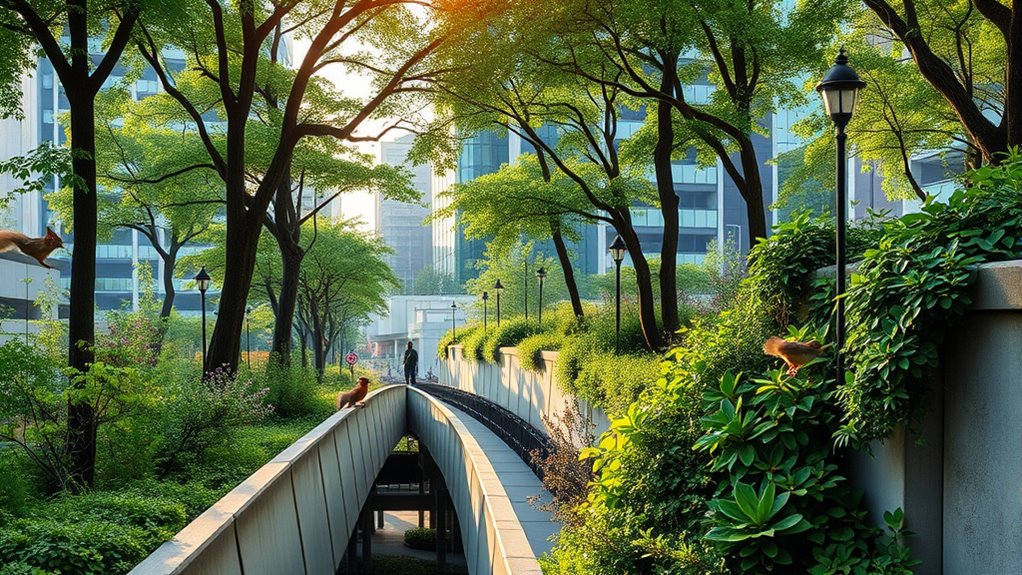
Urban wildlife corridors are essential pathways that connect fragmented habitats within cities, allowing animals to move safely between green spaces. These corridors help restore biodiversity by creating continuous routes through which birds, insects, and small mammals can travel without risking urban hazards like roads and buildings. As cities expand, natural habitats become isolated patches, making it difficult for wildlife to find food, reproduce, or migrate. By establishing corridors, you can reduce these barriers and promote healthier, more resilient ecosystems within urban environments.
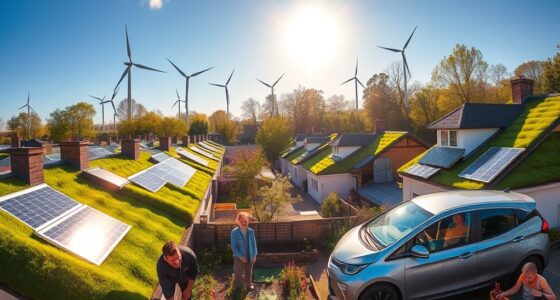
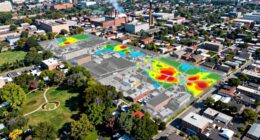
One effective way to support these corridors is through green roof initiatives. When you install green roofs on buildings, you transform sterile rooftops into vibrant habitats that attract insects, birds, and pollinators. These green roofs serve as stepping stones, linking otherwise disconnected green spaces and offering safe resting spots for wildlife. They also help mitigate the heat island effect, improve air quality, and manage stormwater runoff. As a city dweller, advocating for or supporting green roof projects can markedly enhance urban biodiversity by providing critical habitat patches along wildlife corridors.
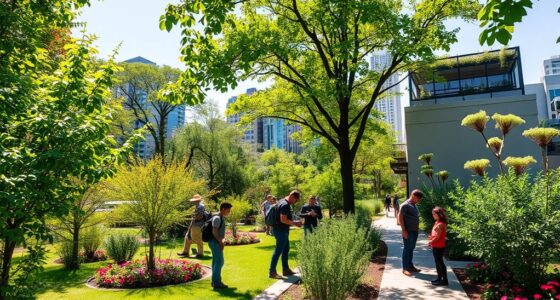
Urban tree planting further enriches these corridors, creating a network of shaded, vegetated pathways that facilitate wildlife movement. When you plant native trees along streets, parks, and vacant lots, you contribute to a continuous green belt that supports various species. Trees provide food, shelter, and nesting sites, making urban areas more hospitable for wildlife. Additionally, thoughtfully planned tree corridors can guide animals safely through busy neighborhoods, reducing human-wildlife conflicts and fostering coexistence. You can participate in local tree planting events or encourage city planners to prioritize native species in new development projects.
Combining green roof initiatives with urban tree planting creates a layered approach to reconnecting fragmented habitats. While green roofs offer elevated, isolated patches, street trees and park greenery extend the corridor horizontally across neighborhoods. This multi-tiered network allows species to navigate the city more freely, increasing their chances of survival and breeding success. It also benefits residents by improving air quality, reducing noise pollution, and enhancing the overall aesthetic of urban areas. Your support and participation in these initiatives can make a tangible difference in transforming concrete jungles into thriving habitats.
As an affiliate, we earn on qualifying purchases.
Frequently Asked Questions
How Do Urban Wildlife Corridors Affect Local Human Communities?
Urban wildlife corridors positively impact local human communities by promoting community engagement and enhancing green spaces. These corridors reduce noise pollution by creating natural buffers, making neighborhoods more peaceful. As you participate in corridor projects, you help foster a sense of ownership and environmental stewardship. You’ll notice improved air quality and increased biodiversity, which benefits everyone’s well-being. Overall, these corridors create harmonious coexistence between humans and wildlife, enriching city life.
What Are the Main Challenges in Establishing Urban Wildlife Corridors?
When establishing urban wildlife corridors, you face key challenges like habitat fragmentation, which makes connecting green spaces difficult, and pollution management, as pollutants harm both animals and plant life. You need to coordinate between city planning and environmental conservation efforts, often dealing with limited space and funding. Overcoming these obstacles requires strategic planning, community support, and policies that prioritize ecological connectivity, ultimately fostering healthier urban ecosystems.
Can Urban Wildlife Corridors Help Mitigate Climate Change Effects?
You might wonder if urban wildlife corridors can help mitigate climate change effects. They do, by promoting greenhouse gas reduction through increased green spaces that absorb carbon dioxide. Additionally, they assist with temperature regulation, reducing urban heat island effects. By connecting habitats, these corridors support biodiversity and create resilient ecosystems, ultimately contributing to climate change mitigation. So yes, they play a meaningful role in addressing climate challenges in cities.
How Do City Planners Prioritize Areas for Corridor Development?
You wonder how city planners decide where to create wildlife corridors. They start by analyzing zoning policies to identify underserved areas and potential eco-pathways. Then, they engage communities to gather insights and foster support. This careful balance between policy and public input reveals that prioritization isn’t random but a strategic process aimed at maximizing ecological benefits while ensuring community needs are met. The true challenge lies in making those corridors a reality.
Are There Successful Examples of Urban Wildlife Corridors Worldwide?
You’ll find successful examples of urban wildlife corridors worldwide that enhance habitat connectivity and support species migration. Cities like Singapore, Seoul, and Vancouver have created green corridors linking parks and natural areas, allowing animals to move safely and thrive. These initiatives demonstrate how urban planning can promote biodiversity by maintaining habitat connectivity, ultimately fostering healthier ecosystems within city environments. Your efforts in understanding and supporting these corridors can help sustain urban biodiversity.
Conclusion
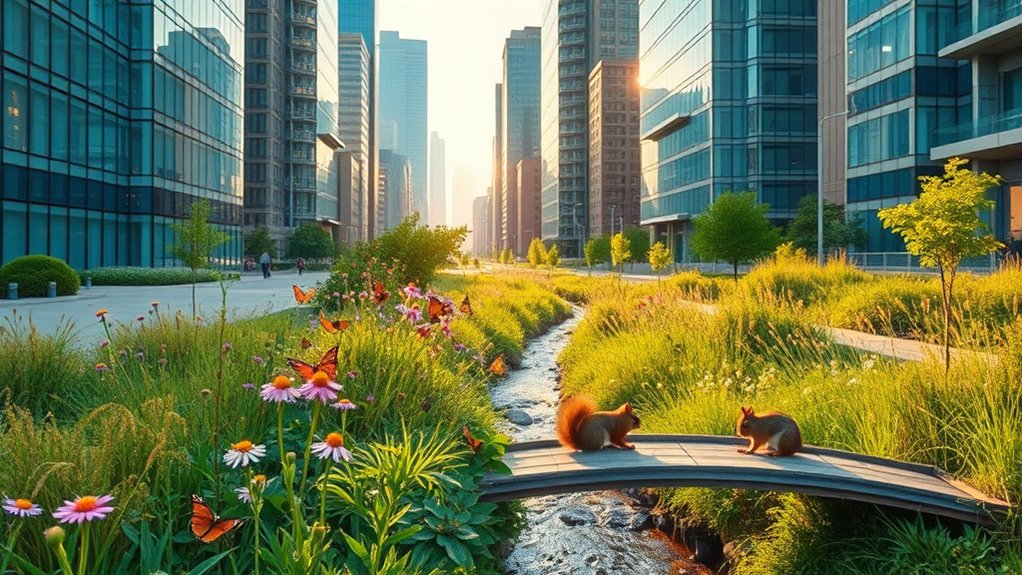
By creating urban wildlife corridors, you’re opening secret pathways through concrete jungles, turning cityscapes into vibrant, living tapestries. Imagine green ribbons weaving through buildings, inviting birds, butterflies, and small animals to dance across the urban stage. These corridors breathe life into your city, transforming it into a thriving heartbeat of biodiversity. When you embrace these green bridges, you’re stitching together a future where nature and city coexist, blossoming side by side in harmony.
Fall yard work Picks
leaf blowers
As an affiliate, we earn on qualifying purchases.