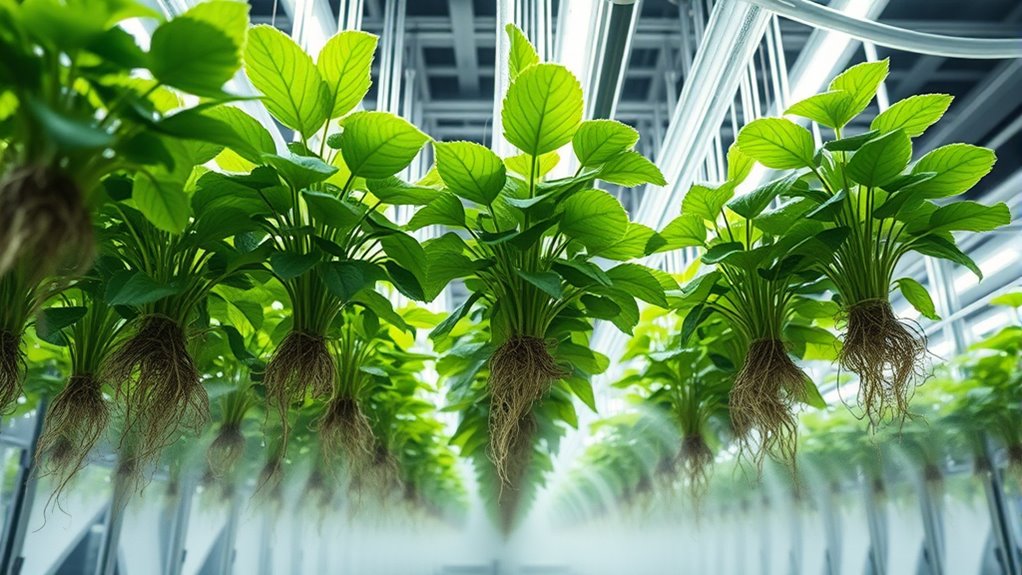

Aeroponic farming involves suspending plants in the air and misting their roots with nutrient-rich solutions. This method improves growth speed, yields, and reduces water use compared to traditional soil farming. It also minimizes soil-borne pests and diseases, making your crop production more sustainable. With precise control over nutrients and environment, you can grow healthier plants more efficiently. Keep exploring to discover how this innovative technique can transform your farming practices.
Get ready for Prime Big Deal Days — try Prime free
Exclusive member deals on October 6–7, plus fast free delivery. Cancel anytime.
As an affiliate, we earn on qualifying purchases.
Key Takeaways
- Plants are suspended in the air, with roots misted by nutrient-rich solutions instead of soil.
- Nutrients are delivered directly to roots via fine misting, promoting faster growth.
- Aeroponics reduces water use and eliminates soil-borne pests and diseases.
- It offers precise environmental and nutritional control, improving crop yields and health.
- This method supports sustainable farming with less land use, fewer chemicals, and higher efficiency.
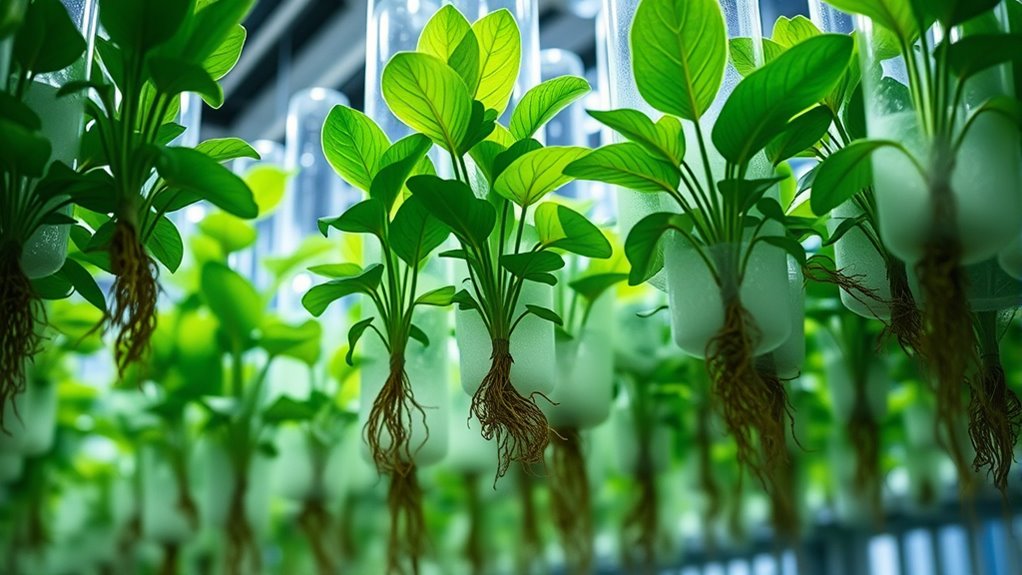
Have you ever wondered how farmers grow crops without soil? Aeroponic farming makes this possible by suspending plants in the air and misting their roots with a nutrient-rich solution. Instead of traditional soil, you’re working with a carefully controlled environment where plant nutrient solutions are delivered directly to the roots, providing everything plants need to thrive. This method isn’t just innovative; it’s highly efficient, reducing water use and eliminating many soil-borne pests and diseases. As a grower, you focus on maximizing the misting system to ensure roots receive the right amount of nutrients and oxygen, which accelerates growth and improves yields.
One of the biggest advantages of aeroponics is its precise control over plant nutrient solutions. Since the roots are exposed and receive nutrients through misting, you can tailor the nutrient composition to the specific needs of each plant species. This targeted feeding promotes healthier growth and can lead to faster harvest times compared to traditional soil farming. Additionally, because the roots are not submerged in water or soil, there’s less chance of root rot and other issues that often plague soil-based cultivation. You can also monitor the nutrient solution closely, adjusting concentrations as plants grow or as environmental conditions change, guaranteeing ideal health and productivity.
Pest management becomes simpler in aeroponic systems because you’re not dealing with soil pests or pathogens that typically attack crops underground. Instead, pests are easier to spot and manage since the plants are suspended and readily accessible. You can implement integrated pest management strategies, such as introducing beneficial insects or using targeted organic treatments, without risking contamination of soil or water sources. This reduces the need for chemical pesticides, making your crop production safer and more sustainable. Furthermore, the controlled environment minimizes the entry points for pests and diseases, so you spend less time fighting infestations and more time focusing on growing healthy plants.
As an affiliate, we earn on qualifying purchases.
Frequently Asked Questions
What Are the Main Costs Involved in Starting Aeroponic Farms?
When you start an aeroponic farm, the main costs include startup costs for setting up the system and equipment investment. You’ll need to purchase misting systems, grow chambers, and monitoring tools. Additionally, consider expenses for seeds, nutrients, and electricity. These initial investments can be significant, but they’re crucial for creating a controlled environment that maximizes plant growth. Planning your budget carefully helps ensure your farm’s long-term success.
How Does Aeroponic Farming Impact Plant Nutritional Content?
They say, “You are what you eat,” and aeroponic farming proves it, enhancing plant nutrition through efficient mineral absorption. You’ll find that this method boosts nutritional content by delivering nutrients directly to roots, resulting in healthier, more nutrient-dense plants. With better control over the environment, you can optimize nutritional enhancement, ensuring your crops retain their essential vitamins and minerals, ultimately providing you with fresher, more nutritious food.
Can Aeroponic Systems Be Used for Root Vegetable Cultivation?
You can definitely use aeroponic systems for root vegetable cultivation. They deliver nutrients directly through aeroponic nutrient delivery, which allows you to control conditions precisely. This method can result in faster growth and healthier roots. While traditionally used for leafy greens, aeroponics can be adapted for root vegetables like carrots or radishes, offering a clean, efficient way to grow roots without soil.
What Are the Common Pests and Diseases in Aeroponic Farms?
You should focus on pest management and disease prevention in aeroponic farms. Common pests include aphids and spider mites, while diseases like root rot and powdery mildew can also occur. Regular inspection and maintaining ideal conditions help prevent issues. Using integrated pest management strategies ensures pests stay under control, and proper sanitation reduces disease risks. Staying proactive keeps your aeroponic system healthy and productive.
How Scalable Is Aeroponic Farming for Commercial Production?
You’ll find that aeroponic farming is quite scalable for commercial production, especially with urban expansion in mind. Its efficient use of water conserves resources, making it ideal for limited spaces. As demand for fresh produce grows, you can expand operations without needing large land areas. This method’s rapid growth potential and water-saving benefits make it a sustainable choice for large-scale, urban agriculture, supporting future food security.
Conclusion
As you explore aeroponic farming, you’ll realize it’s like nurturing plants in a cloud of mist, where every root gets a revitalizing drink. This innovative method uses air and water to grow plants efficiently and sustainably, saving space and resources. Embracing aeroponics is like opening a window to a future where farming is cleaner, greener, and more innovative. So, plunge in and watch your plants thrive in this misty, magical world of growth.
Fall Picks
fall essentials
As an affiliate, we earn on qualifying purchases.