

Right-to-repair laws let you fix your gadgets easily by gaining access to genuine parts, repair manuals, and tools, breaking manufacturer restrictions. This empowers you to extend your device’s lifespan, save money, and reduce electronic waste, benefiting the environment. By promoting standardized and repair-friendly designs, these laws also foster competition among repair services, giving you more affordable options. Staying informed helps you understand how these laws can make your repairs simpler and the planet healthier.
Key Takeaways
- Right-to-repair laws empower consumers and technicians to fix devices, reducing reliance on manufacturers and promoting affordable repairs.
- These laws extend device lifespan by enabling easier access to genuine parts, manuals, and tools.
- Repair accessibility minimizes electronic waste, supporting environmental sustainability and reducing harmful waste.
- Standardized, repair-friendly device designs foster industry competition and innovation in independent repair services.
- Overall, right-to-repair laws promote consumer choice, cost savings, and a more sustainable approach to gadget maintenance.
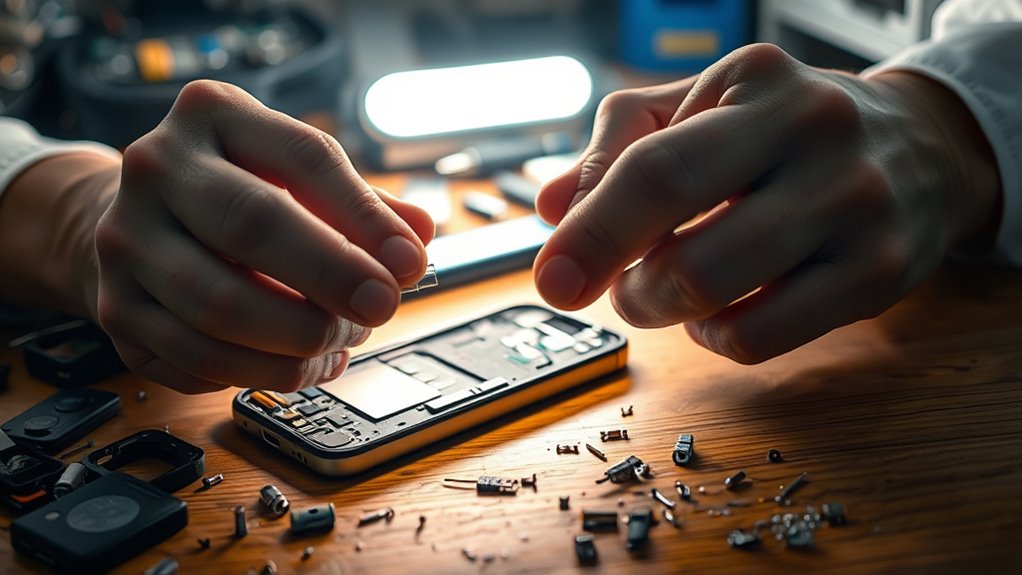
Right-to-Repair laws empower consumers and independent technicians to fix devices without facing restrictions from manufacturers. This shift allows you to take control of your gadgets, whether it’s your smartphone, laptop, or household appliances. One of the most significant benefits of these laws is improved repair accessibility, making it easier and more affordable to get your devices fixed instead of replacing them. When repair options are limited, you often end up discarding devices prematurely, which adds to electronic waste and environmental harm. But with the right to repair, you can access genuine parts, repair manuals, and tools, enabling you or a trusted technician to address issues efficiently.
Battery longevity is a common concern in electronic repairs, and right-to-repair laws play a vital role here. When devices are designed to be easily repaired, replacing or maintaining the battery becomes straightforward. This prolongs the lifespan of your device, saving you money and reducing waste. Instead of rushing to buy new gadgets when batteries start to degrade, you can simply have the battery replaced, restoring your device’s performance. Additionally, easier access to repair parts means that manufacturers aren’t incentivized to use non-standardized, proprietary components that are difficult and costly to replace. Instead, you benefit from a more sustainable approach, where your device’s parts can be swapped out without unnecessary hurdles.
These laws also promote innovation and competition in the repair industry. Independent technicians, who often provide more affordable and personalized services, gain a fairer chance to compete with big manufacturers. You no longer need to rely solely on authorized repair centers, which can be expensive or have long wait times. Instead, you can choose local repair shops or even fix devices yourself, provided you have the right information and parts. This democratization of repair services not only saves you money but also encourages more environmentally friendly practices by extending the life of your devices.
smartphone repair kit with genuine parts
As an affiliate, we earn on qualifying purchases.
As an affiliate, we earn on qualifying purchases.
Frequently Asked Questions
How Do Right-To-Repair Laws Impact Consumer Prices?
You might wonder how right-to-repair laws affect your costs. These laws promote market competition, encouraging repair shops and manufacturers to offer better prices. As a result, repair costs can decrease, leading to overall cost reduction for you. With more options and transparency, you’re less likely to overpay. So, these laws can help you save money while fostering a healthier, more competitive market that benefits consumers like you.
Are Small Repair Shops Supported by Right-To-Repair Legislation?
Ever imagined a neighborhood where small repair shops thrive, supporting local entrepreneurship? Right-to-repair laws empower these small repair shops by giving them access to necessary parts and information, making repairs easier and more affordable. This legislation helps sustain local businesses, keeps repairs close to home, and fosters community resilience. So, yes, right-to-repair laws directly support small repair shops, strengthening your local economy and encouraging sustainable practices.
What Are the Environmental Benefits of Repair-Friendly Laws?
You might wonder about the environmental benefits of repair-friendly laws. These laws help reduce electronic waste by encouraging repairs instead of discarding devices. When you repair rather than replace, you conserve valuable resources like metals and plastics, supporting resource conservation. This not only lessens landfill pollution but also minimizes the environmental impact of manufacturing new gadgets, making your actions more eco-friendly and helping protect the planet.
Do These Laws Apply Internationally or Only in Certain Countries?
You might think these laws have an international scope, but they usually only apply within specific countries or regions. In reality, legal jurisdiction limits their reach, leaving many countries without repair protections. It’s almost ironic how something so beneficial for your gadgets and the planet can be confined by borders. So, unless you’re in a place with strong repair laws, you’re likely stuck with limited options, regardless of global needs.
How Can Consumers Advocate for Stronger Right-To-Repair Policies?
You can advocate for stronger right-to-repair policies by engaging in consumer advocacy efforts. Share your experiences and concerns with lawmakers, join or support organizations pushing for policy change, and raise awareness through social media. Contact your representatives to express your support, participate in petitions, and attend public hearings. Your active involvement helps build momentum for legislation that empowers consumers and promotes sustainable practices, making your voice a catalyst for meaningful change.
Conclusion
By advocating for right-to-repair laws, you give yourself the power to fix your gadgets and help the planet. Imagine saving money while reducing e-waste—it’s like repairing your device and healing the Earth at the same time. When you choose to support these laws, you’re not just fixing a phone; you’re fixing a future. It’s a small act with a big impact, proving that caring for your tech can also care for the planet.