

We’ve researched the 15 best Wi-Fi baseboard thermostats that’ll keep your home cozy and energy-efficient. These smart devices offer features like remote control, programmable scheduling, and voice integration with popular assistants. They’re designed for various electric heating systems, so compatibility matters. Whether you’re interested in sleek designs or advanced energy monitoring, there’s something for everyone. Stick with us to explore each thermostat’s unique benefits and find the perfect match for your heating needs.
Key Takeaways
- Look for thermostats compatible with 120V, 208V, and 240V systems to ensure they fit your heating setup.
- Choose models with user-friendly interfaces, like large LCD touchscreens, for easy temperature adjustments and scheduling.
- Energy-saving features such as programmable schedules and geofencing can significantly reduce heating costs and improve efficiency.
- Ensure the thermostat supports over-the-air firmware updates to maintain functionality and efficiency over time.
- Verify compatibility with your existing heating system and wiring to avoid installation issues and maximize performance.
Mysa Smart Thermostat LITE for Line Voltage Electric Baseboard Heater
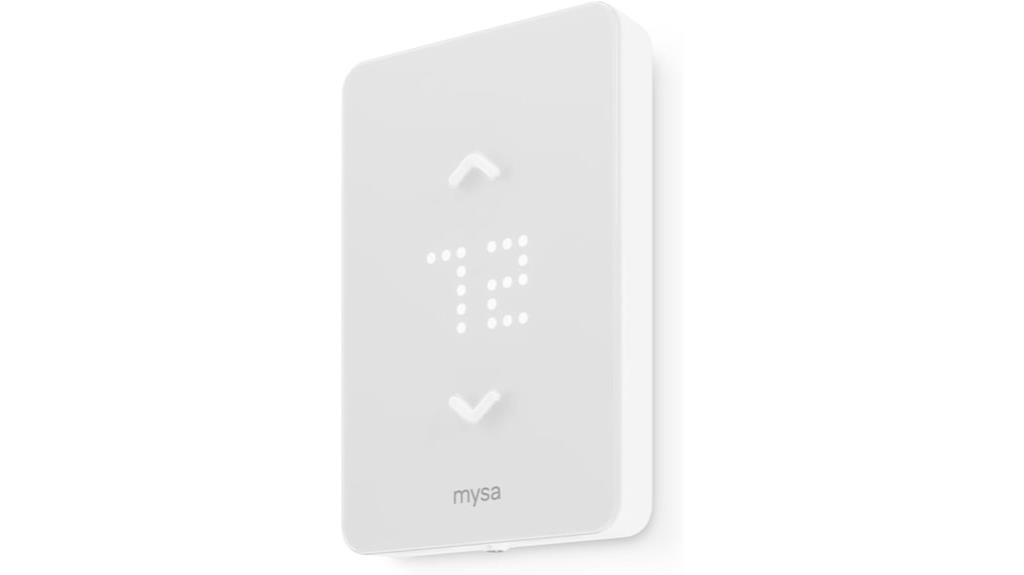
If you’re looking for a smart solution to control your line voltage electric heating systems, the Mysa Smart Thermostat LITE is an excellent choice. I love how it effortlessly manages my baseboard heaters, fan-forced, and wall heaters, all while being compatible with 120V, 208V, and 240V systems. The DIY installation took me just 15 minutes—no electrician needed! With Wi-Fi connectivity, I can adjust the temperature from anywhere using my smartphone. Plus, it works seamlessly with Apple HomeKit, Amazon Alexa, and Google Assistant. This thermostat not only enhances comfort but also helps me save on heating costs with its energy-saving features.
Best For: Homeowners with line voltage electric heating systems looking for a smart and efficient way to control their heating.
Pros:
- Easy DIY installation that takes only 15 minutes without needing an electrician.
- Wi-Fi connectivity allows for remote temperature adjustments and scheduling via a smartphone app.
- Compatible with major smart home systems like Apple HomeKit, Amazon Alexa, and Google Assistant for voice control.
Cons:
- Requires a minimum of four wires for installation, which may not be available in all homes.
- Limited to line voltage systems, making it unsuitable for low voltage or non-electric heating systems.
- Some users may find the upfront cost higher compared to traditional thermostats.
meross Smart Thermostat for Electric Baseboard and In-Wall Heaters

The meross Smart Thermostat for Electric Baseboard and In-Wall Heaters is an excellent choice for homeowners who want efficient temperature control without the hassle of complicated installations. I found that it installs in under 30 minutes and works seamlessly with various heater types. Plus, voice control through Siri, Alexa, or Google Home makes adjusting the temperature a breeze. The Meross app lets me schedule heating and monitor energy usage in real-time. With its sleek display and precise temperature control, this thermostat not only enhances comfort but also promotes energy efficiency, saving me money in the long run.
Best For: Homeowners seeking an easy-to-install smart thermostat that offers efficient temperature control and energy monitoring for electric heating systems.
Pros:
- Easy to install in under 30 minutes, compatible with various heater types.
- Voice control functionality through Siri, Alexa, and Google Home for convenient temperature adjustments.
- Real-time energy monitoring and scheduling features available through the Meross app, promoting energy efficiency.
Cons:
- Requires four or more wires in the electric box, which may limit compatibility in some homes.
- Not compatible with electric baseboard heaters that do not meet the wiring requirements.
- High-voltage systems only; may not be suitable for low-voltage heating systems.
Mysa Smart Thermostat for Electric Baseboard Heaters

For those with high/line voltage electric heating systems, the Mysa Smart Thermostat for Electric Baseboard Heaters stands out as an excellent choice. It’s designed to handle 120–240V systems, making it compatible with various heaters. I love its compact design and adaptive display, which adjusts brightness based on my presence. Plus, controlling the thermostat through the app, voice, or touch is super convenient. With features like geofencing and scheduling, it helps me save energy effortlessly. Rated 4.5 stars by users, Mysa combines functionality with modern tech, ensuring my home stays comfortable and efficient year-round.
Best For: Homeowners with high/line voltage electric heating systems looking for a modern, efficient thermostat solution.
Pros:
- Compact design with an adaptive display that adjusts brightness based on presence.
- Convenient control options through app, voice, or touch commands.
- Features energy-saving capabilities like geofencing and customizable scheduling.
Cons:
- Requires at least four wires, making it incompatible with low-voltage or two-wire systems.
- Higher upfront cost compared to traditional thermostats.
- Limited to electric heating systems, excluding other heating types.
MOES Programmable Smart Thermostat for Electric Baseboard Heaters

Looking to enhance your home’s heating efficiency? The MOES Programmable Smart Thermostat for Electric Baseboard Heaters might be just what you need. It’s compatible with 2.4G WiFi and works seamlessly with Alexa and Google Home for voice control. I love how I can manage it remotely through the Smart Life/TUYA app. The frosted display reduces glare, while the easy-grip knob allows for manual adjustments. Plus, with its scheduling feature, I can heat my home only when necessary, ultimately cutting down on energy costs. If you’re looking for a reliable, energy-efficient solution, this thermostat is worth considering!
Best For: Homeowners with electric baseboard heaters looking for an energy-efficient and smart way to manage their heating.
Pros:
- Smart Connectivity: Compatible with Alexa and Google Home, allowing for convenient voice control.
- Remote Management: Offers control via the Smart Life/TUYA app, enabling adjustments from anywhere.
- Energy Efficient: Scheduling features help reduce energy costs by heating only when necessary.
Cons:
- Installation Requirements: Requires at least four wires in the electrical box, which may complicate installation for some users.
- Limited Compatibility: Specifically designed for high-voltage electric baseboard heaters, limiting its use with other heating systems.
- Manual Control Complexity: While it has a knob for manual adjustments, some users may prefer a fully digital interface.
Wi-Fi Smart Thermostat for Electric Baseboard Heaters

If you need a reliable way to manage your electric baseboard heaters, a Wi-Fi smart thermostat is an excellent choice. It’s designed for 120-240V systems, making installation quick and straightforward with all necessary components included. The Fahrenheit LCD screen shows the current and target temperatures, plus Wi-Fi status. I can control it remotely through the app, perfect for adjusting settings when I’m away. Plus, it integrates with Alexa and Google Assistant for hands-free convenience. With programmable features, it helps optimize energy use and keeps my home comfortable, even during freezing temperatures. Overall, it’s a smart investment for any home.
Best For: Homeowners with electric baseboard heaters looking for efficient temperature management and remote control capabilities.
Pros:
- Easy installation with all necessary components included, designed for 120-240V systems.
- Remote control via app and integration with voice assistants like Alexa and Google Assistant for hands-free operation.
- Energy-efficient programmable features that help reduce costs while maintaining comfort.
Cons:
- Limited compatibility as it does not work with 24V central heating or single-pole systems.
- Requires a 2.4 MHz Wi-Fi network for setup, which may not be available in all homes.
- Reliant on Wi-Fi for remote management, which could be a drawback if the internet connection is unstable.
KING K902-B Hoot WiFi Smart Programmable Thermostat
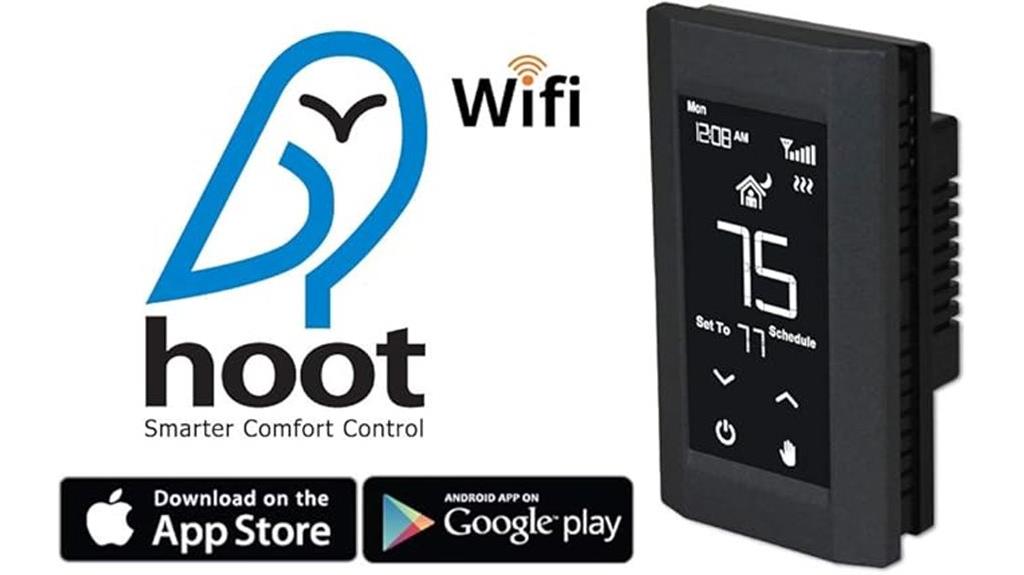
The KING K902-B Hoot WiFi Smart Programmable Thermostat stands out as an ideal choice for homeowners seeking a versatile and efficient heating solution. I love how it’s compatible with 120/208/240V systems, making installation a breeze for various setups. The large LCD touchscreen is user-friendly, and the Hoot smartphone app lets me program it easily. I can schedule up to six time periods daily, ensuring my home stays comfortable. Plus, the electronic sensing delivers precise temperature control. With over-the-air firmware upgrades, I know it’ll stay updated and efficient, making it a smart investment for my heating needs.
Best For: Homeowners looking for a versatile and efficient heating solution compatible with various electrical systems.
Pros:
- Large, user-friendly LCD touchscreen for easy operation.
- Programmable via the Hoot smartphone app, allowing for flexible scheduling with up to six time periods daily.
- Over-the-air firmware upgrades ensure the thermostat remains current and functional.
Cons:
- Requires a 4-wire, double pole line voltage installation, which may not be suitable for all homes.
- Limited to electric heating systems, excluding compatibility with other heating types.
- The initial setup may be complex for users unfamiliar with smart device installations.
Sensi Smart Thermostat (ST55)
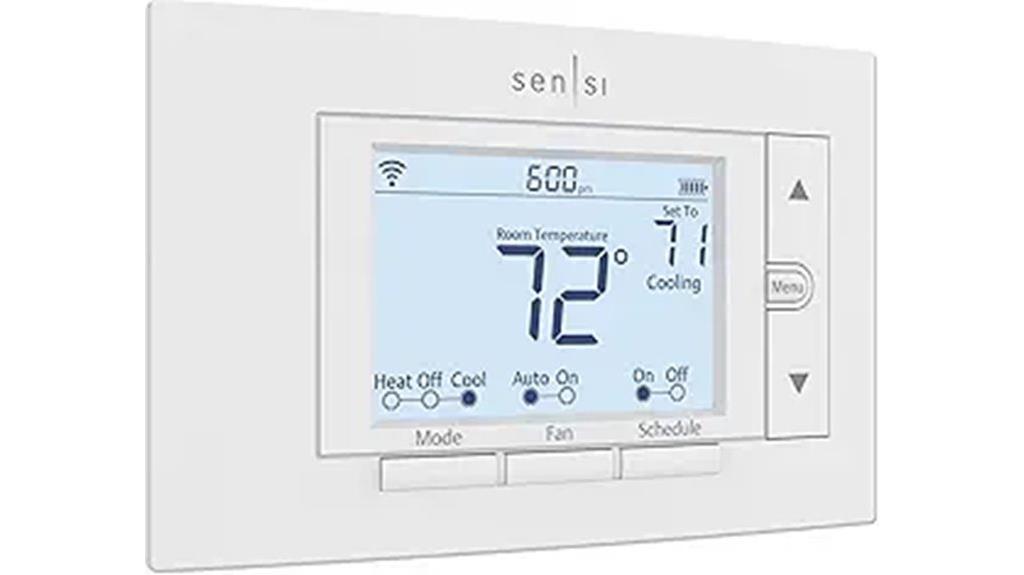
For homeowners seeking an easy-to-install and energy-efficient solution, the Sensi Smart Thermostat (ST55) stands out with its Wi-Fi connectivity and compatibility with most HVAC systems. I love how it supports voice control through Alexa and Google Assistant, making it super convenient. The installation process is a breeze, thanks to the step-by-step app instructions. Plus, it helps reduce energy consumption by about 23%, which is great for my wallet. With its sleek design and intuitive interface, it’s perfect for anyone. I appreciate Sensi’s commitment to data privacy, ensuring my information remains secure while I manage my home’s climate effortlessly.
Best For: Homeowners looking for an easy-to-install, energy-efficient thermostat that supports voice control and offers enhanced privacy.
Pros:
- Energy Savings: Reduces HVAC energy consumption by approximately 23%.
- User-Friendly Installation: Straightforward DIY setup with step-by-step app instructions.
- Voice Control Compatibility: Works seamlessly with Alexa, Google Assistant, and other smart home systems.
Cons:
- Limited Compatibility: May not work with all HVAC systems, particularly older models.
- Dependence on Wi-Fi: Requires a stable Wi-Fi connection for full functionality.
- Initial Setup Complexity: Some users may find the initial setup process challenging despite the instructions.
Sensi Lite Smart Thermostat (ST25)

Looking to simplify your home heating and cooling while saving on energy costs? The Sensi Lite Smart Thermostat (ST25) might be just what you need. It’s Energy Star certified, works seamlessly with Alexa and Google Assistant, and offers easy DIY installation. I appreciate its programmable features, like flexible scheduling and geofencing, which help me save about 23% on HVAC costs. Plus, it assures data privacy—no personal info is sold. With a three-year warranty and solid customer ratings, the Sensi Lite is a reliable choice for managing my home’s comfort efficiently. Give it a try; you won’t regret it!
Best For: Those looking for an affordable, user-friendly smart thermostat to efficiently manage home heating and cooling while saving on energy costs.
Pros:
- Easy DIY installation with step-by-step instructions and no C-wire needed for most systems.
- Energy Star certified, offering an average of 23% savings on HVAC energy costs through programmable features.
- Compatible with popular smart home systems like Alexa, Google Assistant, and SmartThings for convenient control.
Cons:
- Common wire (C-wire) is required for heat pump and heat/cool only systems, which may limit compatibility for some users.
- Optional third-party services may involve additional data collection, which could concern privacy-conscious users.
- The design may not fit all home aesthetics, as it is primarily a wall-mounted unit.
KING K901-W WiFi Programmable Thermostat

If you’re seeking a versatile and user-friendly thermostat for your electric heating system, the KING K901-W WiFi Programmable Thermostat is an excellent choice. It’s compatible with various voltages, making it perfect for single-pole, 3-wire installations. I love the large LCD touchscreen, which makes navigation a breeze. With the ability to set 4 or 6 time periods per day, I can easily customize my heating schedule. Plus, the Hoot app lets me control everything remotely. The electronic sensing guarantees accurate temperature control, and the maximum temperature lock adds a layer of safety. Overall, it’s a reliable and efficient thermostat!
Best For: Homeowners looking for a reliable and user-friendly thermostat to manage their electric heating systems effectively.
Pros:
- Large LCD touchscreen for easy navigation and control.
- Programmable with 4 or 6 time periods per day for tailored heating schedules.
- Remote control via Hoot app, allowing for convenient monitoring and adjustments.
Cons:
- Limited compatibility with non-electric heating systems.
- Requires a compatible 120/208/240V electrical setup for installation.
- May require occasional firmware updates, which necessitates internet connectivity.
Honeywell Home RTH6580WF Wi-Fi 7-Day Programmable Thermostat, White

The Honeywell Home RTH6580WF Wi-Fi 7-Day Programmable Thermostat stands out as the ideal choice for homeowners who want seamless control over their heating and cooling systems from anywhere. It’s compatible with various heating systems, excluding electric baseboard heat. The easy-to-use app lets me adjust settings remotely, while smart home integration with Alexa and Google Assistant enhances convenience. I appreciate its energy-efficient design, which learns my comfort preferences for maximum savings. Installation is straightforward, and the large backlit display makes navigation a breeze. With solid customer ratings, it’s clear this thermostat offers both functionality and reliability for my home.
Best For: Homeowners seeking a user-friendly, energy-efficient thermostat that offers remote access and smart home compatibility.
Pros:
- Easy installation and DIY-friendly setup.
- Smart technology that learns comfort preferences for optimal energy savings.
- Compatible with popular smart home systems like Amazon Alexa and Google Assistant.
Cons:
- Requires a C-wire for installation, which may not be available in all homes.
- Does not work with electric baseboard heat (120-240V).
- 2 AA batteries are needed for operation, not included in the package.
meross Smart Thermostat for Home

For homeowners seeking a smart, user-friendly solution to manage their HVAC systems, the meross Smart Thermostat for Home stands out with its compatibility across 95% of heating and cooling setups. It’s easy to install in under 30 minutes using the Meross app, and it requires a C-wire—don’t worry if you don’t have one, you can grab a meross C-wire adapter. I love its Wi-Fi connectivity and compatibility with platforms like Alexa and Google Home. Plus, it helps monitor energy usage and sends alerts for system issues, making it a practical addition to any home.
Best For: Homeowners looking for a user-friendly smart thermostat compatible with most HVAC systems.
Pros:
- Easy DIY installation in under 30 minutes with the Meross app.
- Supports Wi-Fi connectivity and integrates with popular smart home platforms like Alexa and Google Home.
- Monitors energy usage and provides alerts for system issues, promoting HVAC efficiency.
Cons:
- Requires a C-wire for proper function, which may necessitate an additional purchase if not already available.
- Not compatible with electric baseboard heaters, limiting its use for some users.
- Customer support is only available during specific hours, which may be inconvenient for some.
Honeywell Home Wi-Fi Smart Color Thermostat

Looking for a thermostat that matches your home décor while providing smart functionality? The Honeywell Home Wi-Fi Smart Color Thermostat is a sleek choice with customizable colors to fit any style. It’s compatible with various heating systems, but not electric baseboards, so check your setup first. This ENERGY STAR-certified device helps save on energy bills through flexible programming and monthly energy reports. Plus, its bright touchscreen makes operation easy, and it integrates with smart home systems like Alexa and Google Home. With remote control options, I can adjust the temperature from anywhere, ensuring my home stays comfortable and efficient.
Best For: Homeowners looking for a stylish and energy-efficient thermostat that offers smart functionality and customizable features.
Pros:
- Energy Star certified, helping to reduce energy consumption and save on utility bills.
- Supports remote temperature control through integration with Amazon Alexa, Google Home, and mobile apps.
- Features a bright touchscreen display for easy operation and customizable color options to match home décor.
Cons:
- Not compatible with electric baseboard heat, limiting its use with certain heating systems.
- Requires a C-wire for operation, which may necessitate additional installation for some users.
- Wi-Fi connectivity is necessary for remote access, which may be a drawback for those with unreliable internet.
MAXKOSKO WiFi Smart Thermostat for Electric Floor Warming System

If you want a smart solution for your electric floor heating, the MAXKOSKO WiFi Smart Thermostat stands out with its remote control capabilities. I love managing my floor heating from anywhere using the Smart Life app, which makes adjusting the temperature on-the-go a breeze. Plus, it works with Alexa and Google Assistant, so I can control it with my voice. The programmable settings help me save on energy bills by customizing modes throughout the day. Installation is straightforward, thanks to the user-friendly design and a clear manual. Overall, it’s a reliable and efficient choice for any underfloor heating system.
Best For: Homeowners looking for a smart, energy-efficient solution to manage their electric floor heating remotely.
Pros:
- Allows remote temperature control via the Smart Life app for convenience and comfort.
- Compatible with Alexa and Google Assistant for voice-activated operation.
- Programmable settings help maximize energy savings and comfort throughout the day.
Cons:
- May require a compatible underfloor heating system for optimal performance.
- Initial setup might be challenging for those unfamiliar with smart home technology.
- Dependent on WiFi connectivity for remote access and functionality.
Honeywell Home CT410B Manual Baseboard Thermostat

The Honeywell Home CT410B Manual Baseboard Thermostat is an excellent choice for those seeking a straightforward, reliable solution for controlling electric baseboard heating. This non-programmable thermostat operates on 120-240V and features a simple dial for easy temperature adjustments ranging from 40°F to 80°F. Its sturdy design includes a bimetal temperature sensor and a backlit display, ensuring visibility and durability. With a capacity to manage a total load of 5280W, it’s perfect for multiple heaters. Plus, it’s UL- and CSA-certified for safety. If you want a no-fuss heating control, the CT410B is definitely worth considering.
Best For: Those in need of a simple, reliable thermostat for electric baseboard heating systems without the complexity of programming.
Pros:
- Easy manual dial control for quick temperature adjustments.
- Capable of handling multiple heaters with a total load of up to 5280W.
- UL- and CSA-certified for safety and reliability.
Cons:
- Non-programmable design may not meet the needs of users seeking advanced features.
- Lacks Wi-Fi or digital connectivity options for remote control.
- Backlit display may not be as bright as some users prefer in low-light conditions.
Amazon Smart Thermostat – Works with Alexa and Ring

For anyone seeking a smart and efficient way to control their home’s temperature, the Amazon Smart Thermostat is an excellent choice, especially for those already using Alexa or Ring devices. This thermostat works seamlessly with most 24V HVAC systems, allowing for easy temperature adjustments through voice commands or the Alexa app. I love the energy-saving features, as it can save around $50 annually on bills. With customizable schedules and automated adjustments based on your presence, it makes maintaining comfort effortless. Plus, the guided installation process is straightforward, ensuring you can set it up without hassle.
Best For: Those looking for an energy-efficient thermostat compatible with Alexa and Ring devices to automate and control their home’s heating and cooling systems.
Pros:
- Energy-saving features can save an average of $50 annually on energy bills.
- Seamless integration with Alexa allows for convenient voice control and automation.
- Customizable schedules and automated adjustments enhance comfort and convenience.
Cons:
- Requires a C-wire or a separate power adapter for installation, which may not be available in all homes.
- Limited to 2.4 GHz Wi-Fi networks, excluding 5 GHz support.
- No built-in far-field microphone, necessitating an additional Alexa-enabled device for voice commands.
Factors to Consider When Choosing a Wi-Fi Baseboard Thermostat
When we’re choosing a Wi-Fi baseboard thermostat, there are several important factors we should consider. We’ll want to think about compatibility with our heating systems, installation complexity, and the smart features that fit our lifestyle. By evaluating energy efficiency and user interface options, we can find the perfect match for our needs.
Compatibility With Heating Systems
Choosing a Wi-Fi baseboard thermostat that fits our heating system’s needs is vital for effective temperature control. We must verify the thermostat is compatible with our specific heating system’s voltage—typically 120V, 208V, or 240V—to avoid electrical issues. It’s imperative that it supports line voltage applications like baseboard heaters and convectors, rather than low-voltage systems. We should also check if it requires a neutral or second live wire, as many high-voltage systems need at least four wires for proper installation. Furthermore, verifying that the thermostat’s maximum load capacity matches or exceeds our heater’s wattage guarantees safe operation. In conclusion, confirming compatibility with our existing wiring configuration will facilitate a smoother installation process.
Installation Requirements and Complexity
Confirming compatibility with our heating system sets the stage for the next step: understanding the installation requirements and complexity of a Wi-Fi baseboard thermostat. We need to verify our thermostat requires at least four wires, including a neutral or a second live wire. It’s vital to confirm compatibility with our electrical system voltage—typically 120V, 208V, or 240V—to avoid mismatched components. We should check if our existing wiring setup is suitable for a line voltage thermostat, considering single-pole, double-pole, or multi-wire configurations. Additionally, we must determine whether the installation involves just basic wiring connections or if it requires adapters or modifications. Finally, let’s assess if we’ll be handling high-voltage wiring or mounting in hard-to-reach locations.
Smart Features and Integration
How do we guarantee our new Wi-Fi baseboard thermostat meets our smart home needs? First, we should check for compatibility with popular platforms like Alexa, Google Assistant, or Apple HomeKit. This integration allows us to control our heating through voice commands or smartphone apps effortlessly. Next, we must consider features like automation routines, including scheduling and geofencing, which adjust heating based on occupancy or time. Advanced options, such as open window detection and adaptive learning, can further optimize our energy use. Reliable Wi-Fi connectivity, especially with 2.4 GHz networks, ensures we maintain stable remote access. Finally, compatibility with additional smart devices like humidity sensors can enhance our climate management and create a more cohesive smart home experience.
Energy Efficiency and Savings
What factors should we consider for energy efficiency and savings when selecting a Wi-Fi baseboard thermostat? First, we should look for features like auto-scheduling and geofencing, which help optimize our heating by reducing unnecessary energy use. Open window detection is another valuable feature, alerting us to close windows before heat escapes. We’ll also want to contemplate ENERGY STAR certified models, as they can save us 23-26% on heating costs. With remote control capabilities, we can adjust settings from anywhere, ensuring we’re not wasting energy on unoccupied rooms. Finally, detailed energy reports and real-time consumption tracking empower us to identify potential savings and improve our overall efficiency. These factors can substantially impact our utility bills.
User Interface and Controls
As we seek to optimize energy efficiency and savings with Wi-Fi baseboard thermostats, the user interface and controls play a vital role in our overall experience. A user-friendly interface featuring clear buttons or touchscreens makes operation simple, minimizing setup errors. We should look for adjustable control options like manual knobs or digital displays that allow for quick temperature adjustments. Compatibility with voice commands via smart assistants like Alexa or Google Assistant can enhance accessibility and convenience. A well-lit, high-contrast display ensures we can see adjustments clearly in different lighting conditions. Additionally, advanced controls such as scheduling, temperature locking, and remote access through apps provide us with flexibility and precise management of our home’s heating.
Remote Management Capabilities
When considering a Wi-Fi baseboard thermostat, remote management capabilities are essential for enhancing our control and convenience. These features allow us to monitor and adjust our baseboard heaters from anywhere using a smartphone app or web portal. Many models support scheduling, temperature adjustments, and system status checks without needing to interact physically with the device. Plus, they can integrate with voice assistants like Alexa or Google Assistant, giving us hands-free control through simple voice commands. Remote management also provides real-time energy usage data and alerts, helping us optimize heating efficiency and cut costs. However, reliable access requires a stable Wi-Fi connection and compatibility with our mobile devices or smart home systems.
Warranty and Support Options
How do we guarantee that our investment in a Wi-Fi baseboard thermostat is protected? First, we should look for a thorough warranty period of 1 to 3 years, covering any potential defects or malfunctions. Next, let’s check if the manufacturer offers accessible customer support channels, like phone, email, or live chat, which can be essential for troubleshooting. It’s also vital to verify the availability of firmware updates that enhance functionality and security over time. Reviewing the manufacturer’s support resources, such as user manuals and FAQs, helps us find self-service assistance. Finally, opting for products with reliable support reputations ensures we can resolve issues promptly and access replacement or repair services when needed.
Frequently Asked Questions
How Do I Install a Wi-Fi Baseboard Thermostat?
To install a Wi-Fi baseboard thermostat, we start by turning off the power to the existing thermostat. Next, we remove the old unit and disconnect the wires, noting their placement. Then, we connect the new thermostat wires according to the manufacturer’s instructions. After securing it to the wall, we restore power and follow the setup instructions to connect it to our Wi-Fi network. Finally, we test it to guarantee everything works properly!
Can I Control Multiple Thermostats With One App?
Absolutely, we can control multiple thermostats with one app! In fact, studies show that smart thermostats can save us up to 10-15% on our heating bills. By integrating all our thermostats into a single app, we streamline our home’s temperature management, allowing us to adjust settings for different rooms easily. This not only enhances our comfort but also boosts energy efficiency, making our homes cozier while helping the environment.
What Is the Average Lifespan of a Wi-Fi Thermostat?
The average lifespan of a Wi-Fi thermostat is around 10 to 15 years. We’ve found that factors like usage, environmental conditions, and maintenance can influence this lifespan. Regularly checking for software updates and ensuring proper installation can help extend its life. If we stay proactive with these aspects, our thermostat can keep functioning efficiently for years, providing us comfort and control over our home’s temperature.
Do Wi-Fi Thermostats Work During Power Outages?
Wi-Fi thermostats typically don’t work during power outages. They rely on electricity to operate, so when the power goes out, so does their functionality. However, some models might retain settings for a while, but they won’t control heating or cooling systems. To guarantee comfort during outages, we should consider backup power sources like generators. It’s always a good idea to check our specific model’s specifications for any unique features it might offer.
Are Wi-Fi Thermostats Compatible With All Heating Systems?
Wi-Fi thermostats aren’t compatible with all heating systems. While many work with forced air, radiant, and hydronic systems, some may not support baseboard heaters or older systems. We’ve found it’s essential to check the specifications before purchasing. Most manufacturers provide compatibility information, so let’s make sure to do our research. By understanding our heating system, we can choose a Wi-Fi thermostat that fits our needs and optimizes our comfort efficiently.
Conclusion
In wrapping things up, we’ve explored some of the best Wi-Fi baseboard thermostats to keep your home cozy and energy-efficient. With options tailored to various needs, there’s something for everyone. Remember, choosing the right thermostat can make all the difference in your comfort and savings. So, don’t throw in the towel—take your time and pick the one that suits you best. Happy heating!