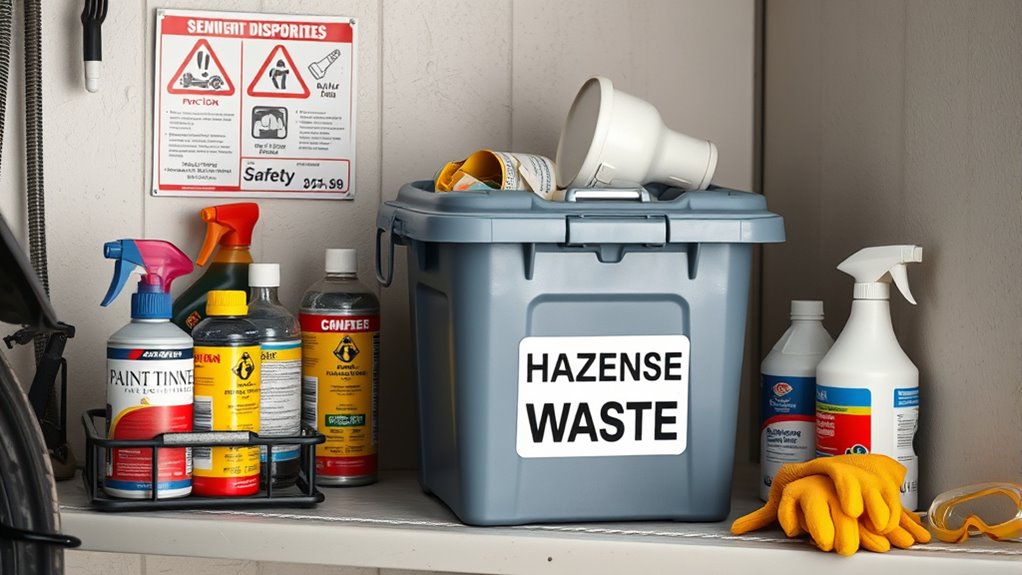

To safely dispose of household hazardous waste, always follow label instructions and use designated collection sites or community hazardous waste events. Keep items in sealed, separate containers during transport, and avoid dumping chemicals down drains or trash. Check your local regulations for specific guidelines, and handle materials carefully to prevent spills. Proper disposal keeps your family and environment safe. If you’d like to learn more about effective disposal methods, there’s useful information available to guide you further.
Key Takeaways
- Read product labels for proper disposal instructions and warnings.
- Use designated community collection sites or hazardous waste facilities for disposal.
- Transport hazardous waste in sealed containers and keep it separate from regular trash.
- Follow local regulations and guidelines to ensure safe and compliant disposal.
- Avoid dumping chemicals down drains or into the environment to prevent pollution.
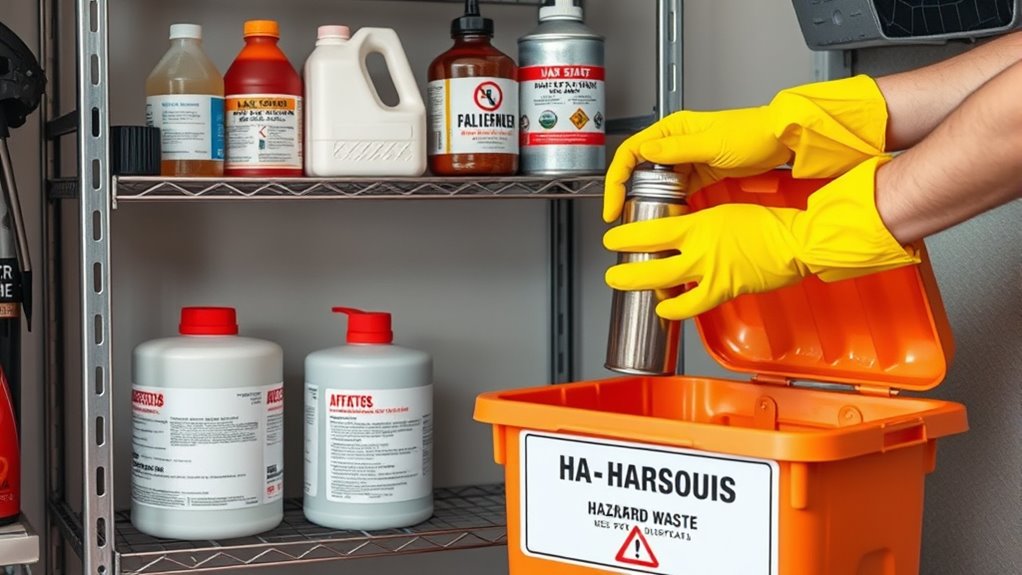
Household hazardous waste includes everyday items like cleaning supplies, paints, batteries, and pesticides that can pose risks to your health and the environment if not disposed of properly. When you’re handling such waste, it’s important to prioritize eco friendly disposal methods to minimize harm. One of the best ways to start is by carefully reading the household product labels. These labels provide vital information about how to safely use, store, and dispose of each item. They often include specific disposal instructions or warnings, helping you avoid improper disposal that could lead to pollution or health issues.
By paying attention to household product labels, you can identify which items are classified as hazardous waste and need special handling. Some labels specify whether a product should be taken to a designated collection site, while others detail how to neutralize or contain the waste safely at home. Following these instructions ensures you’re disposing of products in a way that reduces environmental impact and keeps your household safe. It’s tempting to toss chemicals down the drain or in the trash, but doing so can contaminate water supplies and soil. Instead, use the information on the labels to guide you toward proper disposal options, like hazardous waste collection events or drop-off centers.
When you’re ready to get rid of household hazardous waste, consider eco friendly disposal options first. Many communities offer special collection days or facilities designed specifically for hazardous materials. These programs are set up to handle chemicals safely, preventing leaks or spills that could harm the environment. If such options aren’t available nearby, look for local recycling centers or hazardous waste facilities that accept these items. Always transport hazardous waste in sealed containers and keep them separate from regular trash to avoid accidental exposure or spills. Additionally, local regulations may specify the proper disposal methods for hazardous waste in your area, so checking with local authorities can help ensure compliance.

Alcedo Sharps Container for Home Use 2 Gallon (2-Pack) | Biohazard Needle and Syringe Disposal | Professional Medical Grade
- Durable Material: Puncture and impact resistant construction
- Versatile Use: Suitable for professional and home environments
- Lightweight and Sturdy: Easy to handle for professionals and users
As an affiliate, we earn on qualifying purchases.
As an affiliate, we earn on qualifying purchases.
Frequently Asked Questions
How Can I Identify Household Items That Are Hazardous Waste?
You can identify household items that are hazardous waste by checking the chemical labels and ingredient lists. Look for warning symbols, such as skulls or flames, and keywords like “danger,” “warning,” or “caution.” Items like paints, cleaners, batteries, and pesticides often contain hazardous substances. Always read labels carefully, and if you’re unsure, consult local guidelines or your waste management authority to guarantee safe disposal.
Are There Any Local Programs for Hazardous Waste Pick-Up?
Imagine turning your hazardous waste worries into a breeze—you’re in luck! Many communities host collection programs and hazardous waste events where you can safely dispose of dangerous items. Check your local government’s website or contact waste management services to find upcoming community collection days. These events make it easy to do the right thing, keeping your home and environment safe while preventing pollution.
Can I Dispose of Household Hazardous Waste in Regular Trash?
You shouldn’t dispose of household hazardous waste in regular trash. Doing so can cause environmental impact and pose health risks. Always use proper container labeling to identify hazardous materials correctly. Instead, take advantage of local hazardous waste programs or events for safe disposal. Properly managing these wastes helps protect your community and environment, ensuring hazardous substances are handled safely and responsibly.
What Should I Do if I Spill Hazardous Waste at Home?
If you spill hazardous waste at home, act quickly by wearing protective gloves and ventilating the area. For spill cleanup, contain the spill with absorbent materials like paper towels or commercial spill pads, then carefully dispose of the waste according to local regulations. Always have emergency contacts handy in case you need professional assistance. Call your local waste management or emergency services for guidance and guarantee proper cleanup without risking your health.
Are There Special Disposal Rules for Expired Medications?
When dealing with expired medication, you should follow proper medication disposal procedures. Always check local guidelines for medication disposal, as many areas have special rules for expired medicine. You can usually take unused or expired medications to designated collection sites or pharmacies that offer medication take-back programs. Never flush medications down the toilet or sink unless specifically instructed, as this can harm the environment. Proper disposal helps keep your home and community safe.
Conclusion
By properly planning and practicing safe disposal, you protect your family, your community, and your environment. Remember, responsible handling reduces risks and restores safety. Always be aware, act appropriately, and avoid accidental accidents. Your careful commitment creates a cleaner, safer community where hazardous waste is handled honestly and hygienically. Keep these key steps in mind — for a healthier home and happier habitat, you hold the power to prevent pollution and promote protection.