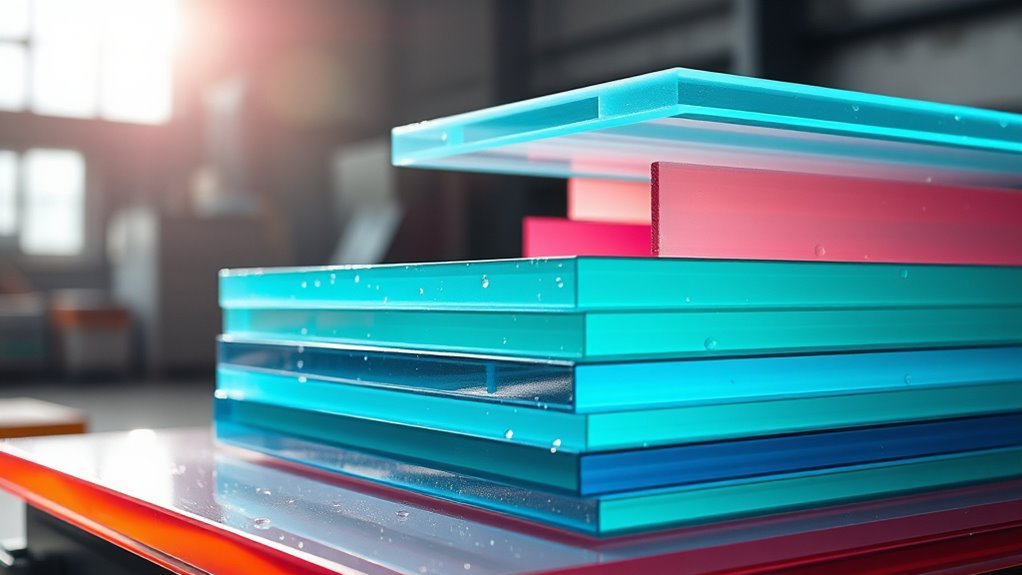

Polycarbonate sheets split into two very different products: twin-wall panels for greenhouse covering and insulation, and solid flat sheets for DIY, robotics, thermoforming, and glass replacement. Choosing wrong between those types matters far more than choosing between brands. For covering a greenhouse, the Sinimaka 10-Pack of 8′ x 4′ twin-wall panels stands out as the best overall pick thanks to its full-size coverage, UV protection, and 0.24-inch thickness. For smaller hobby greenhouses, the DGSL 6-Pack of 4 x 2 ft panels is easier to handle and store, while the Lexan 1/8-inch thermoforming sheet is the clear leader among solid sheets for fabrication work. The main tradeoffs you’ll face are thickness versus light transmission, panel size versus shipping damage risk, and price per square foot versus long-term UV resistance. Keep reading for the full breakdown of all 13 options.

Get garden gear delivered free with Prime
- Fast, free delivery on millions of items
- Prime Video, Amazon Music and more included
- Member-only deals all year
Complete the kit


Key Takeaways
- Twin-wall panels dominated this roundup for greenhouse use because their fluted structure delivers insulation and diffused light that solid sheets simply cannot match.
- The Sinimaka 10-Pack won best overall by combining the largest per-panel footprint (8′ x 4′) with 0.24-inch thickness — most competitors in this size range thin out to 0.16 inches to cut costs.
- Solid sheets under 1/16-inch thick, like the Zonon 5-Pack, are hobby and craft materials only; they flex too much for structural uses like window or glazing replacement.
- UV protection claims varied widely in this comparison, and several budget panels only coat one side — a real problem if you install them backwards or use them in high-sun climates.
- Smaller 4′ x 2′ and 6′ x 2′ panels arrived with far less shipping damage than full 8-foot sheets, which matters if you cannot afford to replace cracked fluted edges.
- Thickness labels are not standardized: a 0.16-inch twin-wall sheet and a 0.24-inch twin-wall sheet differ dramatically in rigidity, even though both ‘look’ clear in product photos.


| polycarbonate sheet | Material | Thickness | Quantity |
|---|---|---|---|
| Sinimaka 10-Pack Twin-Wall Pol | Twin-wall polycarbonate | 0.24 in (6 mm) | 10 panels |
| DGSL Twin-Wall Polycarbonate G | Twin-wall polycarbonate | 0.16 in | 6 panels |
| Robosource Polycarbonate Sheet | 100% virgin polycarbonate resin | 1/8 in (approximately 3 mm) | — |
| 14 Pack Polycarbonate Greenhou | Twin-wall polycarbonate | 0.16 in | 14 panels |
| Polycarbonate Lexan Sheet Clea | Polycarbonate | 0.125 in (1/8 in) | — |
| Hotop 3 Pcs Polycarbonate Gree | Polycarbonate | — | 3 pieces |
| Polycarbonate Clear Plastic Sh | Polycarbonate | 0.0625" (1/16") | — |
| Tatuo 12 Pack 8′ x 2′ x 0.16" | Polycarbonate | 0.16 inch | 12 pieces |
| Evereco 6 Pcs Polycarbonate Gr | Twin-wall polycarbonate | — | 6 pieces |
| Zonon 5 Pcs Polycarbonate Clea | Polycarbonate | — | 5 sheets |
| Polycarbonate Clear Plastic Sh | Polycarbonate | 0.118" (3mm) | — |
| Clear Polycarbonate Sheet 24" | Polycarbonate | 1/4" | — |
| Sinimaka 8-Pack Twin-Wall Poly | — | 0.24 in (6 mm) | 8 panels |
More Details on Our Top Picks
Sinimaka 10-Pack Twin-Wall Polycarbonate Greenhouse Panels, 8′ x 4′ x 0.24″
For a greenhouse that needs broad coverage, these 10 large twin-wall panels offer more reach per sheet than the DGSL 4 × 2 ft panels. Their 0.24-inch twin-wall construction is suited to outdoor enclosures where impact resistance and insulation matter alongside daylight. Sinimaka lists 89% light transmission and 99.9% UV blocking, a useful pairing for letting in light while limiting UV exposure. The sheets are also described as cuttable and cold-bendable, giving DIY builders options for shaped roofs. The tradeoff is handling: each 8 × 4 ft panel can be awkward to move and position, especially without help. No framing or mounting hardware is included, so buyers need to plan the support structure and attachment materials separately.
Pros:- Large 8 × 4 ft sheets cover broad areas with fewer panel joints
- Twin-wall construction is impact-resistant and helps insulate outdoor structures
- 99.9% UV blocking with 89% light transmission
- Can be cut or cold-bent for custom greenhouse shapes
Cons:- Oversized panels can be difficult to transport and position
- No framing or mounting hardware is included
- Requires planning for support and attachment across large spans
Best for: DIY greenhouse builders covering a large roof or wall area who can handle oversized sheets and supply their own framing
Not ideal for: Solo installers or small-project buyers who need compact panels that are easier to carry, cut, and position
- Material:Twin-wall polycarbonate
- Panel size:8 ft × 4 ft
- Thickness:0.24 in (6 mm)
- Quantity:10 panels
- Light transmission:89%
- UV blocking:99.9%
- Temperature range:-40°C to 120°C
Our verdict“Choose Sinimaka for broad greenhouse coverage and high light transmission if you have help handling the large sheets and will provide the mounting system.”
DGSL Twin-Wall Polycarbonate Greenhouse Panels, 6-Pack, 4 × 2 ft
DGSL’s six compact 4 × 2 ft panels suit repairs and modest greenhouse projects where oversized sheets would be difficult to handle. Compared with Sinimaka’s 8 × 4 ft panels, these are easier to carry and cut to fit, and their 0.16-inch thickness keeps the format suited to lighter covering jobs. Their 80% light transmission is lower than Sinimaka’s stated 89%, so buyers prioritizing maximum daylight may prefer the larger Sinimaka sheets. DGSL describes the panels as shatter-resistant and designed to moderate greenhouse temperatures across seasons. Installation has a small but relevant extra step: the adhesive backing must be removed. The product information also gives no explicit UV-blocking figure, making it harder to compare UV performance with options that state one.
Pros:- Compact 4 × 2 ft sheets are easier to handle than 8 × 4 ft panels
- Can be cut to size with a cutter knife or scissors
- Shatter-resistant construction for greenhouse use
- Rated for a broad working temperature range
Cons:- 80% light transmission is below the stated 89% for Sinimaka panels
- Adhesive backing must be removed during installation
- No UV-blocking percentage is provided
Best for: Greenhouse owners replacing a few sections or covering a compact structure who want manageable panels they can trim
Not ideal for: Builders covering a large greenhouse or buyers who need a stated UV-blocking level and higher listed light transmission
- Material:Twin-wall polycarbonate
- Quantity:6 panels
- Panel dimensions:4 ft × 2 ft
- Thickness:0.16 in
- Light transmission:About 80%
- Working temperature range:-44°C to 120°C
Our verdict“Pick DGSL for small greenhouse repairs or compact builds where easy handling matters more than maximum light transmission.”
Robosource Polycarbonate Sheet, 12 x 12 x 1/8 Inch Clear Plastic (Replaces Plexiglass)
Unlike the twin-wall greenhouse panels in this roundup, this 12 × 12 inch solid sheet is aimed at precise small projects: guards, covers, or components that need drilling or shaping. Robosource specifies 100% virgin polycarbonate resin and an exact square cut, so it offers a more predictable starting piece than large panels intended for greenhouse coverage. The 1/8-inch sheet can be cut, drilled, bent, and thermoformed without the cracking or chipping associated with more brittle materials. Its protective film helps keep the clear face clean while marking and working. The tradeoff is scale and exposure: one small sheet cannot cover much area, and its UV stabilization is described as suitable for moderate sun only. Sinimaka is a better fit for extended outdoor coverage.
Pros:- Exact 12 × 12 in dimensions with square, straight edges
- Virgin polycarbonate can be cut, drilled, bent, and thermoformed
- Protective film helps keep the clear surface clean during fabrication
- Shatter-resistant alternative to acrylic or glass
Cons:- Small dimensions limit it to compact projects
- UV stabilization is specified for moderate sun exposure only
- Less scratch-resistant than glass
Best for: Makers and repairers needing a small, accurately cut clear sheet for drilling, bending, or thermoforming
Not ideal for: Greenhouse builders or outdoor users needing large coverage or long-term exposure to direct sunlight
- Brand:Robosource
- Material:100% virgin polycarbonate resin
- Dimensions:12 × 12 in
- Thickness:1/8 in (approximately 3 mm)
- Color:Transparent
- Grade:Grade A polycarbonate
- UV stabilization:Suitable for moderate sun exposure
Our verdict“Choose Robosource for a small, workable clear part that needs accurate dimensions, and use a UV-coated option for prolonged direct sun.”
14 Pack Polycarbonate Greenhouse Panels, 4′ x 2′ x 0.16″ Twin-Wall Sheets for All Weather Greenhouse Covering
This pack’s distinction is its 14-panel count: compared with DGSL’s six panels at the same 4 × 2 ft dimensions and 0.16-inch thickness, it can cover a larger area in one purchase. That makes it a practical choice for a greenhouse project that needs many manageable sections rather than a few oversized sheets like Sinimaka’s 8 × 4 ft panels. The listing gives 80% light transmission, a broad temperature range, and twin-wall construction intended to insulate while admitting daylight. It also describes the panels as easy to cut and install. Buyers should account for peeling the protective film and may need additional sealing for some uses. Product details do not specify the UV-blocking percentage, so buyers with strict UV requirements have less information than Sinimaka provides.
Pros:- Fourteen panels provide more coverage pieces than the DGSL six-pack
- 4 × 2 ft size is manageable for cutting and installation
- Twin-wall construction is intended to provide thermal insulation
- Rated for temperatures from -44°C to 120°C
Cons:- Protective film must be peeled before use
- Additional sealing may be needed for some applications
- No UV-blocking percentage is provided
Best for: Gardeners covering a medium or large greenhouse with multiple compact panels and who prefer manageable sheet sizes
Not ideal for: Buyers who need a quantified UV-blocking level, maximum listed light transmission, or fewer panel seams
- Material:Twin-wall polycarbonate
- Quantity:14 panels
- Panel size:4 ft × 2 ft
- Thickness:0.16 in
- Light transmission:80%
- Temperature range:-44°C to 120°C
- Application:Greenhouse covering and other outdoor uses
Our verdict“Choose this 14-pack for greenhouse projects that need many easy-to-handle sections, provided you can accommodate seams and verify UV needs.”
Polycarbonate Lexan Sheet Clear 1/8″ x 24″ x 48″ – Thermoforming
This clear Lexan sheet fills a different role from the twin-wall greenhouse options: it is a solid 24 × 48 inch workpiece for thermoforming and fabrication. Its 1/8-inch thickness and stated impact resistance suit projects that need a shaped, clear component, while the longer format offers more working area than Robosource’s 12 × 12 inch sheet. Robosource provides more detail about cutting, drilling, and UV stabilization; this Lexan listing instead centers on thermoforming and gives fewer technical specifics. That makes it a focused choice for buyers who already know their forming process, rather than a detailed all-purpose outdoor panel. It comes in one size and thickness, and the product information does not state UV performance, so greenhouse builders should favor panels with explicit outdoor and UV specifications.
Pros:- Genuine Lexan brand polycarbonate
- Clear 24 × 48 in sheet offers a larger work area than Robosource’s 12 × 12 in sheet
- High impact resistance
- Listed for thermoforming applications
Cons:- Available in a single listed size and thickness
- Requires suitable handling and process control during thermoforming
- No UV performance or outdoor temperature range is specified
Best for: Fabricators who need a clear, impact-resistant 24 × 48 in sheet for thermoforming
Not ideal for: Greenhouse builders needing twin-wall insulation, stated UV protection, or a temperature rating for outdoor installation
- Brand:Lexan
- Material:Polycarbonate
- Color:Clear
- Thickness:0.125 in (1/8 in)
- Dimensions:24 × 48 in
- Application:Thermoforming
Our verdict“Pick the Lexan sheet for thermoforming a clear, impact-resistant part, and choose a greenhouse panel when insulation and outdoor ratings matter.”
Hotop 3 Pcs Polycarbonate Greenhouse Panels 4′ x 2′ x 0.24″
Not everyone needs a full panel overhaul — sometimes you just need to replace a cracked section or two. This pick stands out for that job. The 0.24-inch double-layer corrugated construction gives it more rigidity than the thinner Tatuo honeycomb panels, and the UV protection means it won’t yellow after a season in direct sun. Compared with the Evereco twin-wall sheets, the corrugated profile here is a better match for existing corrugated greenhouse frames, though it sacrifices some of the insulation value that a true twin-wall channel provides. The tradeoff for that stiffness is workability: cutting these to size demands proper tools, and the material fights back during installation. Clear-only coloring also limits shading options for heat-sensitive plants.
Pros:- Thicker 0.24-inch double-layer build resists breakage better than budget panels
- UV protection slows yellowing and sun degradation
- Cuts to custom sizes for non-standard greenhouse shapes
- Versatile enough for fencing, pool covers, and other outdoor uses
Cons:- Cutting requires professional-grade tools, not just a utility knife
- Stiff material makes installation physically challenging
- Clear only — no shade or diffusing color options
Best for: Hobby gardeners patching or reskinning a small corrugated greenhouse frame
Not ideal for: Buyers building a large walk-in greenhouse from scratch — 3 panels won’t cover much area for the effort involved
- Quantity:3 pieces
- Size:4′ x 2′ x 0.24″
- Material:Polycarbonate
- Construction:Double-layer corrugated
- UV Protection:Yes
- Waterproof:Yes
- Color:Clear
Our verdict“A sensible repair-panel choice when you need stiffness and UV durability in small quantities rather than full-structure coverage.”
Polycarbonate Clear Plastic Sheet 12″ x 18″ x 0.0625″ (1/16″)
This is the workshop-sheet pick, not a greenhouse pick. Where the Hotop and Evereco panels are built for weather, this 1/16-inch flat sheet is built for fabrication: it cuts, drills, bends, and thermoforms with hand tools, which matters enormously if you’re making robot chassis, guards, or glass replacements. The CNC precision cuts mean square edges out of the box — a real advantage over the Zonon 12 x 12 sheets if your project demands dimensional accuracy. The tradeoff is sunlight: it’s UV stabilized for moderate exposure but lacks a full UV coating, so a permanent outdoor install will eventually degrade it. And like most nominal-cut plastic, expect slight dimensional variance, so measure before committing to tight fits.
Pros:- Shatter-resistant polycarbonate is far safer than acrylic or glass for moving parts
- Cuts, drills, bends, and thermoforms with simple hand tools
- Precision square and straight cuts save setup time on tight-tolerance projects
- Easy-to-peel protective film keeps surfaces clean during fabrication
Cons:- No full UV coating for prolonged direct sunlight exposure
- Actual dimensions can vary slightly from nominal size
Best for: Makers, robotics builders, and DIYers who need a workable, formable clear sheet for indoor projects
Not ideal for: Outdoor glazing projects — without a full UV coating it won’t hold up to prolonged direct sun
- Size:12″ x 18″
- Thickness:0.0625″ (1/16″)
- Material:Polycarbonate
- UV Stabilized:Yes (moderate exposure)
- Cut Quality:CNC precision square & straight
- Workability:Cut, drill, bend, thermoform
Our verdict“The clear choice for fabrication-focused buyers who value workability and cut precision over weather resistance.”
Tatuo 12 Pack 8′ x 2′ x 0.16″ Polycarbonate Greenhouse Panels
When the job is covering an entire structure without draining the budget, this 12-pack earns its place. At 8 feet per panel, these are long enough to span most hobby greenhouse walls and roof slopes in a single piece — something the shorter 4-foot Hotop and Evereco panels can’t do without visible seams. The hollow honeycomb core delivers surprisingly good heat retention for a 0.16-inch sheet, keeping overnight temperatures friendlier to seedlings. The compromises are real, though: the panels cut with a utility knife (not included), and that same lightweight hollow structure makes them vulnerable to cracking if you torque a fastener too hard or flex them during handling. Compared with the Sinimaka 8-foot twin-wall panels, these are lighter duty but come in a higher count for less outlay.
Pros:- 12-panel count covers large structures in a single order
- 8-foot length spans most hobby greenhouse walls without seams
- Honeycomb structure provides solid heat insulation at low weight
- Cuts and installs with basic household tools
Cons:- Utility knife required for cutting is not included
- Hollow panels can crack if flexed or mishandled during installation
Best for: Budget-conscious builders covering a full greenhouse, roof, or fence line in one purchase
Not ideal for: High-wind areas or installers who tend to overtighten fasteners — the hollow core can crack under stress
- Quantity:12 pieces
- Panel Size:8 ft x 2 ft
- Thickness:0.16 inch
- Material:Polycarbonate
- Design:Hollow honeycomb
- UV Resistance:Yes
- Applications:Greenhouses, roofs, fences
Our verdict“The most coverage per dollar here, ideal for whole-structure builds where careful handling is part of the plan.”
Evereco 6 Pcs Polycarbonate Greenhouse Panels, 6′ x 2′ x 0.24″ Twin-Wall Sheets
This option stands out for growers who care about plant performance, not just weather cover. The 90%-plus light transmission and 99% UV blocking mean plants get the light spectrum they need while the sheet itself resists yellowing — a stronger spec sheet than the Tatuo honeycomb panels on both counts. Twin-wall construction at 0.24 inches also gives it meaningful insulation and 200x glass impact resistance, plus a temperature tolerance from -40°C to 120°C that handles four-season climates. The 6-foot length sits between the Tatuo’s 8-foot spans and the Hotop’s 4-foot panels, which suits most standard hobby greenhouse bays without seams stacked too high. Two cautions: precision cutting takes patience for custom fits, and like all clear polycarbonate, it scratches easily if dragged across a workbench.
Pros:- Over 90% light transmittance supports strong plant growth
- Blocks 99% of UV rays to prevent panel yellowing and plant damage
- Impact resistance rated 200x that of glass
- Handles extreme temperatures from -40°C to 120°C for all-season use
Cons:- Custom sizes demand careful, precise cutting
- Scratches easily if handled without care during installation
Best for: Year-round greenhouse growers who prioritize light transmission, insulation, and durability
Not ideal for: Buyers needing a quick, rough-and-ready covering — the precision cutting and careful handling slow down installation
- Dimensions:6′ x 2′ x 0.24″
- Quantity:6 pieces
- Material:Twin-wall polycarbonate
- Light Transmittance:Over 90%
- UV Protection:Blocks 99% of UV rays
- Impact Resistance:200x glass
- Temperature Range:-40°C to 120°C
Our verdict“The best balance of light quality, insulation, and durability for growers building a greenhouse meant to last years.”
Zonon 5 Pcs Polycarbonate Clear Plastic Sheets, 12″ x 12″ x 0.02″
Some projects don’t need structural sheeting at all — they need a thin, clear, cuttable layer. That’s this pick’s whole identity. At 0.02 inches thick, these five sheets flex easily, cut with scissors-level effort, and slot neatly into photo frames, display cabinets, document protectors, and craft builds. The dual protective films are a genuinely thoughtful touch, keeping faces scratch-free until the moment of use — something the thicker 1/16-inch fabrication sheet can’t claim as completely. Compared with that robotics-oriented sheet, this is far cheaper per piece for small jobs but dramatically less rigid, so it won’t work as a window pane or machine guard. Five sheets also runs out fast if a project involves multiple layers or mistakes, so plan quantities accordingly.
Pros:- Impact-resistant polycarbonate won’t shatter or crack when cut into shapes
- Thin 0.02-inch profile cuts easily into custom shapes without power tools
- Protective films on both sides prevent scratches in transit and storage
- Five-sheet pack covers multiple small projects or spares for mistakes
Cons:- Too flimsy for heavy-duty or load-bearing applications
- Only 5 sheets — larger multi-panel projects will need multiple packs
Best for: Crafters, framers, and hobbyists needing thin clear panels for displays, photos, and small DIY pieces
Not ideal for: Anyone glazing a window or building a guard — the 0.02-inch thickness flexes too much for structural roles
- Quantity:5 sheets
- Sheet Size:12 x 12 x 0.02 inches
- Material:Polycarbonate
- Color:Clear
- Total Weight:10.08 ounces
- Surface Protection:Films on both sides
- Common Uses:Crafts, window panels, display cabinets, photo frames, document protection
Our verdict“A craft-room staple for lightweight clear panels, as long as no one expects it to behave like glazing.”
Polycarbonate Clear Plastic Sheet 12″ x 24″ x 0.118″ with EasyRuler Film
What sets this 12 x 24 inch sheet apart from the pack is the EasyRuler protective film, which turns the sheet itself into a measuring guide — a genuine time-saver if you’re cutting multiple small parts for robotics, hobby enclosures, or glass replacement panels. At 3mm thick, it sits between the floppy 1/16-inch Zonon sheets and the heavier 1/4-inch Clear Polycarbonate Sheet, giving you enough rigidity to hold a bend while still cutting cleanly with hand tools. Compared with the Robosource 12 x 12 sheet, you get four times the working area for larger layouts. The tradeoff is honest: the UV stabilization handles moderate sun, so this isn’t the sheet for a permanent outdoor window — the double-sided UV coating on the 24 x 48 option is the better fit there.
Pros:- EasyRuler film makes measuring and cutting accurate without a separate straightedge
- 3mm thickness balances rigidity with easy cutting, drilling, and bending
- Shatter-resistant and far safer than glass for household projects
- Thermoforms well for curved or molded parts
Cons:- UV stabilization is only rated for moderate sunlight exposure
- Nominal dimensions may vary slightly, which matters for tight-fit projects
Best for: Makers and DIYers who need precise, repeatable cuts for crafts, robotics, or small glass replacements
Not ideal for: Anyone covering a permanent outdoor structure — the single-layer UV stabilization won’t hold up to years of direct sun
- Size:12″ x 24″
- Thickness:0.118″ (3mm)
- Material:Polycarbonate
- UV Stabilized:Yes (moderate exposure)
- Included:EasyRuler protective film
- Workability:Cut, drill, bend, thermoform with common tools
Our verdict“This is the sheet to buy when cut precision matters more than outdoor durability.”
Clear Polycarbonate Sheet 24″ x 48″ (1/4″ Thick)
This is the heavyweight of the solid-sheet group, and the 1/4-inch thickness plus double-sided UV protection make it the clear choice for anything that lives outdoors year-round. The two-sided coating is the key differentiator: the 12 x 24 EasyRuler sheet and the Robosource 12 x 12 option will eventually yellow in sustained sun, while this sheet is built to resist it. It’s also made in the USA, which some buyers will value for consistent material quality. Compared with the Lexan 1/8 x 24 x 48 thermoforming sheet, you trade flexibility and heat-forming ease for rigidity and impact strength — this one behaves more like security glazing than craft material. One real limitation: it cannot be laser cut, so makers relying on a laser cutter need to look at thinner acrylic-compatible options or plan on sawing and drilling by hand.
Pros:- Double-sided UV protection prevents yellowing in long-term outdoor use
- 1/4-inch thickness delivers exceptional impact and shatter resistance
- Lightweight compared with glass at equivalent safety ratings
- Cuts and drills cleanly with standard woodworking tools
Cons:- Not compatible with laser cutting equipment
- Thick enough to resist bending and thermoforming without professional equipment
- Nominal size and thickness may vary slightly from listed dimensions
Best for: Homeowners replacing storm windows, machine guards, or safety glazing that will face weather and direct sunlight
Not ideal for: Laser-cutting hobbyists and anyone needing thermoforming — the thickness resists bending and the material is laser-incompatible
- Size:24″ x 48″
- Thickness:1/4″
- Material:Polycarbonate
- UV Protection:Double-sided
- Color:Clear
- Impact Resistance:High
- Made in:USA
Our verdict“If your project faces weather and needs real impact strength, this is the most durable solid sheet in the lineup.”
Sinimaka 8-Pack Twin-Wall Polycarbonate Greenhouse Panels, 8 × 4 ft
When the job is cladding an entire greenhouse, nothing else in this roundup competes on scale — eight 8 × 4 ft panels cover up to 256 square feet before trimming, versus roughly 48 square feet from the Evereco 6-pack and far less from the 4 × 2 ft DGSL panels. Fewer panels also means fewer seams, which translates directly into better heat retention and less installation labor. The twin-wall fluted construction adds rigidity and slows heat transfer, something no solid sheet here can match — but the same flutes make these panels translucent rather than clear, so they’re wrong for anyone wanting a glass-like view. Note the one-sided UV coating must face the sun, a mistake that would undo the weather protection entirely. And unlike the smaller Hotop corrugated sheets, these require proper framing and support spacing — they are covering, not structure.
Pros:- Full 8 × 4 ft panels minimize seams, cutting, and installation time on large builds
- Twin-wall construction adds rigidity and slows heat transfer for plant insulation
- UV-coated side blocks harmful rays while diffusing soft natural light
- Cuts and drills with common household tools
Cons:- Requires proper framing, support spacing, and secure fastening — not a DIY peel-and-stick job
- Panels are covering material only, not structural
- Translucent finish is not glass-clear for visibility applications
Best for: Builders constructing or re-covering a full-size greenhouse who need maximum coverage per panel
Not ideal for: Small cold-frame projects or anyone wanting optically clear panels — the translucent diffusion and 8-foot panel size are overkill and wrong-looking
- Quantity:8 panels
- Panel dimensions:8 × 4 ft each
- Thickness:0.24 in (6 mm)
- Structure:Twin-wall fluted
- UV protection:One-side coating; marked side faces sun
- Coverage:Up to 256 sq. ft. before trimming and waste
- Light transmission:Translucent; diffuses light
- Material performance:ASTM E84 Class A
Our verdict“The most efficient way to cover a large greenhouse, provided you’re building real framing and don’t need clear sightlines.”

How We Picked
My ranking logic started with intended use case, because polycarbonate sheets are not interchangeable across applications. Twin-wall panels were judged on insulation value, UV coating quality, panel dimensions, pack quantity, and how well the fluted edges seal against moisture and dirt. Solid sheets were judged on thickness tolerance, cut quality, workability (cutting, drilling, bending, thermoforming), and surface protection film. I weighted durability and weather resistance heavily, since most buyers install these outdoors and a failed panel means redo an entire project.
From there, I compared value per square foot within each category, because pack sizes ranged from 3 to 14 panels and sticker comparison alone is misleading. I also factored in handling realities: larger sheets cover more area faster but arrive damaged more often and require a helper to install. Products that thinned their material to hit a lower cost point lost ground to options that kept a robust 0.24-inch wall, and single-side UV coatings ranked below fully protected sheets for outdoor longevity.
Factors to Consider When Choosing Polycarbonate Sheets
Before choosing a specific pack, it helps to understand the factors that separate a sheet that lasts a decade from one that yellows in two seasons. These are the considerations I weighed during this comparison.Twin-Wall vs. Solid: Pick Your Structure First
This is the single biggest decision, and it comes before brand or price. Twin-wall sheets have fluted channels that trap air, giving roughly double the insulation of solid plastic at the same visual clarity, plus better light diffusion for plants. Solid sheets offer superior rigidity per thickness, cleaner edges for fabrication, and the ability to be thermoformed into curved shapes. A common mistake is buying solid sheet for a greenhouse because it looks sturdier — you lose insulation and gain glare. The reverse mistake is buying twin-wall for a machine guard or glazing insert, where the open fluted edges collect dust and look unfinished. Match the structure to the job before comparing anything else on the spec sheet.
Thickness and What It Actually Buys You
Thickness in polycarbonate is not cosmetic — it directly determines span capability, impact resistance, and insulation. In twin-wall, the jump from 0.16 to 0.24 inches is the difference between panels that bow across a wide greenhouse roof bay and panels that stay flat under snow load. In solid sheet, 1/16-inch works for craft shims and small guards, 1/8-inch suits brackets and window inserts, and 1/4-inch handles structural applications like machine guards. One trap I saw repeatedly in this category: ultra-thin sheets described as ‘unbreakable’ are indeed hard to crack, but they flex so much they pop out of frames. Always check whether your project needs stiffness or just impact resistance — they are not the same property.
UV Protection: One Side or Two?
Untreated polycarbonate yellows and turns brittle within a few seasons of direct sunlight, so the UV co-extruded layer is what makes outdoor use viable. Many budget panels carry UV protection on only one side, and installing that sheet backwards voids the protection entirely — a mistake that is invisible on day one and catastrophic in year three. Ask the seller which side is coated if the documentation does not say, and mark it before cutting. For greenhouses in southern or high-altitude climates, I would not compromise here at all. Indoors or for short-term projects, UV coating matters less and single-sided sheets become a legitimate way to save money.
Panel Size, Shipping Risk, and Waste
Bigger panels mean fewer seams, faster coverage, and better structural continuity — but they also arrive damaged more often and require two people and a clean workspace to install. The 8-foot sheets in this roundup are efficient for a full greenhouse but a headache for a cold frame. Smaller 4 x 2 ft panels ship reliably, cut down easily, and let you replace a single damaged section later, at the cost of more framing and more leak points. Calculate your actual coverage area before buying: pack sizes of 3, 5, 6, 8, 10, 12, and 14 panels mean the leftover material differs dramatically between kits, and polycarbonate scrap has limited reuse value once cut.
Workability: Cutting, Drilling, and Bending
Solid polycarbonate can be cut with standard woodworking tools, drilled without cracking (unlike acrylic), and cold-bent to gentle curves — this is why it replaces plexiglass in so many DIY projects. Twin-wall is different: you score and snap it or use a fine-tooth blade, and the flutes mean you must tape the edges to keep water and insects out. Sheets that ship with a protective masking film, like ruler-printed options, cut more cleanly and stay scratch-free during handling. If your project involves thermoforming, ordinary retail sheets may not specify forming grades — the Lexan thermoforming sheet in this lineup is the one to trust for heated bends.
Light Transmission and Diffusion
Clear polycarbonate transmits around 90 percent of light, but twin-wall drops that to 70–80 percent because of the internal walls — and that can be a feature, not a flaw. Diffused light spreads more evenly across plant canopies and reduces hot spots and scorching compared with the concentrated glare of solid clear glazing. For growing lettuce, seedlings, and shade-tolerant crops, twin-wall diffusion often outperforms raw clarity. For solariums, display cases, or window replacement where you want a true view, solid sheet is the only sensible choice. Some buyers fixate on maximum transmission, then discover their greenhouse cooks plants in summer — plan for your climate, not just your light meter reading.
Frequently Asked Questions
Can I use solid polycarbonate sheets instead of twin-wall for a greenhouse?
You can, but you give up the two main advantages twin-wall exists to provide: insulation and light diffusion. Solid sheet lets more direct light through, which sounds better until summer sun creates hot spots that scorch plants, and single-layer solid glazing loses heat quickly on cold nights, raising heating costs if you run a heated greenhouse. Solid polycarbonate does make sense for greenhouse end walls, doors, and vents, where clarity for viewing and rigidity for hinges matter more than insulation. For the roof and main walls, twin-wall panels from this lineup will perform better in most climates. The exception is a mild, cloudy coastal climate where insulation gains are minimal and every bit of light transmission counts.
How do I keep water and bugs out of the fluted channels in twin-wall panels?
The open channels along twin-wall edges will wick water, grow algae, and house insects if left untreated, which is the most common reason greenhouse panels look dirty from the inside after a season. The fix is breathable sealing tape on the top edges and solid aluminum or foil tape on the bottom edges, oriented so the channels run vertically when installed. Never seal both ends solidly — condensation forms inside the channels and needs an escape path at the bottom. Some panel packs in this roundup include edge tape; budget on buying it separately for those that do not. A few minutes of edge treatment before installation adds years of clean appearance and prevents the hazy, streaked look that plagues neglected panels.
What thickness of solid polycarbonate do I need for replacing glass?
For window and glazing replacement, 1/8-inch polycarbonate matches the stiffness of typical single-pane glass in most residential frame sizes, and that thickness appeared several times in this comparison for exactly that purpose. For larger panes above roughly 24 x 36 inches, step up to 3/16 or 1/4-inch to prevent the sheet from bowing in and out with wind pressure, which can pop it out of the frame. The 1/16-inch sheets in this lineup are too thin for glass replacement — they flex visibly and will rattle in a frame. Also confirm your frame can accept the slightly different thickness, since polycarbonate is usually cut slightly undersized to allow thermal expansion that glass does not have.
Why did my clear polycarbonate turn yellow, and can it be reversed?
Yellowing is UV degradation of the polymer itself, and once it starts it cannot be cleaned off or reversed — the surface chemistry has changed. It happens when a sheet either lacked a UV co-extruded layer or was installed with the protected side facing inward. This is why I ranked single-side-coated panels lower for permanent outdoor installs, and why you should confirm and mark the coated side before cutting anything. The timeline varies: unprotected sheets in sunny climates can haze within 18 months, while properly coated ones carry warranties of ten years or more. If your panels have yellowed, replacement is the only real fix, and this time verify the UV specification in writing before you buy.
Is it better to buy one big pack of panels or several smaller packs?
One large pack is usually cheaper per square foot and guarantees consistent color and thickness across your build, which matters visually on a finished greenhouse. However, large packs concentrate shipping-damage risk: if a box of twelve 8-foot panels gets crushed, your whole project stalls. Buying two smaller packs splits that risk and lets you confirm fit and quality before committing to the full order. Smaller packs also make sense when your coverage area does not divide evenly into a big pack’s panel count. For a first-time builder, I would order one small pack to test cutting, handling, and framing technique, then order the balance in a single large pack once the learning curve is behind you.
Conclusion
The right pick here depends entirely on your project. For best overall, the Sinimaka 10-Pack of 8′ x 4′ twin-wall panels delivers the most usable greenhouse coverage with the thickest walls in this lineup, and the Sinimaka 8-Pack is the natural runner-up if ten panels is more than you need. For best value, the 14-pack of 4′ x 2′ panels covers a lot of ground cheaply, accepting thinner 0.16-inch walls in exchange for a lower cost per panel. For beginners, the DGSL 6-Pack wins — small 4 x 2 ft panels are forgiving to cut, cheap to ruin, and easy to handle solo while you learn.
For premium fabrication work, the Lexan 1/8-inch thermoforming sheet is the only choice in this lineup I would trust for heated bends and professional-grade projects, with the 1/4-inch 24 x 48-inch sheet as the heavy-duty alternative for machine guards and structural glazing. For small craft and robotics work, the 12 x 18 x 1/16-inch sheet and the ruler-film 12 x 24-inch sheet hit a nice balance of workability and stiffness, while the Zonon ultra-thin 5-pack suits shim and hobby use only. Whatever you choose, match the structure to the job first, verify the UV coating before cutting, and treat those fluted edges — those three habits separate a ten-year installation from a two-season disappointment.
Fall yard work Picks

Halloween Inflatable Haunted House Maze – 20×20 ft with Removable Roof and Blower
As an affiliate, we earn on qualifying purchases.