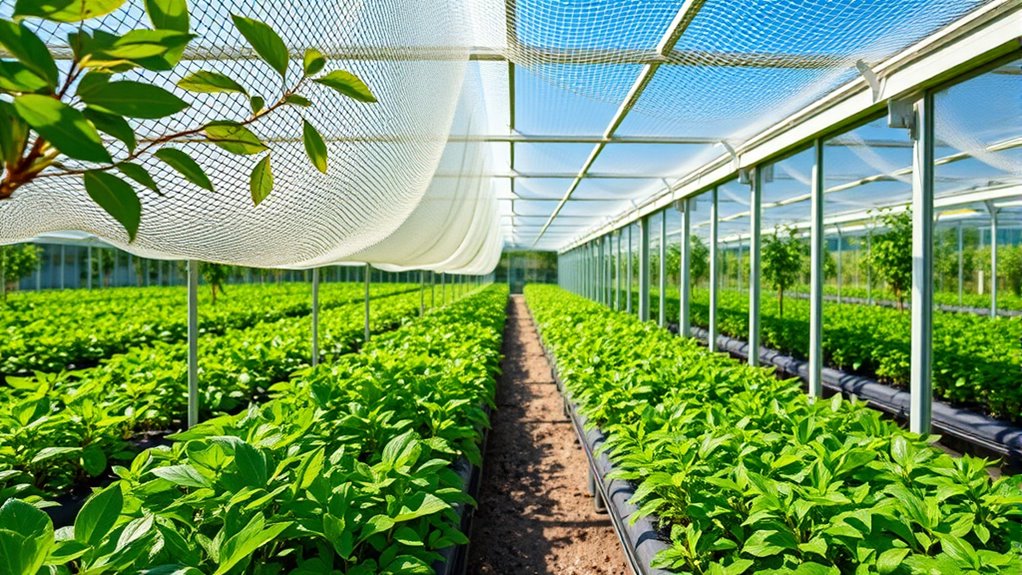
For greenhouse cover made to fit, I’d start with DGSL’s 40% shade cloth: its grommets and moderate shading suit growers who need a straightforward sun screen, though buyers should confirm the dimensions fit their structure. RIFNY’s two-piece netting offers broad coverage for raised beds, while Ztzfacai’s ultra-fine mesh is a better match when small pests are the main concern. The central choice is between blocking insects, reducing heat and sunlight, or finding a mesh that balances both. Coverage, mesh fineness, shade level, and attachment points matter as much as the listed dimensions. Read on for how the 14 options compare and which tradeoffs fit each greenhouse.

Get garden gear delivered free with Prime
- Fast, free delivery on millions of items
- Prime Video, Amazon Music and more included
- Member-only deals all year
Complete the kit


Key Takeaways
DGSL’s 40% shade cloth is the lead pick for moderate sun control with grommets, but its fixed 10-by-20-foot size may not suit a made-to-measure greenhouse cover.
RIFNY’s two 10-by-33-foot panels stand out for coverage flexibility over raised beds; insect mesh is not a substitute for a shade screen.
Ztzfacai and Meuallikit focus on fine insect exclusion, a different job from the 40%, 70%, and 90% shade cloth options.
Shade percentages change the growing environment: a 90% screen blocks far more sun than 40% cloth, so it suits targeted high-glare areas rather than every greenhouse roof.
Small panels such as WenTao’s 4-by-10-foot netting are easier to position on vents or beds, while long rolls such as the 10-by-65-foot mesh can cover larger runs but need a plan for trimming and securing.
| RIFNY Garden Netting for Raised Beds, 2 Pcs 10×33 Ft Plant Protection Mesh |  | Best for Large Greenhouse Coverage | Panel size: 10 x 33 ft each | Quantity: 2 pieces | Mesh size: 0.04 in | VIEW ON AMAZON | See Our Full Breakdown |
| DGSL 10Ft x 20Ft 40% Shade Cloth Greenhouse Tarp Mesh with Grommets for Plants |  | Best for Moderate Sun Protection | Dimensions: 10 x 20 ft | Shade rate: 40% | Material: High-density polyethylene (HDPE) | VIEW ON AMAZON | See Our Full Breakdown |
| Black Garden Mesh Netting for Plants, 10 x 20 ft |  | Best Lightweight Dual-Purpose Screen | Dimensions: 10 x 20 ft | Material: PPT Nano | Color: Black | VIEW ON AMAZON | See Our Full Breakdown |
| JOJOLEE 70% Sun Shade Cloth, 10 x 20 ft, Black HDPE Mesh Tarp with Grommets |  | Best for Strong Sun Exposure | Dimensions: 10 x 20 ft | Material: HDPE | Color: Black | VIEW ON AMAZON | See Our Full Breakdown |
| Ztzfacai 8×13 Ft Ultra Fine Insect Mesh Garden Netting Pest Barrier |  | Best Compact Fine-Mesh Barrier | Dimensions: 8 x 13 ft | Mesh: 256 ultra-fine mesh | Material: Polyester | VIEW ON AMAZON | See Our Full Breakdown |
| Meuallikit Garden Netting 10x20ft – Ultra Fine Insect Mesh Netting for Plants and Trees |  | Best Overall Insect Screen | Dimensions: 10 x 20 ft | Mesh hole size: 0.8 x 1 mm | Material: UV-resistant lightweight PE | VIEW ON AMAZON | See Our Full Breakdown |
| Alphatool 2 Pack 6.5×10 ft Garden Netting, Ultra Fine Mesh Plant Covers |  | Best for Divided Beds | Dimensions per piece: 10 x 6.5 ft | Quantity: 2 pieces | Material: PE (polyethylene) | VIEW ON AMAZON | See Our Full Breakdown |
| Shade Cloth for Garden Plants and Greenhouse, 40-50% Sunblock Netting for Outdoor Use |  | Best for Moderate Sun Reduction | Material: High-density polyethylene | Construction: Lock-stitch knitting | Grommet spacing: Every 40 inches along reinforced edges | VIEW ON AMAZON | See Our Full Breakdown |
| 90% Shade Cloth with Grommets, 5 x 10 ft |  | Best for Strong Sun Blocking | Dimensions: 5 x 10 ft | Shading rate: 80–90% | Material features: Tear-resistant, UV-resistant, weather-resistant | VIEW ON AMAZON | See Our Full Breakdown |
| FARAER Ultra-Fine Garden Netting, 10 x 33 ft |  | Best for Long Greenhouse Rows | Dimensions: 10 x 33 ft | Mesh size: 0.8 x 1 mm | Material: PE-stabilized mesh | VIEW ON AMAZON | See Our Full Breakdown |
| 10 x 65FT Garden Mesh Netting, Ultra Fine Mesh Plant Protection Cover, Green |  | Best for Large Custom Coverage | Dimensions: 10 × 65 ft | Material: 100% polyethylene (PE) | Mesh openings: 1 mm × 0.8 mm | VIEW ON AMAZON | See Our Full Breakdown |
| WenTao Ultra-Fine Garden Netting, 4 × 10 ft |  | Best for Small Greenhouse Beds | Dimensions: 4 × 10 ft | Color: Green | Unit count: 1 | VIEW ON AMAZON | See Our Full Breakdown |
| Garden Netting Pest Barrier – 4’x10′ Fine Bug Mesh |  | Best for Specified Pest Protection | Dimensions: 4 × 10 ft | Material: 100% new HDPE | Mesh: 40 mesh | VIEW ON AMAZON | See Our Full Breakdown |
| 90% Blackish Green Shade Cloth, 6.5 x 10 ft with Reinforced Grommets |  | Best for High-Light Reduction | Dimensions: 6.5 × 10 ft | Material: High-density polyethylene (HDPE) | Shading rate: 90% | VIEW ON AMAZON | See Our Full Breakdown |
| netting and screens for greenhouse | Material | Dimensions | Color |
|---|---|---|---|
| RIFNY Garden Netting for Raise | PE stabilized see-through mesh | — | White |
| DGSL 10Ft x 20Ft 40% Shade Clo | High-density polyethylene (HDPE) | 10 x 20 ft | — |
| Black Garden Mesh Netting for | PPT Nano | 10 x 20 ft | Black |
| JOJOLEE 70% Sun Shade Cloth | HDPE | 10 x 20 ft | Black |
| Ztzfacai 8×13 Ft Ultra Fine In | Polyester | 8 x 13 ft | — |
| Meuallikit Garden Netting 10×2 | UV-resistant lightweight PE | 10 x 20 ft | — |
| Alphatool 2 Pack 6.5×10 ft Gar | PE (polyethylene) | — | White |
| Shade Cloth for Garden Plants | High-density polyethylene | — | — |
| 90% Shade Cloth with Grommets | — | 5 x 10 ft | — |
| FARAER Ultra-Fine Garden Netti | PE-stabilized mesh | 10 x 33 ft | — |
| 10 x 65FT Garden Mesh Netting | 100% polyethylene (PE) | 10 × 65 ft | Green |
| WenTao Ultra-Fine Garden Netti | Not specified | 4 × 10 ft | Green |
| Garden Netting Pest Barrier | 100% new HDPE | 4 × 10 ft | — |
| 90% Blackish Green Shade Cloth | High-density polyethylene (HDPE) | 6.5 × 10 ft | Blackish green |
More Details on Our Top Picks
RIFNY Garden Netting for Raised Beds, 2 Pcs 10×33 Ft Plant Protection Mesh
For a greenhouse grower who needs to cover several beds or a long growing area, RIFNY’s two 10-by-33-foot panels offer more reach than the 10-by-20-foot options from DGSL and JOJOLEE. Its 0.04-inch mesh is aimed at insect exclusion while still letting air, sunlight, and water reach plants, so routine watering can happen without removing the cover. That makes it a better fit for pest protection than DGSL’s 40% shade cloth, which is designed to soften sunlight rather than form an ultra-fine insect barrier. The tradeoff is installation: this lightweight netting has no built-in grommets, so you’ll need staples, stakes, or weights to keep it in place. It also needs protected storage between seasons.
Pros:- Two large panels cover more area than the 10-by-20-foot DGSL shade cloth.
- 0.04-inch mesh forms a fine barrier against insects and small animals.
- Water and liquid feeding can pass through without removing the cover.
- Lightweight, reusable PE mesh can be cut to fit different beds.
Cons:- No grommets or fastening hardware are specified, so installation supplies are needed.
- The product should be stored away from sunlight and humidity when not in use.
Best for: Greenhouse growers covering multiple raised beds who want fine insect protection and enough material to cut panels to size.
Not ideal for: Growers who need a ready-to-hang screen with grommets or substantial sun reduction; this mesh needs separate fasteners and is not specified with a shade rate.
- Panel size:10 x 33 ft each
- Quantity:2 pieces
- Mesh size:0.04 in
- Material:PE stabilized see-through mesh
- Color:White
- Primary uses:Insect, animal, UV, and frost protection
Our verdict“Choose RIFNY for broad greenhouse coverage against small pests when you can supply your own fasteners and do not need a defined shade level.”
DGSL 10Ft x 20Ft 40% Shade Cloth Greenhouse Tarp Mesh with Grommets for Plants
DGSL’s 40% shade rating makes this a middle-ground screen for greenhouses that get harsh midday sun but still need ample light for growth. Compared with JOJOLEE’s 70% cloth, it leaves more sunlight available; compared with RIFNY’s fine netting, it prioritizes heat and glare reduction over a detailed insect barrier. The reinforced edges and aluminum grommets, spaced every 3.28 feet, make it easier to attach across a frame using ties, rope, or hooks. Its HDPE construction is described as tear-resistant, and it can also provide light frost protection. That frost coverage is limited, though, and the 40% shade may not be enough where the greenhouse receives intense sun or houses plants that need heavier shade.
Pros:- 40% shade reduces harsh sun while allowing ample light through.
- Reinforced edges and rust-resistant aluminum grommets support frame attachment.
- Grommets are spaced every 3.28 feet for multiple tie points.
- HDPE cloth can also be used for light frost protection.
Cons:- Moderate shade may not suit plants that need substantial sun reduction.
- Light frost protection is not suitable for hard freezes.
Best for: Greenhouse owners seeking moderate relief from strong sun who want a cloth that can be tied directly to a frame.
Not ideal for: Growers needing a fine-mesh insect barrier, heavy shade, or protection through hard freezes.
- Dimensions:10 x 20 ft
- Shade rate:40%
- Material:High-density polyethylene (HDPE)
- Grommet spacing:Every 3.28 ft
- Mounting:Tie or post
- Other stated use:Light frost protection
Our verdict“Pick DGSL when your main greenhouse problem is excessive sun and you want a moderately shaded, grommeted cloth.”
Black Garden Mesh Netting for Plants, 10 x 20 ft
This black mesh combines a breathable pest barrier with 33% shade, making it a useful compromise when a greenhouse needs some sun reduction as well as protection from birds and small animals. Its 10-by-20-foot coverage matches the footprint of the JOJOLEE shade cloth, but the two serve different needs: JOJOLEE has a stated 70% shade rate and reinforced grommeted edges, while this PPT Nano mesh offers lighter shade without listed fastening details. Compared with RIFNY’s 0.04-inch netting, the product data here gives less detail about which insect sizes the mesh excludes. That makes it harder to choose for fine insect control. The lightweight construction is easy to drape, but buyers will need to work out how to secure it and should not assume it blocks larger pests.
Pros:- 10-by-20-foot coverage suits larger beds or greenhouse sections.
- Breathable mesh protects against birds and small animals.
- 33% shading adds some relief from direct sun.
- Lightweight material is suited to draping over plants or seating areas.
Cons:- No fastening or installation details are provided.
- Pest protection is described for birds and small animals, not larger pests.
- Mesh opening size and insect exclusion are not specified.
Best for: Greenhouse growers who want a lightweight cover for birds and small animals with some added shade.
Not ideal for: Buyers seeking a specified fine insect mesh, built-in grommets, or strong shade comparable to JOJOLEE’s 70% cloth.
- Dimensions:10 x 20 ft
- Material:PPT Nano
- Color:Black
- Shading rate:33%
- Stated protection:Birds and small animals
- Other stated use:Outdoor shade
Our verdict“Choose this mesh for light shade and a breathable barrier against birds and small animals when you can provide your own secure mounting.”
JOJOLEE 70% Sun Shade Cloth, 10 x 20 ft, Black HDPE Mesh Tarp with Grommets
When a greenhouse or its plants receive intense direct sun, JOJOLEE’s 70% shade rate makes it the strongest sun filter among these five products with a stated shade percentage. It blocks more sunlight than DGSL’s 40% cloth and the black garden mesh’s 33% shading, making it better suited to locations where those lighter screens may leave plants exposed. Air and rain can pass through, and reinforced borders, corners, and rust-resistant grommets provide tie points around the 10-by-20-foot panel. This is a shade screen, not a fine insect net like RIFNY or Ztzfacai, so it will not serve the same pest-control role. Rope and zip ties are not included, and the product may need to be retracted or secured during extreme weather.
Pros:- 70% shade blocks more sunlight than the DGSL 40% cloth.
- Air and rain pass through the HDPE mesh.
- Reinforced borders and corners help support the panel.
- Rust-resistant metal grommets provide tie points.
Cons:- Rope and zip ties are not included.
- Heavy shade may be unsuitable where plants need more direct sunlight.
- May need to be retracted or secured during extreme weather.
Best for: Greenhouse growers with intense sun exposure who need substantial shade and a cloth with built-in attachment points.
Not ideal for: Growers whose priority is fine insect exclusion or who need a lighter shade level to preserve more direct sunlight.
- Dimensions:10 x 20 ft
- Material:HDPE
- Color:Black
- Shade rate:70%
- Edges and corners:Reinforced khaki borders and corners
- Grommets:Rust-resistant metal
- Installation:Attach with rope or zip ties, not included
Our verdict“Choose JOJOLEE for substantial greenhouse sun reduction when you need reinforced, grommeted coverage and do not require a fine pest barrier.”
Ztzfacai 8×13 Ft Ultra Fine Insect Mesh Garden Netting Pest Barrier
For a smaller greenhouse section or a single raised bed, Ztzfacai’s 8-by-13-foot panel offers a more manageable footprint than RIFNY’s two 10-by-33-foot sheets. Its 256-mesh polyester fabric is specified as an ultra-fine physical barrier against pests including aphids and carrot flies, while sunlight, air, and water can still reach plants. That makes it a more targeted choice for small-insect protection than DGSL’s shade cloth, which focuses on reducing sun. It can be cut to fit, and the description identifies it as tear-resistant and reusable. The smaller coverage area is the clear compromise for larger structures, and the lightweight material may need extra securing in strong wind. No grommets or fastening hardware are listed.
Pros:- 256-mesh fabric is specified for small pests such as aphids and carrot flies.
- Water, air, and sunlight pass through while the net stays in place.
- Cuttable polyester can be reused across growing seasons.
- Compact size is easier to fit over one bed than RIFNY’s large two-panel set.
Cons:- The 8-by-13-foot panel covers less area than RIFNY’s two 10-by-33-foot pieces.
- Lightweight netting may need extra securing in strong winds.
- No grommets or included fasteners are specified.
Best for: Small greenhouse owners or raised-bed growers who want a cuttable fine-mesh barrier against small insects.
Not ideal for: Buyers covering long greenhouse runs or needing a ready-to-mount screen with specified grommets and fasteners.
- Dimensions:8 x 13 ft
- Mesh:256 ultra-fine mesh
- Material:Polyester
- Model number:028
- Stated pest protection:Insects, birds, squirrels, and other pests
- Watering:Water and fertilizer pass through
- Reuse:Reusable and cuttable
Our verdict“Pick Ztzfacai for a compact, cuttable insect barrier when fine-mesh protection matters more than broad greenhouse coverage.”
Meuallikit Garden Netting 10x20ft – Ultra Fine Insect Mesh Netting for Plants and Trees
Meuallikit’s 0.8 x 1 mm mesh makes this the most balanced pick here for greenhouse growers trying to keep small insects off crops while leaving the cover in place for watering. Its 10 x 20 ft sheet gives more coverage than the Alphatool two-pack’s individual 10 x 6.5 ft pieces, though Alphatool offers two separate sections for beds that need independent covers. Water and sunlight pass through the Meuallikit mesh, and its UV-resistant PE is described as reusable. The tradeoff is the fine weave: airflow may be lower than through coarser netting, so it may not suit a greenhouse that already runs hot or humid. You’ll also need to supply stakes, clips, or ties. It can be cut to fit, but it is not a made-to-measure cover out of the box.
Pros:- 0.8 x 1 mm mesh is specified for blocking small pests such as aphids and cabbage moths
- Water, air, and sunlight can pass through while the netting stays in place
- 10 x 20 ft sheet can be cut to suit beds or greenhouse sections
- UV-resistant PE is described as reusable
Cons:- Stakes, clips, or cable ties for securing it are not included
- Fine mesh may restrict airflow compared with more open netting
- Cut-to-fit sizing requires the buyer to measure and finish the edges
Best for: Greenhouse growers who need one cuttable sheet to protect a larger bed from small insects while watering through the cover
Not ideal for: Growers prioritizing maximum airflow or wanting a fitted cover and included mounting hardware
- Dimensions:10 x 20 ft
- Mesh hole size:0.8 x 1 mm
- Material:UV-resistant lightweight PE
- Weight:22.4 oz
- Available sizes:4 x 10 ft, 10 x 20 ft, 10 x 30 ft
- Water permeability:Water passes through
- Model number:NVMS
Our verdict“Choose Meuallikit for a versatile insect screen that you can trim for a greenhouse bed, provided you can add your own supports and accept some airflow tradeoff.”
Alphatool 2 Pack 6.5×10 ft Garden Netting, Ultra Fine Mesh Plant Covers
Two separate 10 x 6.5 ft panels make Alphatool a practical choice when a greenhouse has multiple small beds or sections that need individual covers. Compared with Meuallikit’s single 10 x 20 ft sheet, the split format is easier to assign to separate areas, but each piece covers less ground and may leave a larger bed short. The cuttable PE mesh lets you adjust the panels for hoops or raised beds, while water, light, and air can pass through. This helps avoid lifting the cover for routine watering. The listing calls the mesh ultra-fine but gives no hole measurement, so buyers focused on excluding a particular pest have less sizing detail than Meuallikit or FARAER provide. Support poles are not included, and careful measuring matters before cutting.
Pros:- Two panels can cover separate beds independently
- PE mesh allows water and light through during use
- Panels can be cut to fit different garden setups
- Reusable material is suited to seasonal plant protection
Cons:- Support poles are not included
- No mesh-hole measurement is provided to match a target pest size
- Each panel is narrower than Meuallikit’s 10 x 20 ft sheet
Best for: Greenhouse gardeners covering two smaller raised beds or separate plant sections with independent panels
Not ideal for: Buyers who need a specified mesh aperture or one uninterrupted cover for a broad greenhouse span
- Dimensions per piece:10 x 6.5 ft
- Quantity:2 pieces
- Material:PE (polyethylene)
- Color:White
- Mesh type:Ultra-fine
- Water and light:Pass through mesh
- Model number:Anphsin2-garden screen-white 2pcs
Our verdict“Pick Alphatool when you need two manageable covers for separate greenhouse beds and can work without a stated mesh aperture or included supports.”
Shade Cloth for Garden Plants and Greenhouse, 40-50% Sunblock Netting for Outdoor Use
Where Meuallikit and FARAER focus on keeping insects off plants, this 40–50% shade cloth addresses a different greenhouse problem: strong sun. It reduces incoming light while allowing airflow and water through, making it a better fit for crops that need some relief without the heavy dimming of the 90% Shade Cloth with Grommets. Reinforced edges and grommets every 40 inches give it a ready-made hanging system, unlike the fine insect netting options that require separate ties or stakes. The listing does not provide dimensions, so it is difficult to judge coverage or plan a made-to-measure greenhouse installation. Grommets are only on the sides, which limits attachment points across the middle, and the stated shade level may vary in actual use.
Pros:- 40–50% sun blocking offers moderate light reduction
- Breathable fabric lets airflow and water pass through
- Reinforced edges and grommets spaced every 40 inches support hanging
- Lock-stitch knitting is designed to resist unraveling
Cons:- Product dimensions are not specified
- Side-only grommets provide limited mid-panel attachment options
- Shade performance may vary from the stated percentage
Best for: Greenhouse growers who want moderate sun reduction with breathable, water-permeable fabric and edge grommets
Not ideal for: Buyers needing insect exclusion, a specific cover size, or frequent attachment points through the cloth’s center
- Material:High-density polyethylene
- Construction:Lock-stitch knitting
- Grommet spacing:Every 40 inches along reinforced edges
- Water permeability:Water passes through
- Breathability:Breathable
- Cleaning:Garden hose
Our verdict“Choose this cloth to moderate greenhouse sun while preserving airflow, but confirm the required coverage because no dimensions are listed.”
90% Shade Cloth with Grommets, 5 x 10 ft
For a greenhouse with an exposed, sun-sensitive section, this 5 x 10 ft shade cloth provides far more light reduction than the 40–50% shade cloth in this lineup. Its stated 80–90% shading range may suit a small propagation area or a temporary screen where substantial sun blocking matters more than keeping light levels high. Reinforced edges and grommets support fastening, while the fabric is described as tear-resistant, UV-resistant, and weather-resistant. Compared with the larger insect screens such as FARAER’s 10 x 33 ft netting, this is a compact shade panel, not a pest barrier or broad greenhouse cover. The supplied details do not state grommet spacing or installation guidance, and the high shade level could be unsuitable for crops that need stronger direct light.
Pros:- 80–90% stated shading provides substantial sun reduction
- Compact 5 x 10 ft size suits a defined area
- Fabric is described as tear-resistant, UV-resistant, and weather-resistant
- Reinforced edges and grommets support fastening
Cons:- High shade level may reduce light too much for some greenhouse crops
- Grommet spacing and installation details are not provided
- Small panel covers less area than the 10 x 20 ft Meuallikit netting
Best for: Growers shading a small greenhouse zone or plant area that needs substantial reduction in direct sunlight
Not ideal for: Growers seeking insect screening, broad coverage, or a mild shade level for light-hungry crops
- Dimensions:5 x 10 ft
- Shading rate:80–90%
- Material features:Tear-resistant, UV-resistant, weather-resistant
- Edge design:Reinforced edges
- Fasteners:Grommets
- Intended uses:Shade cover, plant protection, privacy screen, outdoor enclosure cover
Our verdict“Use this compact cloth when a greenhouse section needs heavy sun protection and you have confirmed that its high shade level suits the plants.”
FARAER Ultra-Fine Garden Netting, 10 x 33 ft
At 10 x 33 ft, FARAER supplies the longest specified insect-screen sheet among these five, giving greenhouse growers room to cover a long row or trim sections for several beds. Its 0.8 x 1 mm mesh matches Meuallikit’s stated aperture, so both are aimed at fine-pest protection while allowing light, air, and water through. FARAER’s advantage is the extra length; Meuallikit supplies a shorter 10 x 20 ft sheet and explicitly lists UV-resistant material. FARAER is described as PE-stabilized and reusable, but the product details do not specify UV resistance, so long-term exposure durability is less clear. Like the other cut-to-fit insect nets, it needs to be secured with stones, soil, or stakes. It is a flexible sheet, not a fitted cover with a frame.
Pros:- 10 x 33 ft length suits long rows or multiple cut sections
- 0.8 x 1 mm mesh size is specified
- Air, water, and light pass through while the netting is installed
- Reusable PE-stabilized material can be cut to size
Cons:- Stakes or other anchoring materials are needed and not included
- UV resistance is not explicitly stated in the supplied product data
- Long sheet may require additional support to prevent sagging
Best for: Greenhouse growers covering a long planting row who can trim and anchor a continuous insect-screen sheet
Not ideal for: Buyers wanting a fitted cover, included supports, or explicitly stated UV-resistant material
- Dimensions:10 x 33 ft
- Mesh size:0.8 x 1 mm
- Material:PE-stabilized mesh
- Unit count:1
- Reusable:Yes
- Water permeability:Water passes through
- Cut-to-size:Yes
Our verdict“Choose FARAER for long greenhouse rows needing a cuttable fine-mesh insect barrier, and plan to provide your own anchors.”
10 x 65FT Garden Mesh Netting, Ultra Fine Mesh Plant Protection Cover, Green
For greenhouse growers covering several beds or shaping a barrier around an irregular frame, this 10-by-65-foot roll offers far more reach than the compact WenTao 4 × 10 ft net. Its 1 mm × 0.8 mm openings are intended to block small pests and animals while passing water, air, and sunlight, so routine watering does not require taking the cover off. I’d choose it when coverage needs to be cut to fit, though the listing does not provide a UV-resistance rating or warranty, making long-term outdoor durability harder to judge than the 40-mesh HDPE Garden Netting Pest Barrier. The lightweight PE also needs stakes or other weights to stay put and may be vulnerable to larger animals or rough weather. It is a flexible coverage option, but the buyer must supply the anchoring and plan for its limits.
Pros:- Long 65-foot roll can be cut to cover multiple beds or custom shapes
- Very small 1 mm × 0.8 mm openings target small pests
- Passes water, sunlight, and air for in-place watering
- Can be used across gardens, orchards, raised beds, and greenhouses
Cons:- Lightweight PE may not hold up to larger animals or harsh weather
- Stakes or weights are needed and are not included
- No UV-resistance rating or warranty is provided in the product data
Best for: Greenhouse growers covering multiple beds or custom-sized frames who can provide their own stakes or weights
Not ideal for: Growers needing a documented UV rating, included fasteners, or a heavy-duty barrier against forceful animals
- Dimensions:10 × 65 ft
- Material:100% polyethylene (PE)
- Mesh openings:1 mm × 0.8 mm
- Color:Green
- Cuttable:Yes
- Water, air, and light:Pass through
- Intended protection:Birds, chickens, rabbits, and other small animals
Our verdict“Choose this long, cuttable roll for broad custom greenhouse coverage if you can anchor it securely and accept limited durability details.”
WenTao Ultra-Fine Garden Netting, 4 × 10 ft
The WenTao netting is a straightforward fit for a single small bed or a short row, where a manageable 4 × 10 ft sheet is easier to place than the 65-foot roll from the previous pick. Its lightweight construction is described as easy to install, and the listing identifies greenhouse, raised-bed, and outdoor use. That makes it approachable for a beginner who wants a basic pest barrier without cutting down a much larger piece. The tradeoff is sparse product information: no mesh opening size or material is given, so I can’t compare its pest exclusion or expected outdoor life as confidently as the Garden Netting Pest Barrier, which specifies 40 mesh and UV-resistant HDPE. It may also need stakes or supports. I’d keep this to modest coverage where those unknowns are acceptable.
Pros:- Compact 4 × 10 ft dimensions suit a single small bed
- Listed for greenhouse, raised-bed, and outdoor garden use
- Lightweight design is described as easy to install
- Can cover flowers, fruit, and vegetables
Cons:- Mesh opening size is not specified, limiting pest-fit assessment
- Material and UV-resistance details are not provided
- May need stakes or other supports, which are not specified as included
Best for: New greenhouse gardeners covering one small raised bed or a short row of vegetables
Not ideal for: Growers targeting a particular insect size or needing verified material and UV-resistance details
- Dimensions:4 × 10 ft
- Color:Green
- Unit count:1
- Mesh type:Ultra-fine
- Material:Not specified
- Mesh opening size:Not specified
- Intended use:Garden pest and mosquito barrier
Our verdict“Pick this compact sheet for a small greenhouse bed when simple handling matters more than documented mesh and material specifications.”
Garden Netting Pest Barrier – 4’x10′ Fine Bug Mesh
Among these small-format insect barriers, this 4 × 10 ft net is the clearest choice when a greenhouse grower wants defined mesh and material details. Its 40-mesh HDPE is UV-resistant, and the stated three-year warranty adds a concrete point of comparison that the WenTao sheet lacks. Air, water, and light pass through, so the cover can remain over crops during watering; a tight selvedge is also described as resisting unraveling when cut. The limitation is the footprint: it suits a hoop, cage, window, or one modest bed, not a broad greenhouse span like the 10 × 65 ft PE roll. The listing also notes it may not stop insects smaller than its mesh can exclude. I’d choose it for targeted pest control where its size matches the frame.
Pros:- 40-mesh specification helps buyers judge pest-barrier suitability
- UV-resistant HDPE and a stated three-year warranty
- Passes air, water, and light while in place
- Cuttable with a tight selvedge described as resisting unraveling
Cons:- 4 × 10 ft footprint may be too small for larger greenhouse areas
- May not exclude insects smaller than the 40-mesh barrier can block
- Supports or fastening hardware are not specified
Best for: Greenhouse growers covering a small hoop or bed who want specified 40-mesh, UV-resistant fabric
Not ideal for: Owners of large greenhouse beds or growers whose target pests may pass through 40-mesh netting
- Dimensions:4 × 10 ft
- Material:100% new HDPE
- Mesh:40 mesh
- UV resistant:Yes
- Warranty:3 years
- Cuttable:Yes
- Pass-through:Air, water, and light
Our verdict“Choose this for a small greenhouse frame when specified 40-mesh HDPE and a stated warranty matter more than coverage area.”
90% Blackish Green Shade Cloth, 6.5 x 10 ft with Reinforced Grommets
This is the lineup’s shade-control option, rather than an insect screen: its 90% shading rate is aimed at reducing intense sun over a greenhouse area, patio, or other exposed space. Compared with the DGSL 40% shade cloth in the wider roundup, it cuts far more sunlight, which can help where heat and glare are the main problems but may leave sun-loving crops short of light. The 6.5 × 10 ft HDPE panel has reinforced edges and grommets every 3.3 ft on all sides, giving growers regular attachment points without having to sew their own. It remains breathable and water-permeable, so it is not a sealed cover or a pest barrier. I’d pick it for deliberate heavy shading, not as a substitute for fine greenhouse netting.
Pros:- 90% shade rating provides strong sunlight reduction
- HDPE cloth remains breathable
- Reinforced edges and corners are designed to resist tearing and fraying
- Grommets every 3.3 ft on all four sides provide regular attachment points
Cons:- Heavy shading may reduce light too much for many sun-loving crops
- Water-permeable fabric does not provide a sealed cover
- Does not serve as fine insect netting
Best for: Greenhouse growers shading a small, very sunny zone or protecting heat-sensitive crops from intense direct sun
Not ideal for: Growers who need an insect barrier, a sealed rain cover, or substantial light for sun-loving plants
- Dimensions:6.5 × 10 ft
- Material:High-density polyethylene (HDPE)
- Shading rate:90%
- Color:Blackish green
- Grommet spacing:Every 3.3 ft on all four sides
- Edge reinforcement:Six-needle binding on all four sides
- UV resistant:Yes
Our verdict“Choose this reinforced cloth for a small greenhouse area that needs heavy shade, and use a separate screen when pest exclusion is the goal.”

How We Picked
I compared these 14 options by their stated purpose, mesh or shade level, dimensions, and attachment details. For greenhouse use, those features determine whether a product helps exclude insects, soften direct sun, or cover a particular opening or bed. I gave more weight to clear functional fit and usable coverage than to broad claims about plant protection.
The ranking favors products that make their intended use and installation straightforward, while recognizing that pest mesh and shade cloth solve different problems. The DGSL 40% shade cloth leads for its moderate shade rating and grommets; RIFNY ranks strongly for flexible area coverage, and fine meshes rise for insect-focused needs. Higher shade ratings, compact dimensions, and unspecified fit reduce versatility for general greenhouse use, even when they may suit a specific setup well.
Factors to Consider When Choosing Netting And Screens For Greenhouses
Choosing greenhouse netting starts with the problem you want to solve and the part of the structure you need to cover. These broader checks can help prevent a mismatch between a product’s label and your growing conditions.
Choose Pest Exclusion or Sun Control First
Insect mesh and shade cloth serve different jobs, even when both look like netting. Fine mesh aims to keep pests from reaching plants, while shade cloth reduces incoming sunlight and heat. Before buying, identify whether crop damage, midday heat, or both are limiting growth. If you need both functions, check whether separate layers can be mounted without sealing vents or making access difficult. A single product labeled for general plant protection may not provide the mesh fineness or shade level your greenhouse needs. Treat the product’s stated purpose as a starting point and verify its construction details.
Match Mesh Fineness to the Pest and Ventilation Needs
Finer mesh can help exclude smaller insects, but it also reduces airflow more than open netting. That tradeoff can raise humidity and heat inside a greenhouse, especially when mesh covers a large area or ventilation is already limited. Identify the pest you are trying to exclude and compare the opening size where the listing provides it. If the opening size is not stated, do not assume “ultra-fine” describes a precise barrier. Consider screening vents and entry points first rather than wrapping the entire structure. Keep a way to inspect the screen for damage and clear debris.
Calculate Coverage Around Seams and Openings
Measure the area you intend to cover, including overlap at edges and any allowance for fastening. A nominal 10-by-20-foot panel will not cover that full area once you fold edges or overlap seams. For roof and wall panels, map each section separately and account for doors, vents, and irregular framing. Long rolls can reduce seams on extended beds or runs, but they may call for trimming and extra support. Multiple smaller pieces are easier to position around openings, though every seam needs a secure closure. Planning the layout first helps avoid gaps that defeat pest exclusion.
Treat Shade Percentage as a Crop-Specific Choice
A higher shade percentage blocks more sunlight, which can help with heat and glare but may leave light-hungry crops short of what they need. The options here range from 40% shade to 90%, so they are not interchangeable. Consider which plants occupy the screened area, how much direct sun it receives, and whether the shade will cover a roof, one side, or a small patch. Seasonal mounting can let you remove or reposition shade as daylight changes. Avoid choosing a high percentage simply because summer temperatures are uncomfortable; ventilation and localized shade may address the problem with less light loss. Check whether the product specifies shade performance consistently across the whole panel.
Plan Fastening and Wind Load Before Covering a Frame
Grommets can simplify attachment, but their spacing and reinforcement determine how easily you can tension a panel without stressing its edges. Fine netting without listed grommets may need clips, ties, battens, or another method suited to the greenhouse frame. Loose material can flap, rub against plants, or pull free in wind, while excessive tension can tear mesh at fastening points. Think through how the cover will be removed for cleaning, crop access, or seasonal changes. On larger spans, add support points rather than relying on the corners alone. Check that the selected fastening method will not block doors or vents.
Decide Whether a Fixed Panel Can Fit Your Greenhouse
Most options in this roundup come in fixed rectangular dimensions, which work well for beds and simple frames but may leave awkward gaps on a custom greenhouse. Measure the structure and compare the product dimensions with the usable mounting area before ordering. For a made-to-measure cover, confirm whether the seller offers custom sizing, whether the material can be cut cleanly, and how cut edges should be finished. A larger panel can provide trim allowance, but extra fabric also needs safe, secure storage or fastening. For irregular roofs, separate panels may fit more neatly than one oversized sheet. The right choice depends on the frame geometry as much as the headline size.
Frequently Asked Questions
Can I use one cover for both insect control and shade?
Only if the product states both functions and gives enough detail to judge each one. Fine insect netting can limit airflow without providing meaningful sun reduction, while shade cloth may have openings too large to exclude pests. Combining two layers can work, but it may further reduce ventilation and complicate access. Compare the mesh opening and shade percentage with the needs of the crops and pests in your greenhouse. If either specification is missing, treat that function as unconfirmed.
How do I tell whether 40%, 70%, or 90% shade is appropriate?
Start with the crop’s light needs and the amount of direct sun that reaches the area you plan to cover. The 40% option in this lineup is the more moderate screen, while the 70% and 90% products block much more light. A high percentage may suit a particularly bright side or a heat-sensitive crop, but using it across the whole roof can reduce light for other plants. You can also shade only the sunniest wall or mount the screen seasonally. When uncertain, test a small area before screening the full greenhouse.
Will a 10-by-20-foot panel fit a greenhouse with those exact measurements?
Not necessarily: the listed dimensions describe the panel, not the usable area after attachment. You may need extra material for edge fastening, overlap, and routing around a frame. Measure the actual surfaces and openings rather than relying on the greenhouse’s floor dimensions. Also check whether the panel’s shape suits a pitched roof or whether separate roof and wall pieces are needed. For a custom fit, ask whether the seller can provide made-to-measure sizing and how the edges are finished.
Does finer insect mesh always give better greenhouse protection?
Finer mesh can block smaller pests, but it can also restrict airflow and collect debris more readily. A screen that is finer than your pest problem requires may make temperature and humidity harder to manage. Compare the listed opening size with the insects you need to exclude; vague “ultra-fine” wording does not confirm a specific barrier. Screening vents and doors can be a useful first step before covering the entire structure. Check the screen routinely for tears, since even a small gap can undermine the barrier.
Which format is easier to use for a small greenhouse or raised bed?
Smaller panels, such as the 4-by-10-foot option, are easier to position over a compact bed or opening and involve less material to tension. They may require seams if the area is larger, so plan overlap and fastening before installation. A longer roll can cover several beds or a long run with fewer joins, but trimming and securing it takes more planning. RIFNY’s two-piece format offers more flexibility than one fixed panel, while a compact shade cloth may fit a specific section. Choose based on the surface layout and how often you need to lift the cover.
Conclusion
For most growers seeking a greenhouse sun screen, I’d choose DGSL’s 40% shade cloth as the best overall starting point: it pairs moderate shading with grommets, though the fixed dimensions may not deliver a made-to-measure fit. RIFNY is my value-minded pick for raised beds and broad coverage, while growers focused on insect exclusion should look to Ztzfacai or Meuallikit’s fine mesh. Beginners may find a compact panel easier to place and adjust before covering a whole structure; experienced growers screening a specific, very bright area may prefer the 70% or 90% shade options. For custom greenhouse cover, measure the frame and confirm sizing and edge finishing with the seller before choosing any fixed-size panel.
Halloween Picks
halloween
As an affiliate, we earn on qualifying purchases.