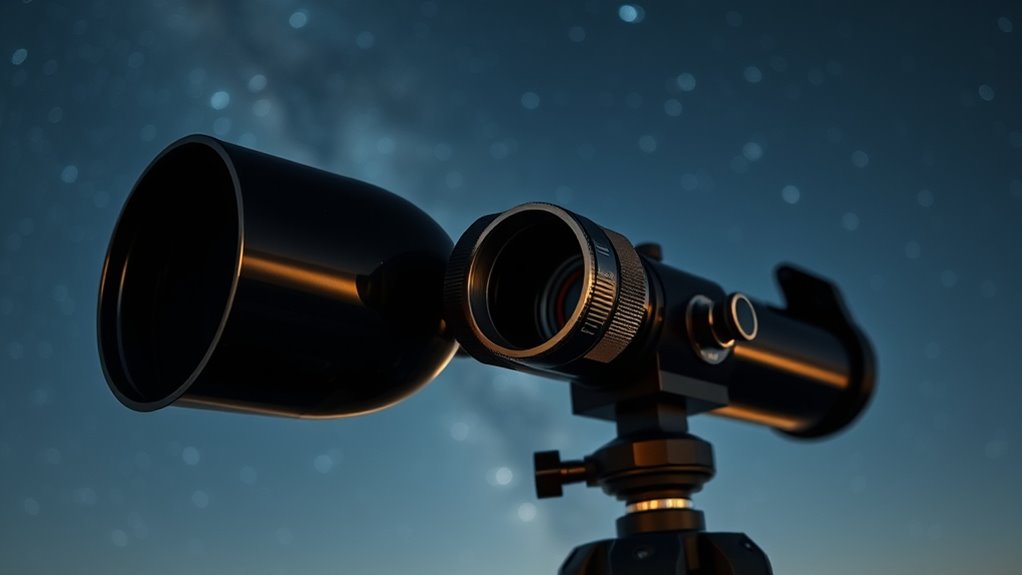

When selecting a field flattener for a refractor telescope, the goal is to produce sharp, distortion-free images across the entire field of view. The Explore Scientific Field Flattener stands out as the best overall choice, offering excellent correction for astro-imaging at f/5 to f/7. The SVBONY SV503 Field Flattener provides a budget-friendly alternative with solid performance, while the SVBONY SV550 80ED F6 Triplet combines high-quality optics with a built-in flattener for those seeking premium features. The main tradeoffs involve balancing optical quality, compatibility, and price. Continue reading for a detailed comparison to find the best fit for your setup.
Play games included with Prime
Start a Prime free trial and play with Amazon Luna on your devices.
Start playingAs an affiliate, we earn on qualifying purchases.
Complete the kit


Key Takeaways
- The best flatteners deliver consistent correction across a range of focal ratios, with the Explore Scientific model excelling at f/5 to f/7.
- Compatibility with various refractor models is a key consideration; some flatteners are optimized for specific aperture sizes or focal lengths.
- Higher-end options like the SV550 provide premium optical correction but come at a significant cost, whereas budget options still offer decent performance.
- Ease of use, including installation and adjustability, varies and can influence setup time and frustration for beginners.
- The presence of focal reducers integrated with flatteners can save space and streamline imaging workflows, but may introduce additional compromises in image quality.


More Details on Our Top Picks
Explore Scientific Field Flattener for Refractor Telescopes (f/5 to f/7) for Astrophotography
This field flattener excels at minimizing star distortion across a range of focal ratios, making it the most adaptable choice for astrophotographers using refractors between f/5 and f/7. Its fully multi-coated optics enhance contrast and light transmission, delivering sharper images than simpler flatners. Compared with the SVBONY SV503 80ED with a dedicated field flattener, this model offers greater compatibility and straightforward manual focus control, though it demands precise spacing of 55mm (+/- 2mm) for optimal results. Its ease of attachment and broad focal ratio support make it a well-rounded option, but beginners may find its setup trickier than plug-and-play alternatives.
Pros:- Reduces star distortion for sharper astrophotos
- Compatible with refractors at f/5 to f/7
- Fully multi-coated optics for high contrast and light transmission
- Easy to attach with standard T-ring thread
Cons:- Requires exact 55mm spacing, which can be fiddly
- Limited to refractor telescopes, reducing versatility
Best for: Intermediate to advanced astrophotographers seeking a flexible, high-quality field flattener for multiple refractor systems
Not ideal for: Beginners who prefer plug-and-play solutions or those with limited space for precise setup adjustments
- Focal Ratio Range:f/5 to f/7
- Compatibility:Refractor telescopes
- Optics Coating:Fully multi-coated
- Focal Length:Unchanged
- Field of View:1.86 degrees
- Dimensions:2″D x 2″W x 4″H
Our verdict“This field flattener suits serious astrophotographers who need reliable performance across multiple focal ratios, despite its setup complexity.”
SVBONY SV503 Refractor Telescope, 102mm F7 Extra Low Dispersion Achromatic Refractor OTA with SV193 Focal Reducer
The SV503 with its large 102mm aperture delivers bright, crisp images ideal for wide-field astrophotography and observation, surpassing smaller apertures like the 70mm SV503 in brightness and resolution. Its multi-coated optics reduce glare, providing clear views of deep-sky objects, but the heavier weight can hinder portability compared with lighter models like the SV503 70mm. While its manual focusing is straightforward, some users may find the setup process complex, especially when integrating the SV193 focal reducer for faster imaging. Compared to specialized flatters, this telescope’s primary strength lies in its aperture and versatility, though it’s less tailored solely for flat-field correction.
Pros:- Large 102mm aperture for bright, detailed images
- Multi-coated optics reduce glare and improve clarity
- Compatible with filters and cameras for astrophotography
- Durable aluminum body with polished finish
Cons:- Heavier weight makes portability more difficult
- Manual focusing can be slow for quick observations
- Setup may be complex for beginners
Best for: Amateur astronomers wanting a bright, versatile refractor for both visual and astrophotography applications
Not ideal for: Travelers or those with limited space who need a lightweight, compact setup
Our verdict“This telescope is best suited for those looking for a bright, multi-purpose refractor with good aperture and imaging capabilities, accepting some weight and complexity.”
SVBONY SV503 Upgraded ED Refractor Telescope, 80mm F7 with Field Flattener
The SV503 80ED with its 0.8X focal reducer and built-in field flattener provides sharp, edge-to-edge images in a lightweight package, making it ideal for portable astrophotography and deep-sky imaging. Its ED glass minimizes chromatic aberration, offering clearer, more accurate star images than basic models. Compared with the SV550 80ED F6 triplet, this model sacrifices some chromatic correction for weight savings and simplicity, but it remains a solid choice for amateurs seeking a more manageable setup. The dual-speed focuser adds precision, yet the need for assembly and calibration might be challenging for newcomers.
Pros:- Lightweight and portable for outdoor use
- Includes a 0.8X focal reducer for faster imaging
- ED glass reduces chromatic aberration
- Dual-speed focuser for precise adjustments
Cons:- Requires assembly and calibration for optimal results
- Limited to fixed mounts, not suitable for heavy or complex mounts
Best for: Beginners and hobbyists who prioritize portability and ease of use in astrophotography
Not ideal for: Users requiring a fully integrated, ready-to-go system or those needing heavy-duty mounts
Our verdict“This refractor is perfect for beginners who want a portable, high-quality option for astrophotography, despite some setup requirements.”
SVBONY SV550 80ED F6 Triplet Apochromatic Refractor Telescope with Field Flattener and Camera Angle Adjuster
The SV550 80ED triplet combines high-end optical design with a field flattener and camera angle adjuster, catering to serious astrophotographers demanding top-tier image quality. Its S-FPL51 ED glass ensures minimal chromatic aberration, offering sharp, color-true images of planets and deep-sky objects. Compared with the semi-apo SV503 models, the triplet design greatly enhances contrast and reduces false color. The inclusion of a camera rotator and a high-quality flatner makes it a versatile tool for detailed imaging, but its complexity and weight may deter casual users or beginners. This setup is ideal for those committed to astrophotography excellence and willing to handle a more involved setup process.
Pros:- High-quality triplet apochromatic optics for sharp, true-to-life images
- Includes field flattener and camera angle adjuster for flexibility
- Excellent contrast and minimal chromatic aberration
- Portable and lightweight for its class
Cons:- Complex setup and calibration process
- Higher price point limits accessibility for casual users
Best for: Advanced astrophotographers seeking high-contrast, detailed images with premium optical quality
Not ideal for: Novices or those preferring a simple, lightweight setup without extra accessories
Our verdict“This premium triplet is tailored for experienced astrophotographers prioritizing image quality and flexibility, despite its higher complexity.”
SVBONY SV503 Refractor Telescope, 70mm ED Refractor with Field Flattener
The SV503 70mm ED refractor offers a flat-field design that ensures sharp, distortion-free images across the frame, making it a practical choice for beginners or casual observers interested in astrophotography or wide-field viewing. Its ED glass reduces chromatic aberration, providing more natural colors than basic achromats. While the absence of a finderscope and its basic altazimuth mount limit its convenience, the self-flat-field system simplifies setup, and dual-speed focuser allows for fine adjustments. Compared to larger models like the SV503 102mm, it sacrifices brightness for portability and ease of handling, making it ideal for those new to astrophotography.
Pros:- Flat-field correction prevents edge distortion
- ED glass reduces chromatic aberration
- Self-flat-field design simplifies setup
- Dual-speed focuser for precise focusing
Cons:- No finderscope included, requiring extra accessories
- Limited mount capacity and basic design
Best for: Beginners and casual astronomers seeking an easy-to-use, flat-field refractor for wide-field views
Not ideal for: Users requiring a mount capable of supporting heavy accessories or advanced astrophotography setups
Our verdict“This refractor provides a straightforward, effective entry point for wide-field astrophotography and visual observation, with some limitations on accessories.”
SVBONY SV193 0.8X Focal Reducer Field Flattener for SV503 102mm Telescope
The SVBONY SV193 stands out for its ability to significantly widen the field of view on the SV503 102mm Telescope, making it ideal for capturing larger star fields and deep-sky objects. Compared with the Explore Scientific Field Flattener, which covers a broader range of focal ratios, the SV193 is more specialized, offering a precise 0.8x reduction that benefits users focused on a specific setup. Its multi-coated optics and durable aluminum construction ensure reliable performance, especially during long imaging sessions. However, its compatibility is limited mainly to the SV503 model, and some users may need extra adapters for other setups, adding to complexity. No included accessories or detailed instructions could pose a minor hurdle for beginners. Best for dedicated astrophotographers using the SV503 102mm telescope who want a reliable, high-quality focal reducer with a compact form factor.
Pros:- Provides a wider field of view, ideal for capturing larger sky areas
- Multi-coated optics ensure high image quality and contrast
- Durable aluminum body offers good stability and longevity
- Standard filter threads allow easy integration with filters and cameras
Cons:- Limited to the SV503 102mm telescope, reducing versatility
- May require additional adapters for other setups, complicating installation
- No included accessories or detailed instructions for setup
Best for: Astrophotographers with the SV503 102mm telescope seeking a dedicated, high-quality focal reducer.
Not ideal for: Users with different telescope models or those seeking a universal solution, as it requires specific adapters and compatibility is limited.
- Focal Reduction:0.8x
- Compatibility:SV503 102mm Telescope
- Filter Thread:2″ M54X1
- Body Material:Aluminum
- Coatings:Multi-coated
- Threaded End:M48x0.75
Our verdict“This pick makes the most sense for dedicated SV503 users wanting a compact, reliable focal reducer to enhance astrophotography without broader compatibility needs.”

How We Picked
These products were evaluated based on optical correction quality, build durability, ease of installation, and compatibility with common refractor models. Performance in real-world astrophotography scenarios was prioritized, alongside value for money. The ranking reflects a balance between high-end features and affordability, ensuring options suit different user needs—from serious astrophotographers to hobbyists. Products with adjustable elements or proven track records of consistent correction were rated higher, helping buyers make informed decisions based on their specific telescope configurations and imaging goals.Factors to Consider When Choosing Field Flatteners For Refractor Telescopes
Choosing the right field flattener involves several considerations beyond just optical performance. Compatibility with your refractor’s focal length and aperture is fundamental, as a mismatch can lead to vignetting or subpar correction. Durability and ease of installation are also important, especially if you plan to switch between telescopes or adjust for different setups. Budget constraints often influence the choice, but investing in a slightly more expensive model can yield noticeable improvements in image quality. Lastly, consider whether you need additional features like integrated focal reducers or adjustable elements to optimize your imaging workflow.Compatibility with Your Telescope
Ensuring the field flattener matches your refractor’s focal length, aperture, and thread size is critical. Many flatteners are designed for specific focal ratios (like f/5 or f/7), and using one outside its intended range can cause vignetting or distortion. Take the time to verify thread compatibility and whether the flattener supports your camera’s sensor size. Mismatched components can negate the benefits of correction and complicate your setup, so selecting a model tailored to your scope’s specifications is essential.Optical Correction Quality
The primary purpose of a field flattener is to produce a flat, distortion-free image across the entire sensor. Higher-quality flatteners tend to correct for field curvature and coma more effectively, especially towards the edges. Cheaper models might only provide partial correction, leading to star distortions or softness at the periphery. Assessing user reviews and sample images can help gauge real-world performance, but prioritize products with proven optical correction for your focal ratio and sensor size.Ease of Installation and Adjustment
A well-designed flattener should be straightforward to attach and fine-tune. Some models include adjustable elements or spacers to optimize correction for your specific setup. Complex or rigid designs can be frustrating, especially for beginners. Consider whether the product offers clear instructions, adjustable focus or tilt features, and stable mounting options to simplify setup and ensure consistent results.Value and Budget
While high-end flatteners deliver superior correction, they come at a premium cost. Budget options can still significantly improve images compared to no correction, but they may require compromises like less precise correction or less durable construction. Balance your budget with your imaging ambitions—if you’re serious about astrophotography, investing in a more refined model can pay dividends in image quality and ease of use.Additional Features and Future-Proofing
Some flatteners incorporate focal reducers, which can effectively shorten your focal length while maintaining correction, saving space and simplifying your optical train. Adjustable tilt or spacing features allow for fine-tuning correction, especially with different cameras or telescopes. Consider whether extra features align with your future plans or current needs; investing in a versatile, adjustable model might provide long-term benefits even if it costs more upfront.Frequently Asked Questions
Can I use a field flattener with any refractor telescope?
Not all refractors are compatible with every flattener. Compatibility depends on factors like focal length, aperture, and thread size. Some flatteners are designed for specific focal ratios (such as f/5 or f/7) and may not perform well outside those ranges. To avoid vignetting or distortion, verify that the flattener is rated for your telescope’s specifications and check for any recommended models or adapters. Proper matching ensures optimal correction and avoids frustrating trial-and-error adjustments.Is it worth investing in a premium field flattener?
Premium flatteners generally offer superior optical correction, durability, and ease of adjustment, which can significantly improve image quality, especially for astrophotographers aiming for high-resolution results. If your setup involves long exposures or high-resolution sensors, a high-end model can reduce the need for post-processing corrections. However, for casual imaging or beginner setups, a mid-range or budget option may suffice, and the extra cost might not translate into proportionate benefits.How does a focal reducer differ from a field flattener?
While both devices modify the optical path, a focal reducer decreases the effective focal length to widen the field of view and shorten exposure times, whereas a field flattener corrects for curvature and distortion across the image. Some models combine both functions, providing a focal reducer integrated with a flattening element, which can streamline your setup. Be aware that combining these functions can sometimes compromise correction quality or introduce additional aberrations if not carefully selected.Will a field flattener improve my images if I only do visual observing?
For visual use, a field flattener generally offers limited benefit because the eye perceives a smaller part of the field and is less sensitive to distortions at the edges. However, if you plan to switch to astrophotography later, choosing a flattener now can make the transition smoother. For purely visual purposes, a simple diagonal or eyepiece with a flat field may suffice without the need for a dedicated flattener.What should I do if my images still have distortion after attaching a flattener?
If distortion persists, check that the flattener is properly spaced and aligned according to the manufacturer’s instructions. Minor adjustments to the spacing or tilt can significantly improve correction. Also, verify compatibility with your specific telescope model and focal ratio. Sometimes, optical issues stem from mismatched components or improper installation; in such cases, consulting the manufacturer’s guidelines or seeking advice from experienced astrophotographers can help resolve persistent problems.Conclusion
For those seeking the best overall performance, the Explore Scientific Field Flattener offers reliable correction across a variety of setups. Budget-conscious users will appreciate the SVBONY SV503 Field Flattener for its affordability and decent correction. Advanced astrophotographers aiming for premium quality should consider the SV550 80ED F6 Triplet, which combines high-grade optics with integrated correction features. Beginners or casual users benefit from simpler, straightforward models, while those with specific focal length needs should prioritize compatibility and adjustable features. Ultimately, matching your optical setup and imaging goals with the right flattening solution will lead to the best results.NFL season / tailgating Picks
team gear
As an affiliate, we earn on qualifying purchases.