
TL;DR

Get garden gear delivered free with Prime
- Fast, free delivery on millions of items
- Prime Video, Amazon Music and more included
- Member-only deals all year
A Gardener’s Path growing guide describes how to cultivate datura, also known as jimsonweed, as a fast-growing ornamental in warm, sunny conditions. It warns that all parts of the plant are highly poisonous to people, pets and livestock, and that Datura stramonium may be restricted in some places.
A Gardener’s Path guide to planting and growing datura describes a fast-growing, summer-flowering ornamental that needs full sun and well-drained soil, while warning that every part of the plant is highly poisonous to people, pets and livestock. The safety warning is central for gardeners considering jimsonweed, especially households with children or animals.
The guide says datura grows best in full sun and fertile, well-draining soil, with organic matter such as compost added where needed. It tolerates sandy soil but does not thrive in soggy conditions. Plants can grow to about 4 to 6 feet tall and wide, so the guide advises allowing room for their mature size; container growers should choose large, heavy-based planters.
For watering, the guide recommends about one inch per week when the top inch of soil is dry. Established plants can tolerate drought, but regular moisture supports fuller growth and flowering. Datura is described as a heavy feeder: the source recommends applying balanced slow-release fertilizer in spring, though the supplied material does not provide the remainder of its fertilizer instructions.
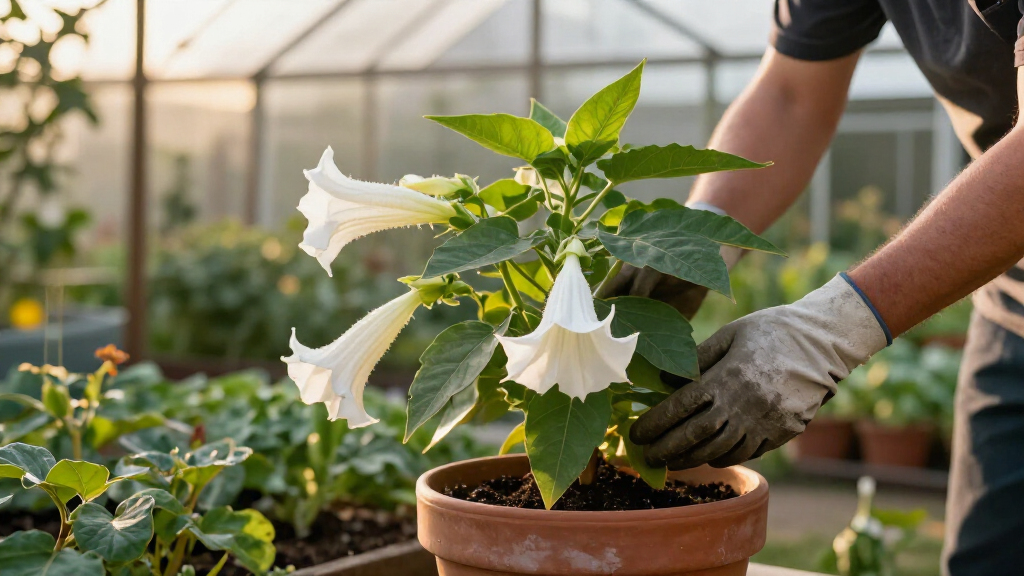
The trumpet-shaped flowers open in the evening and are fragrant, with blooms appearing from early summer until frost in suitable conditions. The plants are frost-tender and listed as hardy in USDA Zones 9 to 10. After flowering, they produce spiny capsules that split when ripe. The guide cautions that the seeds, like other plant parts, are poisonous if ingested.
Safety Shapes Garden Placement
Datura’s ornamental appeal comes with a serious hazard. The guide states that all parts of the plant are extremely poisonous to people, pets and livestock, identifying children and small animals as especially at risk. That makes planting location and access as important as sunlight and soil. Gardeners should avoid sites where children or animals could reach the plant, and should not treat its traditional use in medicines or rituals as evidence of safety.
The plant can also spread without deliberate replanting. According to the guide, jimsonweed self-seeds vigorously, and cultivation of Datura stramonium is banned in some municipalities and states. Gardeners need to check local rules before growing it and consider whether its seed dispersal could cause problems nearby.
Popular right now

Ninja Foodi 6-in-1 DualZone Air Fryer, 8 qt, Grey (DZ201)

Dyson W1 PencilWash Wet and Dry Cleaner with Dok Cordless Wet Floor Cleaner

Bose QuietComfort Headphones (2nd Gen), Wireless Over-Ear Noise-Cancelling Headphones, Hazelnut Taupe
As an affiliate, we earn on qualifying purchases.
Datura’s Growth and Range
Datura is a member of the nightshade family, Solanaceae. The guide says the genus has up to 12 named species, though its taxonomy is disputed and counts vary by source. Garden varieties commonly include Datura inoxia and Datura metel. The former is native to Central America, Mexico and the southwestern United States; the latter is native to Southeast Asia, according to the source.
Datura is often grown as a half-hardy annual, although it is an herbaceous, short-lived perennial in suitable climates. It is closely related to Brugmansia, but the flowers provide a practical distinction: Datura’s blooms point upward, while Brugmansia flowers hang downward. Datura flowers may be visited by moths and other insects while open, the guide says.
Local Rules and Species Differences
The source does not identify which municipalities or states restrict Datura stramonium, so gardeners must check rules in their own area. It also says the genus’s taxonomy is unsettled, with species counts and origins disputed. The supplied source material does not specify a planting calendar, seed-starting method, pruning approach or complete fertilizer schedule, so those details cannot be established from this guide excerpt.
Check Conditions Before Planting
Before planting, gardeners should confirm that datura is permitted locally, select a sunny site with room for a plant up to six feet across, and make sure children, pets and livestock cannot access it. The guide’s advice points to well-drained soil and measured watering as the main ongoing care needs. Because the plant can self-seed, growers should also watch for seed capsules and unwanted seedlings. The source does not provide a specific next update or follow-up date.
Key Questions
Is datura poisonous?
Yes. The Gardener’s Path guide says all parts of datura are extremely poisonous to people, pets and livestock, including the seeds. Children and small animals face particular risk.
How much sun does datura need?
The guide recommends full sun for vigorous growth and abundant flowers. Plants can grow in partial shade, but may become leggy and produce fewer blooms.
How often should datura be watered?
The guide suggests about one inch of water per week when the top inch of soil is dry. Mature plants may need more if they droop between watering; avoid waterlogged soil.
Can datura survive winter outdoors?
The source lists garden varieties as frost-tender and hardy in USDA Zones 9 to 10. It does not give winter-protection instructions for colder areas.
Is it legal to grow jimsonweed?
The guide says cultivation of Datura stramonium is banned in some municipalities and states, but it does not name those locations. Check local rules before planting.
Source: gardenerspath.com